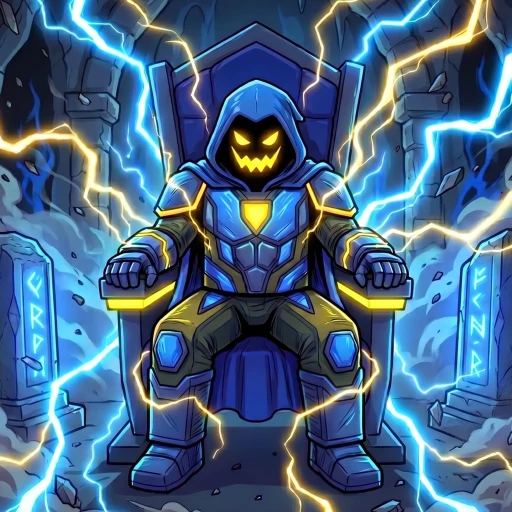
Power Simulator X vs Super Power Fighting Simulator (2026) -- Which Roblox Game Is Better?
Two Roblox games. Both built around the same core fantasy: train hard, get stupidly powerful, and make other players feel weak by comparison. Power Simulator X (Place ID: 139862517286509) is a multi-stat training simulator from Power Games Studio with boss fights, area unlocks, and a rebirth system that rewards players who plan their resets carefully. Super Power Fighting Simulator (Place ID: 5115710684), developed by MayrusHart, is the older heavyweight -- over 3 billion total visits -- built around training your body, mind, fist, and movement until you can go Super Saiyan-style and wreck everyone in the PvP arena. Same power fantasy, noticeably different execution.
I've put serious hours into both. They attract the same type of player -- someone who loves watching numbers climb toward absurdity -- but the experience of getting there feels different enough to matter when you're deciding where to spend your time. Here's how they actually compare in 2026.
Quick Stats Comparison
| Metric | Power Simulator X | Super Power Fighting Simulator |
|---|---|---|
| Developer | Power Games Studio | MayrusHart |
| Genre | Simulator | Simulator / Fighting |
| Total Visits | ~80 Million+ | ~3 Billion+ |
| Concurrent Players | ~3K--7K | ~3K--5K |
| Core Stats | Strength, Speed, Powers (multiple) | Body, Mind, Fist, Movement |
| Signature System | Rebirth system + boss fights | Transformation system (Super Saiyan-style) |
| Rank System | No | Yes |
| PvP | Yes (competitive) | Yes (arena-based) |
| Quests | Yes | Yes |
| Mobile | Yes | Yes |
| Trading | Limited | No |
| Free to Play | Yes | Yes |
| Roblox Place ID | 139862517286509 | 5115710684 |
The visit gap is enormous -- SPFS sits at over 3 billion against PSX's roughly 80 million -- but concurrent player counts are actually comparable. PSX pulls similar active engagement numbers despite being far newer and having a fraction of SPFS's history. Both games hover in a healthy 3K--7K concurrent range, which is solid for the simulator genre without putting them in Roblox's absolute top tier.
Gameplay Loop: How They Actually Play
Power Simulator X -- Structured Training with Purpose
PSX gives you multiple stat tracks to develop simultaneously: strength, speed, and a range of power categories. You're not just grinding one number -- you're managing a connected system where different stats feed into different gameplay capabilities. Training spots unlock as your numbers grow, and accessing a new area feels like a meaningful step forward rather than a cosmetic shift.
Boss fights are PSX's clearest differentiator from the standard simulator formula. You'll periodically take on boss encounters that test your current power levels, and clearing them gates progress to new areas or stat milestones. It's not combat in the fighting-game sense, but it gives your grinding a tangible target beyond the number itself. Sessions have a rhythm: train, push toward the boss threshold, clear it, unlock something new, repeat.
The rebirth system sits at the center of PSX's long-term loop. Resetting your progress at certain milestones grants permanent multipliers that make your next run faster. Knowing when to rebirth -- and squeezing every last bit of progress out of each run before you reset -- creates genuine decision-making in what could otherwise be passive clicking. That's a harder design problem to solve than it sounds, and PSX does it well.
For tips on making the most of each rebirth cycle, our Power Simulator X free Robux guide covers the key strategies for maximizing your multiplier gains.
Super Power Fighting Simulator -- Train Everything, Become Something Else
SPFS structures its training around four distinct categories: Body, Mind, Fist, and Movement. Body builds your health and raw physical power. Mind strengthens your ki and energy-based abilities. Fist improves melee damage. Movement increases your speed and aerial agility in combat. Balancing these four tracks is an actual strategic consideration, not just an aesthetic one -- how you allocate training time shapes what your character can do in fights.
The transformation system is the game's signature hook and the reason it accumulated 3 billion visits. As you hit certain power thresholds, you unlock transformations that visually and mechanically change your character -- think golden aura explosions, altered models, and real stat amplifications. Hitting a new transformation for the first time has a genuine payoff moment that most simulators can't replicate. The quest system adds short-term structure between those major milestones, keeping you focused during the grinds that would otherwise feel directionless.
The rank system gives SPFS a social hierarchy that PSX doesn't match. Your rank is visible to other players and signals where you are in the progression arc. It creates organic server dynamics where newer players look up to high-rank veterans, and reaching a new rank tier feels like a public achievement rather than a private one.
Our Super Power Fighting Simulator free Robux guide covers efficient training methods and how to push through the slower mid-game stretches.
Edge: Super Power Fighting Simulator -- the transformation system delivers emotional payoff that standard simulators rarely match, and the four-stat structure creates more texture in your training decisions. PSX's boss fights are a meaningful differentiator, but SPFS's signature moments hit harder.
Progression Systems
PSX's rebirth loop is the stronger long-term hook for players who like compounding progression. Each cycle is faster than the last, and the multiplier stack creates that satisfying exponential growth curve where early numbers eventually look microscopic. Boss fights break up the grind with clear checkpoints, so there's always a specific target just ahead of where you are now.
SPFS's progression is more continuous. You're always training, always climbing toward the next transformation or rank threshold, but the pace is steadier rather than explosive. The quest system gives you daily objectives that provide boosts and break up monotonous clicking. Transformations function as pseudo-rebirth moments -- they reset the sense of how powerful you feel by giving you a new baseline to build from, which is a smart way to generate that same "fresh start" excitement without a literal reset.
Both games have the mid-game plateau problem common to the genre -- a stretch where the gap between your current stats and the next major milestone feels endless. PSX handles this better because boss fights give you a concrete target to aim at. SPFS compensates with quests, but they don't fully eliminate the slog during the longer grind stretches between transformations.
Edge: Power Simulator X -- the rebirth system with compounding multipliers and the boss structure make progression feel more purposeful. You always know what you're working toward and roughly how far away it is.
Graphics and Audio
PSX looks clean and polished for a simulator. Training zones have distinct visual identities, power effects are satisfying, and bosses have enough visual presence to feel like actual encounters. It's not pushing Roblox's limits, but it's well-executed within the genre's conventions and runs smoothly as a result.
SPFS leans hard into the anime aesthetic, with energy auras, ki blasts, and transformation sequences that pop. When you hit a new form and the screen fills with golden light and particle effects, it genuinely looks impressive for a Roblox game. The training zones are more functional than atmospheric, but the combat and transformation visuals are a real highlight that drives the game's appeal.
On the audio side, SPFS's transformation sound effects carry more weight. The power-up audio that plays when you unlock a new form contributes meaningfully to the experience -- it's the kind of sound design that makes the moment feel earned. PSX's audio is competent and fits the game without standing out either way.
Edge: Super Power Fighting Simulator -- the transformation audio-visual package is a genuine selling point that sets the game above standard simulator presentation. PSX is polished but doesn't have an equivalent wow-moment in its visual design.
Player Count and Community
The concurrent player parity between these two games is the most interesting data point in this comparison. PSX runs around 3K--7K concurrent; SPFS runs 3K--5K. For a game with 80 million total visits to match the concurrent numbers of a game with 3 billion total visits, PSX is either very sticky or SPFS's playerbase has spread thin over time. Either way, both games have healthy enough populations to fill servers and make PvP functional.
PSX's community is built around optimization. Training rotation efficiency, rebirth timing, boss strategies -- Discord servers are full of guides and discussions about the best paths to progress. It's a knowledge-sharing culture that makes it easy to get advice when you hit a wall. The game's relative newness means the community is still actively discovering optimal strategies rather than having solved everything years ago.
SPFS has the advantages of an established community: years of accumulated guides, wiki pages, YouTube tutorials, and veteran players who've seen every update cycle. The nostalgia factor is real -- SPFS holds a place in Roblox history for many players who started there years ago and keep returning. New players sometimes feel the power gap between themselves and veterans acutely, but the rank system at least gives everyone a visible ladder with clear rungs.
Game Passes and Monetization
PSX monetizes through training multipliers (typically tiered from 2x upward), auto-training that lets stats grow passively, and premium area access. The multiplier passes are the most impactful -- free players can absolutely reach endgame, but the time investment is significantly longer. Limited trading adds a light player economy where some items carry residual value, which is a social dimension most simulators skip entirely.
SPFS sells VIP packages bundling training boosts, exclusive cosmetics, and various perks. Boost-focused passes are the most popular since training speed is the core constraint. SPFS has no trading system at all -- what you earn or buy stays with your account, and there's no player-driven market. That simplicity works for some players and feels limiting to others.
Neither game crosses into predatory territory. Both are genuinely playable without spending, and core progression is accessible to free players. The monetization in both cases is primarily about time compression rather than capability gating. In PvP contexts, faster progression does translate to a stat edge, but it's not pay-to-win in a direct mechanical sense -- you can't buy a skill advantage, only a head start on numbers.
Edge: Power Simulator X -- the limited trading adds a social economy layer that SPFS doesn't offer, and the overall monetization structure is transparent about what you're buying.
Social Features
Both games support multiplayer servers where you train alongside other players, but neither is built around cooperative play in a structured sense. The ambient social experience in both revolves around seeing other players' power levels, chatting in server, and measuring yourself against what you observe. It's the standard Roblox social experience rather than designed co-op.
SPFS has the edge here through its rank system and PvP arena. When your rank is publicly visible and you're fighting named opponents in the arena repeatedly, you develop rivalries and recognize regular players. The rank hierarchy creates social motivation that PSX's PvP doesn't quite replicate at the same depth. Reaching a high rank means something visible to everyone in the server.
PSX's boss fights create natural cooperative moments that SPFS doesn't offer -- there's something fun about a full server of players collectively taking on a boss even without formal co-op mechanics. It's unstructured, but it generates shared experiences that give players things to talk about between training sessions.
Replay Value
PSX's rebirth system is specifically engineered to generate replay value. Each cycle is more satisfying than the last, and chasing perfect rebirth efficiency creates a meta-game that keeps dedicated players running sessions repeatedly. Power Games Studio has been actively adding new areas, stat categories, and bosses, so the content ceiling keeps moving as the game matures.
SPFS's replay value comes from the transformation grind and competitive drive. Once you've cleared the top transformations, the motivation shifts to PvP perfection and rank climbing. Daily quests refresh regularly, giving casual players a reason to log in even briefly. The sheer scale of the progression -- 3 billion visits worth of layered content added over years -- means there's always another milestone just out of reach if you're willing to keep grinding for it.
Both games have strong replay value for players who enjoy long-form stat progression. They're also decent palate cleansers for each other -- if you burn out on PSX's structured loop, SPFS's open-ended grinding feels fresh, and vice versa.
Earning Free Robux
Get Game Passes Without Spending Your Own Cash
Whether you're eyeing a training multiplier in Power Simulator X or a VIP pack in Super Power Fighting Simulator, Earnaldo lets you earn free Robux through quick tasks you can complete between training sessions. No surveys that go nowhere -- just real Robux you can put toward either game.
Verdict
Our Verdict
Super Power Fighting Simulator is the more historically significant game with a vastly larger total playerbase and a transformation system that's genuinely one of the best power fantasy hooks in the Roblox simulator genre. If you want depth, an established community, and a proven long-term experience backed by 3 billion visits, SPFS earns that reputation. Power Simulator X, though, is the better-structured game for players who want clear direction -- boss fights gate content meaningfully, the rebirth system gives each session a purpose, and the comparable concurrent player numbers despite 37x fewer total visits suggest PSX is doing something right with engagement and retention. For new players choosing between them right now: start with PSX if you want a tight, goal-oriented loop that respects your time. Move to SPFS when you want the transformation spectacle and a deeper grind. Playing both is a perfectly reasonable call -- they complement each other more than they compete.
Who Should Play What?
Play Power Simulator X if you:
- Want a structured simulator with boss fights and clear milestone targets at every stage
- Love rebirth systems and the satisfaction of exponentially faster progress each cycle
- Prefer managing multiple stat categories -- strength, speed, powers -- with distinct purposes
- Want some form of trading and a light player economy alongside the core grind
- Like competitive PvP where your trained stats directly determine fight outcomes
- Are looking for a newer, actively growing game with momentum and an evolving meta
Play Super Power Fighting Simulator if you:
- Want the satisfaction of unlocking Dragon Ball-style power transformations as major milestones
- Enjoy a four-stat training system with body, mind, fist, and movement categories
- Like a visible rank system that signals your progress to everyone in the server
- Want a large, established community with years of guides, videos, and history behind it
- Enjoy quest-driven daily objectives that give structure to longer grinding sessions
- Are drawn to the anime power fantasy aesthetic and want it executed at scale
Frequently Asked Questions
Super Power Fighting Simulator is far more popular by total visits, sitting at over 3 billion compared to Power Simulator X's roughly 80 million. SPFS has been on Roblox for years and built a massive base around its Dragon Ball-inspired transformation system. PSX is newer and growing, but the gap in raw numbers is enormous. In concurrent players, however, both games sit in a comparable active range -- PSX runs 3K--7K, SPFS runs 3K--5K.
Yes, Power Simulator X includes competitive PvP where your trained stats directly influence how you perform in fights. Boss fights against PvE enemies are also a core part of the loop. Super Power Fighting Simulator has PvP arenas as well, though most players focus on grinding stats and reaching new transformations before jumping into serious competitive play. Both games have active PvP scenes.
Power Simulator X has a dedicated rebirth system that resets your progress in exchange for permanent multipliers -- a highlight of its long-term loop. Super Power Fighting Simulator uses a rank-based prestige structure tied to its transformation milestones. PSX's rebirth system is more central to progression planning and delivers clearer compounding gains each cycle, making it the stronger pick if you enjoy that specific type of meta-progression.
Both are free to play. Power Simulator X offers game passes for training multipliers, auto-training, and exclusive areas. Super Power Fighting Simulator sells boosts, VIP perks, and cosmetic items. Neither requires spending Robux to reach endgame content, though paying does accelerate progress significantly in both. If you want to fast-track without spending, Earnaldo can help you earn free Robux for either game.
Both games support mobile. Power Simulator X's interface is somewhat cleaner for touchscreen use given its focused stat system. Super Power Fighting Simulator's training menus and quest systems can feel cramped on smaller screens. Neither matches the desktop experience, but both are fully playable on phones and tablets without major issues. If you're primarily a mobile player, either is a reasonable choice.
Both games receive regular updates. Super Power Fighting Simulator has the longer track record given its much older launch date and 3 billion visits behind it. Power Games Studio has been actively updating Power Simulator X with new areas, stat categories, and boss encounters. In 2026, both development teams are keeping their communities engaged with consistent content -- neither game is at risk of going stale.