Project Baki 4 vs HOURS (2026) — Which Roblox Fighting Game Is Better?
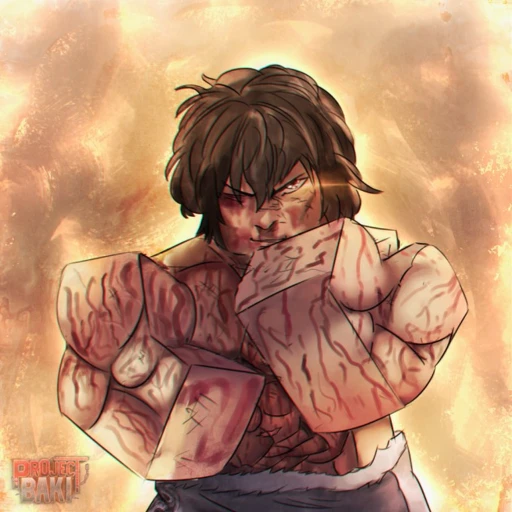
If you're into combat games on Roblox, two names keep coming up in very different conversations: Project Baki 4 and HOURS. Both are action-focused, both feature satisfying combat with real depth, and both have communities that swear their game is the better pick. But they couldn't be more different in execution. Project Baki 4 is an open-world martial arts PvP game inspired by the Baki the Grappler anime where you train stats, learn fighting styles, and throw hands against other players. HOURS is a wave-based PvE arena game where you pick from 15 unique characters called Hosts, pair them with time-manipulation powers, and fight through increasingly brutal enemy waves.
One game tests how well you can read and outplay another human being. The other tests how efficiently you can master a system and push its limits. Both require genuine skill, but the skills are completely different. This comparison breaks down every aspect of both games so you can figure out which one deserves your next 50 hours.
Project Baki 4 vs HOURS — Quick Stats (2026)
| Category | Project Baki 4 | HOURS |
|---|---|---|
| Genre | Martial Arts Fighting / PvP | Wave Survival / Hack-and-Slash |
| Place ID | 5951002734 | 5732973455 |
| Inspiration | Baki the Grappler anime | Original (time-manipulation theme) |
| Core Loop | Train stats, learn styles, fight players | Pick Host + Tempo, survive waves |
| Characters | Custom character with fighting styles | 15 unique Hosts |
| PvP Focus | Primary | None (PvE only) |
| Abilities | Z, X, C, V, B mapped moves per style | Unique per Host + 32 Tempos |
| Difficulty Tiers | Open world (player skill determines difficulty) | 4 structured difficulty settings |
| Mobile-Friendly | Playable (harder for PvP) | Playable (ability buttons work well) |
| Free-to-Play | Yes | Yes |
Gameplay — What Do You Actually Do?
Project Baki 4
Project Baki 4 drops you into an open world inspired by the Baki the Grappler franchise. Your character starts weak, and the entire progression loop revolves around training your stats and learning fighting styles. The stat system determines which martial arts styles become available to you. Pump points into strength and you unlock brawler-type movesets. Focus on agility and you get access to speed-based combos. The build diversity is real — two players at the same level can fight completely differently based on their stat allocation.
Combat uses a five-ability system mapped to Z, X, C, V, and B keys, plus a dash on Q, block on F, and a rage mechanic on G that activates at low HP. Each fighting style comes with its own set of moves across those keybinds, and mastering the timing, range, and combo potential of your chosen style is where the skill expression happens. You can chain abilities into basic attacks, read your opponent's cooldowns, and punish whiffed moves. The PvP is the main attraction, and skilled players make the combat system look like a legitimate fighting game.
Beyond PvP, the game offers quests and PvE content to earn yen (the in-game currency) and experience. Boss fights test your combat skills against AI opponents with unique attack patterns. But make no mistake — PvP is why most players are here. The open world is essentially a training ground and social hub between fights. Check out our Project Baki 4 free Robux guide to get a head start on your training.
HOURS
HOURS takes a completely different approach to combat. Instead of PvP, it's a wave-based PvE survival game that combines hack-and-slash action with roguelite elements. You pick one of 15 characters called Hosts, select a time-manipulation power called a Tempo, and fight through escalating waves of enemies in an arena. The goal is to survive as long as possible while clearing waves efficiently.
What makes HOURS special is the depth of its Host and Tempo system. Each of the 15 Hosts plays completely differently. Invader is a fast melee DPS character who heals by staying close to enemies. Prophet uses slow, predictive attacks that deal massive burst damage. Subject brews potions that provide different buffs depending on the situation. Every Host has a distinct rhythm and strategy that takes hours to fully grasp, and mastering even three or four of them gives you dramatically different gameplay experiences.
The 32 Tempos are where HOURS goes from great to brilliant. These are time-manipulation powers that fundamentally change how combat plays out. Stop time to land free hits. Enter a time loop that rewinds your position. See the future to predict enemy attacks. Each Tempo pairs differently with each Host, creating 480 possible combinations, many of which produce entirely unique strategies. The game has four difficulty settings that adjust enemy density, damage output, and wave composition, so there's always a harder challenge waiting. For tips on unlocking more content, see our HOURS free Robux guide.
Progression — How Quickly Does It Hook You?
Project Baki 4 has a slow burn that rewards patience. Your first hour is spent training at various locations to build up base stats, learning the basics of whichever fighting style you can afford, and getting beaten up by more experienced players. The progression feels grindy early on because your character is genuinely weak. But once you hit enough stats to unlock your first real fighting style, the game transforms. Suddenly you have combos, abilities, and the tools to compete in PvP. From that point forward, progression splits between stat grinding and skill development, and the latter is what keeps you hooked.
The yen economy drives your upgrade path. You earn yen from quests, PvE bosses, and some PvP activities. Spending yen on stat resets lets you experiment with different builds, and seasonal codes provide free yen boosts and EXP multipliers. The progression system intentionally gates content behind training time to mirror the anime's theme of dedicated martial arts practice. It's thematic, but it can frustrate players who want to jump straight into competitive fights.
HOURS hooks you almost immediately. Your first run with the starting Host takes about 10-15 minutes and teaches you the core mechanics through gameplay rather than tutorials. You'll probably die on your first attempt, but you'll understand exactly what you did wrong and want to try again. Unlocking new Hosts happens through gameplay milestones — beating certain difficulties, clearing specific wave counts, or completing hidden challenges. Each unlock feels earned and immediately adds a new playstyle to experiment with.
The Tempo unlock system adds another progression layer. As you play more runs, you unlock additional Tempos that expand your strategic options exponentially. The feeling of discovering a Host-Tempo combination that completely clicks with your playstyle is one of the most satisfying progression moments on Roblox. It's not about numbers going up — it's about your understanding of the game's systems deepening with every run.
Edge: HOURS for immediate engagement and satisfying unlock pacing. Project Baki 4 for long-term dedication that rewards hundreds of hours of investment.
Graphics and Audio
Project Baki 4 uses a gritty, anime-inspired visual style that matches its source material. Character models are muscular and exaggerated in the Baki tradition, with fighting animations that feel weighty and impactful. The environments are functional but not flashy — training areas, arenas, and open-world zones serve their purpose without visual excess. Hit effects are punchy, with screen shake and particle bursts on heavy attacks that sell the power fantasy. The audio design is solid, with meaty impact sounds on hits, distinct audio cues for different abilities, and background music that shifts based on combat intensity.
HOURS has a more stylized, almost minimalist aesthetic that works in its favor. The arenas are clean and geometric, designed for visual clarity during chaotic combat with dozens of enemies on screen. Host character designs are distinctive and immediately readable, even amid particle-heavy Tempo effects. The real star is the visual feedback system — time stops have a satisfying freeze-frame effect, rewinding creates visible afterimages, and each Host's abilities have unique visual signatures that make combat feel cinematic. The soundtrack is genuinely excellent by Roblox standards, with tracks that build intensity as waves progress and shift tone based on your Host selection.
Both games look good for different reasons. Project Baki 4 aims for anime authenticity and achieves it. HOURS aims for stylish clarity and nails it. Audio-wise, HOURS has the edge with a more polished and memorable soundtrack.
Edge: HOURS for overall visual polish and soundtrack quality. Project Baki 4 for anime-faithful character design and fight feel.
Player Count and Community (July 2026)
Project Baki 4 has maintained a dedicated player base since its original launch, and the fourth installment has brought fresh players into the fold. The community is heavily PvP-oriented, with Discord servers full of combo tech discussions, fighting style tier lists, and organized sparring sessions. Content creators produce PvP montages, build guides, and tier breakdowns that regularly hit solid view counts on YouTube. The community can be intense — PvP games naturally attract competitive personalities, and trash talk is part of the culture. But there's also a strong mentorship tradition where experienced players teach newcomers optimal training routes and combo structures.
HOURS has a cult following that punches above its weight. Despite being a PvE game without the inherent virality of PvP content, the community is deeply engaged with theorycrafting, speedrunning, and challenge runs. Discord servers are filled with Host-Tempo combination guides, difficulty challenge strategies, and heated debates about which Host is the most versatile. The developer's commitment to quality over quantity has earned significant respect, and the game regularly appears on "hidden gems" lists for Roblox. Games like The Strongest Battlegrounds share some audience overlap with Project Baki 4, but HOURS occupies a unique niche on the platform.
Neither game has the mainstream player counts of Roblox's biggest titles, but both have extremely loyal communities. Project Baki 4's community is louder and more competitive. HOURS's community is more analytical and cooperative. Both are welcoming to newcomers who show genuine interest in learning.
Game Passes and Monetization
Project Baki 4 offers game passes that primarily speed up the training grind. Typical offerings include 2x EXP passes (around 149-199 Robux) that double experience gained from training, Stat Reset passes (around 49-99 Robux) that let you reallocate your stat points without yen cost, and VIP passes (around 399-499 Robux) that grant access to exclusive training areas and bonus yen per fight. Some passes unlock cosmetic items like custom fighting stances or auras that don't affect gameplay but look impressive during PvP encounters.
HOURS takes a minimal approach to monetization. The game is almost entirely free-to-play, with any game pass offerings being cosmetic or quality-of-life focused rather than gameplay-altering. The developer has prioritized keeping the experience fair and complete without paywalls, which is part of why the community holds the game in such high regard. You can unlock every Host and every Tempo through gameplay alone, and no purchase gives you an advantage in combat.
The monetization philosophies reflect the games' different design priorities. Project Baki 4's passes reduce grind time in a game where grinding is a core mechanic. HOURS's minimal monetization reflects a game where the design itself is the reward. Neither approach is objectively better, but if you're sensitive to feeling pressured to spend, HOURS is the cleaner experience.
Edge: HOURS for minimal monetization and no pay-to-win elements. Project Baki 4 for players comfortable with spending Robux to skip grind time.
Social Features
Project Baki 4's social layer revolves around its open-world PvP structure. You encounter other players constantly in the game world, leading to spontaneous fights, training partnerships, and rivalries that develop over time. The PvP ranking and sparring systems create natural competitive relationships. Players organize tournaments through Discord, set up training sessions with specific fighting styles, and form crews that fight together against rival groups. The social experience is raw and unstructured — you make your own stories through player interactions.
HOURS is primarily a solo experience, but it has social elements that enhance it. You can compare run times and wave counts with other players, share Host-Tempo combination discoveries, and participate in community challenges that test specific builds. The spectator element is surprisingly strong — watching a skilled player execute a difficult Host perfectly is educational and entertaining. The game's community has also built robust external social structures through Discord servers and wiki pages that function as collaborative knowledge bases.
Project Baki 4 wins on in-game social interaction by a wide margin. HOURS is a game you discuss with others more than you play with others. If direct player interaction is important to your gaming experience, Project Baki 4 delivers it in spades.
Edge: Project Baki 4 for direct social interaction and emergent PvP relationships. HOURS for community-driven knowledge sharing.
Replay Value
Project Baki 4's replay value is tied to the endless depth of PvP competition and build experimentation. No two fights play out the same way because you're facing human opponents who adapt and improve. Resetting your stats to try a different fighting style effectively gives you a new character to learn. Content updates add new abilities, styles, and reworks that shift the meta regularly. The competitive ceiling is effectively infinite — there's always someone better to challenge and always a new technique to incorporate into your gameplay.
HOURS has some of the best replay value of any Roblox game, period. The 15 Hosts multiplied by 32 Tempos creates 480 distinct gameplay combinations, and that's before factoring in four difficulty levels. A single run takes 15-30 minutes, making it perfect for pick-up-and-play sessions. Speedrunning communities have formed around optimizing clear times with specific builds. Challenge runs — like clearing the hardest difficulty with the weakest Host or using Tempos that don't synergize with your Host — add even more variety. After 200 hours, you can still discover combinations you haven't tried.
Both games offer exceptional replay value, but HOURS has a mathematical edge through sheer combinatorial variety. Project Baki 4's replay value is more organic and depends on the quality of opponents you find. Both will keep you playing for months if the core loop clicks with you.
Earning Free Robux for Your Fighting Game of Choice
Whether you want training boosts in Project Baki 4 or cosmetics in HOURS, Robux enhances both experiences. Earnaldo lets you earn free Robux by completing tasks outside of Roblox, then withdraw real Robux to spend in any game.
Check out our dedicated guides: the Project Baki 4 free Robux guide and the HOURS free Robux guide break down the best earning strategies.
Earn Free Robux for Project Baki 4 or HOURS
Want Robux for game passes or cosmetics? Earnaldo lets you earn free Robux by completing simple tasks — no generators, no scams, just real rewards you can withdraw instantly.
Head-to-Head Verdict — Project Baki 4 vs HOURS in 2026
The Verdict
Choose Project Baki 4 if you want a martial arts PvP experience with stat-based progression, multiple fighting styles, and the thrill of outplaying human opponents. It rewards dedication and practice, and the Baki-inspired theme gives every fight a dramatic, anime-worthy intensity. This is the game for players who want combat to mean something beyond a leaderboard score.
Choose HOURS if you want a brilliantly designed PvE combat system with nearly infinite build variety through its Host and Tempo combinations. It respects your time with short, satisfying runs that always teach you something new. The minimal monetization and pure gameplay focus make it one of the most fairly designed games on the entire Roblox platform.
Overall: Project Baki 4 is the better PvP game. HOURS is the better PvE game. They don't really compete for the same audience — they complement each other. Play Project Baki 4 when you want to test yourself against other players. Play HOURS when you want to master a system and push your limits against clever AI design. As of May 2026, both are actively supported and absolutely worth playing.
Who Should Play What?
- You love PvP combat: Project Baki 4, because fighting human opponents is the entire game and the combat system supports it beautifully.
- You prefer PvE challenges: HOURS, because its wave-based survival with 480 build combinations provides hundreds of hours of PvE content.
- You enjoy anime-inspired games: Project Baki 4, because its Baki the Grappler foundation gives every mechanic an anime context that fans will appreciate.
- You want short play sessions: HOURS, because a complete run takes 15-30 minutes, making it perfect for quick gaming breaks.
- You like building competitive communities: Project Baki 4, because its PvP nature creates natural rivalries, tournaments, and social dynamics.
- You want zero pay-to-win pressure: HOURS, because every piece of content is unlockable through gameplay with no competitive advantages for sale.
Frequently Asked Questions
HOURS is more beginner-friendly. Its structured wave-based progression and clear difficulty settings teach combat fundamentals through gameplay. Project Baki 4 throws you into an open world with PvP and PvE elements that can overwhelm new players, and the stat training grind before you access fighting styles requires patience.
Both have excellent combat, but they serve different purposes. Project Baki 4 focuses on martial arts PvP with fighting styles, stat builds, and player-versus-player encounters. HOURS is a PvE wave survival game with 15 unique Hosts and 32 Tempo time powers that create hundreds of build combinations. PvP fans should choose Project Baki 4. PvE fans should choose HOURS.
Both are playable on mobile through the Roblox app. HOURS translates well to touchscreens since its combat involves ability buttons and timing windows. Project Baki 4's complex combo inputs and PvP combat are significantly harder on mobile, and most competitive players use keyboard and mouse for the required precision.
HOURS has exceptional mathematical replayability with 15 Hosts multiplied by 32 Tempos, creating 480 possible combinations across four difficulty tiers. Project Baki 4's replayability comes from the infinite nature of PvP competition and ongoing content updates that add new fighting styles and abilities. Both offer hundreds of hours of content for dedicated players.
Project Baki 4 receives regular updates in 2026, including character reworks, new fighting styles, balance adjustments, and seasonal codes for free resources. HOURS has a more established and polished content base, with the developer focusing on refinement and balance rather than rapid content additions. Both games are actively maintained.
Neither game pays you Robux directly, but you can earn free Robux through platforms like Earnaldo by completing tasks and offers. Those Robux can be spent on game passes in either Project Baki 4 or HOURS to enhance your gameplay experience with cosmetics or quality-of-life upgrades.
About This Comparison
All stats, game pass estimates, and gameplay observations are current as of July 2026. Game data changes with updates, so developers may adjust pricing and mechanics in future patches.
This page is not affiliated with the developers of Project Baki 4, HOURS, or Roblox Corporation. All trademarks and game content belong to their respective owners.