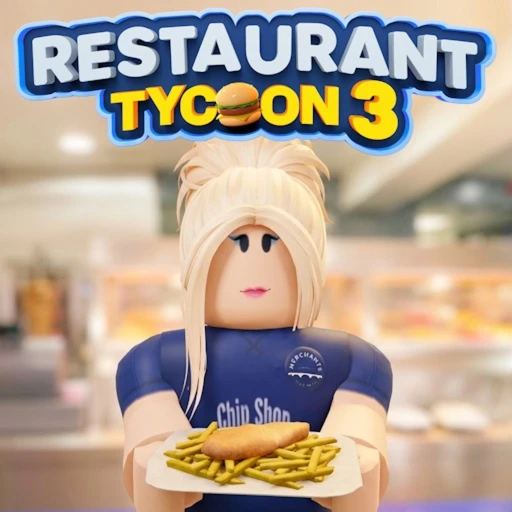
Restaurant Tycoon 3 vs Restaurant Tycoon 2 (2026) -- Which Roblox Game Is Better?
Ultraw's Restaurant Tycoon franchise is one of the longest-running success stories on Roblox. For years, Restaurant Tycoon 2 was the go-to restaurant management sim on the platform, pulling in billions of visits and building a loyal community of virtual chefs and restaurateurs. Then in August 2025, Restaurant Tycoon 3 arrived with overhauled building tools, a farming system, cooperative ownership, and a fresh progression structure that quickly drew tens of thousands of concurrent players.
Now that RT3 has had several months to mature and RT2 continues to receive updates, the question many players keep asking is straightforward: which game should you actually be playing in 2026? The answer depends on what you value most in a restaurant sim -- and the differences between these two entries are more significant than a simple sequel number suggests.
Whether you are a longtime RT2 veteran deciding whether to migrate or a new player picking your first restaurant sim, this guide covers everything you need to make that call.
Quick Stats: Restaurant Tycoon 3 vs Restaurant Tycoon 2 at a Glance
| Category | Restaurant Tycoon 3 | Restaurant Tycoon 2 |
|---|---|---|
| Developer | Ultraw | Ultraw |
| Release | August 2025 | 2019 |
| Concurrent Players | ~21,500 | ~4,400 |
| Total Visits | Growing rapidly | 2B+ |
| Genre | Restaurant Sim / Tycoon | Restaurant Sim / Tycoon |
| Building Floors | Up to 3 floors | 1 floor (expandable) |
| Recipes | 200+ dishes | 100+ dishes |
| Farming System | Yes | No |
| Co-Op Ownership | Yes (co-own restaurants) | Visiting only |
| Currency | Cash + Gems | Cash + Diamonds |
| Skill System | 10 skills with trophies | Basic leveling |
| Franchise System | Yes (offline earnings) | No |
| Game Passes | 6 passes (from 299R$) | Multiple passes available |
| Age Suitability | All ages | All ages |
Those numbers paint a broad picture, but the real differences show up once you start playing. Let us dig into the details section by section.
Gameplay and Core Loop
Restaurant Tycoon 3: A Ground-Up Rebuild
Restaurant Tycoon 3 is not a simple reskin of its predecessor. Ultraw rebuilt the game from scratch with a far more ambitious scope. The core loop still revolves around building a restaurant, cooking food, serving customers, and reinvesting your earnings into upgrades and expansion. But nearly every system within that loop has been deepened or reimagined.
The building system is the most immediately obvious improvement. RT3 lets you construct restaurants across up to three floors, place diagonal walls, position doors and windows with flexible precision, and even sculpt the terrain around your restaurant to create outdoor features like lakes, gardens, and patios. The level of architectural control rivals dedicated building games on the platform. You are not just placing pre-made furniture in a box -- you are designing a restaurant from foundation to rooftop.
Cooking has also been expanded significantly. The game features over 200 dishes drawn from cuisines around the world, presented on a 3D world map that shows ingredient origins. Beyond following set recipes, you can create custom dishes -- assemble your own signature burger, design a unique pizza, or experiment with fusion plates. The food boosting system lets you enhance dishes to increase their value and customer satisfaction.
Then there is farming. RT3 introduces an ingredient farming system that ties directly into your restaurant's supply chain. Growing your own produce cuts costs and opens up additional recipe paths that RT2 never offered.
The skill system rounds out the loop with ten distinct skills including chopping, management, and baking. Leveling these grants trophies and permanent upgrades that shape your playstyle. A player who focuses on management runs a different kind of restaurant than one who maximizes cooking efficiency.
Restaurant Tycoon 2: The Proven Formula
Restaurant Tycoon 2 takes a more traditional approach to the genre. You start with a modest restaurant, a limited menu, and a handful of tables. Customers arrive, place orders, and you (along with any hired workers) prepare and serve the food. When customers leave, they drop cash on their tables, which you collect and spend on new equipment, recipes, decor, and staff.
The gameplay loop is tighter and more focused than RT3's. There are fewer systems competing for your attention, which makes RT2 easier to pick up and understand within the first few minutes of play. You are not managing a farm or leveling ten separate skills. You are running a restaurant -- keeping customers happy, expanding your menu, and growing your space.
Building in RT2 is respectable but noticeably simpler than in RT3. You work on a single floor with a solid selection of furniture, kitchen equipment, and decorative items. The placement tools get the job done, and experienced players have created impressive-looking restaurants within the system's constraints. But if you have spent any time building in RT3, the older system feels limited by comparison.
The recipe library in RT2 covers over 100 dishes from various world cuisines. While smaller than RT3's catalog, the selection is still substantial enough to keep menu planning interesting across dozens of hours of play. The cooking process itself is straightforward -- select a recipe, wait for preparation, serve the dish.
Where RT2 still shines is in its stability and polish. After years of updates and refinements, the game runs smoothly, bugs are rare, and the core systems work exactly as expected. There is a comfort to playing a game that has been iterated on for this long. Everything feels dialed in.
Edge: Restaurant Tycoon 3. The expanded building tools, farming system, 200+ recipes, custom dish creation, and skill trees give RT3 a clear gameplay advantage. RT2 remains solid for players who prefer simplicity, but RT3 offers meaningfully more to do in every session.
Progression and Milestones
Restaurant Tycoon 3: Depth Through Systems
RT3 structures its progression around multiple interlocking systems rather than a single linear track. The milestones feature gives you concrete goals to work toward -- serve a certain number of customers, reach a revenue threshold, unlock specific recipes, max out a skill tree. Each completed milestone rewards you with currency, items, or permanent bonuses that compound over time.
The franchise system is a standout addition. Once your primary restaurant reaches a certain level of success, you can open franchise locations that generate income even while you are offline. This passive earning mechanic gives late-game players a reason to keep optimizing their main restaurant while also providing rewards between active sessions. It is a smart way to address the common tycoon-game problem of progression stalling once you log off.
Skill progression adds another dimension. Each of the ten skills has its own leveling track with visible rewards at each tier. Because skill gains are tied to specific actions -- chopping ingredients, managing staff, greeting customers -- your progression reflects how you actually play rather than just how long you have been online. Two players at the same overall level might have very different skill profiles, which creates a sense of individual identity within the progression system.
Restaurant Tycoon 2: Straightforward Growth
RT2's progression is more linear and easier to follow. You earn cash from customers, spend it on upgrades, unlock new recipes as you level up, and gradually transform your small starter restaurant into a larger, more profitable operation. The feedback loop is satisfying in its simplicity: serve food, earn money, buy better stuff, serve more food.
Diamonds serve as a premium currency that unlocks exclusive items and speeds up certain processes. You can earn diamonds through gameplay or purchase them, though the game is generous enough with its free diamond distribution that paying is never required. The upgrade path from basic kitchen equipment to high-end cooking stations provides a clear visual indicator of your progress -- your restaurant physically transforms as you advance.
The absence of systems like franchises and skill trees means RT2's progression can feel less varied in the late game. Once you have unlocked most recipes and maxed out your restaurant's size, the sense of forward momentum slows. Long-term players often set personal goals like achieving a specific aesthetic or hitting income milestones to stay motivated.
Edge: Restaurant Tycoon 3. The milestone system, franchise mechanic, and skill trees give RT3 substantially more long-term progression depth. RT2's simplicity works well for casual players, but dedicated players will find more to chase in RT3.
Graphics and Audio
Restaurant Tycoon 3: A Visual Leap Forward
RT3 represents a clear generational improvement in visual quality over its predecessor. The restaurant interiors feature better lighting, more detailed textures on furniture and equipment, and smoother character animations. Food models in particular received significant attention -- dishes look more appetizing and distinct, which matters in a game where food is the primary product.
The exterior environments benefit from the terrain sculpting system. Restaurants can sit beside custom-built ponds, have landscaped gardens leading to the entrance, and take advantage of a variety of outdoor decorative elements that make each build feel unique. The overall art direction maintains the Roblox aesthetic while pushing the visual fidelity higher than what RT2 could achieve on its older engine framework.
Audio design in RT3 complements the visuals with ambient restaurant sounds -- the sizzle of cooking, the murmur of customers, the clink of dishes being served. Background music shifts based on time of day and activity level, creating a dynamic soundscape that adapts to your situation.
Restaurant Tycoon 2: Clean and Functional
RT2 has a clean visual style that has aged reasonably well thanks to periodic graphical updates from Ultraw. The restaurant interiors are colorful and readable, making it easy to spot where customers are sitting, which stations need attention, and where you should place new items. Furniture and decor items have a consistent style that makes mixing and matching aesthetically forgiving.
Food models in RT2 are simpler but recognizable. You can tell the difference between a pizza and a sushi roll, which is all the game really needs for its purposes. The visual simplicity also means the game performs well on lower-end devices and mobile hardware, which remains important for a Roblox audience that plays across a wide range of hardware.
Audio in RT2 is functional without being particularly memorable. Background music plays during sessions, and basic sound effects accompany cooking and customer interactions. It gets the job done but does not create the same immersive atmosphere that RT3 achieves.
Edge: Restaurant Tycoon 3. The visual improvements are noticeable in every aspect of the game, from food models to environmental detail. RT2 is not ugly by any stretch, but RT3 is a clear step up in both graphics and audio design.
Player Count and Community Health
The numbers tell a clear story about where the community's attention has shifted. As of early April 2026, Restaurant Tycoon 3 averages approximately 21,500 concurrent players, placing it among the top 100 most-played games on the entire Roblox platform. Restaurant Tycoon 2 sits at around 4,400 concurrent players -- still a healthy number by Roblox standards, but roughly one-fifth of RT3's active base.
This gap has widened steadily since RT3's launch in August 2025. The newer game's regular content updates -- including the Easter Update on March 27, 2026 and the Restaurant Tycoon 3 x Chip Shop Diva collaboration on April 3, 2026 -- keep bringing players back and attracting new ones. Each update generates a spike in concurrent players and social media engagement that reinforces the game's momentum.
RT2 still receives occasional updates, including the wheelchair customers addition in January 2026, showing that Ultraw has not abandoned the older title. However, the update cadence has slowed considerably compared to RT3, and the community conversation has shifted toward the newer game. YouTube creators, TikTok producers, and wiki contributors have largely redirected their attention to RT3, which means guides and community resources are more abundant for the newer title.
For players choosing between the two, this matters practically. Higher player counts in RT3 mean more active servers, more restaurants to visit for inspiration, and a more vibrant social environment. RT2 servers are quieter, which some players prefer -- but for those seeking a bustling community, RT3 wins. For a deeper look at RT2, check our Restaurant Tycoon 2 hub page.
Edge: Restaurant Tycoon 3. Nearly five times the concurrent player count and significantly more frequent content updates give RT3 a decisive advantage in community health and long-term viability.
Game Passes and Monetization
Restaurant Tycoon 3: Convenience-Focused Passes
RT3 offers six game passes, all of which fall into the convenience or luck-enhancement category rather than providing direct power advantages. The Auto Money Collection pass (375 Robux) automatically gathers cash dropped by customers at a 100% collection rate, saving you from manually running around tables. The 3x Customer Luck pass (299 Robux) triples your chances of getting rare customer types like birthday customers, food critics, and VIP guests who tip more generously.
The remaining passes offer similar quality-of-life improvements -- faster cooking, expanded storage, and other time-saving features. None of them lock content behind a paywall, and the core game is fully playable without spending any Robux. Pricing ranges from 299 to roughly 800 Robux depending on the pass, which is moderate by Roblox standards.
Restaurant Tycoon 2: Established Pass Selection
RT2 has its own selection of game passes that have been available for years. These include speed boosts, VIP benefits, and exclusive items. Like RT3, none of the passes are required to enjoy the full game. The monetization philosophy is consistent across both titles -- Ultraw clearly prioritizes free-to-play accessibility and uses passes as optional extras rather than progression gates.
RT2's passes represent a more mature monetization structure refined over several years of community feedback, and veteran players generally agree that the pricing feels fair.
Edge: Tie. Both games follow the same fair-play monetization model. Neither locks core content behind paywalls, and both offer passes at reasonable price points. Your spending in either game is entirely optional.
Social Features and Multiplayer
Restaurant Tycoon 3: Built for Co-Op
Social play is one of RT3's strongest differentiators. The game was designed from the ground up with cooperative features that go well beyond basic multiplayer support. The co-ownership system lets you build and manage a restaurant together with friends, sharing responsibilities and revenue. This is not just visiting someone else's restaurant -- you are genuinely working together as co-owners with shared control over the space.
The friendship XP system rewards cooperative play. Working alongside the same players over time builds friendship levels that unlock bonuses and perks. This encourages forming long-term partnerships rather than one-off visits, creating a social dynamic that many restaurant management fans have wanted for years.
Role-playing is also supported through the game's systems. Players can choose to work as staff members in someone else's restaurant, taking on roles like chef, waiter, or host. Alternatively, customers can visit your restaurant and order from your menu, providing a natural social loop where some players cook and others eat. This flexibility makes RT3 feel less like a solo tycoon game and more like a shared restaurant experience.
Restaurant Tycoon 2: Visit and Admire
RT2's multiplayer is functional but comparatively basic. You can visit other players' restaurants, walk around their spaces, and see what they have built. However, you cannot meaningfully collaborate on construction, share ownership, or take on staff roles in someone else's establishment. The social experience is essentially parallel play -- everyone building their own restaurant in the same server, occasionally dropping by to see what their neighbors have cooked up.
That said, the RT2 community has created its own social norms around visiting and reviewing restaurants. Experienced players often tour other restaurants for design inspiration, and showing off your build to visitors is a social reward in itself.
Edge: Restaurant Tycoon 3. Co-ownership, friendship XP, and role-playing mechanics make RT3's social features substantially deeper. If playing with friends is a priority for you, RT3 is the clear choice.
Replay Value and Longevity
Restaurant Tycoon 3: Layers of Engagement
RT3's replay value comes from the sheer number of systems that feed into each other. Your farming operation influences your available recipes. Your skill choices shape your restaurant's efficiency. Your building decisions determine customer flow and satisfaction. The milestones system provides a constant stream of short-term and long-term goals. And the franchise mechanic gives you a reason to keep optimizing even after your main restaurant is running smoothly.
Content updates amplify this further. Ultraw has maintained an aggressive update schedule since launch, introducing themed events, collaboration content like the Chip Shop Diva crossover, seasonal recipes, and new building items. Each update gives returning players fresh objectives and new creative possibilities. The game feels like it is still growing and evolving, which is critical for long-term retention in the tycoon genre.
The creative potential alone adds hundreds of hours for building-focused players. With three floors, diagonal walls, terrain sculpting, and a massive furniture catalog, the architectural possibilities far exceed what most Roblox tycoon games offer.
Restaurant Tycoon 2: Comfort Food Gaming
RT2's replay value is more modest but still meaningful for its target audience. The game offers a relaxing, predictable experience that many players return to precisely because it does not demand much. You log in, serve some customers, make some upgrades, redecorate a corner of your restaurant, and log off feeling satisfied. It is comfort food gaming -- reliable, familiar, and low-stress.
The recipe collection provides a completionist goal for dedicated players, and the decorating system allows for ongoing aesthetic projects. However, without farming, skills, milestones, or franchises, the late-game experience in RT2 is narrower than in RT3. Players who have been with RT2 for years may find that they have explored most of what the game has to offer.
RT2 does benefit from its established wiki, community guides, and years of accumulated player knowledge. For new players, there is an enormous amount of community content to learn from. Our Restaurant Tycoon 2 codes page stays updated with the latest working codes to give you a head start.
Edge: Restaurant Tycoon 3. More systems, faster content updates, and deeper creative tools give RT3 significantly more replay value for players willing to invest time in its mechanics.
Earning Robux While You Play
Regardless of which Restaurant Tycoon game you prefer, both are free-to-play experiences that pair well with earning Robux on the side. The relaxing, session-based nature of restaurant management games makes them ideal for multitasking -- you can complete Earnaldo tasks between customer rushes or while waiting for dishes to cook, steadily building your Robux balance without interrupting your gameplay.
If you are looking for game-specific tips on maximizing your time, we have dedicated guides for both titles. Our Restaurant Tycoon 3 free Robux guide covers strategies tailored to RT3's gameplay rhythm. For the older title, our Restaurant Tycoon 2 free Robux guide walks through similar approaches adapted to RT2's pace and structure.
Active codes are another way to get free value in both games. Check our Restaurant Tycoon 3 codes list and our Restaurant Tycoon 2 codes list for the latest working codes that grant free cash, gems, and other rewards. Codes expire frequently in both games, so bookmarking those pages and checking back regularly is the best way to stay on top of new drops.
Earn Free Robux While You Cook
Whether you are building a three-story restaurant in RT3 or perfecting your RT2 kitchen, Earnaldo helps you earn free Robux through simple tasks. No surveys, no scams -- real Robux you can spend on game passes or anything else.
The Verdict
Our Pick: Restaurant Tycoon 3 for Most Players
Restaurant Tycoon 3 is the better game for the majority of players in 2026. It offers deeper building tools with multi-floor construction, over 200 recipes with custom dish creation, a farming system, ten-skill progression with milestones, franchise-based offline earnings, and cooperative ownership that transforms the social experience. With roughly 21,500 concurrent players and frequent content updates, the community is thriving and the game shows no signs of slowing down. Restaurant Tycoon 2 is not a bad game -- far from it. It remains a polished, accessible, and relaxing restaurant sim that has earned its 2 billion visits through years of consistent quality. If you want a simpler, more laid-back experience without as many systems to manage, RT2 still delivers on that promise. But if you are looking for the most feature-rich, visually impressive, and socially engaging restaurant management game on Roblox right now, Restaurant Tycoon 3 is the one to play.
Who Should Play What?
Play Restaurant Tycoon 3 if you:
- Want the most advanced building system in any Roblox restaurant game
- Enjoy managing multiple systems like farming, cooking, and skills simultaneously
- Want to co-own and co-build restaurants with friends
- Like having milestones, franchises, and long-term progression goals
- Prefer active, frequently updated games with a large player base
- Enjoy creative freedom with three floors, terrain sculpting, and 200+ recipes
- Want the latest graphics and audio design from Ultraw
Play Restaurant Tycoon 2 if you:
- Prefer a simpler, more focused restaurant management experience
- Want a proven game with years of polish and community resources
- Enjoy relaxed, low-stress gameplay sessions without too many overlapping systems
- Play on lower-end devices and want guaranteed smooth performance
- Are new to tycoon games and want an easier learning curve
- Like having extensive wiki pages, guides, and community knowledge available
- Prefer quieter servers with a smaller but dedicated player community
Frequently Asked Questions
Restaurant Tycoon 3 offers significant upgrades in building, cooking, and social features, making it the more feature-rich game overall. However, Restaurant Tycoon 2 remains a polished and well-established experience with years of content updates. If you want the latest systems like farming, multi-floor construction, and co-op restaurant ownership, RT3 is the better pick. If you prefer a more straightforward and proven restaurant management experience, RT2 still holds up well.
No. Restaurant Tycoon 3 is a completely separate game with its own save system, currency, and progression mechanics. Your RT2 restaurant, cash, diamonds, and unlocks do not carry over. Everyone starts fresh in RT3, which means new and veteran players begin on equal footing.
As of early April 2026, Restaurant Tycoon 3 averages around 21,500 concurrent players, while Restaurant Tycoon 2 sits at roughly 4,400 concurrent players. RT3 has roughly five times the active player base, which translates to busier servers and more social interaction.
Yes, both games release redeemable codes that grant free in-game rewards such as cash, gems, and boosts. Codes expire regularly, so check our Restaurant Tycoon 3 codes guide and Restaurant Tycoon 2 codes guide for the latest working codes.
Both Restaurant Tycoon 3 and Restaurant Tycoon 2 are completely free to play. Each game offers optional game passes that provide convenience boosts or cosmetic perks, but no core gameplay is locked behind a paywall. You can build, cook, serve, and progress without spending a single Robux.
Yes. Restaurant Tycoon 3 puts a strong emphasis on cooperative play. You can co-own restaurants with friends, earn friendship XP by working together, and even role-play as staff or customers in each other's restaurants. Restaurant Tycoon 2 also supports multiplayer visits, but the co-op mechanics in RT3 are significantly deeper and more rewarding.
The Restaurant Tycoon series continues to set the standard for restaurant management games on Roblox. Whether you stick with the proven comfort of RT2 or dive into the expanded systems of RT3, you are playing one of the best tycoon experiences the platform has to offer. And if you want to earn Robux for those optional game passes while you cook, Earnaldo has you covered.