Sol's RNG vs Blade Ball (2026) — Which Roblox Game Is Better?
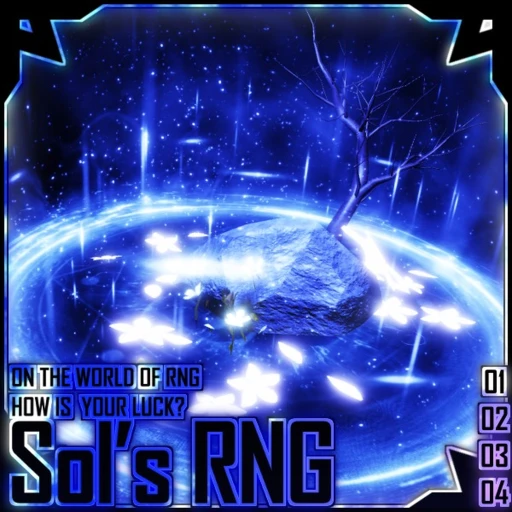
Two of the most-played games on Roblox right now could not be more different from each other. Sol's RNG is a luck-based collecting game where you roll for incredibly rare auras and build a collection worth bragging about. Blade Ball is a fast-paced competitive arena where a lethal ball flies at your face and you need split-second reflexes to deflect it. One game tests your patience. The other tests your nerves. Both have millions of dedicated players who swear theirs is the better experience.
This comparison breaks down everything that matters — gameplay loops, progression systems, trading, player counts, monetization, mobile experience, and community — so you can figure out which game deserves your time. Or maybe you will walk away wanting to play both. That is a perfectly valid answer too.
Sol's RNG vs Blade Ball — Quick Stats (2026)
| Category | Sol's RNG | Blade Ball |
|---|---|---|
| Genre | RNG / luck-based collecting | Competitive deflection PvP |
| Place ID | 15532962292 | 13772394625 |
| Total Visits | Growing rapidly | 6B+ |
| Concurrent Players | 62K+ | High (varies by event) |
| Core Loop | Roll, collect, trade, craft | Deflect, survive, eliminate |
| Skill Type | Patience and luck | Timing and reflexes |
| Session Length | Long / AFK-friendly | Short rounds (1-3 min) |
| Trading | Full player-to-player trading | No trading system |
| Mobile-Friendly | Yes | Yes |
| Free-to-Play | Yes | Yes |
Gameplay — What Do You Actually Do?
Sol's RNG
Sol's RNG is built around one core action: rolling. You press a button, the game generates a random result, and you either get a common aura you have seen a thousand times or something so rare that your hands start shaking. That is the entire premise, and it has captivated hundreds of thousands of players who cannot stop chasing the next roll.
The aura system is where the depth lives. Every aura has a rarity tier, ranging from common drops that appear on nearly every roll to legendary and mythical auras with odds measured in the millions. When you land something truly rare, the game announces it to the server. Other players see your pull. The social validation is immediate and powerful. You did not just get lucky in private — everyone knows you got lucky, and that shared moment creates genuine excitement.
Beyond rolling, Sol's RNG offers a crafting system that lets you combine lower-tier auras into higher-tier ones. This gives purpose to duplicate drops that would otherwise feel like wasted rolls. The biome system adds another layer by changing the available aura pool depending on which area you are in. Certain rare auras only appear in specific biomes during specific conditions, which means knowledgeable players can optimize their rolling strategy rather than leaving everything purely to chance.
Trading is the other half of the Sol's RNG experience. Rare auras have real value within the community, and the player-to-player trading system allows you to negotiate deals, flip items for profit, and build your collection through smart trades rather than lucky rolls alone. Some players spend more time trading than rolling. The economy that has grown around Sol's RNG auras is surprisingly deep, with community-maintained value lists and Discord servers dedicated to brokering trades.
Blade Ball
Blade Ball drops you into an arena with a group of other players and introduces a simple, terrifying concept: a glowing ball is going to fly at someone, and when it targets you, you need to swing your sword at exactly the right moment to deflect it toward another player. Miss the timing and you are eliminated. The ball speeds up after every deflection. Players drop one by one. The last person standing takes the win.
The beauty of Blade Ball is how much tension it extracts from a single mechanic. When you are one of the final three players and the ball is screaming toward you at maximum speed, the pressure is real. Your palms sweat. Your timing has to be frame-perfect. And when you nail the deflection and send it rocketing toward the last opponent, the satisfaction is enormous. Blade Ball turns a simple idea into a genuine adrenaline rush.
Abilities add strategic depth to the deflection loop. As you play and earn currency, you unlock special sword abilities that modify how you interact with the ball. Some abilities let you curve the ball mid-flight, making your deflections harder to read. Others give you a brief invulnerability window or teleport you out of the ball's path. Choosing the right ability for your playstyle — and knowing when to deploy it during a round — separates competent players from dominant ones.
Rounds are short by design. A typical match lasts between one and three minutes, and queue times between rounds are minimal. This rapid cycling makes Blade Ball dangerously addictive. There is always time for one more round, and that one more round turns into twenty before you realize an hour has passed.
The Core Difference — Luck vs Skill
This is the fundamental divide between these two games, and it is worth examining honestly because it shapes every other aspect of the experience.
Sol's RNG is a game where outcomes are determined primarily by random number generation. You can optimize your approach — choosing the right biome, using luck boosts, rolling during events with improved odds — but at the end of the day, whether you pull a one-in-a-million aura depends on factors outside your control. Some players will roll a mythical aura on their tenth try. Others will roll ten thousand times and never see one. The game is honest about this. It is called Sol's RNG for a reason.
This luck-driven loop creates a specific emotional experience. The anticipation before each roll, the dopamine spike when something rare appears, the disappointment of another common drop followed by the compulsion to try again — Sol's RNG taps into the same psychological reward system that makes gacha games and slot machines compelling. It is not manipulative in a predatory way, but it is honest about what it is: a game designed to make you feel the thrill of beating the odds.
Blade Ball sits at the opposite end of the spectrum. Outcomes are determined almost entirely by your skill. Your reflexes, your timing, your ability usage, your positioning in the arena — all of it is within your control. When you win a round of Blade Ball, you earned that win. When you lose, it was because you mistimed a deflection or made a poor ability choice, not because the game generated an unfavorable number. The satisfaction of improvement in Blade Ball is deeply personal in a way that Sol's RNG cannot replicate.
Neither approach is objectively better. Some people find fulfillment in the chase — the dream of that one incredible pull that validates all the time spent rolling. Others need agency. They need to know that their outcomes reflect their effort and ability. Understanding which type of reward motivates you is the most important factor in choosing between these two games.
Progression and Economy
Sol's RNG Progression
Progression in Sol's RNG is measured by your collection. Every new aura you obtain — whether through rolling, crafting, or trading — adds to your catalog. Rare auras serve as status symbols within the community. Walking around a server with a mythical-tier aura equipped tells other players that you either got incredibly lucky or made incredibly smart trades. Both paths earn respect.
The crafting system provides a secondary progression path that rewards consistent play. Even when your rolls produce nothing exciting, those common and uncommon auras can be combined through crafting recipes to create higher-tier results. This ensures that every session contributes toward progress, even when luck is not on your side. Long-term players accumulate crafting materials naturally, which means patience and persistence eventually pay off regardless of RNG outcomes.
The trading economy adds a whole metagame on top of the rolling and crafting loops. Understanding aura values, recognizing when something is underpriced, knowing which auras are trending up in demand — these are skills that have nothing to do with luck and everything to do with knowledge and negotiation ability. Some of the most successful Sol's RNG players are not the luckiest rollers. They are the sharpest traders.
Blade Ball Progression
Blade Ball ties progression to currency earned through gameplay. Winning rounds and completing matches awards coins that you spend on new abilities and cosmetic swords. The system is straightforward: play more, earn more, unlock more. There is no randomness in what you receive — you choose exactly which ability or skin you want and work toward it.
The real progression in Blade Ball is internal and skill-based. When you first start playing, you are happy to survive past the first few eliminations. A week later, you are consistently making it to the final five. A month in, you are winning rounds regularly and experimenting with advanced ability timings. This skill curve is visible and measurable, which makes improvement feel tangible in a way that luck-based progression cannot match.
Limited-time events introduce exclusive abilities and swords that create short-term urgency. These events keep the content rotation fresh and give long-term players something to chase beyond their regular unlocks. The event cadence has been consistent throughout 2026, with new content dropping roughly every few weeks.
Edge: Sol's RNG for depth and economy. Blade Ball for clarity and agency. Both systems work well for what they are trying to achieve.
Trading — Where Sol's RNG Dominates
If trading matters to you, this category is not close. Sol's RNG has one of the most active player-driven economies on Roblox. Auras function as a currency of their own, with values that fluctuate based on rarity, demand, and supply. The community maintains tier lists and value guides that are updated regularly. Discord servers dedicated to Sol's RNG trading have thousands of active members negotiating deals at any given hour.
The trading experience in Sol's RNG adds hundreds of hours of potential gameplay that has nothing to do with rolling. Learning the market, identifying good deals, flipping items for profit, and building relationships with reliable trading partners — all of this constitutes a full game within the game. Players who enjoy the economic side of gaming will find Sol's RNG deeply rewarding.
Blade Ball does not have a trading system. Abilities and cosmetics are earned or purchased individually. There is no secondary market, no player economy, and no way to exchange items with other users. This is not a flaw — Blade Ball is a competitive arena game, and trading would not add anything meaningful to its core experience. But if you are the type of player who enjoys trading as a primary activity, Blade Ball simply does not offer that.
Player Count and Community (July 2026)
Sol's RNG consistently pulls 62,000+ concurrent players during peak hours, which is a staggering number that places it among the most-played experiences on the entire Roblox platform. The community is highly engaged, with active Discord servers, YouTube content creators producing pull videos and trading guides, and a subreddit where players share their rarest drops and discuss market trends. The social aspect of Sol's RNG — showing off rare auras, comparing collections, negotiating trades — keeps players coming back beyond the rolling loop itself.
Blade Ball has surpassed 6 billion total visits and maintains consistently strong concurrent numbers. Its community skews toward competitive players who enjoy analyzing ability tier lists, sharing clutch play clips, and discussing balance changes. Content creators on YouTube and TikTok produce highlight reels and tutorial content that drives new player interest. The community is welcoming to newcomers, partly because Blade Ball's simple premise makes it easy to understand what you are watching even if you have never played.
Both communities are active and passionate, but they express that passion differently. Sol's RNG players bond over shared luck (or lack thereof) and trading experiences. Blade Ball players bond over shared competition and skill improvement. Neither community has a toxicity problem beyond what you would expect from any popular online game.
Monetization and Game Passes
Sol's RNG offers game passes and Robux purchases that primarily accelerate the rolling experience. Luck boosts increase your odds of pulling rarer auras. Speed potions let you roll faster. Extra inventory slots give you more room to store your collection. Auto-roll features let you accumulate results while away from your screen. None of these purchases guarantee specific outcomes — you are paying for more chances and faster chances, not for guaranteed results. Free players can access every aura in the game through patience and persistence.
Blade Ball sells game passes focused on cosmetic acceleration and convenience. Premium currency lets you unlock abilities and swords faster than grinding alone. Event passes occasionally appear with exclusive cosmetic rewards. The monetization is restrained and never feels like it is pressuring you to open your wallet. Paying players do not gain competitive advantages — a free player with better timing will beat a whale with every ability unlocked every single time.
Both games are fair in their monetization. Sol's RNG charges for convenience in a luck-based system, while Blade Ball charges for cosmetic shortcuts in a skill-based system. Neither is pay-to-win in a meaningful sense, though Sol's RNG comes closer to the line since luck boosts directly influence your chance of obtaining rare items. The key distinction is that Sol's RNG has no PvP component where those advantages would affect other players.
Edge: Blade Ball for pure fairness. Sol's RNG is fair within its own context, but spending Robux has a more direct impact on outcomes.
Mobile Experience
Sol's RNG is one of the best mobile games on the Roblox platform, full stop. The gameplay requires minimal input — you are pressing a button to roll and navigating menus to trade and craft. There are no precision timing requirements, no fast-twitch mechanics, and no scenarios where touchscreen input puts you at a disadvantage. You can roll for auras on the bus, in bed, or during a boring class with zero loss in gameplay quality compared to desktop. The AFK-friendly nature of the game means you can even set up auto-rolls and let your phone do the work.
Blade Ball also performs well on mobile thanks to its clean input model. The core mechanic — tapping to swing your sword at the right moment — maps naturally to touchscreen controls. You do not need complex input sequences or rapid button combinations. A single well-timed tap is all it takes. Mobile Blade Ball players can absolutely compete with desktop players, which is rare for competitive Roblox games. The short round format also suits mobile play sessions where you might only have a few minutes available.
Edge: Sol's RNG by a small margin. Both work great on mobile, but Sol's RNG requires literally zero mechanical precision, making it the ultimate mobile Roblox experience.
Social Experience and Content Creation
Sol's RNG thrives as a social experience because of the shared emotional rollercoaster it creates. When someone in your server pulls a mythical aura, the entire chat erupts. When you are on a dry streak of ten thousand common rolls, other players sympathize because they have been there too. The trading system forces genuine social interaction — you have to negotiate, evaluate offers, and build trust with other players. For introverted players, this might feel uncomfortable. For social players, it is the beating heart of the game.
Content creation around Sol's RNG focuses on two formats: pull videos and trading content. Pull videos capture the moment of landing incredibly rare auras, and the best ones build genuine tension through long rolling sessions that finally pay off. Trading content showcases market knowledge and negotiation skills, often teaching viewers how to grow their collection without relying solely on luck. Both formats perform extremely well on YouTube and TikTok because they tap into universal emotions — hope, excitement, disbelief.
Blade Ball's social experience is more competitive than collaborative. You are playing against other people, not alongside them. The social bonds form through repeated encounters — fighting the same skilled player across multiple rounds, recognizing regular opponents, developing rivalries. It is a different kind of social connection, built on respect and competition rather than shared luck and negotiation.
Blade Ball content creation centers on highlight reels, clutch plays, and ability breakdowns. The visual spectacle of a perfectly timed deflection at maximum ball speed translates brilliantly to short-form video. Tutorial content performs well because the skill gap between beginners and experts is large enough that learning opportunities are abundant. Top Blade Ball content creators build audiences through a combination of raw skill display and educational content.
Earning Free Robux While You Play
Both games pair exceptionally well with Earnaldo for earning free Robux on the side. Sol's RNG is particularly well-suited to multitasking because the game supports AFK rolling and does not require constant attention. You can set up your rolls in Sol's RNG and complete Earnaldo tasks in between checking your results. The passive nature of the gameplay means you are never forced to choose between playing and earning.
Blade Ball works with Earnaldo during the downtime between rounds. The 10 to 30 second queue time between matches provides natural windows for completing quick tasks. Since rounds are short, you can alternate between playing and earning without losing momentum in either activity.
For detailed strategies on maximizing your Robux earnings alongside these games, check out our Sol's RNG free Robux guide and Blade Ball free Robux guide. You can also grab the latest active codes in our Sol's RNG codes and Blade Ball codes pages.
Earn Free Robux for Sol's RNG or Blade Ball
Complete simple tasks on Earnaldo and withdraw real Robux — no downloads, no generators, no scams.
Longevity and Replayability
Sol's RNG has theoretically infinite replayability because the collection is never truly complete. New auras are added regularly, the trading market shifts constantly, and the low odds on rare drops mean you can always chase something you do not have yet. The game rewards long-term dedication. Players who have been rolling since launch have collections that represent hundreds of hours of play, and they are still logging in because there is always a new aura to pursue or a new trade to negotiate.
The risk with Sol's RNG is burnout from the repetitive nature of the core loop. Rolling is, at its mechanical core, pressing the same button thousands of times. The emotional highs are real but infrequent, and the valleys between them can feel long and unrewarding. Players who need constant stimulation may find themselves drifting away during dry streaks, even if they plan to come back.
Blade Ball's replayability comes from the competitive drive to improve and the variety that human opponents provide. No two rounds play out identically because every opponent brings different timing, different abilities, and different strategies. The skill ceiling is high enough that even experienced players can identify areas for improvement. Ability updates and balance changes keep the meta shifting, which prevents the game from feeling solved.
The risk with Blade Ball is that the core format — deflect the ball, last player standing — can feel repetitive once the initial novelty wears off. Abilities add variety, but the fundamental loop remains the same. Players who need mechanical variety may find themselves looking for additional games to rotate into their schedule.
Both games solve their repetition problem through consistent content updates. Sol's RNG adds new auras, biomes, and events. Blade Ball adds new abilities, swords, and seasonal modes. As long as both development teams maintain their current update pace, neither game is at risk of feeling abandoned or stagnant.
Head-to-Head Verdict — Sol's RNG vs Blade Ball in 2026
The Verdict
Choose Sol's RNG if you love collecting, trading, and the thrill of beating the odds. Sol's RNG is perfect for players who enjoy building something over time — a collection, a reputation, an understanding of a complex economy. It is ideal for mobile play, AFK sessions, and social interactions built around trading and shared excitement. If the idea of rolling a one-in-a-million aura and watching the server react sounds thrilling, Sol's RNG was made for you.
Choose Blade Ball if you want competitive action where your skill determines the outcome. Blade Ball is perfect for players who need agency — the knowledge that every win was earned and every loss was a learning opportunity. It is ideal for short play sessions, mobile gaming on the go, and anyone who wants fast, intense PvP without spending weeks learning complex systems. If you want your heart rate to spike every time a glowing ball changes direction toward you, Blade Ball delivers.
Overall: These two games serve completely different needs, which makes them excellent companions rather than competitors. Sol's RNG is the game you play when you want to relax, collect, and dream about big pulls. Blade Ball is the game you play when you want to compete, react, and prove yourself against other players. Playing both is not just a compromise — it is genuinely the best approach for getting the full range of what Roblox has to offer in 2026.
Who Should Play What?
- You love collecting and trading: Sol's RNG. Its aura economy and trading system create a full metagame built around acquisition and negotiation.
- You want competitive PvP: Blade Ball. Pure skill-based competition with fast rounds and a high skill ceiling.
- You play mostly on mobile: Both work great, but Sol's RNG requires zero mechanical skill and supports AFK play, making it the ultimate mobile experience.
- You enjoy the thrill of randomness: Sol's RNG. The dopamine hit of a rare pull is unmatched by anything in Blade Ball.
- You need agency over outcomes: Blade Ball. Your results are determined entirely by your timing and decision-making.
- You want short sessions: Blade Ball. One-to-three-minute rounds fit into any schedule.
- You want to AFK or multitask: Sol's RNG. Auto-roll features and low input requirements make it perfect for background play.
- You want to earn Robux while playing: Both pair well with Earnaldo, but Sol's RNG's passive gameplay makes multitasking effortless.
For deeper dives into each game individually, check out our full guides: Sol's RNG guide and Blade Ball guide.
Frequently Asked Questions
Blade Ball has the edge in total visits with over 6 billion. However, Sol's RNG regularly hits 62,000+ concurrent players, which places it among the most-played games on the platform at any given moment. Both are firmly in the top tier of Roblox popularity, and comparing raw numbers between a luck-based collector and a PvP arena is not entirely meaningful since they attract different audiences.
Sol's RNG has a full player-to-player trading system for auras, which is a major part of its economy and community. Blade Ball does not feature trading. Its cosmetics and abilities are earned or purchased individually. If trading is important to you, Sol's RNG is the clear choice between these two.
Both are accessible in different ways. Sol's RNG requires almost no mechanical skill — you roll for auras and the game handles the rest. Blade Ball is easy to understand but demands reflexes and timing to survive. For the most relaxed experience, Sol's RNG wins. For casual competition that still gets your heart racing, Blade Ball is the pick.
Yes, both games run on the Roblox mobile app for iOS and Android. Sol's RNG works perfectly on mobile since it requires minimal input — just tapping to roll. Blade Ball also plays well on touchscreens thanks to its simple tap-to-deflect mechanic. Both are strong mobile experiences, with Sol's RNG having a slight edge due to its AFK-friendly nature.
Sol's RNG is not pay-to-win in a traditional sense since there is no PvP combat. Spending Robux can buy luck boosts, extra rolls, and speed potions that accelerate your progress. Free players can still obtain every aura in the game — it just takes more time. The luck-based nature means even paying players are not guaranteed rare drops on any individual roll.
Both receive frequent updates throughout 2026. Sol's RNG regularly adds new auras, biomes, crafting recipes, and limited-time events. Blade Ball consistently introduces new abilities, swords, and seasonal content. Neither game has gone through a prolonged content drought, and both development teams are actively maintaining and expanding their titles.