Speed Run 4 vs Tower of Hell (2026) -- Which Roblox Game Is Better?
Roblox obby games have been a staple of the platform since the very beginning, and two titles stand head and shoulders above the rest in 2026: Speed Run 4 and Tower of Hell. One is a polished, handcrafted speedrunning experience with 45 levels across seven visually distinct dimensions. The other is a brutal, randomly generated tower climb with no checkpoints and roughly 28.4 billion visits to its name (as of August 10, 2026). Both test your platforming skills, but they do it in fundamentally different ways.
Whether you are a veteran obby player looking for your next challenge or a newcomer trying to figure out which game will hook you, this comparison covers everything you need to know. We will break down difficulty curves, level design philosophies, replayability, and the speedrun communities that have formed around each game. By the end, you will know exactly which obby matches your skill level and preferences.
Let us start with the numbers before we get into the details.
Quick Stats: Speed Run 4 vs Tower of Hell at a Glance
| Category | Speed Run 4 | Tower of Hell |
|---|---|---|
| Developer | Vurse | YXCeptional Studios |
| Roblox Place ID | 183364845 | 1962086868 |
| Total Visits (as of Aug 10, 2026) | 1.74B+ | 28.4B+ |
| Genre | Speedrun Obby | No-Checkpoint Obby |
| Total Levels | 45 (7 dimensions) | Randomized towers |
| Checkpoints | Yes (per level) | None |
| Level Generation | Handcrafted (static) | Procedural (random sections) |
| Difficulty Curve | Gradual (easy to hard) | Steep from the start |
| Multiplayer | Race against other players | Race to the top |
| Game Passes | Speed Coil, Gravity Coil | Various mutators, effects |
| Speedrun Leaderboards | Informal (community-tracked) | In-game time tracking |
| Average Session | 15-30 minutes | 10-20 minutes per tower |
The visit count difference alone tells a story -- Tower of Hell is one of the most played games in Roblox history. But numbers alone do not determine which game is better for you. Let us look at what makes each one tick.
Difficulty and Challenge Design
Speed Run 4: A Measured Climb
Speed Run 4 handles difficulty progression the way a well-designed platformer should. The first few levels are straightforward -- simple jumps, wide platforms, and forgiving gaps that let beginners find their footing. As you advance through the seven dimensions, the difficulty ramps steadily. Platforms get smaller, gaps get wider, moving obstacles appear more frequently, and the timing windows tighten. By the time you reach the later dimensions, you are executing precise jumps that require genuine skill and muscle memory.
The checkpoint system is critical to how Speed Run 4 manages frustration. Each of the 45 levels acts as its own checkpoint, meaning a failed jump only sends you back to the start of that particular level rather than the beginning of the entire game. This design choice makes progression feel achievable even for less skilled players. You can struggle with a difficult level for ten minutes, finally clear it, and know that your progress is saved. The satisfaction of conquering a tough level is amplified because you never have to redo content you have already beaten.
For skilled players, the difficulty ceiling comes from speed optimization rather than raw completion. Getting through a level is one thing. Getting through it in record time is another challenge entirely. The speedrun community has found optimal routes, precise jump angles, and movement exploits that shave seconds off completion times. This transforms an already completed level into an entirely different challenge when you are chasing a personal best.
The downside is that once you have mastered all 45 levels, the fixed design means there are no surprises left. You know every platform, every obstacle, and every jump. For players who crave novelty, this predictability can lead to burnout after full completion.
Tower of Hell: Unforgiving by Design
Tower of Hell does not ease you in. From the moment you spawn at the base of a randomly generated tower, the game expects consistent execution. There are no checkpoints. None. If you fall from the eighth section of a twelve-section tower, you go back to the very bottom. This single design decision defines the entire Tower of Hell experience and separates it from nearly every other obby on Roblox.
The difficulty comes from two sources: the individual sections and the cumulative pressure of chaining them together. Each tower is assembled from a pool of pre-built sections that range from relatively manageable to genuinely punishing. Some sections feature narrow beams over empty space. Others involve spinning obstacles, wall jumps, or precision timing on moving platforms. Individually, most sections are achievable with practice. The challenge is executing them back to back without a single mistake across the entire tower.
This no-checkpoint philosophy creates an emotional rollercoaster that Speed Run 4 cannot replicate. The tension of being nine sections up, knowing that one missed jump erases everything, produces an adrenaline response that makes every successful jump feel enormous. Reaching the top of a difficult tower is one of the most satisfying experiences in any Roblox obby precisely because the stakes are so high throughout the entire climb.
The random generation adds another difficulty layer. Because you cannot memorize tower layouts, you must adapt your approach to unfamiliar section combinations on every attempt. A section that feels easy in isolation might become much harder when it follows a section that leaves you at an awkward angle or with forward momentum you need to kill. This unpredictability keeps veteran players on their toes in a way that fixed level design cannot.
Edge: Tower of Hell for raw difficulty and challenge intensity. The no-checkpoint design creates stakes that Speed Run 4's forgiving structure cannot match. Speed Run 4 wins for difficulty accessibility -- its gradual curve welcomes players of all skill levels, while Tower of Hell's approach can be demoralizing for beginners.
Level Design and Visual Variety
Speed Run 4: Seven Handcrafted Dimensions
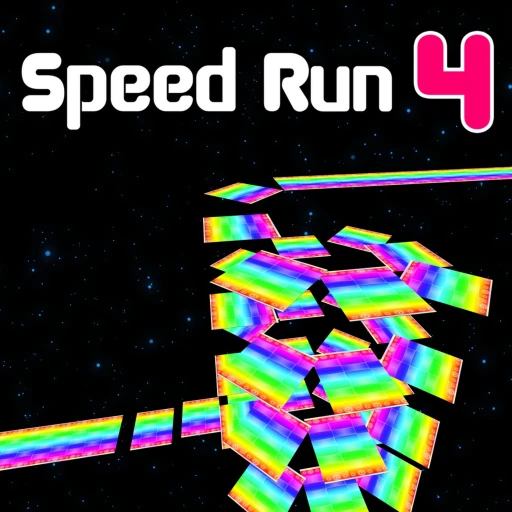
Speed Run 4's greatest visual strength is its dimension system. The 45 levels are spread across seven distinct visual themes, each with its own color palette, aesthetic, and atmosphere. You start in a relatively normal environment and progressively move through dimensions that become increasingly surreal and abstract. One dimension might feature neon-soaked platforms against a cosmic backdrop. Another might use natural terrain with organic shapes. The variety keeps the visual experience fresh across the entire game.
Because every level is handcrafted, the design quality is consistent. Each jump is intentionally placed, every obstacle is deliberately positioned, and the visual elements support the gameplay rather than obscuring it. You can always tell what is a platform and what is decoration, which is more important than it might seem in a genre where visual clarity directly impacts playability.
The artistic direction gives each dimension a sense of identity. Players develop favorites and remember specific levels not just by their difficulty but by their look and feel. Level 32 in the neon dimension feels completely different from level 8 in the starter dimension, even though both test similar platforming skills. This variety makes playing through the entire game feel like a journey rather than a repetitive grind.
The limitation is static content. Once you have seen all seven dimensions and their associated levels, there is nothing new to discover visually. The game looks the same on your hundredth playthrough as it did on your first.
Tower of Hell: Infinite Variety, Functional Aesthetic
Tower of Hell takes a different approach to visual design. The focus is on functional clarity rather than artistic ambition. Sections use clean, readable geometry with distinct colors that indicate difficulty or section type. The visual language is simple: you can immediately identify platforms, killbricks, trampolines, and moving elements based on their appearance. This readability is essential because you are encountering unfamiliar sections constantly, and any moment of visual confusion could end your run.
The random generation system draws from a large pool of community-created and developer-made sections, which means the visual variety comes from structural diversity rather than thematic changes. You will see hundreds of different platform configurations, obstacle layouts, and spatial challenges. No two towers look the same from a layout perspective, even if the individual visual elements remain consistent.
Special tower events add visual flair on occasion. Inverted towers, fog towers, and other modifier-based events change the visual presentation and create memorable moments that stand out from standard gameplay. These events are infrequent enough to feel special when they appear.
The trade-off is that Tower of Hell's visual presentation is utilitarian. It serves the gameplay perfectly but does not create the same sense of wonder or artistic progression that Speed Run 4's dimension system delivers. If you care about visual storytelling in your obby experience, Speed Run 4 is the more satisfying choice.
Edge: Speed Run 4 for visual design and artistic variety. The seven dimensions create a more memorable and varied visual journey. Tower of Hell wins for structural variety since no two towers play the same, but its visual presentation is functional rather than inspired.
Replayability and Longevity
Speed Run 4: Speedrun Culture Extends the Lifespan
Speed Run 4's replayability challenge is straightforward: the game has 45 fixed levels, and once you have beaten them all, the content is technically complete. There are no new levels to discover, no procedural generation to create fresh challenges, and no randomization to keep you guessing. On paper, this should mean the game has a natural endpoint. In practice, the speedrun community has extended the game's lifespan far beyond what the base content alone could support.
The speedrun scene around Speed Run 4 is one of the most active in the Roblox obby community. Players compete for the fastest completion times on individual levels and full-game runs. Optimal routes have been dissected, documented, and debated extensively. Movement tech discoveries -- like specific jump angles and momentum conservation tricks -- continue to emerge years after the game's release, which keeps the competitive metagame evolving.
For casual players, the game offers replay value through the simple pleasure of improvement. Replaying a level you struggled with and breezing through it is satisfying, and gradually reducing your total completion time provides a clear metric for personal growth. The game pass items -- Speed Coil and Gravity Coil -- add a wrinkle by changing your movement capabilities, which effectively creates different versions of the same levels.
The social replay value is also strong. Racing friends through levels simultaneously is consistently entertaining, and the competitive dynamic turns a solo experience into a party game. Speed Run 4 is one of those titles that players return to whenever friends are online and looking for something quick and competitive.
Tower of Hell: Procedural Generation Is the Engine
Tower of Hell's replay value is built into its core design. Because every tower is randomly generated from a pool of sections, you genuinely never play the same tower twice. This is the game's greatest strength and the primary reason it has accumulated roughly 28.4 billion visits as of August 10, 2026. Players can return day after day and face completely new challenges without any developer intervention.
The no-checkpoint design contributes to replayability through sheer repetition. You will attempt dozens or hundreds of towers before consistently reaching the top, and each attempt teaches you something about a specific section or section combination. The learning curve is the replay loop -- you are not replaying content you have mastered but rather attempting to master content you have not yet conquered.
The tower rotation timer adds urgency. Each tower is available for a limited time before a new one generates, creating a "now or never" pressure that keeps sessions intense. If you do not complete the current tower before the timer expires, that specific combination of sections is gone forever. This ephemeral quality gives every tower a sense of significance that static content cannot replicate.
Tower of Hell also benefits from its massive player base. With tens of thousands of concurrent players, there is always someone to compete against. Watching another player reach the top just ahead of you provides powerful motivation to improve. The visible competition in every server transforms a solo challenge into a shared experience.
Edge: Tower of Hell. Procedural generation gives Tower of Hell functionally infinite replayability. Speed Run 4's speedrun community adds significant longevity, but it cannot match the freshness of never playing the same tower twice. For players who prioritize always having something new to tackle, Tower of Hell is the clear winner.
Speedrun Culture and Competitive Scene
Speed Run 4: The Purist's Platform
Speed Run 4 is a speedrunner's game by nature. The name is not subtle about it. The fixed level design means every player faces identical challenges, which creates a level playing field for time comparisons. This is essential for a healthy speedrun community -- when the content is the same for everyone, the only variable is player skill.
The community tracks records across multiple categories: individual level times, full-game completions, dimension-specific runs, and various challenge categories like no-coil runs or backwards completions. YouTube is home to hundreds of Speed Run 4 record attempt videos, and the comment sections serve as informal leaderboards where players claim and contest records.
The speedrun meta in Speed Run 4 is mature and well-documented. Movement optimization guides, frame-by-frame analyses of record runs, and tutorials on advanced techniques are readily available. New players entering the competitive scene have a wealth of resources to learn from, which lowers the barrier to competitive participation even though the execution barrier remains high.
Tower of Hell: Competitive Climbing
Tower of Hell's competitive scene is different because the random generation means direct time comparisons between different towers are not meaningful. Instead, the competition is contextual -- who can reach the top of this specific tower the fastest, right now, in this server? The competitive element is immediate and social rather than record-based and archival.
The game does track completion times, and players compete for personal bests and server-wide bragging rights. Certain sections have become infamous within the community, and executing a notoriously difficult section cleanly earns respect from other players in the server. The social recognition system is organic rather than formal, but it functions effectively as a competitive motivator.
Content creators have built significant followings around Tower of Hell challenge content. "First to the top" races, difficult section compilations, and challenge modifier runs generate millions of views. The game's inherent drama -- will they make it or will they fall? -- makes for compelling content that maintains viewer interest across countless videos.
Edge: Speed Run 4 for structured competitive speedrunning. Fixed levels enable meaningful time comparisons and a traditional speedrun community. Tower of Hell wins for casual competitive play and social competition within servers, but its randomized nature limits formal competitive structure.
Monetization and Accessibility
Both games are free to play with optional game passes. Speed Run 4 offers the Speed Coil and Gravity Coil, which alter your movement capabilities and effectively create new ways to experience existing levels. These passes provide tangible gameplay changes without gating core content.
Tower of Hell offers a broader range of game passes, including visual effects, mutators, and convenience features. Some passes are purely cosmetic, while others like the double jump mutator provide gameplay benefits that make climbing easier. The core experience remains accessible without any purchases, but the game passes can significantly change how you interact with the towers.
Neither game is pay-to-win in a competitive sense. Speed Run 4's coils are widely used but also widely available, and serious speedrunners compete in both coil and no-coil categories. Tower of Hell's mutators provide advantages but do not guarantee completion -- skill remains the primary determinant of success.
Edge: Tie. Both games handle monetization fairly. Core content is free, optional purchases enhance the experience without creating unfair advantages, and neither game pressures you to spend Robux.
The Verdict
Choose Speed Run 4 if...
You want a polished, handcrafted obby experience with a satisfying difficulty curve, beautiful visual variety across seven dimensions, and a deep speedrun community that rewards optimization and mastery. Speed Run 4 is the better choice for players who enjoy checkpoints, gradual progression, and competing for the fastest times on fixed courses. With 1.7 billion visits and a dedicated speedrun culture, it remains one of the definitive Roblox platforming experiences in 2026.
Choose Tower of Hell if...
You want the ultimate obby challenge with no checkpoints, infinite variety through random generation, and the adrenaline rush of knowing every jump matters. Tower of Hell is the better choice for players who thrive under pressure, enjoy adapting to new challenges every session, and want a game that always has something fresh to offer. Its roughly 28.4 billion visits speak to a universal appeal that has made it one of the most played games in Roblox history.
Who Should Play What?
Play Speed Run 4 if you:
- Prefer checkpoints and gradual difficulty progression
- Enjoy handcrafted level design with visual variety
- Want to compete for speedrun records on fixed courses
- Are new to Roblox obbies and want a forgiving entry point
- Like racing friends through levels simultaneously
- Appreciate distinct visual themes and artistic direction
- Enjoy mastering specific levels and optimizing routes
Play Tower of Hell if you:
- Thrive on high-stakes platforming with no safety net
- Want infinite variety through procedural generation
- Enjoy the adrenaline of no-checkpoint obby challenges
- Like competing against other players in real-time
- Prefer games that always feel fresh and unpredictable
- Want one of the largest and most active Roblox communities
- Enjoy the satisfaction of conquering genuinely difficult content
For more details on each game individually, check out our Speed Run 4 guide and Tower of Hell guide.
Earn Free Robux While You Play
Whether you choose Speed Run 4, Tower of Hell, or both, Earnaldo helps you earn free Robux through simple tasks. No surveys, no scams -- just real Robux rewards.
Frequently Asked Questions
Yes, Tower of Hell is generally harder than Speed Run 4. The no-checkpoint design means a single mistake sends you back to the bottom, and the randomly generated tower sections ensure you cannot fully memorize routes. Speed Run 4 has checkpoints at the start of each level, making progress easier to retain. Tower of Hell demands consistent execution over long stretches, which significantly raises the difficulty.
Speed Run 4 is much better for beginners. Its checkpoint system means new players can progress at their own pace without losing all their work to a single mistake. The early levels are relatively easy and teach platforming fundamentals gradually. Tower of Hell throws you into the deep end with no checkpoints and expects consistent execution from the start.
Yes, both support multiplayer. Speed Run 4 lets you race friends through levels simultaneously, and the competitive aspect of seeing who finishes first adds excitement. Tower of Hell places all players in the same tower, creating a visible race to the top where you can see other players ahead of or behind you. Both games are more fun with friends.
Tower of Hell has stronger replay value because its randomly generated towers mean you never play the same course twice. Speed Run 4 has fixed levels that remain the same every time, so once you have completed and optimized all 45 levels, the replay incentive drops. However, Speed Run 4's speedrun community keeps the game alive for competitive players chasing faster times.
Tower of Hell periodically releases codes for cosmetic items and effects. Check our Tower of Hell codes guide for the latest working codes. Speed Run 4 has a more limited codes system, but occasional promotional codes do appear. Neither game gates significant gameplay content behind codes.
Tower of Hell has a substantially larger player base with about 28.4 billion total visits compared to Speed Run 4's roughly 1.74 billion, as of August 10, 2026. Tower of Hell consistently pulls higher concurrent player counts and has a more active community across social media and content creation platforms. Speed Run 4 maintains a loyal player base but operates at a smaller scale.
Speed Run 4 and Tower of Hell represent two philosophies of obby design that have stood the test of time on Roblox. One rewards careful mastery of fixed challenges. The other demands adaptability in the face of constant novelty. Both are excellent platforming experiences in 2026, and the best choice depends entirely on whether you prefer the comfort of checkpoints or the thrill of risking it all.