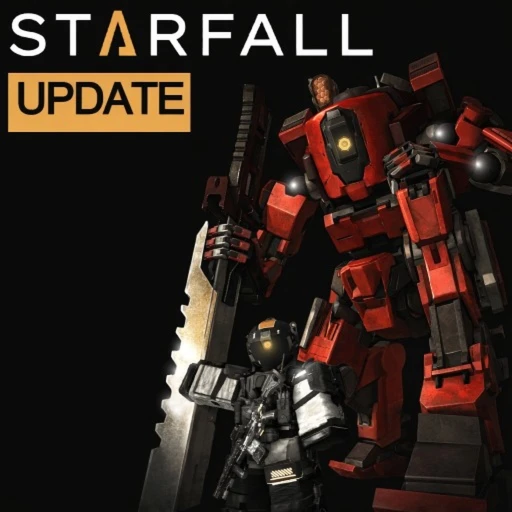
STARFALL vs RIVALS: Mech Warfare or FPS Precision in 2026?
Two of Roblox's most ambitious combat games are pulling players in different directions. STARFALL puts you in the cockpit of a customizable mech with three distinct classes and both PvE and PvP modes. RIVALS delivers a refined first-person shooter experience that consistently draws over 110,000 concurrent players. Both games demand skill, reward investment, and push the boundaries of what Roblox can do. But they deliver fundamentally different power fantasies, and this comparison will help you figure out which one matches your appetite.
Quick Stats Comparison
| Feature | STARFALL | RIVALS |
|---|---|---|
| Genre | Mech PvE/PvP | First-Person Shooter |
| Mech Classes / Weapons | 3 Mech Classes | 30+ Weapons |
| Peak CCU | 25K+ | 110K+ |
| Place ID | 102529979143737 | 17625359962 |
| PvE Content | Full Campaign + Raids | Limited (Training Range) |
| PvP Modes | Team Deathmatch, Siege | TDM, Search, CTF, Ranked |
| Mobile Support | Yes (with limitations) | Yes |
| Free-to-Play | Yes | Yes |
The contrast is immediate. RIVALS is an established powerhouse with a massive player base and a laser focus on FPS gameplay. STARFALL is the newer, more ambitious title that tries to combine PvE and PvP mech combat in a single package. The question is whether STARFALL's ambition translates into a better experience, or whether RIVALS' focused execution wins the day.
Gameplay and Combat Mechanics
STARFALL
STARFALL's defining feature is its mech class system. Three distinct classes offer fundamentally different playstyles, and each one changes how you interact with the game's environments and enemies. The Vanguard class is a frontline brawler with heavy armor, short-range weapons, and a shield system that rewards aggressive positioning. The Sentinel is a mid-range support class with repair drones, area denial tools, and battlefield scanning abilities. The Striker is a light, mobile class built around flanking, aerial combat, and hit-and-run tactics.
What separates STARFALL from other mech games on Roblox is the weight system. Your mech feels heavy in a satisfying way. Turns have momentum, jumps have gravity, and landing from a boost creates a ground impact that affects nearby enemies. The physics sell the fantasy of piloting a massive war machine in ways that lighter, more arcade-style games miss entirely.
The PvE campaign is substantial. Story missions take you across diverse environments, from urban ruins to orbital platforms, fighting AI enemies that employ group tactics and adaptive behaviors. Boss encounters require coordination in co-op mode, with each boss targeting specific weaknesses that different mech classes can exploit. The raid content adds endgame PvE challenges for coordinated teams.
PvP takes the same mech combat and pits teams against each other in arena-style modes. Siege mode, where one team defends a position while the other attacks, is the standout. Class composition matters, and coordinated teams that balance Vanguard shields, Sentinel support, and Striker flanks dominate over disorganized groups regardless of individual skill.
RIVALS
RIVALS does not try to reinvent the FPS genre. Instead, it executes on the fundamentals with a level of polish that few Roblox games match. Movement is tight and responsive. Aim-down-sights feels natural. Recoil patterns are learnable and consistent. The weapon roster covers every archetype from assault rifles to sniper rifles to shotguns, and each weapon has a distinct identity within its category.
The map design is where RIVALS truly excels. Every map is built with competitive play in mind, with clear sightlines, balanced spawns, and multiple viable routes for every engagement. The level designers understand how FPS maps should flow, and the result is that matches feel fair regardless of which side you spawn on.
RIVALS' gunplay has been refined through years of community feedback. The time-to-kill is tuned to reward accuracy without making encounters feel instantly lethal. Skilled players can clutch multi-kill situations through precise aim and smart movement, while newer players do not feel like they die before they can react. This balance is difficult to achieve and RIVALS nails it.
The mode variety is extensive. Team Deathmatch provides the classic experience. Search and Destroy adds strategic depth with no respawns. Capture the Flag rewards map knowledge and team coordination. The ranked mode distills competitive play into a structured format with skill-based matchmaking and seasonal rewards.
Progression and Unlocks
STARFALL
STARFALL's progression system is built around mech customization. As you play, you earn resources that let you upgrade your mech's components: weapons, armor plating, boosters, and utility modules. Each component has multiple tiers, and higher tiers offer meaningful performance improvements alongside visual upgrades.
The class mastery system tracks your experience with each mech class independently. Reaching mastery milestones unlocks class-specific abilities, cosmetic options, and eventually prestige variants that combine elements from multiple classes. The prestige system is the endgame carrot, requiring significant investment in at least two classes to access.
PvE progression feeds directly into PvP readiness. Completing campaign missions and raids awards the same resources used for mech upgrades, creating a pipeline where PvE-focused players can still prepare competitive loadouts without touching PvP until they feel ready. This cross-mode progression is a smart design choice that serves both player types.
The crafting system adds depth. Certain rare components are crafted from materials dropped in specific missions, creating targeted farming goals. The drop rates are transparent, and the crafting interface clearly shows what you need and where to find it.
RIVALS
RIVALS takes a more conventional approach. An account level system unlocks weapons and attachments as you climb. Each weapon has its own leveling track that unlocks optics, grips, barrels, and magazine modifications. The attachment system is deep enough to meaningfully change how a weapon handles without being so complex that it overwhelms new players.
The battle pass system refreshes seasonally with cosmetic tiers. Free track players receive a handful of items per season, while the premium track offers a full cosmetic progression. The pass pricing is moderate and the cosmetic quality has improved significantly with each season.
Ranked progression provides the competitive backbone. Placement matches determine your starting rank, and subsequent matches adjust your rating based on performance. Seasonal rewards include exclusive weapon skins and player titles that signal competitive achievement.
Daily and weekly challenges keep regular players engaged with targeted objectives. These range from simple tasks like "get 50 kills with assault rifles" to more complex goals like "win 5 Search and Destroy rounds without dying." The reward structure is generous enough to feel worthwhile without demanding excessive play time.
Graphics and Visual Design
STARFALL
STARFALL pushes Roblox's visual capabilities. The mech designs are detailed and mechanically plausible, with visible joints, moving parts, and damage states that show battle wear. Environments range from dense urban canyons with volumetric lighting to open desert battlefields with dynamic weather. The particle effects for weapons and boosters are among the best on the platform.
The cockpit view in first-person mode is a highlight. Instrument panels, warning lights, and damage indicators create an immersive piloting experience. Switching between first-person cockpit view and third-person tactical view gives players visual flexibility based on the situation.
Performance can struggle on lower-end devices, particularly during PvE raids with multiple mechs and effects on screen simultaneously. The developers have added quality presets that help, but the game is most impressive on capable hardware.
RIVALS
RIVALS opts for a clean, competitive visual style. Character models are distinct and readable at distance, which matters for a competitive FPS. Weapon models are detailed with smooth reload and firing animations. The visual clarity is outstanding: you never die wondering where the enemy was because the game does not let visual noise interfere with gameplay.
Map environments are varied and well-crafted. Industrial zones, desert compounds, urban streets, and military installations all have distinct visual identities while maintaining the visual clarity that competitive play demands. Dynamic elements like destructible cover and environmental particles add life without compromising readability.
Optimization is a clear strength. RIVALS maintains stable frame rates across a wide range of hardware, which is critical for an FPS. The lowest quality settings still look clean and functional, ensuring that even budget-device players have a competitive experience.
Player Count and Community
RIVALS dominates in player count. With peak CCU regularly exceeding 110,000, it is one of the largest FPS games on the Roblox platform. Matchmaking is virtually instant at any time of day, and the ranked ladder is populated enough to provide fair matches across all skill levels. The competitive community is mature, with established tournament circuits, content creators, and coaching resources.
STARFALL has a growing but smaller player base, with peak CCU around 25,000. The community skews older and more engaged, with active Discord discussions about mech builds, raid strategies, and class balance. The PvE content helps sustain the player base during quieter periods, since players do not need opponents to enjoy the game. PvP matchmaking can have longer queue times during off-peak hours, particularly in the Siege mode.
Content creation ecosystems differ significantly. RIVALS has a massive YouTube and streaming presence, with competitive highlights and educational content dominating. STARFALL's content community focuses more on build guides, PvE walkthroughs, and mech customization showcases. Both communities are welcoming to new players, though RIVALS' larger community inevitably means more varied experiences.
Game Passes and Monetization
STARFALL
STARFALL's Game Passes focus on convenience and cosmetics. A premium pass grants bonus resource earnings and access to exclusive cosmetic paint jobs, priced at 499 Robux. Private server access costs 299 Robux and is popular for coordinated raid groups. A cosmetic mech skin bundle rotates monthly with themed designs ranging from 99 to 349 Robux.
The monetization draws a clear line at cosmetics and convenience. No mech components, weapons, or class abilities are sold for Robux. The premium resource boost accelerates progression but does not grant access to anything unavailable through normal play. This distinction is important for PvP integrity and the developers have been transparent about maintaining it.
RIVALS
RIVALS' monetization centers on its seasonal battle pass, priced at 399 Robux per season. The pass offers weapon skins, character cosmetics, and emotes across 100 tiers. Individual skin bundles are available in the shop, typically ranging from 49 to 299 Robux. A VIP pass provides bonus XP and cosmetic perks for 599 Robux.
Like STARFALL, RIVALS keeps all gameplay-affecting content free. Weapons and attachments are unlocked through play, and no statistical advantage is sold. The battle pass cosmetics are well-designed and have become a significant part of the game's identity, with rare skins from early seasons becoming status symbols in the community.
Social Features
RIVALS benefits from FPS social conventions. In-game voice proximity chat, team communication tools, and a robust party system make coordinating with friends straightforward. The competitive clan system hosts weekly tournaments with leaderboard rewards. Spectator mode supports content creation with free camera controls and player perspective switching.
STARFALL's social features are built around cooperative play. The squad system supports groups of up to four for PvE content and up to six for PvP. In-game communication includes a tactical ping system that lets players mark targets, request support, and coordinate movements without voice chat. The raid finder tool matches solo players with groups looking for specific mech classes, which solves the perennial problem of finding groups for endgame content.
Both games have active Discord communities, but the social engagement differs. RIVALS' social scene revolves around competition and ranked play. STARFALL's community is more cooperative, with players forming persistent raid groups and sharing mech builds. The class interdependency in STARFALL naturally fosters stronger social bonds between regular group members.
Replay Value
STARFALL generates replay value from multiple directions. Three mech classes, each with deep customization trees, mean that switching classes essentially gives you a new game to learn. The PvE campaign has difficulty tiers that add new mechanics and enemy behaviors on higher settings. Raids offer weekly rotating challenges with unique rewards. PvP provides the endless competitive loop. A player who fully explores all of STARFALL's content is looking at hundreds of hours before exhausting the game's offerings.
RIVALS keeps players coming back through competitive drive and seasonal content. The core FPS gameplay loop of improving aim, learning maps, and climbing ranks is inherently replayable for competitive players. Seasonal updates bring new maps, weapons, and balance changes that shift the meta and force adaptation. The weapon mastery system provides long-term goals for completionists who want to max every weapon.
The key difference is breadth versus depth. STARFALL offers more varied content types, which means you can switch between PvE raids, PvP matches, and mech customization when one activity starts to feel stale. RIVALS offers one activity, competitive FPS, but executes it at such a high level that the activity itself provides the variety through matchmaking unpredictability and continuous self-improvement.
Earn Free Robux for Skins and Passes
Grab battle pass tiers in RIVALS or premium mech skins in STARFALL. Earnaldo lets you earn Robux through simple tasks.
Who Should Play STARFALL?
STARFALL is the right pick if you want a combat game with strategic variety. The three mech classes provide genuinely different gameplay experiences, and the mix of PvE and PvP means you always have something meaningful to do regardless of your mood. If you enjoyed Titanfall, Armored Core, or Mechwarrior, STARFALL captures that mech fantasy on Roblox in a way nothing else does.
It is also the better choice for players who prefer cooperative experiences. The PvE raids demand teamwork and class coordination, and the social bonds formed through regular raid groups are some of the strongest in Roblox gaming. If your ideal gaming session involves coordinating with friends to overcome tough challenges, STARFALL delivers that experience consistently.
Choose STARFALL if you want strategic mech combat with PvE depth and cooperative play.
Who Should Play RIVALS?
RIVALS is for pure FPS enthusiasts. If you want the tightest gunplay, the most competitive matchmaking, and the largest player base on Roblox, RIVALS is the undisputed choice. The game does one thing and does it at the highest level the platform has seen. Every element is refined, balanced, and optimized for competitive play.
It is also the pragmatic choice for content creators and aspiring competitive players. The massive community, established tournament scene, and abundance of educational content make RIVALS the easiest competitive Roblox game to get into and improve at. The infrastructure for competitive growth is already built, whereas STARFALL's competitive scene is still developing.
Choose RIVALS if you want a pure, polished, highly competitive FPS experience with an enormous community.
Final Verdict
This comparison comes down to what you value in a combat game. RIVALS is the safer recommendation: it is more polished, more populated, and more proven. You know exactly what you are getting, and it delivers at an exceptionally high level. STARFALL is the more interesting recommendation: it is more ambitious, more varied, and offers experiences you cannot find elsewhere on the platform. If you have time for only one game, RIVALS is the pragmatic choice. If you are willing to invest in something with more strategic depth and are drawn to the mech fantasy, STARFALL rewards that investment handsomely. For detailed guides on each game, check out our STARFALL guide, RIVALS guide, and latest RIVALS codes.
Frequently Asked Questions
RIVALS is more accessible for casual players due to its familiar FPS controls and quick match times. STARFALL has a steeper learning curve with mech movement and class-specific mechanics, but its PvE modes let you learn at your own pace.
RIVALS generally performs better on low-end hardware due to its optimized engine and scalable quality settings. STARFALL's mech effects and larger environments can be demanding, though the developers have added performance modes that help significantly.
STARFALL offers both solo PvE missions and team-based PvP modes. The PvE campaign can be completed solo, though some missions are designed for co-op and are significantly easier with teammates. PvP modes require at least two players.
Yes, RIVALS features a full ranked competitive mode with seasonal resets, placement matches, and tiered rewards. The ranked mode is one of the most active competitive queues on the Roblox platform.
STARFALL offers deeper customization through its mech loadout system, where you can modify weapons, armor, boosters, and paint schemes. RIVALS has extensive weapon skin and character cosmetic options but less mechanical customization.
Neither game requires Game Passes for competitive viability. Both titles keep all gameplay-affecting content accessible through regular play. Game Passes in both games are limited to cosmetics, convenience features, and private server access.