Subterra vs Mining Simulator 2 (2026) -- Which Roblox Miner Wins?
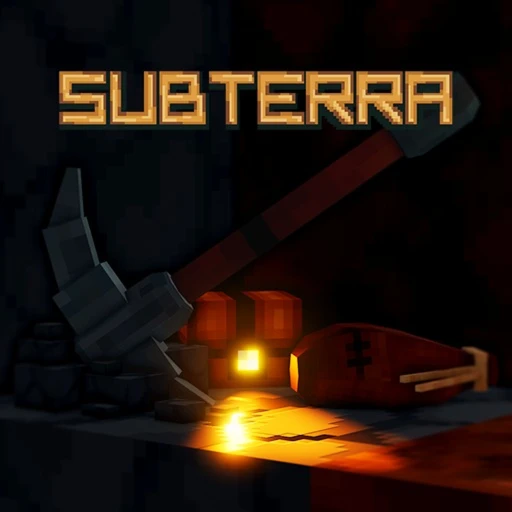
Two Roblox mining games, two completely different ways to swing a pickaxe. Subterra from Polyworks Studio is a 2.5D procedurally generated descent where you dig through ten ore tiers, craft weapons, fight monsters and bosses, draw Ability Cards, and climb a prestige rank ladder. Mining Simulator 2 from Rumble Studios is the platform's dominant upgrade-mining grinder, a pet-collecting idle game where you dig, stack multipliers, and rebirth for ever-bigger numbers.
Both are about mining, but they could not be structured more differently. Subterra is an active, risk-and-reward roguelite where a mine reset called The Collapse can wipe an unbanked run and monsters punish a bad build. Mining Simulator 2 is a relaxed, number-go-up idle grinder you can play with one hand while doing something else. This comparison breaks down gameplay, progression, currencies, combat, player counts, codes, and monetization so you can pick the right one, or keep both for different moods.
Subterra vs Mining Simulator 2 -- Quick Stats (2026)
| Category | Subterra | Mining Simulator 2 |
|---|---|---|
| Genre | 2.5D procedural roguelite mining | Pet-and-upgrade idle mining |
| Place ID | 16817315243 | Mining Simulator 2 (Rumble Studios) |
| Developer | Polyworks Studio | Rumble Studios |
| Created | March 2024 (open testing Feb 2025) | 2022 |
| Total Visits | ~10.4M | Hundreds of millions |
| Favorites | ~268K | Millions |
| Currencies | Gold Coins, Chrono Shards | Coins, Gems |
| Core Loop | Descend, upgrade, craft, fight, rank up | Dig, collect pets, rebirth, repeat |
| Combat | Yes -- monsters and bosses | No real combat |
| Prestige | Rank ladder, max rank 11 | Rebirth multipliers |
| Pets | No | Yes -- core mechanic |
| Active Codes | 100KMEMBERS, 1YEAR, FEATURED, UPDATE | Regular coin/gem/boost codes |
| Max Players | 10 per server | Large servers |
| Free-to-Play | Yes | Yes |
Quick note: Subterra is the newer, more mechanically involved miner with combat and a roguelite reset, while Mining Simulator 2 is the established idle grinder built around pets and rebirths. Different pace, different payoff, same pickaxe.
Gameplay -- What Do You Actually Do?
Subterra
Subterra puts you at the top of a procedurally generated mine and asks you to dig down. You hold left mouse button to mine, fill your backpack with ore, sell it for Gold Coins, and pour that Gold into pickaxe and backpack upgrades so you can push deeper. The ten ore tiers run Copper, Tin, Iron, Silver, Gold, Platinum, Cobalt, Chromium, Titanium, and Wolframite, each in a more hostile layer than the last.
What separates Subterra from a plain mining game is the danger and the build system. Monsters and bosses live in the deeper layers, so you craft weapons and block or parry with F to survive. You spend the second currency, Chrono Shards, at the Chrono Crystal to draw Ability Cards that shape your character, unlocking an extra slot every two levels. And The Collapse, a periodic mine reset, means you have to bank progress with the To Surface button before the tunnels wipe.
With around 10.4 million visits, 268K favorites, and a rating near 94 percent, Subterra has built a strong following on this active, risk-and-reward loop. It is a game you lean into rather than idle through, rewarding players who plan a descent, manage a card build, and know when to pull out before a Collapse.
Mining Simulator 2
Mining Simulator 2 is the genre's comfort-food grinder. You mine blocks, sell ore for Coins and Gems, and funnel that into better pickaxes, bigger backpacks, and most importantly pets, which are the heart of the game. Pets attach to your character and multiply your mining output, so the long game is hatching eggs, collecting rare pets, and stacking their bonuses to dig through tougher zones.
The progression engine is rebirth. Once you have ground out a zone, you rebirth to reset your raw progress in exchange for permanent multipliers, then climb back faster than before. There is no real combat and no run-ending reset like The Collapse; it is a steady, low-pressure climb where the numbers keep getting bigger and the pets keep getting flashier. You can genuinely play it half-attentively.
As one of the most-played mining games on Roblox from Rumble Studios, Mining Simulator 2 has the scale, the polish, and the constant event cadence of an established hit. It is built for collectors and idle players who want a relaxing grind with a deep pet roster, not a tense expedition.
Edge: Subterra for active, engaged mining with combat and real stakes. Mining Simulator 2 for relaxed, idle-friendly pet collecting. The question is whether you want to focus or unwind.
Progression and Prestige
These two prestige on opposite philosophies. Subterra uses a rank ladder: ranking up resets your level to 1 but raises your level cap by 5 per rank, up to a max rank of 11. Because ability slots unlock every two levels, a higher cap means a far stronger build ceiling, so each prestige run climbs back faster and deeper than the last. It is a deliberate, build-focused prestige you time carefully.
Mining Simulator 2 uses rebirth multipliers, the classic idle-game prestige. You reset your progress for a permanent boost, then grind back up with bigger numbers, and you repeat that loop endlessly while collecting pets and chasing rarer hatches along the way. There is no cap to bump against the way Subterra has rank 11; the appeal is the open-ended scaling.
The structural difference is build depth versus number scaling. Subterra's ranks fold into its card system to make each character meaningfully different, while Mining Simulator 2's rebirths feed a multiplier treadmill optimized for collection and idle gains. Neither is better in a vacuum; one rewards active planning, the other rewards patient accumulation.
Currencies and Economy
Subterra runs on Gold Coins and Chrono Shards. Gold comes from selling ore and pays for pickaxe and backpack upgrades, while Chrono Shards, mostly pulled from chests rather than digging, buy Ability Cards at the Chrono Crystal. That split keeps gear and build progression on separate tracks, so you are always deciding whether to strengthen your tools or your character.
Mining Simulator 2 runs on Coins and Gems, with Coins as the everyday upgrade currency and Gems as the premium resource for eggs, rare pets, and special purchases. The economy is tuned around the pet loop, so much of your earning funnels toward hatching and leveling pets that then multiply future earning, a tight feedback cycle built for idle scaling.
Edge: even. Both use a sensible two-currency split, but they serve different designs. Subterra's economy gates a build-and-combat loop, while Mining Simulator 2's economy gates a pet-collection loop. Which feels better depends entirely on whether you would rather assemble an Ability Card build or a pet army.
Codes and Freebies
Both games reward players who check for codes, but they behave differently. Subterra runs an active code system redeemed at an in-game Codes NPC near the gate opposite Sell. As of June 2026 the working codes include 100KMEMBERS, 1YEAR, FEATURED, 30KLIKES, RELEASE, and UPDATE, handing out Chrono Shards, Gold, potions, TNT, and 2x EXP. The catch is they expire fast, so you have to redeem promptly.
Mining Simulator 2, as a long-running Rumble Studios title, also issues regular codes for Coins, Gems, and boosts, typically tied to updates and events. Its code cadence is well established, and the rewards slot neatly into the pet-and-rebirth grind. Both games make codes a genuine shortcut rather than an afterthought.
For the full Subterra redeem walkthrough and the latest verified codes, check our Subterra codes page, which we update as new codes drop and old ones expire. Subterra's codes in particular reward fast action, since milestone codes like 1YEAR can rotate out within a few patches.
Edge: even. Both maintain active, worthwhile code systems. Subterra's hand out build-relevant Chrono Shards but expire quickly; Mining Simulator 2's are steadier and feed the idle grind. Either way, redeeming codes early is free progress in both games.
Combat and Danger
This is the cleanest gap between the two. Subterra has real combat. The deeper layers are full of monsters, and bosses gate your descent, so you craft weapons, manage health, and use the F block or parry to survive. Layer in The Collapse, which can wipe an unbanked run, and Subterra carries genuine risk: a careless deep dive can cost you everything you were carrying.
Mining Simulator 2 has essentially no combat and no run-ending danger. The threat model is simply how fast you can mine and how big your multipliers are, not whether something kills you. That is by design; it is a relaxing idle grinder, and the absence of danger is exactly what lets you play it casually in the background.
Edge: depends on what you want. Subterra wins if you want stakes, combat, and the tension of banking a risky run. Mining Simulator 2 wins if you want zero pressure and a grind you can leave running. There is no neutral answer here -- it is the core split between the two games.
Scale and Community (July 2026)
Mining Simulator 2 is the established giant. As a flagship Rumble Studios grinder, it has hundreds of millions of visits, millions of favorites, and a mature ecosystem of pet guides, value lists, and trading communities built up over years. Its event cadence and update history give it the polish and player base of a top-tier idle game.
Subterra is the rising newcomer. Created in 2024 and opened to public testing in early 2025, it has gathered around 10.4 million visits and 268K favorites with a 94 percent rating, plus a concurrent player base near 572 and peaks above 1,000. Modest next to Mining Simulator 2's scale, but strong momentum for a mechanically deep miner that grows on word of mouth.
Edge: Mining Simulator 2. On raw scale there is no contest -- a years-established hit with hundreds of millions of visits dwarfs a fast-growing newcomer. If a huge active community and a deep trading scene matter to you, Mining Simulator 2 wins. Subterra counters with a distinct, more active design and clear upward momentum.
Game Passes and Monetization
Subterra monetizes through convenience passes that smooth the grind without gating progress. Bottomless Backpack (1,399 Robux) removes carry limits, Sell Anywhere (550) skips the surface trip, and Mega Magnet (199) auto-collects loot within 64 studs. Cheaper passes, an Ore Server Boost (200) that doubles drops server-wide for an hour, plus card and forge slot passes and a 99-Robux starter pack round out the options. None are required to reach max rank.
Mining Simulator 2 monetizes around its pet loop, selling boosts, premium eggs, luck multipliers, and convenience passes that speed hatching and earning. As with Subterra, spending accelerates the grind rather than buying a hard wall-skip, and a free player can reach the deep content with patience. Both keep their core loops fully playable at zero Robux.
Edge: even. Both are fair free-to-play games with optional convenience and acceleration passes. Subterra's passes target backpack space and selling speed; Mining Simulator 2's target hatching and multipliers. Neither forces a purchase, and both respect players who want the full experience without spending.
Earning Free Robux While You Play
Both games have natural downtime that pairs well with earning Robux on the side. Subterra has quiet stretches while you mine ore veins and sell, and Mining Simulator 2 is idle by nature with plenty of background grind. For game-specific strategies, check our Subterra free Robux guide and our Mining Simulator 2 free Robux guide. For everything on Subterra in one place, the Subterra hub collects guides, codes, and tips together.
Earn Free Robux for Subterra or Mining Simulator 2
Complete simple tasks on Earnaldo and withdraw real Robux -- no generators, no downloads. Put your earnings toward game passes and pets in either game.
Head-to-Head Verdict -- Subterra vs Mining Simulator 2 in 2026
The Verdict
Choose Subterra if you want active, risk-and-reward mining with real stakes. The ten ore tiers, the weapon crafting and boss fights, the Ability Card build system, and the rank ladder up to max rank 11 make every descent an engaged session, and the active codes -- 100KMEMBERS, 1YEAR, and the rest -- hand you free Chrono Shards to start building right away. It is the better pick for players who want to focus and be challenged.
Choose Mining Simulator 2 if you want a relaxed, pet-collecting idle grinder you can play with one hand. The pet roster, the rebirth multipliers, and the endless number-scaling make it a comfortable, low-pressure climb, backed by a massive community and years of polish. It is the stronger pick for collectors and idle players who want a grind they can leave running.
Overall: Mining Simulator 2 is the bigger, more established game, and on scale and community it is the obvious mainstream winner. But Subterra is not trying to win on size -- its combat, procedural descents, card builds, and prestige ranks make it the more mechanically rich and active experience. The honest answer for many mining fans is both: Subterra for engaged sessions, Mining Simulator 2 for idle progress.
Who Should Play What?
- You want active, challenging mining: Subterra, because combat, bosses, and The Collapse keep every descent engaging.
- You want a relaxed idle grind: Mining Simulator 2, because the pet-and-rebirth loop plays comfortably in the background.
- You love build systems: Subterra, thanks to Ability Cards and the rank ladder that reshape your character each prestige.
- You love collecting: Mining Simulator 2, because the deep pet roster is the entire draw.
- You want free currency from codes: Both, though Subterra's 100KMEMBERS and 1YEAR codes hand out Chrono Shards fast if you redeem before they expire.
- You want the biggest community: Mining Simulator 2, with its years-deep player base and trading scene.
- You want to earn Robux: Both work with Earnaldo.
Frequently Asked Questions
Subterra is a 2.5D procedurally generated mining game with combat, weapon crafting, an Ability Card build system, and a prestige rank ladder that resets your level for a higher cap. Mining Simulator 2 is a pet-and-upgrade idle grinder where you dig, collect pets that boost your output, and rebirth for multipliers. Subterra leans roguelite with real danger; Mining Simulator 2 leans relaxed idle progression.
Both run active code systems. Subterra codes, redeemed at the in-game Codes NPC, include 100KMEMBERS, 1YEAR, FEATURED, 30KLIKES, RELEASE, and UPDATE for Chrono Shards, Gold, potions, and EXP boosts, though they expire fast. Mining Simulator 2 by Rumble Studios also issues regular codes for coins, gems, and boosts. Both reward checking for fresh codes often.
It depends on the kind of depth. Subterra has more mechanical depth, with combat, weapon crafting, Ability Cards, The Collapse mine reset, and ten ore tiers to descend. Mining Simulator 2 has more long-term grind depth, with a huge pet collection, rebirth multipliers, and constant number-scaling. Subterra suits players who want active danger; Mining Simulator 2 suits idle collectors.
Yes, both are free on Roblox. Subterra sits at place ID 16817315243 and sells optional convenience passes like Bottomless Backpack and Sell Anywhere. Mining Simulator 2 is also free with optional pet, boost, and convenience purchases. Neither requires spending Robux to progress, though both offer passes that speed up the grind.
If you want active, risk-and-reward mining with combat and a prestige ladder, start with Subterra and use codes like 1YEAR and 100KMEMBERS for an early Chrono Shards boost. If you want a relaxed, pet-collecting idle grinder you can play with one hand, start with Mining Simulator 2. Many mining fans rotate between both: Subterra for engaged sessions, Mining Simulator 2 for idle progress.