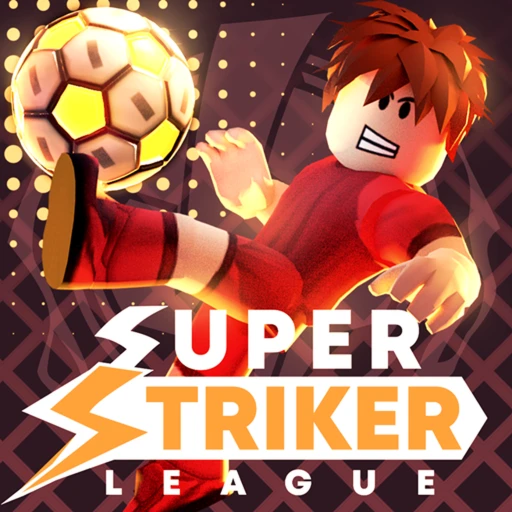
Super Striker League vs Blue Lock: Rivals (2026) -- Which Roblox Soccer Game Is Better?
Roblox has become a serious platform for sports games, and soccer is leading the charge. Super Striker League (SSL) by Cinder Studio and Blue Lock: Rivals (BLR) are two of the most popular soccer experiences on the platform right now, but they take dramatically different approaches to the beautiful game. SSL is an ability-based soccer game with 419 million visits and a competitive ranked mode. BLR draws from the Blue Lock anime to create an anime-flavored soccer experience pulling 13K concurrent players. Let's figure out which pitch you should step onto.
We'll compare everything from core gameplay mechanics and ability systems to progression, ranked play, graphics, community size, and replay value. By the end, you'll know which game fits your style -- whether you're a competitive grinder or an anime fan looking to recreate your favorite Blue Lock moments.
Quick Stats: Super Striker League vs Blue Lock: Rivals
| Feature | Super Striker League | Blue Lock: Rivals |
|---|---|---|
| Developer | Cinder Studio | Blue Lock: Rivals Team |
| Genre | Soccer / Abilities | Anime Soccer |
| Total Visits | 419M+ | Growing (2026 hit) |
| Concurrent Players | Consistent thousands | ~13K peak |
| Ranked Mode | Yes (full divisions) | Limited |
| Ability System | Competitive-balanced | Anime-inspired |
| Anime License | No | Yes (Blue Lock) |
| Place ID | 3360853050 | -- |
| Mobile Friendly | Yes | Yes |
| Free to Play | Yes | Yes |
Gameplay Comparison: Competitive Balance vs Anime Spectacle
Super Striker League plays like a traditional soccer game with a twist -- every player has special abilities they can activate during matches. You'll find abilities like speed boosts, power shots, defensive shields, and teleport dashes. The key here is that Cinder Studio has spent years balancing these abilities for competitive play. No single ability dominates the meta, and skilled players can counter any strategy with positioning and timing. The actual soccer mechanics are tight: passing feels responsive, shots have weight, and goalkeeper play requires genuine skill.
Blue Lock: Rivals takes a wildly different approach. Instead of building from soccer fundamentals up, it builds from the Blue Lock anime down. Characters have signature moves inspired by the show -- Isagi's spatial awareness, Bachira's dribbling, Rin's shooting. The abilities are flashier, more dramatic, and designed to make you feel like you're living out anime moments on the pitch. A powered-up shot in BLR looks and feels like a special attack from a fighting game, complete with screen effects and dramatic camera angles.
The fundamental difference is philosophy. SSL says "here's great soccer with cool abilities layered on top." BLR says "here's a great anime experience that happens to involve soccer." Both are genuinely fun, but they're scratching different itches. SSL will satisfy you if you care about outplaying opponents through skill. BLR will satisfy you if you want to feel like a protagonist in a sports anime.
Edge: Super Striker League. For pure soccer gameplay quality, SSL's years of balance tuning and mechanical polish put it ahead. The game feels like a proper competitive sport, and that foundation makes everything else work better.
Progression Systems
SSL has one of the deepest progression systems in any Roblox sports game. The ranked mode features full divisions you climb through, from bronze up to champion tiers. Wins earn rating points, losses subtract them, and the matchmaking tries to pair you against similarly ranked players. Outside of ranked, there's a currency system for unlocking cosmetics, new abilities, and character customization options. The progression feels meaningful because it's tied to genuine skill improvement -- you climb ranks by getting better, not just by grinding hours.
Blue Lock: Rivals takes a character collection approach that mirrors gacha-style anime games. You'll unlock different Blue Lock characters, each with their own stats and signature abilities. Leveling up characters improves their performance, and there's a system for upgrading skills. The progression is driven more by collection and character development than by competitive rank. For anime fans, there's a strong pull to unlock their favorite characters and max them out.
Our Blue Lock: Rivals guide covers the best characters to unlock first. For SSL players, our Super Striker League guide breaks down the ranked system and optimal ability builds.
Edge: Super Striker League. The ranked division system gives progression real stakes and ties it to skill improvement. BLR's character collection is fun but doesn't test whether you're actually getting better at the game.
Graphics and Audio Design
Super Striker League uses a clean, polished art style that prioritizes readability during fast-paced matches. Player models are distinct, ability effects are visible without being distracting, and the pitch environments look professional. The camera work during matches is smooth and follows the action well. Audio is functional -- crowd noise, ball impact sounds, and ability activation effects all convey information clearly. It's not flashy, but it serves the competitive gameplay perfectly.
Blue Lock: Rivals goes all-in on visual spectacle. Ability animations are cinematic, with screen-shaking effects, dramatic slow-motion, and particle systems that make every special move feel like a highlight reel moment. The character models are designed to match their anime counterparts, and the overall aesthetic is more vibrant and stylized than SSL. The soundtrack features energetic music that matches the anime's tone, and sound effects during abilities are punchy and dramatic.
If you're watching both games side-by-side, BLR looks more impressive in screenshots and clips. But in actual gameplay, SSL's cleaner visual design helps you track the ball, read opponent movements, and make split-second decisions. BLR's effects can occasionally obscure what's happening during the most chaotic moments.
Player Count and Community Size
SSL has the larger established community with 419 million total visits and years of accumulated content. There are comprehensive wikis, YouTube channels dedicated to SSL strategies, tier lists for abilities, and an active competitive scene. The game's Discord server is well-organized with channels for ranked play, tournaments, and general discussion. It's a mature community that takes the competitive aspect seriously.
Blue Lock: Rivals benefits from the massive popularity of the Blue Lock anime. The game's community overlaps heavily with the anime fandom, pulling in players who might not have been interested in a Roblox soccer game otherwise. At 13K concurrent players and climbing, BLR is building its community fast. Content creators have been quick to cover it, and the crossover appeal between anime fans and Roblox players is driving sustained interest.
SSL has depth of community. BLR has momentum and crossover appeal. Both are in healthy positions, but BLR's growth trajectory is steeper because it's tapping into an existing massive fanbase outside of Roblox.
Game Passes and Monetization
SSL offers game passes for cosmetics, premium abilities, and quality-of-life features. The competitive integrity is maintained -- you can't buy a higher rank or an overpowered ability that free players can't counter. Cinder Studio has been careful about not introducing pay-to-win elements, which matters enormously for a game with a ranked mode. Most purchases are skins, emotes, and visual flair.
BLR's monetization leans into the character collection aspect. You can spend Robux to speed up character unlocks or access premium characters faster. Some of the strongest characters may require significant grinding for free players, which creates a soft advantage for paying players. It's not aggressively pay-to-win, but the line is blurrier than SSL's approach. The anime-game monetization model (collect characters, upgrade them, pay to speed up the process) is familiar to anyone who's played gacha games.
Neither game is predatory, but SSL's monetization is cleaner for competitive players who want a level playing field.
Social Features and Multiplayer Experience
SSL's social experience revolves around competitive teamwork. You'll queue into matches, get assigned to a team, and need to coordinate passes, set up plays, and cover defensively. The ranked mode creates natural rivalries and a sense of progression that's shared with your regular teammates. Private matches let friend groups run custom tournaments, and the game supports spectating for watching high-level ranked matches.
BLR creates social engagement through shared fandom. Playing as your favorite Blue Lock character alongside others doing the same creates a natural bonding experience. Discussions about which character is best, recreating moments from the anime, and theory-crafting builds give the community a different kind of social energy. The game also features co-op elements where you work with other players to complete challenges inspired by the anime's story arcs.
Edge: Super Striker League. For structured social gameplay, SSL's team-based ranked matches create deeper cooperative experiences. BLR's social energy is more fandom-driven, which is fun but less mechanically integrated.
Replay Value
SSL's replay value is virtually infinite for competitive players. Ranked mode alone gives you a reason to keep playing indefinitely -- there's always a higher division to reach, a new strategy to learn, and opponents to outplay. Cinder Studio regularly adds new abilities, maps, and seasonal content that keeps the meta fresh. The skill ceiling is high enough that even experienced players have room to improve. Casual modes provide a lower-pressure alternative when you don't want to stress about rank.
BLR's replay value is driven by character collection and the ongoing relationship with the Blue Lock anime. As new characters are introduced in the show, they'll likely appear in the game, giving fans reasons to return. Leveling up your character roster and experimenting with different playstyles adds variety. However, if you're not invested in the Blue Lock franchise, the replay value drops significantly once you've experienced the core gameplay loop.
If the Blue Lock anime continues releasing new seasons (and it almost certainly will), BLR has a built-in content pipeline that keeps the game relevant. But SSL doesn't need an external property to drive engagement -- the competitive loop sustains itself.
Edge: Super Striker League. Competitive ranked play creates self-sustaining replay value. BLR's replay value is partially dependent on the anime releasing new content.
Who Should Play What?
Choose Super Striker League If You...
You want a competitive soccer game where skill determines outcomes. You enjoy climbing ranked ladders, learning matchups, and improving your mechanics over time. SSL is the clear choice for players who care about competitive integrity and want a sports game that rewards practice and game sense. It's also the better pick if you're looking for a long-term competitive hobby on Roblox -- the ranked system gives you goals that last for months.
Choose Blue Lock: Rivals If You...
You're a Blue Lock anime fan who wants to play as your favorite characters on Roblox. You enjoy flashy abilities, character collection, and the spectacle of anime-style soccer more than strict competitive balance. BLR is perfect for players who want to feel like they're inside the Blue Lock universe, pulling off impossible shots and dramatic plays. If you value style and fan service over competitive purity, BLR delivers that in spades.
Our Verdict
Super Striker League wins this comparison for most players thanks to its polished mechanics, robust ranked system, and competitive balance. It's the better soccer game in terms of pure gameplay quality. But Blue Lock: Rivals isn't trying to compete on that axis -- it's an anime experience first and a soccer game second, and it nails that combination. If you're a Blue Lock fan, you'll probably play BLR regardless of what any comparison article says, and that's the right call. For everyone else, SSL is the stronger all-around package.
Earn Free Robux for Game Passes
Grab premium abilities in SSL or unlock characters faster in Blue Lock: Rivals. Earnaldo lets you earn free Robux through quick tasks.
Frequently Asked Questions
Super Striker League has more total visits at 419 million and has been around longer with a well-established community. Blue Lock: Rivals is newer with around 13K concurrent players and growing fast, especially among anime fans. Both have healthy player bases in 2026.
Super Striker League offers ability-based soccer with special moves and a polished ranked mode built for competitive play. Blue Lock: Rivals focuses on anime-style soccer with character abilities inspired by the Blue Lock series. SSL has tighter mechanics overall, while BLR has more visual spectacle and fan appeal.
Yes, Super Striker League features a full ranked competitive mode where you climb through divisions from bronze to champion. The matchmaking system pairs you against similarly skilled opponents, making it one of the most developed ranked systems in any Roblox sports game.
No, you don't need to know the anime to have fun. The game works as a standalone soccer experience. However, fans of the Blue Lock anime will get significantly more out of it since the characters, abilities, and themes are all directly inspired by the show.
Both games feature unique abilities designed differently. SSL's abilities are built around competitive balance for ranked play -- no single ability is overpowered. BLR's abilities are flashier and more anime-inspired, prioritizing spectacle and fan service. If you want balanced competition, SSL wins. If you want cinematic moments, BLR wins.
Yes, both games are playable on mobile devices. Super Striker League has been optimized for mobile controls over its longer lifespan, giving it a slight advantage on touchscreens. Blue Lock: Rivals works on mobile too, though some players find the ability inputs easier with a keyboard and mouse setup.