Survive Cold for Brainrots vs Parkour for Brainrots (2026) -- Which Roblox Game Is Better?
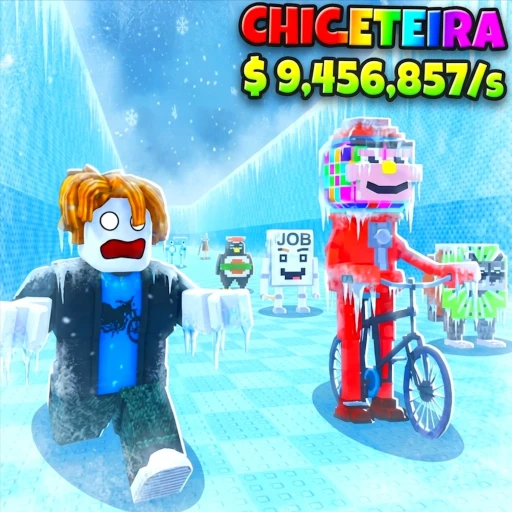
The brainrot genre on Roblox keeps branching into new directions, and two of the most interesting divergences are Survive Cold for Brainrots and Parkour for Brainrots. One asks you to endure freezing temperatures and build warm shelters while collecting brainrots between blizzard waves. The other asks you to wall-jump, ledge-grab, and sprint through obstacle courses with brainrots placed along the route. They share a brainrot collecting objective but deliver completely different gameplay experiences.
Survive Cold for Brainrots, developed by 1-Day, holds a 96.03% approval rating and fits squarely in the survival subgenre. You manage resources, build insulated structures, and ride out increasingly deadly cold snaps. The gameplay rewards patience, planning, and smart resource allocation. Parkour for Brainrots takes a pure skill-based approach. There are no resources to manage, no shelters to build, and no environmental threats to weather. Instead, you face precision platforming courses where your movement abilities determine how many brainrots you collect and how far you progress.
These two games represent fundamentally different playstyles within the brainrot ecosystem. If you have been trying to decide which one suits you, or wondering whether the grass is greener on the other side, this comparison covers everything you need to know. We will break down mechanics, difficulty, brainrot collection, progression, monetization, and community to give you a complete picture of both games.
Quick Stats: Survive Cold vs Parkour at a Glance
| Category | Survive Cold for Brainrots | Parkour for Brainrots |
|---|---|---|
| Developer | 1-Day | Parkour Brainrots Studio |
| Roblox Place ID | 100612093365292 | 75034791252172 |
| Approval Rating | 96.03% | ~94% |
| Genre | Survival / Brainrot Collector | Platformer / Brainrot Collector |
| Core Loop | Build shelter, survive cold, collect brainrots | Run courses, nail jumps, collect brainrots |
| Skill Type | Resource management, planning | Mechanical precision, timing |
| Progression | Round-based with upgrades | Course-based with ability unlocks |
| Multiplayer | Public servers, co-op building | Public servers, racing |
| Game Passes | Optional boosts, VIP | Optional boosts, VIP |
| Session Length | 15-30 minutes | 10-25 minutes |
| Concurrent Players | ~20K+ | ~22K+ |
| Mobile Friendly | Yes, excellent | Yes, but better on desktop |
The table makes the fundamental difference clear: one game tests your survival instincts while the other tests your fingers. Let us get into the specifics.
Gameplay and Core Mechanics
Survive Cold for Brainrots: Endure the Freeze
Survive Cold for Brainrots follows the established survive-the-hazard formula but executes it with particular attention to atmospheric design. The game drops you into a frozen landscape where the temperature drops in waves. Between cold snaps, you scavenge for building materials -- insulation panels, heating units, fuel cells, and structural reinforcements -- and construct shelters that protect you from the lethal cold.
The cold mechanic works on a temperature gauge that depletes your health when it drops below a threshold. Early rounds feature mild temperature drops that drain health slowly, giving you plenty of time to build basic shelters. By mid-game, the cold snaps hit harder and last longer. Blizzard events reduce visibility to near zero and drop temperatures to levels that can freeze you solid in seconds if you are caught outside.
Shelter quality matters more in Survive Cold than in many other survival brainrot games. A hastily built wooden box might protect you in round three but crumble under the pressure of a round eight blizzard. Investing in insulation upgrades, redundant heating systems, and reinforced walls is not optional in the late game -- it is the difference between survival and a quick restart. The building system has genuine depth, with material interactions that reward experimentation. Combining certain insulation types with specific heating configurations creates synergies that outperform their individual components.
Brainrot collection happens during the calm phases between cold waves. Brainrots spawn across the map, and you have a limited window to venture out, grab what you can, and return to shelter before the next wave hits. The colder brainrots -- ice-themed variants, frost legendaries, and blizzard-exclusive drops -- spawn further from safe zones and during the most dangerous weather, creating a constant pull between safety and greed.
Parkour for Brainrots: Move or Lose
Parkour for Brainrots strips away every survival mechanic and replaces them with pure movement challenges. The game presents you with a series of parkour courses -- escalating obstacle sequences built from wall jumps, ledge grabs, tightrope walks, bounce pads, speed boosts, and precision landings. Brainrots are scattered throughout these courses, placed at the ends of difficult sections, hidden behind optional detours, and positioned in spots that require creative movement to reach.
The controls are tight and responsive, which is critical for a game built entirely around movement precision. You have a standard jump, a wall jump that lets you chain off vertical surfaces, a ledge grab that catches you on platform edges, and a dash that provides a burst of horizontal speed. Mastering the interaction between these abilities is the core skill curve. Early courses use one or two mechanics at a time, while advanced courses require you to chain all four in rapid succession with pixel-perfect timing.
There are no health bars, no resource management, and no environmental threats that punish you passively. The only penalty for failure is restarting the section you fell from. This makes Parkour for Brainrots feel low-stakes per attempt but high-stakes per completion. Finishing a difficult course you have been stuck on for twenty minutes delivers an adrenaline rush that survival games rarely match.
The course variety keeps the gameplay fresh across sessions. Some courses are speed-focused, rewarding fast completion with bonus brainrots. Others are precision-focused, with narrow platforms and unforgiving gaps that test your patience. A few courses incorporate moving elements -- shifting platforms, rotating obstacles, and timing-based gates -- that add a rhythmic dimension to the platforming.
Edge: Survive Cold for Brainrots for players who want depth, atmosphere, and strategic decision-making in their gameplay. Parkour for Brainrots for players who want a pure skill test with immediate feedback and tight movement mechanics.
Difficulty and Skill Expression
Survive Cold: Strategic Depth Over Reflexes
The difficulty in Survive Cold for Brainrots scales through environmental intensity and resource scarcity. Early rounds are teaching rounds -- the cold is mild, materials are plentiful, and you have time to experiment with shelter designs. The difficulty curve steepens gradually, with each round introducing slightly harsher conditions that demand better shelters and smarter resource allocation.
Skill expression comes from optimization. Top players build shelters that use minimal materials for maximum protection, position them near brainrot-dense spawn areas, and time their collection runs with mathematical precision. There is a right way to play each round, and discovering it through trial and error is deeply satisfying. The game rewards game knowledge over mechanical skill -- understanding which materials to prioritize, which shelter layouts resist damage most effectively, and which brainrot spawns are worth the risk.
The difficulty can feel punishing for players who do not enjoy resource management. Running out of heating fuel in a late-game blizzard because you miscounted your supplies is frustrating in a way that mechanical failure in a platformer is not. The penalty is time lost, not just a quick restart.
Parkour: Mechanical Mastery
Parkour for Brainrots inverts the skill profile entirely. The difficulty is purely mechanical. You either make the jump or you do not. There is no resource to manage, no strategic decision to agonize over, and no hidden knowledge that gives you an advantage. Your hands, your timing, and your spatial awareness are all that matter.
The difficulty curve in the parkour courses is well-calibrated. Beginner courses teach each movement mechanic in isolation, letting you build muscle memory for wall jumps, dashes, and ledge grabs before combining them. Intermediate courses mix mechanics and increase speed requirements. Advanced courses are brutally demanding, requiring flawless chains of wall jumps, dash cancels, and precision landings with no room for error.
Skill expression is immediately visible. You can watch a skilled player navigate a course that took you thirty attempts and see them flow through it in one clean run. The gap between a good player and a great player is obvious and measurable, which creates a strong competitive dynamic around course completion times and leaderboard rankings.
The difficulty is more forgiving per attempt because failure just means restarting a section. There is no accumulated penalty for failing -- you do not lose resources or progress. This makes the game accessible to players of all skill levels because you can always try again immediately. The frustration comes from personal standards, not game-imposed punishment.
Edge: Parkour for Brainrots for clarity of skill expression and a forgiving failure system. Survive Cold for Brainrots for strategic depth that rewards knowledge and planning over raw mechanical ability.

Brainrot Collection and Rewards
Survive Cold: Brave the Blizzard
The brainrot collection in Survive Cold for Brainrots is tightly integrated with the survival loop. Common brainrots spawn close to shelter-safe zones during mild weather. Uncommon and rare variants appear further from safety and during harsher conditions. The rarest brainrots -- frost legendaries, blizzard exclusives, and ice-crystal variants -- only spawn during the most extreme cold events, in locations that require significant exposure to reach.
This risk-reward dynamic means that completing your collection requires deliberate risk-taking. You cannot sit in your shelter and wait for rare brainrots to come to you. You have to venture into deadly conditions, sprint to a spawn point, grab the brainrot, and race back before the cold kills you. Each rare catch feels earned because you literally risked your survival to get it.
The collection includes cold-themed exclusive brainrots that cannot be found in any other brainrot game. Snowflake brainrots, aurora variants, and permafrost legendaries are unique to Survive Cold and give collectors a reason to play even if they already have large collections from other games.
Parkour: Earn Through Execution
Brainrot collection in Parkour for Brainrots is skill-gated rather than risk-gated. Brainrots are placed throughout parkour courses, with common variants on the main path and rarer ones hidden behind optional, more difficult sections. To collect a legendary brainrot, you do not need to brave a blizzard -- you need to nail a sequence of wall jumps that most players cannot complete.
The collection pace is generally faster than in Survive Cold because brainrots are densely placed along courses and you can re-run completed courses to farm specific drops. Speed-runners who can clear courses quickly can accumulate brainrots at an impressive rate. The rarity is tied to course difficulty rather than environmental danger, so the rarest brainrots require the highest skill level rather than the biggest risk tolerance.
Parkour-themed exclusive brainrots include acrobatic variants, speed-trail brainrots, and gravity-defying legendaries that match the movement theme. These exclusives are visually distinct and popular in the trading community.
Edge: Survive Cold for Brainrots for a collection system where every rare catch feels earned through survival risk. Parkour for Brainrots for faster collection rates and a system that directly rewards mechanical skill.
Progression and Long-Term Goals
Survive Cold: Build Better, Last Longer
Progression in Survive Cold for Brainrots follows the same general pattern as other survival brainrot games. Playing rounds, collecting brainrots, and surviving to higher waves earns you currency that you spend on material upgrades, shelter blueprints, and passive bonuses. Each upgrade tier meaningfully improves your survival capabilities and opens access to new strategies for handling extreme cold events.
The long-term goal is reaching the highest possible round, which requires a combination of fully upgraded materials, optimized shelter designs, and efficient collection routes. Leaderboards track round progression, giving competitive players a concrete target. The satisfaction of breaking through to a new personal best round -- knowing your shelter design and resource management were good enough to handle conditions that previously killed you -- is the primary reward loop.
The progression pace is moderate. Upgrades feel meaningful but require enough investment that you appreciate each one. The game avoids both the trap of making progression too fast, which undermines satisfaction, and too slow, which creates tedium.
Parkour: Unlock New Moves
Progression in Parkour for Brainrots centers on unlocking new movement abilities and accessing harder courses. Completing courses earns experience and currency that you spend on ability upgrades -- higher jumps, longer dashes, wall-jump chain extensions, and speed boosts. Each ability upgrade opens new possibilities for how you approach existing courses and grants access to advanced courses that require the upgraded mechanics.
The course unlock system provides clear milestones. Beating all beginner courses unlocks intermediate courses. Clearing intermediate courses opens advanced courses. Each tier represents a significant jump in difficulty and brainrot rarity, giving you a strong incentive to push through challenging sections. The progression feels natural because your improving skill is reflected in both your movement capabilities and the courses available to you.
Leaderboards for course completion times add a competitive layer that survival games lack. You are not just trying to beat the game -- you are trying to beat other players' times. This speed-running element extends the game's lifespan well beyond initial course completion because there is always a time to improve.
Edge: Parkour for Brainrots for clear milestones, competitive leaderboards, and progression that directly reflects improving skill. Survive Cold for Brainrots for progression that fundamentally changes your strategic options and how you play the game.
Monetization and Value
Survive Cold: Standard Survival Model
Survive Cold for Brainrots offers optional game passes including VIP access with exclusive building materials, a double brainrot collection rate, and cosmetic shelter themes. The VIP materials provide a tangible advantage in late-game survival, similar to other survival brainrot games. Free players can reach high rounds and complete their collections without spending Robux, but the VIP materials make it easier.
The monetization is transparent and non-predatory. There are no loot boxes, no gacha mechanics, and no time-limited purchase pressure. If you want to support the developer and get a quality-of-life boost, the passes are there. If you do not, the full game is available to you.
Parkour: Clean Monetization
Parkour for Brainrots has a similarly fair monetization model. Game passes include cosmetic trail effects, exclusive character skins, and a VIP pass that grants bonus currency and access to exclusive practice courses. None of the passes affect your movement capabilities or give paying players faster completion times on leaderboards.
The distinction here is important. In a game where leaderboard competition matters, keeping monetization purely cosmetic and convenience-based preserves competitive integrity. Free players compete on equal mechanical footing with paying players, which keeps the leaderboard rankings meaningful and fair.
For free Robux to use in either game, check out our Survive Cold for Brainrots free Robux guide and our Parkour for Brainrots free Robux guide.
Edge: Parkour for Brainrots for keeping monetization completely separate from competitive performance. Survive Cold's VIP materials, while not game-breaking, do provide a tangible gameplay advantage that Parkour avoids entirely.
Multiplayer and Social Features
Survive Cold: Cooperative Survival
Multiplayer in Survive Cold for Brainrots follows the cooperative survival model. Friends can share shelter space, divide resource-gathering duties, and coordinate brainrot collection runs during calm phases. Having a teammate who focuses on building while you focus on collecting creates efficient specialization that neither player could achieve alone. The social dynamic of huddling in a shared shelter during a blizzard, watching the walls creak under the wind, and hoping your combined construction holds is a bonding experience unique to survival games.
The downside is that there is no formal role system or co-op matchmaking. You bring friends or you play alongside strangers who may or may not cooperate. The social experience depends heavily on who you share a server with.
Parkour: Competitive and Social
Parkour for Brainrots multiplayer is built around parallel competition. You run courses alongside other players, seeing them on the same obstacles, and compare completion times in real-time. This creates a natural competitive energy that drives both players to perform better. Watching someone clear a section you are stuck on shows you it is possible and often reveals a technique you had not considered.
The social element extends to course-specific leaderboards where friends can compete for the fastest times. Friendly rivalries around specific courses are common in the community, and the immediate visibility of other players' skill levels creates organic social interaction. You do not need voice chat to bond over shared struggle on a difficult course -- the shared experience communicates itself.
Edge: Tie. Survive Cold wins for cooperative gameplay that benefits from teamwork. Parkour wins for competitive social dynamics that push you to improve. Both create meaningful multiplayer experiences through different means.
Performance and Accessibility
Survive Cold for Brainrots runs smoothly across all device types. The frozen environments are visually clean, blizzard effects are optimized well, and the building system responds quickly on both touch and mouse-and-keyboard input. Mobile players have no significant disadvantage because the gameplay does not require precision input under time pressure. The tutorial effectively teaches the building and survival mechanics within the first two rounds.
Parkour for Brainrots runs well on most devices but performs noticeably better on desktop. The fast-paced movement requires low input latency and precise camera control, which touchscreens handle adequately but not optimally. Players who primarily use mobile devices can complete all courses, but the precision demands of advanced courses become significantly harder without physical buttons and a mouse for camera control. The game has no formal tutorial -- you learn the movement mechanics by doing them, which is intuitive for platform-game veterans but can confuse players new to parkour games on Roblox.
Edge: Survive Cold for Brainrots for consistent performance and accessibility across all platforms and skill levels. Parkour for Brainrots is better optimized for the desktop experience where its movement mechanics feel most responsive.
Community and Updates
Survive Cold: Dedicated and Knowledgeable
Survive Cold for Brainrots has a community that skews toward optimization and knowledge sharing. The 96.03% approval rating reflects a player base that appreciates the game's depth and rewards system. Discord channels and community forums feature shelter design discussions, material efficiency spreadsheets, and round-by-round strategy guides. Content creators produce survival challenge videos and shelter showcase content that performs well on YouTube and TikTok.
Developer 1-Day pushes regular updates with new materials, cold event types, and brainrot additions. The update cadence is steady without being overwhelming, and the development team incorporates community feedback into balance adjustments. The game has maintained its player count through consistent quality rather than hype-driven content drops.
Parkour: Active and Competitive
Parkour for Brainrots has a vibrant community driven by competition and speed-running culture. Course completion videos, speed-run records, and movement technique breakdowns populate social media feeds. The competitive angle gives the community a natural content engine -- every time someone sets a new course record, it generates discussion and challenger attempts.
Updates add new courses, movement mechanics, and brainrot types at a pace that keeps the game feeling fresh. The development team has been responsive to course balance feedback, adjusting difficulty where the community identifies unfair sections and adding quality-of-life improvements to the movement system based on player input.
Edge: Tie. Both communities are healthy, active, and well-served by their respective development teams. The communities differ in focus -- optimization in Survive Cold versus competition in Parkour -- but both create engaging ecosystems around their games.

The Verdict
Our Recommendation: Know Your Playstyle
Survive Cold for Brainrots and Parkour for Brainrots test entirely different skills, and the right choice depends on what kind of player you are. Survive Cold is the better game if you enjoy strategic survival where preparation, resource management, and shelter design determine your success. Its atmospheric cold events, risk-reward brainrot collection, and deep building system offer an experience that rewards patience and game knowledge. The 96.03% approval rating is well earned. Parkour for Brainrots is the better game if you want a pure skill test with tight movement mechanics, clear progression milestones, and competitive leaderboards. The instant feedback loop of attempt-fail-learn-succeed is addictive, and the variety of courses keeps the experience fresh long after you have mastered the basics. Neither game is objectively better than the other. They serve different moods and different types of engagement. If you want to relax and plan your way through a frozen challenge, choose Survive Cold. If you want to push your mechanical skills and compete against other players on precise obstacle courses, choose Parkour. And if you have room for both in your rotation, they complement each other well -- one for strategic sessions, one for skill-building sessions.

Who Should Play What?
Play Survive Cold for Brainrots if you:
- Enjoy resource management and strategic planning in survival games
- Like building systems with meaningful upgrades and material synergies
- Prefer a smooth difficulty curve that rewards game knowledge
- Want a brainrot collection tied to survival risk-reward decisions
- Play on mobile and want consistent performance with no control disadvantage
- Appreciate atmospheric design and immersive environmental hazards
Play Parkour for Brainrots if you:
- Love precision platforming and tight movement mechanics
- Want a game where mechanical skill directly determines success
- Enjoy competitive leaderboards and speed-running culture
- Prefer a forgiving failure system where you can retry immediately
- Like collecting brainrots through skill-gated challenges rather than survival risk
- Want faster session times with high-intensity gameplay throughout
Earn Free Robux While You Play
Whether you are braving blizzards or perfecting wall jumps, Earnaldo helps you earn free Robux through simple tasks. No surveys, no scams -- just real Robux rewards you can spend anywhere on Roblox.
Frequently Asked Questions
They test completely different skills. Survive Cold for Brainrots is harder in the late-game rounds when freezing temperatures become extreme and resource management is critical. Parkour for Brainrots is harder in terms of mechanical execution because missing a jump means restarting a section. Players who struggle with precise platforming will find Parkour more challenging, while players who dislike resource management will struggle more with Survive Cold.
Parkour for Brainrots generally has faster brainrot acquisition because brainrots are placed directly along parkour courses. Skilled players who complete courses quickly can gather brainrots at a rapid pace. Survive Cold for Brainrots distributes brainrots during calm phases between cold waves, and collection speed depends on how efficiently you balance survival tasks with collecting runs.
Yes, both games support public multiplayer servers. Survive Cold for Brainrots allows cooperative shelter building and resource sharing with friends. Parkour for Brainrots lets you race through courses alongside other players and compare completion times. The social experience is different in each game but both benefit from playing with friends.
Survive Cold for Brainrots has more mobile-friendly controls because the gameplay is primarily about building shelters and managing resources, which does not require pixel-perfect input. Parkour for Brainrots demands precise jump timing and camera control that can be tricky on touchscreens. Both games are playable on mobile, but Parkour benefits significantly from keyboard and mouse or gamepad input.
Both games release codes that reward free currency, brainrots, and boosts. Codes are typically tied to updates, milestones, and seasonal events. We maintain updated code lists for both Survive Cold for Brainrots and Parkour for Brainrots so you can claim every available reward.
Earnaldo lets you earn free Robux through simple tasks and offers that you can complete alongside your Roblox gameplay. The Robux you earn can be spent on game passes in Survive Cold for Brainrots, Parkour for Brainrots, or any other Roblox game. Visit earnaldo.com to start earning.
Survive Cold for Brainrots and Parkour for Brainrots showcase the impressive range of the brainrot genre on Roblox. Whether you find satisfaction in weathering a blizzard behind carefully constructed walls or nailing a flawless parkour run through a gauntlet of obstacles, both games deliver polished, rewarding experiences worth your time in 2026.