Survive the Backrooms vs PARANORMAL (2026) -- Which Roblox Game Is Better?
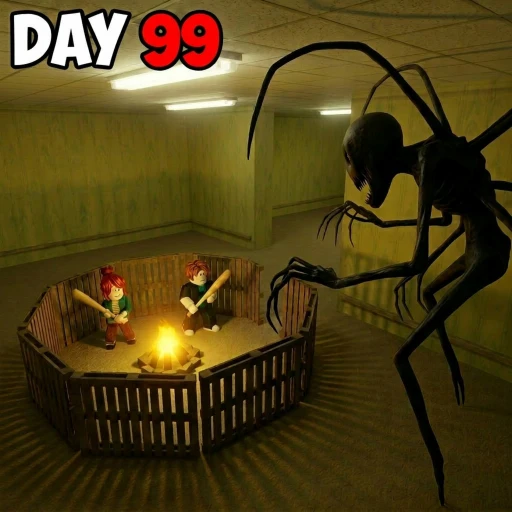
Roblox horror splits into two camps, and these two games are the cleanest example of each. Survive the Backrooms is a co-op survival grind where you scavenge emeralds, buy permanent classes, and try to outlast entities for 99 days in the yellow maze. PARANORMAL is a found-footage story horror by MetroPunk Studio where you play Nathan, trapped at home with a flashlight and a dwindling battery, trying to save your possessed sister Elenoire and escape. They scratch completely different itches, yet players keep asking which one to download first.
Between them they have pulled in tens of millions of plays. As of June 2026, Survive the Backrooms sits near 2,068 concurrent players, while PARANORMAL hovers around 1,842, and the older story game carries roughly 24 million lifetime visits to the survival game's 10.3 million. We have run both games solo and with friends, so this comparison breaks down gameplay, progression, scares, monetization, and replay value to help you pick the one worth your night.
What's in this comparison
Survive the Backrooms vs PARANORMAL -- Quick Stats (2026)
Here is the head-to-head at a glance. The numbers below are current as of July 2026 and pulled from each game's live Roblox stats and community sources.
| Category | Survive the Backrooms | PARANORMAL |
|---|---|---|
| Genre | Co-op survival horror | Found-footage story horror |
| Place ID | 105007075895966 | 16426359665 |
| Developer | Cozy Campfires | MetroPunk Studio |
| Concurrent Players | ~2,068 | ~1,842 |
| Total Visits | ~10.3 million | ~24 million |
| Core Loop | Gather emeralds, buy classes, survive 99 days | Explore, solve puzzles, save your sister, escape |
| Key Features | Permanent classes, base campfire, trials, entity scaling | Found-footage camera, flashlight battery, multiple endings |
| Trading System | No | No |
| Mobile-Friendly | Yes | Yes |
| Free-to-Play | Yes | Yes |
Gameplay -- What You Actually Do
These two games could not be built around more different verbs. One is about managing resources across a long run. The other is about creeping forward through a scripted story and bracing for the next scare.
Survive the Backrooms
Survive the Backrooms drops you into the classic Backrooms legend: endless yellow corridors, buzzing fluorescent lights, damp carpet, and entities you should never face alone. The single goal is to last 99 days. You keep a base campfire burning, scavenge scrap and food, upgrade your crafting bench, and rescue four lost friends, each one locked behind a trial you complete by gathering specific resources.
The progression hook is Emeralds, the currency you spend on permanent classes at your base. Classes are the real meat of the game because each one carries unique starting gear, stat modifiers, and abilities that stick across every future run. Calamity costs 1,000 Emeralds and spawns with a Ki Blade, Minigunner runs 700, and Flamethrower sits at 750. Picking a class turns a panicked scavenger into a build with a defined combat role.
Combat matters here in a way it does not in most horror games. You find tools and weapons, slot into a class fantasy, and use those abilities to fend off the monsters that stalk the maze. Solo runs are fully supported with easier entity scaling, though you then juggle every role yourself: scavenging, crafting, and fighting all fall on you.
PARANORMAL
PARANORMAL plays it straight as a narrative horror. You are Nathan, alone in your house, and a dark force has possessed your sister Elenoire Whitmore and is slowly taking control of her. The story runs along a linear path split into two acts, and your job is to uncover the truth, save Elenoire, and find a way out before the cult closes in.
You start with nothing but a flashlight and a limited battery. From there you search drawers and rooms for supplies: batteries, ammo, and Tokens you spend at the in-game shop. The first act is about getting your bearings inside an abandoned home, and there is no shortage of environmental puzzles, cursed objects, and scripted scares as you piece the night together.
The standout feature is the found-footage presentation. A first-person camera with realistic grain and shake sells the dread, and the developers built in real horror staging: flickering lights, loud audio stings, and jumpscares that land on a script rather than at random. PARANORMAL also offers multiple endings, so the choices you make decide who survives and what secrets surface.
Edge: Survive the Backrooms for players who want active, mechanical gameplay with builds and combat; PARANORMAL for players who want a tense, guided horror story over raw survival systems.
Progression and Pacing
Survive the Backrooms is a long-haul grind. Each run pushes toward the 99-day finish, and the meta-progression lives in your Emerald balance and the classes you unlock between attempts. Early runs feel brutal because you have no class and limited gear, but once you bank enough Emeralds for something like Flamethrower at 750 or Minigunner at 700, later runs open up fast. The curve rewards repetition: every failed run still feeds your permanent power.
PARANORMAL paces itself like a horror movie. Progression is story progression, measured in acts cleared and puzzles solved rather than currency banked. Tokens let you buy useful items from the shop, but the main forward motion comes from reaching the next room, the next scare, and eventually one of the multiple endings. A first playthrough can run a focused evening, and chasing every ending extends that.
The difference comes down to what hooks you. Survive the Backrooms hooks through the loop, the slow climb of getting stronger across many runs. PARANORMAL hooks through the story, the pull to find out what happens to Elenoire and which ending you can reach. One is a marathon you replay; the other is a tense night you can finish.
Graphics and Audio
Both games lean hard on atmosphere, but they aim at different effects. Survive the Backrooms nails the liminal-space look the Backrooms legend is famous for: flat yellow walls, humming fluorescent tubes, and identical corridors that mess with your sense of direction. The audio is built around dread and entity cues, with ambient buzz and distant sounds that warn you something is close before you see it. It is unsettling in a slow, creeping way.
PARANORMAL goes for cinematic fright. The found-footage camera adds grain, shake, and a claustrophobic frame, and the lighting design uses your weak flashlight and flickering bulbs to hide threats until the last second. The sound design is louder and more aggressive, with audio stings timed to jumpscares and a constant low hum of menace. The game even ships a warning for flashing lights and loud sounds, which tells you how heavily it relies on sensory shock.
Edge: PARANORMAL, because its found-footage camera and scripted audio staging deliver more intense, movie-grade horror, while Survive the Backrooms wins for fans of slow liminal dread specifically.
Player Count and Community (July 2026)
The live numbers are close. As of June 2026, Survive the Backrooms runs near 2,068 concurrent players and PARANORMAL near 1,842, so the survival game holds a modest edge in active sessions on a typical day. Both have healthy enough populations that co-op lobbies fill quickly.
Lifetime reach tells a different story. PARANORMAL has banked roughly 24 million visits over its run, more than double the 10.3 million of Survive the Backrooms. That gap reflects PARANORMAL releasing earlier and riding the wave of found-footage horror, while Survive the Backrooms is the newer game still climbing. The takeaway is that more people have tried PARANORMAL overall, but Survive the Backrooms is currently holding slightly more players in the game at once.
Community life runs through Discord and developer channels for both. MetroPunk Studio pushes PARANORMAL codes and updates through its Discord and Roblox group, and the Survive the Backrooms community organizes around its own wiki and code drops. Neither game has a marketplace economy, so the community centers on guides, trial strategies, and code sharing rather than trading.
Edge: PARANORMAL for sheer audience size at 24 million visits; Survive the Backrooms for being the busier game in the moment.
Game Passes and Monetization
Both games are free to play, and both keep their core experience open without forcing a purchase. The monetization sits in optional convenience and cosmetics rather than hard paywalls.
In Survive the Backrooms, the spine of the economy is Emeralds, which you earn through play and codes and spend on classes like Calamity at 1,000, Flamethrower at 750, and Minigunner at 700. Game passes and Robux purchases tend to speed up that grind or add perks, but you can earn enough Emeralds through codes and runs to unlock strong classes without spending. The smart move is to fund your first class with free Emerald codes before considering any Robux outlay.
PARANORMAL keeps its purchases light and story-focused. Tokens are the in-game currency for shop items, and codes hand out free Tokens you redeem through the Shop menu. Because the game is a guided story rather than an endless grind, there is less pressure to spend than in a survival loop, and you can reach the endings on free Tokens and scavenged supplies alone.
Edge: PARANORMAL, because its story format means almost nothing of value is locked behind Robux; Survive the Backrooms is fair but its class grind nudges harder toward spending.
Social Features
Survive the Backrooms is built for co-op from the ground up. Rescuing your four lost friends and clearing trials is far smoother with real teammates splitting the roles, so one person scavenges while another crafts and a third holds off entities. Solo is supported with easier scaling, but the game clearly wants a squad, and coordinating a 99-day run with friends is where it shines.
PARANORMAL is solo-first but supports co-op for up to 6 players. Playing the story with friends turns the scares into shared panic and makes the puzzle rooms a group effort, though the narrative was designed to land hard whether you go in alone or bring a group. Neither game has trading or a player marketplace, so the social layer is purely cooperative play and voice or text coordination.
Edge: Survive the Backrooms, because its survival systems are deeper and more rewarding with a coordinated team, while PARANORMAL co-op is a fun bonus on top of a solo story.
Replay Value
Survive the Backrooms is the clear replay champion. The whole design loops on repetition: every run feeds Emeralds, every Emerald inches you toward a new class, and every class changes how the next run plays. With permanent unlocks, trial variety, and the long 99-day target, there is always a reason to queue another attempt. It is the kind of game you keep on your Roblox favorites for months.
PARANORMAL front-loads its value into the first playthrough. The found-footage scares hit hardest when you do not know what is coming, and the multiple endings give you a reason to run it again to see different outcomes. Once you have seen the endings, though, the scripted nature means the surprises fade, and the replay loop is shorter than a survival grind. It is a memorable night or two rather than a long-term home.
If your priority is a game you return to for weeks, Survive the Backrooms wins on structure. If you want a sharp, complete horror experience with a few branches to explore, PARANORMAL delivers more in a shorter window.
Earning Free Robux While You Play
Whether you are buying a class in Survive the Backrooms or grabbing a shop item in PARANORMAL, a Robux balance helps, and you do not have to pay cash for it. Earnaldo lets you earn free Robux by completing simple tasks, then spend it on whichever horror game you favor. If you want the full breakdown for each game first, read our Survive the Backrooms guide and our PARANORMAL guide, or see how to get free Robux in 2026.
Earn Free Robux for Survive the Backrooms or PARANORMAL
Complete simple tasks on Earnaldo and withdraw real Robux to spend on classes, Tokens, or game passes.
Head-to-Head Verdict -- Survive the Backrooms vs PARANORMAL in 2026
The Verdict
Choose Survive the Backrooms if you want active gameplay with builds and combat, you play with friends, and you like the long grind of unlocking permanent classes and surviving 99 days. It is the better pick for repeat sessions and squad coordination.
Choose PARANORMAL if you want a genuinely scary, story-driven night with found-footage atmosphere, scripted jumpscares, and multiple endings. It is the better pick for a focused horror experience, solo or in a small group.
Overall: Neither game beats the other outright because they target different moods. Survive the Backrooms is the deeper, more replayable survival loop, while PARANORMAL is the more intense, more cinematic scare. Pick based on whether you want a game to grind or a story to finish.
Who Should Play What?
- You love survival grinds and builds: Survive the Backrooms, because emeralds and permanent classes give you a long progression to chase.
- You want the scariest experience: PARANORMAL, because the found-footage camera and scripted jumpscares hit harder than slow dread.
- You are a solo player: PARANORMAL, because it is built as a solo story, though Survive the Backrooms also scales down for one player.
- You play with a squad: Survive the Backrooms, because its trials and 99-day runs reward a coordinated team.
- You create content: PARANORMAL, because the jumpscares and multiple endings make for reaction-heavy clips.
- You want to earn Robux: Both work with Earnaldo.
Frequently Asked Questions
As of June 2026, Survive the Backrooms holds a slight edge in live activity with around 2,068 concurrent players, while PARANORMAL runs near 1,842. PARANORMAL leads on lifetime reach with about 24 million visits against roughly 10.3 million for Survive the Backrooms, so the older story game has been played more overall while the survival game is hotter right now.
Survive the Backrooms is a co-op survival game where you gather emeralds, buy permanent classes, and last 99 days against entities in the yellow maze. PARANORMAL is a found-footage story horror game by MetroPunk Studio where you play Nathan trying to save his possessed sister Elenoire and escape, with multiple endings and scripted scares rather than open survival.
PARANORMAL is the scarier game for most players because it uses a found-footage camera, scripted jumpscares, flickering lights, and a limited flashlight battery to build dread. Survive the Backrooms leans on slow tension and entity stalking across long runs, so it is unsettling rather than jumpscare-heavy.
Yes. Survive the Backrooms supports solo runs with easier entity scaling, though you handle scavenging, crafting, and combat alone. PARANORMAL plays as a solo story by default and also supports co-op for up to 6 players, so both games work without a group.
Both games use codes. Survive the Backrooms codes hand out Emeralds you spend on classes, redeemed through the in-game codes menu. PARANORMAL codes give Tokens you spend in the shop, redeemed by opening the Shop and clicking the Codes button. Codes in both games tend to expire within days, so redeem them quickly. See our Survive the Backrooms guide and PARANORMAL guide for the current lists.
Survive the Backrooms has more replay value because classes, emerald grinding, and the 99-day goal give you a reason to return for many runs. PARANORMAL is a story-driven experience with multiple endings, so it has strong first-playthrough value but a shorter loop once you have seen the endings.
About This Comparison
This comparison was written and is maintained by the Earnaldo team, which tracks Roblox games and rewards. Stats are cited as of July 2026 and pulled from each game's official Roblox page, with Survive the Backrooms at its game page and PARANORMAL at its game page. Player counts and visit totals shift over time, so check back after major updates. You can also read whether Earnaldo is legit before you start earning.
Survive the Backrooms is developed by Cozy Campfires and PARANORMAL by MetroPunk Studio. Neither game is affiliated with Earnaldo or Roblox Corporation.