The Intruder vs DOORS (2026) -- Which Roblox Horror Game Is Better?
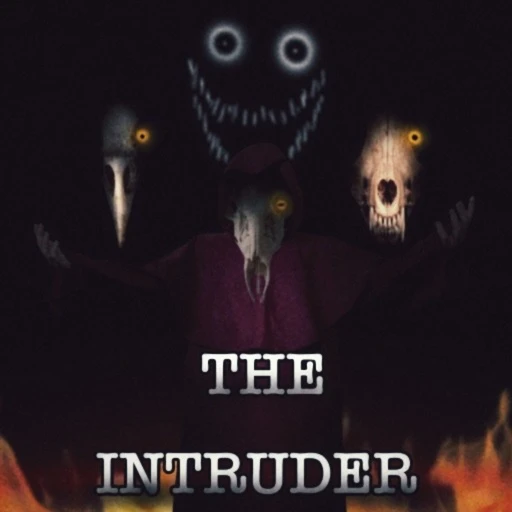
Roblox horror games have carved out a massive niche on the platform, and two titles stand at opposite ends of the genre's spectrum: The Intruder and DOORS. One is a psychological horror experience that builds dread through security cameras, rising anxiety meters, and a shapeshifting creature that mimics the voices of people you trust. The other is a procedural gauntlet that throws you into a hotel with 100+ rooms, each one potentially hiding an entity that will end your run in a heartbeat. Together, they represent two fundamentally different philosophies about what makes a horror game work on Roblox.
The Intruder from Official_Bulderme has accumulated over 447 million visits with its cinematic, chapter-based approach to horror storytelling. DOORS from LSplash has crossed 7.2 billion visits and defined an entire subgenre of procedurally generated survival horror. Both are free to play, both run on mobile, and both have communities that will defend their game as the definitive Roblox horror experience. This comparison puts them side by side across every category that matters so you can decide which one fits your taste -- or whether you need to play both to get the full picture of what Roblox horror has to offer.
The Intruder vs DOORS -- Quick Stats (2026)
| Category | The Intruder | DOORS |
|---|---|---|
| Developer | Official_Bulderme | LSplash (LSPLASH) |
| Roblox Place ID | 8073154099 | 6516141723 |
| Genre | Psychological horror | Procedural horror |
| Total Visits | 447M+ | 7.2B+ |
| Core Loop | Monitor cameras, manage meters, survive chapters | Open doors, avoid entities, survive 100+ rooms |
| Structure | 9+ chapters (linear narrative) | Procedurally generated runs |
| Horror Style | Psychological dread / paranoia | Jump scares / environmental tension |
| Key Mechanics | Anxiety/Awareness meters, voice mimicry, shapeshifting | Entity behaviors, item management, audio cues |
| Key Threats | Shapeshifting Intruder | Rush, Ambush, Seek, Figure, Screech, 20+ more |
| Session Length | 20-40 min per chapter | 15-30 min per run |
| Co-op | Limited | Yes (up to 4 players) |
| Trading | No | No |
| Game Passes | None known | Revives, Stardust, Knobs Doubler |
| Mobile-Friendly | Yes | Yes |
| Free-to-Play | Yes | Yes |
Gameplay -- Psychological Horror vs Procedural Survival
The Intruder
The Intruder drops you into a scenario that feels lifted from a horror film. You are alone in a house, and something is trying to get inside. The game's core mechanic revolves around a security camera system -- you cycle through camera feeds to track the Intruder's movements, check windows and doors, and try to stay one step ahead of a creature that is actively trying to deceive you. Two meters govern your survival: Anxiety and Awareness. Your Anxiety rises when you hear suspicious sounds, see the Intruder on camera, or spend too long in darkness. Your Awareness drops when you fail to check cameras frequently enough, leaving you vulnerable to attacks you cannot see coming.
The brilliance of The Intruder's design is in the shapeshifting mechanic. The creature does not simply chase you -- it mimics voices, disguises itself as familiar objects or figures, and exploits your assumptions about what is safe. Chapter by chapter, the game introduces new scenarios that force you to question what you are seeing and hearing. A voice calling from another room might be a family member or it might be the Intruder luring you into a trap. A shadow on the camera feed might be nothing or it might be the creature testing whether you are paying attention.
Across 9+ chapters, the game builds a narrative that rewards attentive players. Each chapter introduces new environments, new mechanics, and new ways the Intruder adapts its behavior. Early chapters teach you the fundamentals -- camera monitoring, door checking, meter management. Later chapters strip away your safety nets and force you to make decisions with incomplete information. The pacing is deliberate. Long stretches of quiet surveillance are punctuated by moments of genuine terror when the Intruder breaches your defenses or reveals itself in an unexpected way. This is a game that understands the horror of anticipation -- the fear that something is wrong but not knowing exactly what or when the threat will materialize.
The chapter structure means The Intruder has a beginning, a middle, and an end. You progress through a story, not an endless loop. For players who want their horror experience to build toward a conclusion rather than repeat indefinitely, this narrative framework is one of the game's strongest selling points. It gives weight to every chapter completion and creates a sense of escalation that purely procedural games struggle to replicate.
DOORS
DOORS starts simple. You open a door. You enter a room. You look for the next door. Then something kills you, and you realize the simplicity is the trap. The game's procedurally generated hotel is structured around a single rule: every entity teaches you a behavior, and failing to respond correctly is lethal. Rush fills the corridor with flickering lights before charging through at terminal velocity -- you learn to hide in a closet or behind furniture the moment you see the flash. Ambush mimics Rush but fakes its retreat, doubling back multiple times to catch players who emerge too early. Seek triggers a cinematic chase through flooded corridors where sprinting and dodging obstacles is the only survival option. Figure stalks specific rooms and hunts by sound alone, forcing you to crouch-walk and hold your breath. Screech materializes in dark rooms and whispers from behind -- look at it fast enough and it retreats, hesitate and you take damage.
The genius of DOORS is that it never explains any of this. There is no tutorial screen listing entity behaviors. There is no pop-up warning you about Ambush's double-back pattern. You learn by dying. You learn by watching friends die. You learn by reading visual and audio cues that become instinct over dozens of runs. The knowledge gap between a first-time player and a veteran is enormous, and closing that gap is the game's real progression system.
Floor 1 covers rooms 1 through 100 and establishes the foundational entity roster and mechanical language. Floor 2 escalates with new entity types, more complex room layouts, tighter resource constraints, and environmental hazards that punish overconfidence. Each floor is designed as a complete experience, and the difficulty jump between them is steep enough that clearing Floor 1 does not guarantee survival past Floor 2's opening stretch. The procedural generation ensures no two runs play out identically, which means memorization alone is never enough -- you need genuine adaptability and pattern recognition to push deep consistently.
Edge: Depends on your preference. The Intruder delivers a tighter, more authored horror experience with narrative payoff and psychological depth. DOORS delivers a broader, more replayable survival challenge with mechanical depth and entity variety. Neither approach is objectively better -- they are built for different types of horror fans.
Progression -- Story Chapters vs Skill Mastery
The Intruder structures its progression around chapter completion. Each of the 9+ chapters represents a self-contained scenario with unique mechanics, environments, and narrative developments. Finishing a chapter unlocks the next one, and the game tracks your completion status across the full campaign. The progression is linear and finite -- once you have finished every chapter, the story is complete. Replay value within completed chapters comes from improving your performance, discovering hidden details you missed on previous attempts, and experiencing the story with the benefit of knowledge about what the Intruder is capable of.
The Anxiety and Awareness meters create a secondary progression layer within individual chapters. Learning how to manage both meters simultaneously -- keeping Anxiety low enough to function while maintaining Awareness high enough to detect threats -- is a skill that develops over multiple attempts at difficult sections. Each chapter introduces new wrinkles to meter management, so the skills you build in early chapters remain relevant but need to be applied in new contexts as the game progresses.
DOORS takes a fundamentally different approach. There are no permanent upgrades, no carried-over stats, and no mechanical advantages that accumulate between runs. Every session starts fresh with the same base capabilities. What grows is your knowledge. The more runs you attempt, the faster you recognize entity tells, the better you manage limited resources like flashlight batteries and lockpicks, and the deeper you push into the hotel. DOORS tracks achievements for reaching room milestones, discovering secret areas, and surviving specific encounters, but these are records of accomplishment rather than gameplay advantages. The Knobs currency lets you purchase cosmetic items between runs, providing a light collection element that sits outside the core survival loop.
The distinction is clear: The Intruder's progression is content-gated and narrative-driven. DOORS' progression is skill-gated and knowledge-driven. One rewards you with new story beats and environments. The other rewards you with the satisfaction of knowing you survived because you learned something the game never explicitly taught you.
Edge: The Intruder for players who want structured, visible progress with narrative milestones. DOORS for players who find mastery-based progression more rewarding than content unlocks.
Graphics and Atmosphere
The Intruder commits to a grounded, domestic horror aesthetic that makes its scares hit differently than most Roblox horror games. The environments are recognizable -- houses, apartments, everyday spaces that players can relate to their own real-world surroundings. This familiarity is weaponized. When the Intruder distorts something in a space that looks like it could be your living room, the effect is more visceral than an abstract monster in an abstract setting could achieve. Camera feeds add a layer of found-footage tension, with the grainy, limited-perspective views creating natural blind spots that the game exploits for scares. Lighting shifts from warm domestic tones to cold, unsettling washes as the Intruder draws closer, and the visual design consistently reinforces the feeling that safety is an illusion.
Sound design is where The Intruder distinguishes itself most sharply. The voice mimicry mechanic means audio is not just atmosphere -- it is an active threat vector. Familiar voices call from other rooms, and determining whether those voices are genuine or fabricated by the Intruder becomes a survival skill. Ambient sound builds tension through subtlety: distant footsteps, creaking floorboards, the hum of electronics, and sudden silences that feel worse than any noise. The game demonstrates a sophisticated understanding of how sound can create fear without relying on volume or sudden stings alone.
DOORS goes dark from the first room and never lets up. The hotel setting is defined by narrow corridors, cramped rooms, dim lighting, and a persistent sense of enclosure. Visual design is intentionally restrained -- muted colors, minimal decoration, and environments that feel subtly wrong without announcing why. Rooms are just empty enough to seem abandoned. Corridors stretch just long enough to build anxiety before reaching the next door. Entity designs range from abstract threats -- a pair of eyes materializing in the dark -- to fully realized horrors like Figure's towering silhouette advancing through a library. The visual variety across the entity roster keeps players off-balance no matter how many runs they have completed.
Audio cues in DOORS are survival tools, not just ambiance. Rush produces a distant rumble before charging. Screech whispers from behind. Halt triggers screen effects that warn you to stop moving. Players who learn to read the audio environment survive longer than those who depend on visual information alone. LSplash built a game where what you hear matters as much as what you see, and every sound in the hotel either means something or exists to make you think it does.
Edge: The Intruder. Its domestic horror aesthetic and voice mimicry create a uniquely personal sense of dread that DOORS' hotel setting, while excellent, does not replicate. The Intruder makes horror feel like it is happening in your own home, and that intimacy gives its scares extra weight. DOORS has stronger entity design variety, but The Intruder's atmosphere is more psychologically invasive.
Player Count and Community (July 2026)
The raw numbers are not close. DOORS sits at 7.2 billion+ visits with a 92.9% approval rating and regular spikes in concurrent players that coincide with major content updates. It is one of the most-played horror games in Roblox history, and its community spans content creators, speedrunners, lore analysts, entity behavior documentarians, and a massive casual player base. Floor 2's release was a platform-wide event that drew streamers and YouTubers into a competitive race to complete the new content. The DOORS community wiki is one of the most detailed game-specific resources on the platform, with frame-by-frame breakdowns of entity behaviors and survival strategies.
The Intruder has accumulated 447 million+ visits, which is substantial by any measure even if it trails DOORS by a wide margin. Its community is smaller but deeply invested in the game's narrative, lore theories, and psychological horror design. Content creators who cover The Intruder tend to produce longer-form analysis videos that dig into story implications, hidden details within chapters, and the behavior patterns of the shapeshifting creature. The player base is drawn to the game for its storytelling and cinematic quality rather than competitive speedrunning, which gives the community a different character than DOORS' more mechanics-focused audience.
Both communities are active, but the scale difference is significant. DOORS has reached a level of cultural penetration within Roblox that places it alongside the platform's all-time biggest titles. The Intruder occupies a dedicated niche within Roblox horror -- respected, frequently recommended, and played by players who specifically seek out story-driven psychological horror rather than the broader survival horror genre. For detailed guides on earning Robux while playing these games, check our The Intruder free Robux guide and DOORS free Robux guide.
Game Passes and Monetization
The Intruder currently offers no known game passes, making it one of the rare Roblox experiences that is genuinely, completely free. There are no revive tokens, no premium items, no boosted anything. You load in, you play, and the only thing between you and completing the game is your own ability to manage meters, read the Intruder's behavior, and survive each chapter. This approach reflects a design philosophy where the experience itself is the product -- no monetization layers, no shortcuts, and no premium tiers that create separation between paying and non-paying players.
DOORS has a lightweight monetization model that stays well within the boundaries of fair free-to-play design. Revives (25 Robux per use) let you continue a run after dying rather than restarting from room 1 -- a genuinely tempting option when you die on room 85 of a deep run. The Knobs Doubler (199 Robux) increases the rate at which you earn cosmetic currency. Stardust provides access to premium cosmetic items and visual effects. Nothing LSplash sells gives players a survival advantage. Every entity behavior, every room puzzle, and every skill check is identical for free and paying players. The monetization exists for convenience and cosmetic expression, not competitive advantage.
Both games respect the free-to-play promise. The Intruder goes further by eliminating monetization entirely, but DOORS' approach is fair enough that it never feels like the game is pressuring you to spend. The difference is philosophical rather than practical -- both games deliver their complete core experience without requiring a single Robux.
Edge: The Intruder. Zero monetization means zero friction. Every player has the same experience regardless of spending, and there are no purchase decisions to weigh during gameplay. DOORS' monetization is fair, but The Intruder's complete absence of it is noteworthy in the Roblox ecosystem.
Social Features and Multiplayer
The Intruder is primarily a solo experience. Its psychological horror mechanics -- camera monitoring, meter management, voice mimicry detection -- are designed around the isolation of a single player trying to survive alone against a shapeshifting threat. Limited multiplayer options exist in certain chapters, but the game's identity and its strongest moments are built on the loneliness of being the only person between the Intruder and whatever it wants. The solo framework is a deliberate design choice that amplifies the paranoia. When you cannot trust what you see or hear, having no one to confirm your perceptions makes every decision feel heavier.
DOORS supports both solo and co-op play with up to four players, and the multiplayer transforms the experience without undermining it. In co-op, one player opening a door at the wrong moment triggers an entity that threatens the entire group. Communication becomes critical during entity encounters -- coordinating closet positions during Rush, timing movement during Figure's patrols, warning teammates about Screech's whisper from behind. The shared tension of a deep run where any mistake from any player could reset everyone creates a social horror experience that solo mode cannot replicate. Private servers let friend groups run dedicated sessions, and the shared achievement of clearing a run together builds genuine camaraderie.
Solo DOORS remains a complete, fully realized experience. Many veteran players prefer it because it removes the variable of teammate unpredictability and makes survival entirely dependent on personal skill. The game works at every multiplayer scale, from solo to a full squad of four, without sacrificing its core identity.
Edge: DOORS. Its co-op mode adds a layer of shared tension and coordination that enhances the horror without diluting it. The Intruder's solo focus creates a powerful isolation effect, but having the option to bring friends into the experience gives DOORS broader appeal and more ways to play.
Replay Value -- What Keeps You Coming Back?
The Intruder's replay value is front-loaded. The first playthrough of each chapter delivers the strongest impact because the scares, narrative reveals, and Intruder behaviors hit hardest when you do not know what is coming. Subsequent replays reward attention to detail -- hidden story elements, background clues, alternative approaches to specific encounters -- but the diminishing returns on jump scares and scripted events are real. The game partially addresses this through difficulty variations and the challenge of perfecting your meter management across chapters, but the finite chapter count means there is a ceiling on how many hours the average player will invest before they have seen everything.
That said, The Intruder's 9+ chapters represent a substantial amount of content for a single playthrough. Players who value quality over quantity will find more horror packed into those chapters than in dozens of hours of repetitive survival loops. The narrative payoff gives each chapter a sense of purpose that random runs cannot match, and completing the full story delivers a sense of closure that endless games intentionally avoid providing.
DOORS is built from the ground up for infinite replayability. Procedural generation ensures no two runs produce identical room sequences. Entity encounter order shuffles enough to prevent pure memorization from being a complete strategy. The skill ceiling is remarkably high -- speedrunners demonstrate that even after hundreds of runs, there is always room to optimize route decisions, item usage, and entity responses. Floor 2's release injected months of fresh content by introducing new entities, room types, and mechanical challenges that forced even veteran players to relearn fundamentals.
The community layer extends replay value further. Learning about entities from other players, discovering hidden rooms and Easter eggs the community documents, comparing personal bests on deep runs, and attempting challenge conditions (no items, solo Floor 2, specific entity survival streaks) create an ecosystem of goals that exists outside the game's formal structure. Future floor releases from LSplash will likely produce similar engagement spikes, as the studio has established a content model where each major update is substantial enough to bring the entire player base back.
Edge: DOORS. Its procedural generation, skill ceiling, and ongoing content updates create a game that can sustain hundreds of hours of play. The Intruder delivers a more impactful per-session experience, but DOORS is the game you will still be playing months after your first run.
Earning Free Robux While You Play
Both games pair well with Earnaldo for earning free Robux during natural downtime. The Intruder has built-in pauses between chapters and during slower surveillance sequences where you can complete quick earning tasks on Earnaldo without breaking your gameplay flow. DOORS offers natural breaks between runs, during matchmaking for co-op sessions, and during the planning phase before starting a new attempt.
Earning free Robux through Earnaldo means you can bank currency for DOORS revive tokens on deep runs where losing progress would sting, or save toward cosmetic items in the Stardust shop. Since The Intruder has no game passes, any Robux earned alongside it can go toward other games in your rotation. For step-by-step strategies on maximizing your earnings, check our The Intruder free Robux guide and DOORS free Robux guide.
Earn Free Robux for DOORS or Any Roblox Game
Complete simple tasks on Earnaldo and withdraw real Robux -- no downloads, no generators, no scams.
Head-to-Head Verdict -- The Intruder vs DOORS in 2026
The Verdict
Choose The Intruder if you want a story-driven psychological horror experience that builds dread through paranoia, deception, and atmosphere rather than jump scares and entity memorization. Official_Bulderme created a game where the horror is not just about surviving -- it is about questioning what is real. The shapeshifting Intruder, voice mimicry, and Anxiety/Awareness meters create a type of tension that no other Roblox horror game replicates. With 447 million+ visits, zero monetization, and 9+ chapters of authored content, it is the definitive choice for players who want their horror experience to tell a story and build toward a conclusion.
Choose DOORS if you want an endlessly replayable survival horror challenge that tests your reflexes, pattern recognition, and adaptability across hundreds of runs. LSplash built one of the most respected games on Roblox -- 7.2 billion+ visits and a 92.9% approval rating speak to the quality of its design. With 20+ unique entities across two floors, procedural generation that prevents memorization from being enough, and co-op support that creates shared tension, DOORS is the better choice for players who want a long-term horror game they can pick up indefinitely.
The bottom line: The Intruder is the better horror story. DOORS is the better horror game system. If you want to be scared in a deeply personal, narrative way that lingers after you close the game, The Intruder delivers that in a package no other Roblox title matches. If you want a horror game that you can play for hundreds of hours, share with friends, and never fully master, DOORS is the standard against which every other Roblox horror game is measured. Both are free, both run on mobile, and both deserve a spot in any Roblox horror fan's rotation.
Who Should Play What?
- You want a horror game with a real story and narrative payoff: The Intruder. Its 9+ chapter structure delivers a complete psychological horror experience with a beginning, middle, and end.
- You want endless replayability with procedural variety: DOORS. No two runs are identical, and the skill ceiling supports hundreds of hours of play.
- You prefer psychological horror and slow-building dread: The Intruder. The Anxiety/Awareness meters and voice mimicry create paranoia that builds over time rather than relying on sudden scares.
- You want frequent jump scares and constant tension: DOORS. Entities like Rush, Ambush, and Screech keep you on edge from room 1 to room 100 and beyond.
- You play horror games alone and prefer isolation: The Intruder. Its solo-focused design amplifies the loneliness that makes psychological horror effective.
- You want to play with friends in co-op: DOORS. Its 4-player co-op creates shared tension where one mistake from any teammate can end everyone's run.
- You want a completely free experience with zero monetization: The Intruder. No game passes, no revive tokens, no premium currency -- every player gets the same experience.
- You enjoy mastery-based progression and speedrunning: DOORS. The gap between surviving and surviving efficiently is enormous, and the community pushes optimization boundaries constantly.
Frequently Asked Questions
DOORS is significantly more popular with over 7.2 billion visits compared to The Intruder's 447 million+. DOORS also sees much higher concurrent player counts, especially during content updates. However, The Intruder has built a dedicated niche following that values its cinematic storytelling and psychological horror approach. Popularity alone does not determine which game is better for you -- both deliver high-quality horror experiences on Roblox.
The Intruder is generally considered scarier for players who are unsettled by psychological horror. Its voice mimicry, shapeshifting mechanics, and Anxiety meter create a sense of paranoia that builds over time. DOORS delivers more frequent jump scares through entity encounters like Rush, Ambush, and Screech. The Intruder is a slow burn that gets under your skin. DOORS is a constant barrage of tension and sudden threats. Your preference depends on whether you find psychological dread or sudden scares more frightening.
Yes, both games are fully playable on mobile through the Roblox app. The Intruder's camera monitoring and meter management translate reasonably well to touchscreens, though the precision required during tense moments benefits from a larger display. DOORS' first-person controls work on mobile but the horror atmosphere and audio cues are best experienced with headphones on a larger screen. Both games are free to play on all platforms Roblox supports.
The Intruder currently has no known game passes, making it a completely free experience with no optional purchases. DOORS offers several game passes including Revives (25 Robux per use) to continue runs after death, a Knobs Doubler for faster cosmetic currency, and Stardust for premium cosmetic items. Neither game locks core content behind paywalls -- DOORS simply offers optional convenience and cosmetic purchases.
The Intruder has a structured campaign spanning 9+ chapters that most players complete in 4 to 8 hours depending on skill level and how many times they need to retry difficult sections. DOORS is designed for infinite replayability -- each run through 100+ procedurally generated rooms takes 15 to 30 minutes, and the game is meant to be replayed hundreds of times. The Intruder is a finite narrative experience. DOORS is an endless survival challenge.
If you want a complete story-driven horror experience with a beginning, middle, and end, start with The Intruder. Its 9+ chapter structure and psychological horror approach make it a satisfying standalone experience you can finish in a few sessions. If you want something you can pick up and play indefinitely with friends, start with DOORS. Its procedural generation, entity variety, and co-op support make it the better long-term game. Many Roblox horror fans play both.