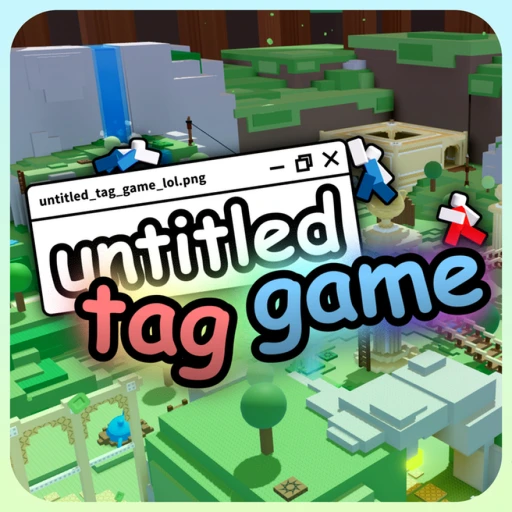
Untitled Tag Game is one of the most popular multiplayer tag games on Roblox, and for good reason. Developed by _create and recoded on December 26, 2023, the game combines fast-paced parkour movement with tag mechanics across 12+ expansive maps. You're not just running in a straight line here — you're climbing walls, sliding under obstacles, vaulting over railings, swinging on ropes, and riding ziplines to outmaneuver everyone in the lobby.
But not all game modes are created equal. Some deliver intense, skill-testing matches every single round, while others can feel slow or unbalanced depending on the lobby. This tier list ranks all 7 game modes from S through C based on actual gameplay as of July 2026. We've factored in replayability, skill expression, balance, and how well each mode uses the game's movement system. Whether you're a seasoned parkour runner or just starting out, this will help you figure out where to spend your time.
Table of Contents
S Tier — Best Game Modes in Untitled Tag Game
These two modes represent Untitled Tag Game at its absolute peak. They fully leverage the parkour movement system, deliver consistently exciting matches, and keep you coming back round after round. If you only have time for a few games, these are the ones to queue into.
Infected
Infected is the crown jewel of Untitled Tag Game and the mode that most players associate with the game itself. The premise is simple — one player starts as the infected "zombie" tagger, and every player they tag joins the infected team. The round ends when either all runners are infected or the timer runs out. What makes it S Tier is the way tension escalates naturally as the match progresses.
In the early game, you have a single tagger against a full lobby. Runners feel relatively safe and can focus on exploring the map and hitting movement lines. But as the infected count grows from 1 to 3 to 8, the pressure ramps up dramatically. Suddenly every corner of the map has threats, every zipline could have an infected player waiting at the end, and that rooftop you thought was safe now has 4 zombies climbing toward you from different angles.
The chaos factor is what pushes Infected above everything else. No two rounds play out the same way because the infection pattern creates different pressure points on the map each time. On Rooftops, a strong early tagger might lock down the central buildings and force runners to the edges. On Warehouse, the vertical space means infected players can approach from above and below simultaneously. Every round tells a different story, and that keeps replayability extremely high even after hundreds of matches.
Free-For-All
Free-For-All (FFA) is the purest test of individual skill in Untitled Tag Game. There's no team to carry you, no hiding behind a group of runners — it's every player for themselves. The objective is straightforward: tag other players to score points while avoiding getting tagged yourself. The player with the most tags when the timer expires wins.
What makes FFA so compelling is that it forces you to master both sides of the movement system simultaneously. You need aggressive parkour skills to chase down targets — wall climbs into slides into vaults to close distance quickly. But you also need defensive movement to escape when someone's on your tail. The best FFA players can switch between hunter and hunted multiple times in a single 10-second sequence, chaining a tag into an immediate escape from a third player who was tracking them.
FFA also does the best job of any mode at revealing your movement weaknesses. If you can't swing consistently, you'll lose races to rope sections. If your sliding is sloppy, faster players will gap you on every flat stretch. It's a mode that directly rewards mechanical improvement, and that feedback loop makes it incredibly satisfying to grind. You can feel yourself getting better round over round in a way that's harder to measure in team-based modes.
A Tier — Excellent Game Modes
A Tier modes are genuinely great and offer unique gameplay experiences that you won't find in the S Tier. They're modes you can play for hours without getting bored. The gap between A and S comes down to either slightly less replayability or a narrower skill expression window, but both of these modes are worth your time.
Classic
Classic is exactly what it sounds like — standard tag with clean, no-nonsense rules. One player is "it," and their goal is to tag a runner. Once tagged, that runner becomes the new tagger. It's the mode most players start with, and it remains a staple of the game for good reason.
The strength of Classic lies in its focus on 1v1 chase dynamics. Unlike Infected where you're dealing with multiple threats, Classic narrows the action down to one tagger versus the field. That spotlight effect creates tension for both sides — the tagger knows the whole lobby is watching their chase, and the runner knows they can't rely on others to draw aggression away. Every movement decision matters because there's no one else to bail you out.
Classic also serves as the best training ground for the game's 6 core movement mechanics. Since you only have one threat to track, you can focus on perfecting your climbing routes, slide timing, and vault angles without the sensory overload of modes like Infected. New players should spend their first 20-30 matches in Classic before branching out. The fundamentals you build here transfer directly to every other mode. For more tips on getting started, check out our Untitled Tag Game free Robux guide.
Crown
Crown adds a strategic layer that no other mode in Untitled Tag Game offers. A crown spawns on the map, and the player holding it earns points over time. Everyone else is trying to tag the crown holder to steal it. The longer you hold the crown, the higher your score climbs — but every second you hold it, more players converge on your position.
What makes Crown A Tier is the risk-reward decision-making it introduces. Grabbing the crown early when the lobby is spread out is relatively safe, but the points you earn are the same as grabbing it late when 8 players are fighting over it. Good Crown players learn to time their pickups, grabbing the crown when opponents have just exhausted their movement options chasing someone else. Map knowledge becomes critical because you need to plan escape routes before you even touch the crown.
The mode rewards a different kind of intelligence than pure mechanical skill. You need spatial awareness to track where every other player is, and you need to predict which routes they'll take to intercept you. On maps like City, a player who knows the zipline network can hold the crown for 30+ seconds by constantly rotating between rooftops. Crown doesn't quite reach S Tier because rounds can occasionally feel one-sided when a highly skilled player holds the crown for the entire duration, but in evenly matched lobbies it produces some of the most memorable moments in the game.
B Tier — Good Game Modes
B Tier modes are solid additions to the game's rotation and offer enjoyable gameplay loops. They don't reach the heights of S or A Tier due to specific design limitations, but they're still worth playing regularly and add welcome variety to your session.
Bomb
Bomb takes the tag formula and flips it on its head. Instead of avoiding being tagged, the tagger is the one in danger. One player starts holding a bomb with a countdown timer, and they need to tag someone else to pass the bomb before it detonates. The player holding the bomb when it explodes is eliminated, and the round continues until one player remains.
The concept is inherently fun and creates a hot-potato panic that never gets old in casual lobbies. There's something uniquely entertaining about watching a bomb holder desperately chase the nearest player while everyone else scatters. The movement system shines here because the bomb holder needs to be aggressive with climbing and vaulting to close gaps, while runners need to maximize every slide and zipline to stay ahead.
Bomb sits in B Tier rather than A because the competitive depth is limited. Once you understand the basic strategy — stay away from the bomb holder, position near escape routes, tag the nearest player if you get the bomb — there isn't much more to learn. Matches can also feel frustrating when you're eliminated early through no fault of your own, like when a bomb holder spawns right next to you after a reset. It's a great mode for casual play and breaking up longer sessions, but it doesn't have the staying power of the modes above it. For active Untitled Tag Game codes, check our codes page for free rewards.
Freeze
Freeze is a team-based mode where taggers try to freeze all runners by tagging them. Frozen players stand in place until a teammate unfreezes them by standing near them for a few seconds. The taggers win if every runner is frozen simultaneously. Runners win if the timer runs out with at least one player still moving.
Freeze introduces a cooperative rescue dynamic that's unique among Untitled Tag Game's modes. Unfreezing teammates requires you to stop moving and stand next to them, which makes you vulnerable to taggers. This creates interesting risk-reward moments — do you go for the rescue and risk getting frozen yourself, or do you play it safe and let your teammate stay frozen while you run out the clock?
The reason Freeze lands in B Tier is pacing. Rounds can drag when taggers aren't aggressive enough, leading to long stretches where nothing meaningful happens. The mode also feels significantly worse in smaller lobbies where there aren't enough runners to maintain the rescue chain. In a full lobby with 12+ players on maps like Factory or City, Freeze is genuinely exciting. In a half-empty server, it can feel like watching paint dry. The mode is at its best when both teams are actively engaged, but that doesn't happen consistently enough to push it higher.
C Tier — Average Game Modes
C Tier doesn't mean bad — it means the mode has noticeable issues that limit its appeal compared to everything above it. These modes can still be fun in the right circumstances, but they're not where you'll want to spend the majority of your time.
Juggernaut
Juggernaut is the most polarizing mode in Untitled Tag Game. One player becomes the Juggernaut — a super-powered tagger who deals damage to runners on contact. Instead of a one-hit tag, runners have a health pool, and the Juggernaut chips away at it over multiple hits. Meanwhile, runners can also deal damage back to the Juggernaut by tagging them. The round ends when either the Juggernaut eliminates all runners or the runners take the Juggernaut down.
On paper, the concept is interesting. It turns the standard tag formula into more of a boss fight, with runners needing to coordinate attacks on a stronger opponent. In practice, the balance swings too far in one direction depending on the lobby. A skilled Juggernaut player can dominate an entire server because the extra health and damage make them nearly impossible to take down without coordinated teamwork — and coordinated teamwork is rare in random Roblox lobbies.
Conversely, when runners do coordinate effectively, the Juggernaut can feel helpless. Getting hit from 4 directions while trying to chase a single runner creates a frustrating experience where your extra power doesn't matter. The mode also underutilizes the parkour movement system compared to other modes. Because the Juggernaut deals damage rather than instant-tagging, the high-speed chase sequences that define the rest of the game are less impactful here. Juggernaut is worth trying a few times, but most players rotate back to the higher-tier modes quickly.
Tier List Summary Table
Here's a quick-reference table covering every game mode in Untitled Tag Game. Use it for at-a-glance comparisons when you're deciding what to play next.
| Game Mode | Tier | Players | Core Mechanic | Best For |
|---|---|---|---|---|
| Infected | S | 8-16 | Zombie tag, growing infected team | Chaotic fun and replayability |
| Free-For-All | S | 8-16 | Solo elimination, most tags wins | Pure skill testing |
| Classic | A | 8-16 | Standard tag, "it" transfers on tag | Fundamentals and 1v1 chases |
| Crown | A | 8-16 | Hold the crown, earn points over time | Strategic and positional play |
| Bomb | B | 8-16 | Pass the bomb before it detonates | Casual fun and variety |
| Freeze | B | 10-16 | Taggers freeze runners, teammates unfreeze | Team cooperation |
| Juggernaut | C | 8-16 | Boss-style tagger vs. runners with health | Niche boss-fight experience |
How We Ranked These Game Modes
Our rankings are based on five core factors: replayability (how many rounds you can play before it feels repetitive), skill expression (how much the movement system matters), balance (whether both sides have a fair chance), pacing (how consistently exciting each round feels), and lobby scalability (whether the mode works in both small and large groups).
We played 30+ rounds of each mode across multiple maps including Rooftops, Warehouse, City, and Factory. Lobby sizes ranged from 6 to 16 players to test how each mode performed under different conditions. Infected and FFA scored highest because they consistently delivered strong gameplay regardless of lobby size or map selection. Classic and Crown were close behind but had slightly narrower appeal in specific scenarios.
Map design plays a huge role in how each mode feels. Untitled Tag Game's 12+ maps all feature heavy verticality with multiple levels, rope swings, and zipline routes. Modes that take full advantage of that vertical space — like Infected and FFA — naturally score higher because they let you use every movement mechanic the game offers. Modes like Juggernaut, where the combat focus reduces the importance of advanced movement, score lower as a result.
We also weighted the impact of power-ups in each mode. Speed boosts, temporary invisibility, and traps that slow opponents spawn at fixed locations across every map. In S and A Tier modes, power-ups add another layer of strategy without breaking balance. In lower-tier modes, they can sometimes swing outcomes too heavily, contributing to the inconsistency that keeps those modes from ranking higher.
Earn Free Robux While You Play
Want more Robux for Untitled Tag Game and other Roblox games? Earnaldo lets you earn free Robux by completing simple tasks — no surveys, no downloads, just real rewards.
Frequently Asked Questions
As of April 2026, Infected and Free-For-All share the S Tier spot. Infected offers chaotic zombie-tag gameplay with massive replayability, while Free-For-All tests pure parkour skill in an intense elimination format. Both modes make full use of the game's advanced movement system and consistently deliver the most exciting matches.
Untitled Tag Game is both. It's a multiplayer tag game built on top of an advanced parkour movement system. You can climb walls, slide, vault over obstacles, swing on ropes, ride ziplines, and roll to maintain momentum. The parkour mechanics are what separate good players from great ones, since tagging and escaping both depend on how well you move through the map.
Untitled Tag Game features 6 core movement mechanics: climbing (scale any wall), sliding (maintain speed on slopes and flat ground), vaulting (hop over obstacles without losing momentum), swinging (grab ropes to cross gaps), ziplines (fast travel across map sections), and rolling (quick directional dodge). Mastering all 6 is essential for high-level play in every game mode.
Untitled Tag Game has over 12 maps as of July 2026, with more added in regular updates. Popular maps include Rooftops, Warehouse, City, and Factory. Each map features heavy verticality with multiple levels, rope swings, and zipline routes that reward players who know the layout and can chain movement mechanics together.
Untitled Tag Game has 3 main power-up categories: speed boosts that temporarily increase your movement speed, invisibility pickups that make you undetectable for a few seconds, and traps that slow opponents who walk over them. Power-ups spawn at fixed locations on each map, so learning spawn points gives you a significant advantage in every game mode.
Untitled Tag Game was recoded and re-released on December 26, 2023 by developer _create. The recode overhauled the movement system, added new game modes, and introduced the maps and mechanics that make up the current version of the game. It has grown steadily since then and remains one of the most popular tag games on Roblox in 2026.