Violence District Free Robux Guide (2026) -- Tips, Perks & Strategies
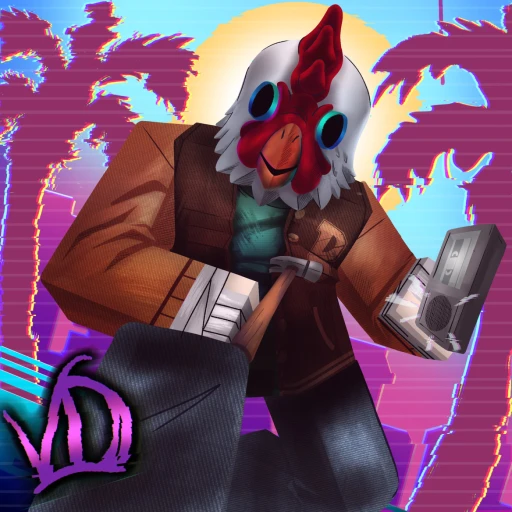
Violence District has quickly become one of Roblox's most popular horror games, pulling in over 1.74 billion visits and holding a 7-day median of about 38,700 concurrent players as of November 19, 2026, with The Butcher X Halloween update and its new Ranked mode live until November 21. This asymmetric survival game pits 5 survivors against 1 killer in tense, generator-powered escape scenarios. Whether you're trying to survive or hunt, this guide covers every strategy, perk, and item you need to know -- plus how to earn free Robux for game passes without spending real money.
All four figures are as of November 19, 2026: 1,738,150,670 visits and 836,253 likes to 63,919 dislikes from the Roblox games and votes APIs for universe 6739698191, and a concurrent-player median of 38,716 across 28 readings from our own tracker between November 12 and November 19, 2026. That series swings from 30,351 to 81,374 within the week, so we publish the median and the range rather than a single snapshot. The swing is the daily cycle, not a trend -- the 14:30 UTC readings median 62,257 and the 20:30 UTC readings median 33,212. Visits are up 23% since our September check while the concurrent median is down 27%: the lifetime visit counter only ever rises, so it is the median that tells you how busy the game is right now.
Table of Contents
What Is Violence District
Violence District is an asymmetric horror survival game on Roblox, developed by the VIOLENCE DISTRICT group. It draws heavy inspiration from Dead by Daylight, translating that formula into Roblox's engine with surprisingly polished results. The game is currently in alpha, yet it already sustains a concurrent player count that many finished games struggle to reach.
The core loop is straightforward. Five survivors spawn across a dark map -- forests, cabins, space stations, and other varied environments -- and must repair a set number of generators to power the exit gates. One player takes on the role of the killer, whose job is to hunt down, injure, and hook survivors before they can escape. Each match accommodates a maximum of 6 players, keeping rounds fast and personal.
What separates Violence District from other Roblox horror games like DOORS or Murder Mystery 2 is its emphasis on team coordination. Survivors can't just hide in a corner and wait. Generators need to be repaired, hooked teammates need to be rescued, and the killer needs to be looped through pallets and vault points. Every player has a role, and every second of a match matters.
You can play Violence District for free on Roblox at its official game page. No access codes, premium passes, or level requirements are needed to join.

Survivor Gameplay & Strategy
Surviving in Violence District requires a balance of stealth, mechanical skill, and teamwork. As one of 5 survivors, your primary objective is repairing generators, but how you approach that task determines whether you escape or end up on a hook.
Generator Repair
Generators are the backbone of every match. You hold an interaction key to repair them, and skill checks appear as quick-time events during the process. Hitting the great zone on these checks accelerates repair speed noticeably. Missing a skill check does two things: it causes the generator to lose progress, and it triggers a loud noise notification that reveals your position to the killer. In higher-level lobbies, missing even one skill check can mean the difference between a clean escape and a team wipe.
The most efficient approach is to split up at the start of a match. If all 5 survivors cluster on one generator, the killer only has to patrol a single area. When 3 or 4 generators are being worked on simultaneously, the killer can't apply pressure everywhere. Aim to have at least 2-3 generators progressing at all times during the early game.
Chase Mechanics: Pallets and Vaulting
When the killer finds you, the chase begins. Violence District features two primary tools for creating distance: pallets and vault windows.
Pallets are wooden barriers scattered across the map that you can drop onto the killer to stun them. A well-timed pallet drop buys you roughly 2-3 seconds -- enough to reach the next loop or break line of sight entirely. But pallets are a limited resource. Once dropped, they stay down (unless the killer breaks them), and your team loses that safe zone for the rest of the match. Drop pallets only when the killer is close enough to be stunned. Throwing them down preemptively wastes your team's resources.
Vaulting works differently. Windows are permanent and reusable. When you vault through a window, you gain a brief speed advantage over the killer, who must also vault but does so more slowly. The key to effective vaulting is approach angle. Running straight at a window gives you a fast vault animation. Walking or approaching from a tight angle results in a slow vault that barely gains you any distance.
Team Coordination
Hook rescues are where matches are won or lost. When a survivor gets hooked, someone needs to make the save -- but not everyone. One player should go for the rescue while the rest keep working on generators. If 3 survivors abandon their generators to rush one hook, the killer effectively stalls the entire team with a single down.
The survivor closest to the hook, or the one with the best rescue perks, should take the save. Everyone else stays on their generator. This discipline is what separates teams that escape consistently from teams that fall apart after the first hook.

Best Survivor Perks (Tier List)
Perks define your playstyle and can dramatically shift a match in your favor. The wiki's full perk list runs to 44 survivor perks and 15 killer perks, and you can only equip 3 at a time -- so choosing the right combination matters more than raw mechanical skill in many situations. Every perk has three tiers, shown in-game as yellow, green and red, and the numbers below are the yellow/green/red values. Here are the top 4 ranked by overall impact, with effects re-read against the wiki's perk page on November 19, 2026.
| Rank | Perk | Effect | Best For |
|---|---|---|---|
| S-Tier | Second Wind | After you are unhooked, Endurance lasts 15/20/25s longer and Fatigue clears 5/10/15% faster | Surviving a tunneller |
| S-Tier | Grab My Hand | After you unhook a survivor, you get a 75% healing speed boost for 45/60/75s | Dedicated support players |
| A-Tier | We're Stronger Together | Within 30 studs of any survivor, every survivor in range gains 4/5/6% speed | Team-oriented generators |
| A-Tier | Group Project | +3/5/7% repair speed per survivor on your generator, shared with them; does not stack with itself | Generator-focused play |
Second Wind -- The Best Anti-Tunnel Perk
A correction to our own September edition. We previously described Second Wind as immunity for the player making a rescue. It is the opposite: it protects you after you are taken off the hook. It extends the Endurance status you get on being unhooked by 15/20/25 seconds and clears the Fatigue effect 5/10/15% faster -- the wiki's own flavour line is "the Jester hates tunnelers." That makes it a direct counter to a killer who chases the freshly-unhooked survivor instead of spreading pressure, which is the single most common way solo-queue teams collapse. It does nothing for your rescuer.
Grab My Hand -- Faster Healing, Not Instant Healing
Also corrected. Grab My Hand does not snap an unhooked teammate back to full health. It gives the rescuer a 75% healing speed boost for 45/60/75 seconds after the unhook, so the heal you then perform finishes far quicker -- which still matters, because the dangerous part of a rescue is the time the two of you spend standing still afterwards. Run it alongside Second Wind on one loadout and you are covered at both ends of a hook trade -- Second Wind when you are the one taken off the hook, Grab My Hand when you are the one doing the taking.
We're Stronger Together -- Conditional but Powerful
The speed boost from We're Stronger Together activates when you're near other survivors. This makes it situational -- it's useless when you're solo on a generator across the map. But during the mid-game and endgame when survivors group up to push the last generators, the extra speed makes it harder for the killer to secure downs. It's particularly strong during exit gate phases when the team is clustered near one or two points.
Group Project -- Generator Rush Meta
Group Project accelerates repair speed when multiple survivors work the same generator. In a coordinated team, pairing Group Project with We're Stronger Together creates a powerful generator rush strategy: 2-3 survivors slam out a generator at increased speed while the others distract the killer. The downside is that it encourages grouping up, which a skilled killer can punish by finding and pressuring the cluster.
Killer Gameplay & Tips
Playing killer is a fundamentally different experience from survivor play. You're alone against 5 players who are all working toward the same goal. Your job is to apply enough pressure across the map to slow down generator repairs and eliminate survivors before they can power the exit gates.
Patrol Strategy
The biggest mistake new killers make is tunnel-visioning on one survivor. Chasing a single player across the entire map while 4 others repair generators freely will lose you the match every time. Instead, establish a patrol route that covers 3-4 generators. When you find a survivor on a gen, chase them off and check the next generator. If you can't down them within 15-20 seconds, break the chase and pressure someone else.
Map control wins games. A killer who keeps 3 generators at low progress is in a better position than a killer who's hooked 2 survivors but let the other 3 finish all their generators uncontested.

Pressure Tactics
Hooking a survivor creates a time-sensitive dilemma for the entire team. At least one survivor has to stop what they're doing to make the rescue. If you can hook someone in an area near active generators, you force the rescuer to come to you rather than repair. This is called "hook pressure," and it's one of your strongest tools.
After hooking, don't camp directly on top of the hook. Move to a nearby generator and start regressing it or patrolling the area. This way, you're productive even while waiting for the rescue attempt. When the rescuer arrives, you have an opportunity to either interrupt the save or chase the rescuer for a second hook, putting the team under enormous pressure.
Using Killer Abilities
There are nine killers: The Slasher, The Stalker, The Killer, The Hidden, The Masked, The Abysswalker, The Veil, The Cure and -- since October 24, 2026 -- The Butcher. Each has unique abilities that change how you approach chases and map control, so learn the specific strengths of whichever one you're playing. Some excel at long-range detection, making it easier to find survivors on distant generators. Others have chase abilities that end loops faster, bypassing pallet setups that would stall other killers for several seconds. All nine are unlockable with Screws -- none is behind a game pass.
The Butcher is the newest and the clearest example of a kit that rewrites a chase. Her Your Heart Is Mine casts a chain at a survivor within 50 studs; once latched they are Silenced, can't get far from her, and need 7 seconds to break free. It wraps around the environment and has real tension, so a chain hooked around a pillar or tree can be recast -- up to three times -- to yank the survivor back and interrupt whatever they were doing. Her second ability, Tendons, plants a steel trap that arms the moment it lands; she carries two, each returning after 45 seconds, and a trapped survivor is injured, held in place and revealed. Freeing yourself takes 20 seconds of continuous special skill checks, each great reducing the timer by one second and a miss cancelling the attempt entirely; a teammate frees you in 7. The studio nerfed her a day after launch -- traps can no longer be placed next to hooks.
Regardless of your killer's kit, breaking pallets quickly is essential. A dropped pallet that stays up is a safe zone for survivors on future chases. Breaking it immediately removes that option and gradually makes the map less safe for the survivor team as the match progresses.
Game Passes -- VIP & 2x Emotes
Violence District offers two game passes, and neither is required to play the full game. Both got cheaper since our September check: V.I.P dropped from 799 to 599 Robux (listing edited November 13, 2026) and 2x Emotes from 199 to 149 (edited October 13, 2026). Neither carries a discount record on Roblox's API, which means these are new base prices rather than a limited-time sale -- but a price that moved once can move again, so treat the figures below as read on November 19, 2026.
| Game Pass | Price | What You Get |
|---|---|---|
| V.I.P | 599 Robux | Per the developer's own listing: a permanent +20% EXP boost to your main level and to every killer, VIP skins for every killer, and a unique nametag on the leaderboard |
| 2x Emotes | 149 Robux | Doubles your available emote slots, giving you more ways to express yourself in lobbies and matches |
The V.I.P pass at 599 Robux is the more substantial purchase, and be clear about what it actually does: the +20% EXP boost is permanent and applies to your main level and every killer, so it is a progression-speed purchase, not purely a cosmetic one. The 2x Emotes pass at 149 Robux is a lighter buy for players who enjoy the social side of the game.
Neither pass gives you stronger perks, better items, or a combat advantage in a match -- all nine killers, The Butcher included, are reachable with Screws alone, and perks are bought with Emblems. What V.I.P buys is time. If you want it, 599 Robux is still a meaningful amount, which is where earning free Robux becomes relevant.
Items & Currencies
Violence District has two in-game currencies and several survivor items that can turn the tide of a match. None of these require real money -- you earn everything through gameplay.
Currencies: Emblems and Screws
Emblems and Screws are earned by completing objectives during matches. Repairing generators, rescuing teammates, escaping as a survivor, and eliminating or hooking survivors as a killer all contribute to your earnings. The exact amounts vary based on match performance, but consistent play across multiple matches builds up your currency steadily.
Both currencies are used to unlock perks, items, and cosmetic options. Managing your spending matters -- prioritize unlocking perks that match your preferred playstyle before investing in cosmetics.
Survivor Items
Items are bought once with Screws and equipped in your survivor loadout -- they are not single-use consumables, which is how we described them in September. The wiki documents 11: Twist of Fate, Bandage, Parrying Dagger, Adrenaline Shot, Flashlight, Motion Tracker, Gate, Shadow Clone, WaxBound Candle, Holy Water and Riot Shield. Two stand out as the most impactful.
Flashlight (5,000 Screws, Green rarity): shine it on the killer's face and they are blinded and forced to drop any survivor they are carrying -- that is the developer's own description, not a community claim. It runs for 20 seconds of use, and a full blind takes roughly 2 to 4 seconds depending on how far away you are, so don't wave it around for fun. Save it for two scenarios: blinding the killer during a chase to gain distance, or blinding them mid-pickup to force the drop.
Motion Tracker (3,000 Screws, Yellow rarity): a correction -- our September edition called this item a "Heartbeat Sensor", which is not a thing in Violence District. The real item is the Motion Tracker, and it works better than we described: you hold it to activate, its beeps speed up and rise in pitch as the killer closes, and while it is active it also reveals the auras of any teammate within 100 studs who has moved in the last second. Its usage duration is unlimited. It is the cheapest item in the game and the single best pick for newer players who struggle with awareness, with one caveat the wiki is blunt about: stop using it once you have found the killer, because holding it tells them roughly where you are too.

Earning Free Robux for Violence District
Violence District doesn't have a codes system, so you can't get free in-game items through code redemption. The game's currencies -- Emblems and Screws -- are earned purely through gameplay. But if you want the V.I.P pass (599 Robux) or 2x Emotes pass (149 Robux), you'll need Robux, and there are legitimate ways to earn it without paying out of pocket.
Earnaldo is a platform where you can earn free Robux by completing simple tasks like surveys, watching videos, and trying out apps. It's a straightforward way to build up enough Robux for Violence District's game passes without spending real money.
How to Earn Free Robux with Earnaldo
- Visit earnaldo.com and create a free account using your Roblox username.
- Browse available tasks in the Earn section -- these include surveys, app installs, and video offers.
- Complete tasks to earn points. Each task clearly shows the reward amount before you start.
- Once you've accumulated enough points, head to the Withdraw section and convert your earnings to Robux.
- The Robux is delivered to your Roblox account, ready to spend on Violence District game passes or anything else.
At 599 Robux for the V.I.P pass, it typically takes a few sessions of completing tasks to earn enough. The 2x Emotes pass at 149 Robux is faster to reach. Similar strategies work for other Roblox games too -- check out our guides for The Strongest Battlegrounds and Blade Ball for more tips.
Earn Free Robux for Violence District
Want the VIP pass or 2x Emotes without spending real money? Earn free Robux through simple tasks on Earnaldo.
Frequently Asked Questions
No. Violence District does not have a code redemption system -- re-verified on November 15, 2026 against the developer's own game description, which still carries no redeem line. There are no active or upcoming codes for this game. You earn in-game currencies like Emblems and Screws by completing objectives during matches.
Each match has 6 players total: 5 survivors and 1 killer. The small lobby size keeps matches intense and ensures every player's actions have a visible impact on the outcome.
Second Wind, but not for the reason most guides give. It does not protect the rescuer -- it protects you after you are unhooked, extending Endurance by 15/20/25 seconds and clearing Fatigue 5/10/15% faster, which is the direct counter to a killer who tunnels. Grab My Hand is a close second: it gives the rescuer a 75% healing speed boost for 45/60/75 seconds, not an instant heal.
Survivors hold an interaction key to repair generators. Skill checks appear as quick-time events during the process. Hitting the great zone speeds up repair, while missing a check causes progress regression and alerts the killer to your position with a noise notification.
Yes. Violence District is completely free on Roblox. The two optional game passes -- V.I.P (599 Robux) and 2x Emotes (149 Robux), both cheaper than they were in September -- are not needed to access any gameplay features, though V.I.P does carry a permanent +20% EXP boost.
Emblems and Screws are Violence District's two in-game currencies. You earn them by completing match objectives like repairing generators, rescuing teammates, escaping, or eliminating survivors as a killer. They're used to unlock perks, items, and cosmetic options.
Aim it at the killer's face: a full blind takes 2-4 seconds depending on range, and the developer's own item description says it forces them to drop any survivor they are carrying. You get 20 seconds of use, so save it for critical moments -- breaking a chase, or blinding them mid-pickup to force the drop.
Yes. Violence District follows the same asymmetric horror format: 5 survivors versus 1 killer, generator repair objectives, hook mechanics, pallets, and vaulting. It adapts these mechanics for Roblox with unique maps, perks, and items, making it the closest Dead by Daylight experience available on the platform.
About This Guide
The live figures, the two game passes and their prices on this page were re-read from the Roblox APIs on November 19, 2026. The perk and item sections were re-read the same day against the game's wiki, which corrected two things we had wrong since March: what Second Wind and Grab My Hand actually do, and the name of the Motion Tracker. The current content update, The Butcher X Halloween, is dated from the studio's own Roblox event listing -- created October 15, opened 12:00 UTC on October 24 and scheduled to close 13:00 UTC on November 21, 2026 -- which names the whole payload: The Butcher, a Halloween event, a Ranked game mode, a UI overhaul, a new map, a new item, new perks, new skins and QOL. The "WEEK 4" counter in the game's title is an event-week label the studio rotates, so we never date anything from it. Violence District is still in alpha -- the developer's description still opens "GAME IS IN ALPHA, EXPECT BUGS AND CHANGES" -- so mechanics, perks and items may change with future updates.
Violence District is developed by the VIOLENCE DISTRICT group on Roblox. You can find the game at roblox.com/games/93978595733734. The game's 92.90% approval rating across 1.74 billion+ visits (November 19, 2026) speaks to the quality of the experience, even at this early stage of development.