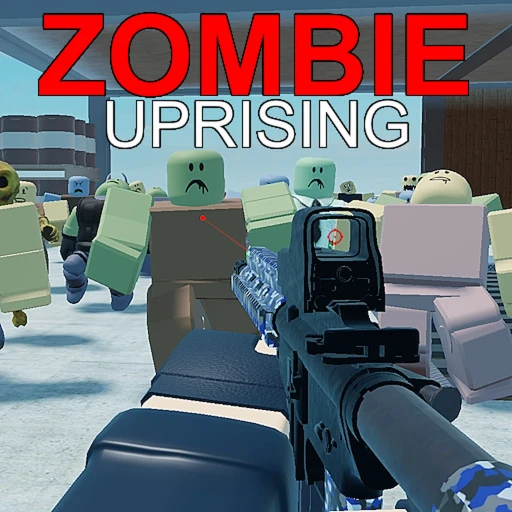
Zombie Uprising vs Hunty Zombie (2026) -- Which Is Better?
Zombie shooters on Roblox have exploded in popularity, and two names keep coming up in every discussion: Zombie Uprising and Hunty Zombie. Zombie Uprising is the established giant, sitting at 1.2 billion visits with a polished wave-survival formula that has kept players coming back for years. Hunty Zombie is the scrappy challenger, racking up 654 million visits with a faster combat style, a deep perk and pet system, and over 120 active codes that keep its community buzzing.
They share a premise -- shoot zombies, earn rewards, get stronger -- but they execute it in noticeably different ways. One leans into structured progression and seasonal content. The other rewards players who love experimenting with builds and hunting down special mission objectives. This article breaks both down across every category that matters so you can decide where your time is best spent.
Start with the quick-stats table below for a side-by-side snapshot, then read on for the section-by-section breakdown.
Quick Stats: Zombie Uprising vs Hunty Zombie at a Glance
| Category | Zombie Uprising | Hunty Zombie |
|---|---|---|
| Developer | Starter Games | Unknown |
| Roblox Place ID | 4972091010 | 103754275310547 |
| Concurrent Players | ~6,000–7,000 | ~2,000–5,000 |
| Total Visits | 1.2B+ | 654M+ |
| Genre | Zombie Shooter / Wave Survival | Zombie Hunter / Wave Combat |
| Core Loop | Survive waves, earn cash, buy & upgrade weapons | Hunt waves, unlock weapons, complete special missions |
| Weapon Tiers | 7 tiers | Tier progression + perk system |
| Special Systems | Seasonal battle pass, multiple maps | Perk, pet & trait system, 120+ codes |
| Game Passes | VIP, Elite, Premium Battle Pass (750R$) | Cosmetic-only (all weapons earnable) |
| Player Rating | 95% | Not specified |
| Mobile Support | Yes | Yes |
| Free to Play | Yes | Yes |
Those numbers tell a clear story about scale, but raw visit counts don't tell you which game actually feels better to play. Let's get into the details.
Gameplay and Core Loop
Zombie Uprising: The Polished Wave Survival Formula
Zombie Uprising's loop is straightforward and deliberately addictive. You and a group of players drop into a map, zombies arrive in escalating waves, and you earn cash by killing them. Between waves you head to the shop, buy better weapons or upgrade existing ones, and prepare for the next onslaught. Survive long enough and you unlock access to higher weapon tiers, which open the gap between an early-game pistol and a tier-7 energy rifle that vaporizes entire crowds.
The multiple maps add real variety to the experience. Different layouts change how you position yourself, which chokepoints are worth defending, and how wave spawns flow around the environment. Some maps favor players who like close-range shotgun builds. Others reward long sight lines and precision rifles. Switching between maps keeps sessions from becoming repetitive even after dozens of hours.
Co-op is naturally baked in. Every public server is a shared battlefield, so you are always playing alongside other people even if you did not coordinate a session with friends. Higher waves require genuine teamwork -- spreading out to cover spawn points, reviving fallen teammates, and calling out heavy zombie types before they overwhelm a chokepoint. The seasonal battle pass layers an extra reward track on top of this, giving you cosmetics, bonus points, and exclusive items as you rack up playtime throughout each season.
Hunty Zombie: Faster, Deeper, More Experimental
Hunty Zombie runs at a noticeably faster pace. Zombie hordes move quicker, combat rewards more aggressive play, and the special mission system pulls you in multiple directions within a single session. Rather than purely surviving to the highest wave, you're also completing objectives -- eliminating specific zombie types, reaching score thresholds within time limits, or surviving challenge variants with modifiers active.
The trait system is where Hunty Zombie really separates itself. You choose traits that modify how your character performs in combat, and those traits interact with your weapon choices and the pet you bring into a round. A trait that increases reload speed pairs differently with a shotgun than with a sniper rifle, and your pet might provide passive healing, damage bonuses, or utility effects that change your playstyle entirely. The result is a game where two players with the same weapon can play completely differently based on how they build their characters.
The 120-plus active codes are worth mentioning here because they're not just a nice bonus -- they're a meaningful bridge for free-to-play players to unlock weapons and items faster, reducing the grind and letting you experiment with builds without sinking twenty hours first. Check our Hunty Zombie codes guide for the full list.
Edge: Hunty Zombie on depth and experimental play. Zombie Uprising wins on accessibility and polish. If you want to pick up and immediately feel competent, Zombie Uprising is the smoother experience. If you want a game that rewards build theory and active experimentation, Hunty Zombie delivers that.
Weapon Systems and Progression
Zombie Uprising: Seven Tiers, Clear Ladder
Zombie Uprising uses a tiered weapon system that runs from tier 1 through tier 7. You start with basic weapons available at low cash costs and work your way up as you earn more from kills and wave completions. Each tier jump represents a meaningful power increase -- you can feel the difference between a tier-3 SMG and a tier-5 assault rifle in how quickly crowds thin out around you.
Upgrades within each tier let you improve rate of fire, damage, magazine size, and reload speed. This creates short-term goals (upgrade this weapon to max) and long-term goals (save up for the next tier) simultaneously, which keeps the grind from feeling aimless. The VIP pass gives you 2,000 starter points and a 25% bonus on all earnings, while the Elite pass bumps that to 5,000 starter points and a 1.5x cash multiplier -- meaningful advantages that let paying players skip the earliest stages and access mid-tier weapons faster.
For free players, the path is still clear; it just takes longer. Our Zombie Uprising codes guide lists current codes that give bonus points and cash to close that gap.
Hunty Zombie: Weapons Plus Build Depth
Hunty Zombie's weapons work within a tier progression system too, but the real depth comes from what surrounds those weapons. Perks directly modify weapon behavior -- think damage bonuses, reload perks, or effects on critical hits. Pets add passive buffs that stack on top of your perk choices. Traits shape your base stats. The result is that unlocking a new weapon in Hunty Zombie isn't the end of the optimization; it's the beginning.
Crucially, every weapon in Hunty Zombie is earnable without spending Robux. The game passes are cosmetic-only, which means the weapon you want is always achievable through gameplay. This philosophy removes the frustration of hitting a paywall mid-progression and is one of Hunty Zombie's strongest selling points for players on a budget.
Edge: Zombie Uprising for clarity and accessibility. The seven-tier ladder gives you a clean sense of where you are and what you're working toward. Hunty Zombie wins on build customization depth and fairer monetization around weapons.
Monetization and Value
Zombie Uprising: Passes with Real Benefits
Zombie Uprising offers three purchasable options. The VIP pass (2,000 Robux) gets you 2,000 starter points and a 25% earnings bonus. The Elite pass gives 5,000 starter points plus a 1.5x cash multiplier. The Premium Battle Pass costs 750 Robux and unlocks the seasonal reward track with cosmetics and exclusive items alongside the free tier.
The VIP and Elite passes provide genuine in-game advantages rather than pure cosmetics, which means free players can feel the gap when playing alongside pass holders. It's not a pay-to-win situation in competitive terms -- this is a co-op game -- but the cash and points advantages do accelerate progression significantly. For players who spend a lot of time in Zombie Uprising, the Elite pass is genuinely worth considering. For casual players, the free experience is still very solid.
Want to earn Robux to put toward those passes? Our Zombie Uprising free Robux guide walks through the best approaches.
Hunty Zombie: Clean Cosmetic-Only Model
Hunty Zombie takes the opposite stance. Its game passes are purely cosmetic -- visual flair that doesn't change how your character performs in a single round. Every weapon, every perk tier, and every meaningful gameplay system is unlockable through normal play. The 120-plus codes further accelerate this, meaning a new player who redeems a good codes list might unlock enough resources to start experimenting with real builds within their first session.
This approach won't generate the same revenue as Zombie Uprising's model, but it earns significant goodwill from the community. There's no resentment from free players, no tiering of the player experience by wallet, and no awkward questions about whether a game is fair. If you want to support the developer, you can buy a cosmetic pass. If you don't, you lose nothing.
Our Hunty Zombie free Robux guide covers how to earn Robux for any optional cosmetics you have your eye on.
Edge: Hunty Zombie. Cosmetic-only monetization with 120-plus active codes is genuinely hard to beat. Zombie Uprising's passes offer real value, but the gap they create between paying and free players is a legitimate criticism. For pure fairness, Hunty Zombie is the better model.
Maps, Content Variety, and Special Features
Zombie Uprising: Multiple Maps and Seasonal Events
One of Zombie Uprising's strongest points is the breadth of its map pool. Each map isn't just a reskin of the same layout -- they're designed around different defensive strategies, movement patterns, and zombie approach vectors. A map built around a central plaza plays nothing like one designed around tight corridors and flanking spawn points. Rotating between maps keeps the wave-survival formula from going stale.
The seasonal battle pass brings regular themed content drops. New cosmetics, limited-time weapon skins, and seasonal events give long-term players something to work toward outside of the standard progression. It's a smart system for keeping an active community engaged between larger content updates, and with over 6,000 concurrent players at any given time, the community certainly stays active.
Hunty Zombie: Special Missions and the Build Ecosystem
Hunty Zombie's special missions are its most distinctive structural feature. Rather than running the same wave format every session, the game regularly introduces mission variants with specific objectives, modifiers, or enemy compositions. Completing these missions often rewards unique items or accelerated progression, giving you a reason to engage with content beyond grinding standard waves.
The perk, pet, and trait system creates a meta-game around build discovery that can be as engaging as the combat itself. Players share loadout combinations in community spaces, debate which trait stacks are most efficient for different mission types, and experiment with pet synergies. This kind of emergent theory-crafting keeps a game interesting long after you've mastered its basic mechanics.
Edge: Zombie Uprising for content volume and seasonal variety. Hunty Zombie for moment-to-moment gameplay variety through missions and build diversity. They're targeting different kinds of engagement -- Zombie Uprising rewards consistency and seasonal participation, Hunty Zombie rewards curiosity and experimentation.
Multiplayer and Community
Zombie Uprising: Large Servers, Strong Co-Op Culture
With 6,000 to 7,000 concurrent players, Zombie Uprising's servers are consistently full and active. Jumping into a public game means you're almost always joining experienced players who know how to handle high-wave content. This creates a natural mentorship dynamic -- newer players learn from watching veterans work through waves efficiently, and high-level players often carry less experienced teammates without friction because the co-op format doesn't punish individual weak links harshly.
The community around Zombie Uprising is large and well-established. Content creators regularly cover the game, strategy guides are plentiful, and the seasonal battle pass gives the community a shared goal to discuss and work toward. The 95% rating speaks to how consistently the player base has received new content and updates over the game's lifetime.
Hunty Zombie: Smaller but Active
Hunty Zombie's 2,000 to 5,000 concurrent players is a smaller pool, but the community is notably engaged. The 120-plus active codes are a direct signal from the developer that they're actively communicating with players and rewarding the community regularly. In many zombie games, a code drop is a rare event. Hunty Zombie treats it as standard operating procedure, which builds loyalty.
The build community around Hunty Zombie's perk and trait system is particularly vocal. Players who enjoy optimizing loadouts find other players who share that interest, creating a niche but passionate group of theorycrafters. Smaller communities often have higher average engagement per player, and Hunty Zombie's appears to fit that pattern.
Edge: Zombie Uprising on sheer scale and established community infrastructure. More players means faster server fills, more experienced co-op partners, and a richer content creator ecosystem. Hunty Zombie's community punches above its weight given the player count, but Zombie Uprising simply has more of everything here.
Performance and Accessibility
Both games support mobile and run well across a range of devices. Zombie Uprising's more polished production generally translates to stable performance, even on mid-range hardware, and its large player base means servers are reliably available at any hour. The UI is clean, tutorials are functional, and new players can understand the core loop within one or two waves without needing to read anything.
Hunty Zombie performs solidly on mobile, though its trait and perk menus can feel slightly compressed on smaller screens. The complexity of the build system also means that true understanding comes slower -- you'll play well quickly, but playing optimally requires time spent understanding how the systems interact. That's a feature for some players and a friction point for others.
Both games support controller play through Roblox's native input handling, which is a plus for players on PC who prefer a gamepad or for those using mobile controller accessories.
Edge: Zombie Uprising for accessibility and onboarding. Its production quality and streamlined UI make it the easier game to pick up without any prior knowledge. Hunty Zombie is still accessible, but its depth has a learning curve.
The Verdict
Our Pick Depends on What You Want From a Zombie Game
Zombie Uprising is the better game for players who want a polished, community-proven zombie shooter with clear progression, consistent seasonal content, and large active servers. Its 95% rating and 1.2 billion visits aren't accidents -- Starter Games has built a formula that works and kept refining it. If you play casually, want to jump in with randoms, and like knowing exactly what weapon tier you're chasing next, Zombie Uprising is the stronger pick. Hunty Zombie is the better game for players who want to theory-craft builds, appreciate genuinely fair free-to-play monetization, and enjoy a game that rewards experimentation through its perk, pet, and trait systems. Its special missions break the wave-survival monotony in a way that Zombie Uprising doesn't, and its 120-plus active codes make it one of the most generous games on Roblox for free players. If you can only pick one, Zombie Uprising edges ahead for most players because its scale, polish, and content variety give it staying power. But if you're the type who gets more enjoyment from finding a broken build combination than from climbing a weapon tier list, Hunty Zombie might be the one you play longer.
Who Should Play What?
Play Zombie Uprising if you:
- Want a well-established zombie shooter with a proven track record
- Enjoy structured weapon tier progression with clear upgrade goals
- Prefer large active servers with experienced co-op players
- Like seasonal content, battle passes, and limited-time events
- Want multiple distinct maps with different defensive strategies
- Value high concurrent player counts and easy server fills
- Are willing to spend Robux on passes to accelerate progression
Play Hunty Zombie if you:
- Love build theory-crafting with perk, pet, and trait combinations
- Prefer cosmetic-only monetization with no pay-to-progress gap
- Want access to 120+ active codes that reward free players generously
- Enjoy special missions that break up standard wave gameplay
- Like faster-paced combat that rewards aggressive play
- Appreciate community-oriented developers who communicate actively
- Want a game where every weapon is earnable through gameplay alone
Earn Free Robux While You Play
Whether you're grinding Zombie Uprising's weapon tiers or experimenting with builds in Hunty Zombie, Earnaldo lets you earn free Robux through simple tasks -- no surveys, no scams, just real rewards you can spend on game passes or anything else on Roblox.
Frequently Asked Questions
Both games are beginner-friendly, but Zombie Uprising is arguably the smoother entry point. Its wave structure is familiar, the early weapons are easy to use, and co-op servers mean there are usually more experienced players around to carry new arrivals through tough waves. Hunty Zombie's perk and trait systems introduce a bit more complexity upfront, so it rewards players who enjoy reading tooltips and experimenting with builds from the start.
Hunty Zombie is the stronger free-to-play experience. Every weapon in the game is earnable through gameplay, and its game passes are cosmetic-only. Zombie Uprising's VIP and Elite passes provide meaningful early advantages like bonus starting points and increased cash earn rates, which can feel like a gap between paying and non-paying players. Both games are fully completable without spending Robux, but Hunty Zombie's approach is cleaner.
Yes, both games have active codes. Hunty Zombie is particularly generous, with 120 or more active codes available at any given time that reward weapons, cash, and other in-game items. Zombie Uprising also maintains a codes list with periodically released rewards. Check our Zombie Uprising codes guide and our Hunty Zombie codes guide for the latest working codes.
Zombie Uprising organizes weapons across seven distinct tiers, giving you a clear ladder of progression from starter weapons up through elite-tier firearms. Hunty Zombie matches this with its own weapon unlock system layered on top of perks and pets, which means your weapon's effective power depends on how you build your character around it. If you prefer straightforward weapon upgrades, Zombie Uprising wins. If you want to customize how your weapons perform through synergies, Hunty Zombie has the edge.
Yes, both Zombie Uprising and Hunty Zombie support mobile devices. Controls are adapted for touchscreen play. Zombie Uprising's larger player base means mobile servers are easy to find and usually well-populated. Hunty Zombie runs well on mobile too, though the trait and perk menus can be slightly cramped on smaller screens. Either game is a solid choice for mobile zombie action.
Zombie Uprising has a long track record of consistent updates including new maps, seasonal events, and battle pass rotations. With over 1.2 billion visits and a large concurrent player base, Starter Games has strong incentive to keep the content flowing. Hunty Zombie is a younger game with active development, evidenced by its 120-plus code releases, though its update cadence is less established. For long-term content, Zombie Uprising currently has the more reliable history.
Both Zombie Uprising and Hunty Zombie are worth your time in 2026. They're chasing the same genre from different angles, and both succeed on their own terms. Pick based on whether you want a proven, polished wave-survival experience or a faster, build-driven game that treats free players fairly -- then check back when the other one gets a major update.