99 Nights in the Forest vs Dead Rails (2026) -- Which Roblox Game Is Better?
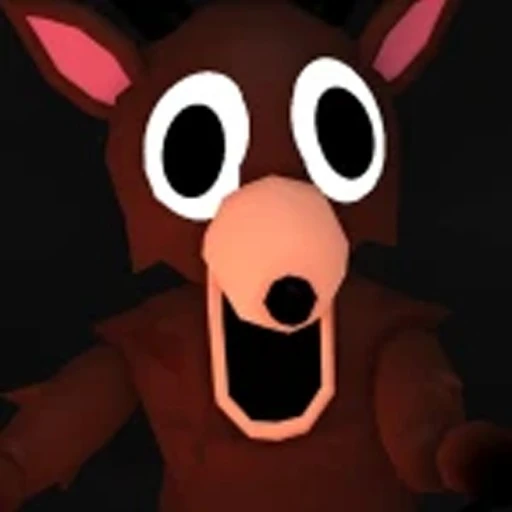
99 Nights in the Forest and Dead Rails are both Roblox survival games, but they pull in opposite directions. One asks you to dig in, defend a campfire, and outlast 99 nights of cultists and a deer monster with a team; the other puts you on a moving train and dares you to cross 80 kilometers of zombie-infested desert without dying. Both have sat near the top of Roblox at some point, and together they have racked up tens of billions of visits. This head-to-head breaks down gameplay, progression, player counts, game passes and Robux prices, community, and replay value so you know which one fits how you actually play.
Survival on Roblox is a crowded space, and these two are among the genre's standout hits. 99 Nights in the Forest, built by Grandma's Favourite Games, exploded after its 2025 release and reached a peak of 14.2 million concurrent players, crossing roughly 26 billion lifetime visits and even landing a movie deal at 20th Century Studios. Dead Rails, made by RCM Games, had its own viral run in 2025 with peaks near 1.3 million concurrent players before settling into a smaller but devoted player base. They share survival DNA, yet the moment-to-moment experience could hardly be more different.
99 Nights in the Forest vs Dead Rails -- Quick Stats (2026)
| Category | 99 Nights in the Forest | Dead Rails |
|---|---|---|
| Genre | Co-op survival horror | Western survival adventure |
| Place ID | 79546208627805 | 116495829188952 |
| Developer | Grandma's Favourite Games | RCM Games |
| Concurrent Players | Hundreds of thousands daily (14.2M all-time peak) | ~10K-20K daily (~1.3M all-time peak) |
| Total Visits | ~26 billion | Multiple billions |
| Core Loop | Defend camp, gather, survive 99 nights, rescue kids | Ride train ~80km across the desert, loot, survive |
| Key Features | 33+ classes, biomes, campfire, deer monster, true ending | Bonds economy, class roster, endless mode, train upgrades |
| Trading System | No formal player trading | No formal player trading |
| Mobile-Friendly | Yes | Yes |
| Free-to-Play | Yes | Yes |
The headline split is clear: 99 Nights is a base-defense survival sit balanced around teamwork and long-term unlocks, while Dead Rails is a run-based gauntlet you can knock out solo. Popularity in 2026 tilts heavily toward 99 Nights, but Dead Rails still fills servers and has a polished, repeatable run structure that keeps its fans loyal.
Gameplay -- What Do You Actually Do?
99 Nights in the Forest
99 Nights in the Forest is a co-op survival-horror game where you and a small team try to outlast 99 in-game nights in a cursed forest. The day-night cycle is the spine of everything: daytime is for gathering wood, food, and gear and exploring nearby structures, while nighttime is when cultists, shadowy entities, and a roughly nine-foot deer monster come for your campfire. Keeping that fire fed and upgraded is the single most important job, because it is your light, your safe zone, and your cooking station.
Beyond pure survival there is a story hook. Four kids are lost in the woods, and rescuing them ties into the game's true ending, which gives committed teams a goal beyond simply staying alive. You loot pelts to trade for a Good Axe and Rod, cook crockpot stews to keep hunger down, manage sack space, and pick a class from a roster of more than 33 that change how you play, from the resource-friendly Scavenger to the stamina-focused Cyborg to the Explorer that helps with the child-rescue path.
The deer monster is the signature threat. Standing at the edge of the campfire light, timing your movement, and coordinating with teammates to bait or evade it is where the horror tension peaks. It is a game of preparation and nerve more than reflexes.
Dead Rails
Dead Rails is a western survival adventure where you ride a train roughly 80 kilometers across a zombie-filled desert. The train is your moving base, and the loop is constant motion punctuated by stops: you pull into towns and ruins to scavenge weapons, ammo, food, and money bags, fight off zombies, werewolves, and other threats, crack bank vaults for Bonds and codes, then keep the train rolling toward the end of the line.
Combat and resource management run side by side. You manage fuel and the train's health, decide when a stop is worth the risk, and balance carrying loot against having room for what you actually need. Classes change the run dramatically, and they are unlocked with Bonds earned over time. Cowboy (around 35 Bonds) hands you a horse and revolver for instant mobility and firepower, while High Roller (50 Bonds) gives 1.5x cash from money bags at the cost of far worse luck during lightning storms, so a lightning rod becomes essential.
Where 99 Nights is a static siege, Dead Rails is a road trip under fire. A full run has a clear start and finish, and an endless mode exists for players who want to push as far as they can. It rewards efficiency and route decisions over base-building.
Edge: Tie, but in different ways. 99 Nights wins for atmosphere and co-op tension; Dead Rails wins for tight, self-contained runs with a real finish line.
Progression -- How Quickly Does It Hook You?
Both games hook fast, but they reward different time investments. 99 Nights gets its claws in within the first session because the early loop, gather, build the fire, survive your first few nights, is immediately tense, and unlocking your first cheap class like Scavenger (25 diamonds) gives a quick taste of build variety. The long game is reaching night 50 and night 99, rescuing all four kids for the true ending, and grinding diamonds through codes, survival challenges, and the Cultist Stronghold to afford pricier classes such as the Lumberjack (70 diamonds).
Dead Rails front-loads a different kind of hook: your very first run is a complete arc, win or lose, in a single sitting. The deeper pull is the Bonds economy. You earn Bonds from completing runs, lobby Challenge Board tasks, and bank vaults, then spend them on a class roster that meaningfully changes how you play, High Roller, Survivalist, Ironclad, Doctor, Cowboy, The Alamo, Vampire, and Arsonist among them. That grind gives long-term players clear goals across dozens of runs.
In short, 99 Nights pulls you in with immediate survival stakes and keeps you with unlocks and a story ending, while Dead Rails pulls you in with a satisfying complete run and keeps you with a Bonds-driven class grind. Players who like a single long-running save lean 99 Nights; players who like discrete, repeatable sessions lean Dead Rails.
Graphics and Audio
99 Nights in the Forest leans hard into atmosphere. The forest is dark, foggy, and oppressive, the campfire glow is the emotional center of every night, and the sound design, rustling, distant cries, the deer monster's approach, does a lot of the horror work. It is one of the better-looking and better-sounding survival games on Roblox, and the mood is a major reason it broke through.
Dead Rails goes for a stylized western look: sun-baked deserts, ruined towns, and a moody undead-frontier vibe. It is clean and readable, with audio cues that matter in combat and during storm events, but it prioritizes function and pace over the dread-soaked immersion that 99 Nights chases. The desert can feel a little repetitive visually over a long run, where 99 Nights' biomes keep the scenery shifting.
Edge: 99 Nights in the Forest, for its horror atmosphere, biome variety, and standout sound design that turns each night into a genuine scare.
Player Count and Community (July 2026)
This is the most lopsided category. 99 Nights in the Forest peaked at 14.2 million concurrent players, became one of the most-played Roblox games of all time at roughly 26 billion lifetime visits, and still draws hundreds of thousands of daily players in mid-2026, plus the attention of a feature-film adaptation. Servers fill instantly and the community is enormous, which means easy matchmaking for the co-op the game is built around.
Dead Rails had a genuinely massive 2025, regularly pulling 500,000 to 700,000 daily players and peaking around 1.3 million concurrent in April 2025. By March 2026 it had cooled to roughly 10,000 to 20,000 active players on a normal day. That is a real, healthy player base for matchmaking and a sign the game has staying power past its viral peak, but it is a fraction of 99 Nights' reach.
Both have active fan wikis, guides, and content creators, so neither is short on community knowledge. The practical difference is scale: 99 Nights guarantees full servers and constant new players, while Dead Rails offers a tighter, more experienced crowd.
Game Passes and Monetization
Both games are fully free-to-play, with passes that save time rather than gate the core experience. The pricing philosophies differ. 99 Nights puts more behind Robux: the Survival Kit (two classes plus 20 gems) runs about 299 Robux, classes like Medic and Ranger sit around 350 Robux each, and other passes such as the Decorator are commonly near 199 Robux, with some regional pricing as low as 79 Robux. It is a more Robux-forward model overall.
Dead Rails keeps Robux purchases cheaper and leans on its Bonds economy for progression. The standout value is the More Storage pass at about 79 Robux, which lets you carry and sell more loot per run, while weapon passes like the Sawed-Off and the Mauser run roughly 148 Robux each. There is also a self-revive option for around 45 Robux if you die mid-run. Crucially, the best classes are bought with in-game Bonds, not Robux, so a free player can unlock the full class roster through play.
Edge: Dead Rails, for cheaper individual passes and a progression system that keeps the strongest content earnable for free through Bonds.
Social Features
99 Nights is built around teaming up. The game is balanced so a group can split jobs, one feeds the fire, another gathers, another scouts for kids, and surviving the deer monster and late nights is far easier together. It is one of Roblox's better drop-in co-op survival experiences, and with servers always full, finding a squad is effortless.
Dead Rails supports multiplayer runs too, and a coordinated crew can defend the train and clear stops faster, but it is fundamentally satisfying solo, since one player can control the whole run. It is less dependent on other people, which is a strength for lone players and a weakness for those who want a deeply social experience.
Edge: 99 Nights in the Forest, for richer co-op design and instant matchmaking thanks to its massive active population.
Replay Value
99 Nights keeps players returning with a deep unlock track: 33-plus classes, multiple biomes, the true ending tied to rescuing all four kids, regular content and code drops, and the constant pull of pushing to night 99. Each run can feel different depending on your class and team, and the long-term diamond grind gives clear goals.
Dead Rails earns its replay value through the Bonds economy and a randomized desert that makes each train run play out differently. Unlocking the full class roster takes many runs, the endless mode chases high scores, and the tight start-to-finish structure makes "one more run" easy to say yes to. It is the more session-friendly of the two.
Neither game runs dry quickly. 99 Nights rewards long-haul collectors and story-completionists; Dead Rails rewards players who love refining a repeatable run and climbing a class-unlock ladder.
Earning Free Robux While You Play
Whether you want the 350-Robux Medic class in 99 Nights or the cheaper passes like More Storage in Dead Rails, you can fund them without spending your own money. Earnaldo lets you earn free Robux by completing simple tasks, then spend it on whichever passes you want in either game. For game-specific tips, see our 99 Nights in the Forest guide and our Dead Rails guide.
Earn Free Robux for 99 Nights in the Forest or Dead Rails
Complete simple tasks on Earnaldo and withdraw real Robux.
Head-to-Head Verdict -- 99 Nights in the Forest vs Dead Rails in 2026
The Verdict
Choose 99 Nights in the Forest if you want a moody co-op survival-horror experience with friends, a huge always-full player base, deep class and biome variety, a story-driven true ending, and regular code rewards. It is the bigger game by every popularity measure and the better pick for social, long-haul play.
Choose Dead Rails if you prefer tight, self-contained survival runs you can finish in one sitting, a strong solo experience, cheaper game passes, and a Bonds economy that keeps the best classes free to earn. It is the more efficient, replayable, session-friendly option.
Overall: 99 Nights in the Forest is the more popular and atmospheric game, and the safer recommendation if you want guaranteed full servers and co-op depth. But Dead Rails is no consolation prize, its run-based design, fair Bonds-driven progression, and cheaper passes make it the better fit for solo players and anyone who likes a clear finish line. They scratch different itches, so the right answer depends on whether you want to dig in or keep moving.
Who Should Play What?
- You love teaming up: 99 Nights in the Forest, because it is balanced around co-op and servers are always full.
- You want a clear start-to-finish challenge: Dead Rails, because each train run is a complete arc you can win or lose in one sitting.
- You are a solo player: Dead Rails, because you control the entire run and classes like Cowboy and High Roller make solo efficient.
- You want horror atmosphere and a story ending: 99 Nights in the Forest, for its biomes, deer monster, and the kid-rescue true ending.
- You want to spend the least Robux: Dead Rails, with cheaper passes and Bonds-earned classes; though both are fully free-to-play.
- You want to earn Robux: Both work with Earnaldo.
For more on each game on its own, browse the 99 Nights in the Forest hub and the Dead Rails hub. If you want a wider survival shortlist, our roundup of the best Roblox games of 2026 covers more picks, and you can see how Dead Rails stacks up against a different rival in our Survive the Apocalypse vs Dead Rails comparison.
Frequently Asked Questions
99 Nights in the Forest is far bigger. It peaked at 14.2 million concurrent players and crossed roughly 26 billion lifetime visits, and it still pulls hundreds of thousands of players on a normal day. Dead Rails had its huge moment in 2025 with peaks near 1.3 million concurrent, but by mid-2026 it usually sits around 10,000 to 20,000 active players. If raw popularity and full servers matter, 99 Nights wins clearly, though Dead Rails still has plenty of active runs to join.
99 Nights is a co-op survival-horror game where a team holes up in a cursed forest, manages a campfire, gathers food and gear, fights cultists and a deer monster, and rescues four lost kids over 99 nights. Dead Rails is a run-based western survival game where you ride a train roughly 80 kilometers across a zombie-filled desert, looting towns and fighting the undead while trying to reach the end alive. One is a base-defense sit, the other a moving-objective gauntlet.
Dead Rails has cheaper individual passes overall. Its More Storage pass runs about 79 Robux, and weapon passes like the Sawed-Off and Mauser are around 148 Robux each, with most progression locked behind in-game Bonds rather than Robux. 99 Nights leans on Robux more, with classes like Medic and Ranger near 350 Robux, the Survival Kit around 299 Robux, and other passes near 199 Robux. Both games are fully playable for free, so passes mainly save time.
Dead Rails is the friendlier solo game. A run is self-contained, you control the pace of the train, and classes like Cowboy and High Roller make solo runs efficient. 99 Nights is playable alone but is balanced around teaming up, since a group can split jobs at the campfire and survive the deer monster more easily. Solo players who want a clean start-to-finish challenge lean Dead Rails; those who want a social survival sit prefer 99 Nights with friends.
99 Nights in the Forest regularly publishes codes that hand out Gems and other rewards, with a fresh set usually tied to updates as of July 2026. Dead Rails does not have a working code system, so there are no active Dead Rails codes to redeem right now. If free in-game rewards from codes matter to you, 99 Nights is the one to follow.
Both have strong replay value for different reasons. 99 Nights keeps you coming back with 33-plus classes, multiple biomes, a true ending tied to rescuing the kids, and frequent updates. Dead Rails relies on its Bonds economy, a deep class roster unlocked over many runs, an endless mode, and a randomized desert that makes each train run different. If you like long-term unlock grinds, 99 Nights edges it; if you prefer tight repeatable runs, Dead Rails holds up well.
About This Comparison
This comparison was last checked on June 14, 2026, using current gameplay, player-count reporting, and shop pricing for both games as of that date. Player counts, game pass prices, and class costs can change with each update, so verify before relying on a number. Check the official pages for the latest: 99 Nights in the Forest and Dead Rails.