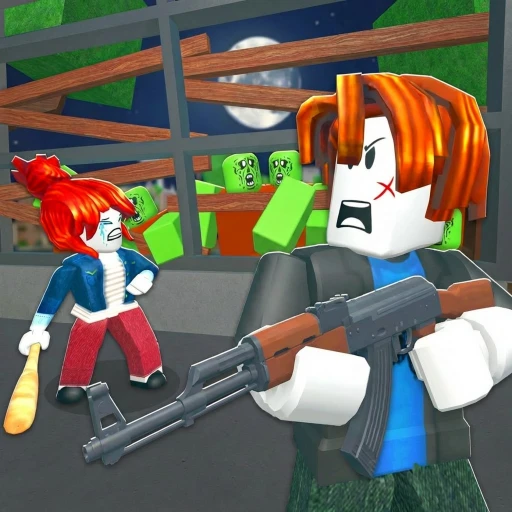
Survive the Apocalypse vs Dead Rails (2026) -- Which Roblox Game Is Better?
Zombie survival on Roblox has entered a golden era, and two games are fighting for the top spot: Survive the Apocalypse and Dead Rails. One drops you into a modern post-apocalyptic wasteland where the undead have overrun civilization. The other throws you onto a steam-powered train barreling through the zombie-infested American frontier. Both games deliver intense survival gameplay, but the settings, mechanics, and pacing could not be more different.
Survive the Apocalypse from Rubicon South maintains a steady 50K concurrent players with a traditional zombie survival formula that emphasizes resource management, base building, and cooperative defense. Dead Rails pulls roughly 55K CCU and peaked at around 350K concurrent players, offering a more focused experience where you defend a moving train against waves of Western-themed undead.
If you have been searching for a solid zombie game on Roblox and cannot decide between these two, this comparison will break it all down. We will cover gameplay loops, combat systems, atmosphere, multiplayer, monetization, and long-term appeal. By the end, you will know exactly which game fits your survival instincts.
Let us look at the numbers first, then get into the details that matter.
Quick Stats: Survive the Apocalypse vs Dead Rails at a Glance
| Category | Survive the Apocalypse | Dead Rails |
|---|---|---|
| Developer | Rubicon South | Independent Studio |
| Roblox Place ID | 90148635862803 | 116495829188952 |
| Concurrent Players | ~50,000 | ~55,000 |
| Peak CCU | Steady growth | ~350,000 |
| Genre | Zombie Survival | Western Zombie Survival |
| Core Loop | Scavenge, build, survive | Defend the train, fight waves |
| Setting | Modern post-apocalyptic | Wild West frontier |
| Multiplayer | Cooperative servers | Cooperative train defense |
| Combat Style | Varied weapons, open world | Firearms, melee, on-rails |
| Average Session Length | 30-60+ minutes | 20-40 minutes |
| Age Suitability | 10+ | 10+ |
| Game Passes | Optional boosts | Optional cosmetics/boosts |
Similar player counts, same genre, completely different experiences. Let us dig into what separates these two zombie games.
Gameplay and Core Loop
Survive the Apocalypse: Open-World Survival
Survive the Apocalypse follows the classic zombie survival template and executes it with surprising depth for a Roblox title. You spawn into a large open-world map that has been ravaged by a zombie outbreak. Buildings are abandoned, vehicles are scattered, and the undead roam in packs through streets, fields, and structures. Your immediate priorities are finding a weapon, securing food and water, and locating a safe place to set up a base.
The survival systems are comprehensive. You have hunger and thirst meters that deplete over time, forcing you to scavenge consistently. Health does not regenerate automatically, so medical supplies become critical after zombie encounters. Stamina management matters when you are sprinting away from a horde or fighting multiple enemies at once. These overlapping systems create genuine tension because you are always managing multiple needs simultaneously.
Base building is a significant part of the experience. You can construct walls, barricades, and fortified structures using materials gathered from the environment. A well-built base becomes your safe haven -- a place to store supplies, heal up, and regroup between expeditions. The building system rewards planning and creativity, and defending your base against zombie attacks at night adds a tower-defense element to the survival loop.
The open-world structure means you set your own goals. Some players focus on building the most fortified base possible. Others play as nomads, moving from location to location and never settling down. Groups of friends can control territory, establish supply lines, and create organized communities within the server. This freedom is the game's greatest asset, giving every player a reason to come back based on their personal objectives.
The pacing is deliberate. Quiet moments of scavenging and building are punctuated by intense zombie encounters. The game does not rush you, but it never lets you feel truly safe either. That constant low-level tension is what makes zombie survival compelling, and Survive the Apocalypse nails it.
Dead Rails: Defend the Train
Dead Rails takes zombie survival in an entirely different direction by placing you on a train cutting through the zombie-infested Wild West. Instead of an open world where you set your own pace, you are on a moving vehicle that dictates the tempo. Zombies attack in waves, climbing onto the train from all sides, and your job is to keep the train -- and your team -- alive until you reach the next safe station.
The setting alone makes Dead Rails feel fresh. Western zombie fiction is a rare combination, and the game leans into it with period-appropriate weapons, frontier architecture, and a dusty, desolate atmosphere that feels pulled from an undead Sergio Leone film. Revolvers, lever-action rifles, shotguns, and dynamite are your primary tools, and each weapon has distinct handling characteristics that reward practice.
Combat is the centerpiece of Dead Rails. Zombies come in different types -- standard shamblers, fast runners, armored brutes, and special infected with unique abilities. Learning which weapon works best against each type and prioritizing targets during chaotic wave attacks is the core skill curve. Ammunition is limited, so accuracy matters. Wasting bullets on common zombies when a brute is approaching the engine car can end your run fast.
The wave-based structure gives Dead Rails a natural rhythm. Between waves, you have brief windows to reload, heal, reposition, and repair damaged sections of the train. These quiet moments build anticipation for the next assault, and the difficulty escalates as you progress further down the tracks. Later waves throw more zombie types at you simultaneously, demanding better coordination and faster decision-making from the entire team.
The train itself acts as a dynamic arena. Different cars serve different purposes -- some hold supplies, others have mounted weapons, and the engine car is the critical target that zombies will prioritize. Deciding where to position your team, which cars to defend, and when to fall back to a stronger position adds a layer of tactical thinking that elevates the combat beyond simple point-and-shoot gameplay.
Edge: Tie. These games serve completely different survival fantasies. Survive the Apocalypse delivers sandbox freedom with deep survival systems. Dead Rails delivers focused, high-intensity combat with a unique setting. Neither approach is better -- they scratch different itches.
Combat and Weapons
Survive the Apocalypse: Arsenal Variety
The weapon variety in Survive the Apocalypse is extensive for a Roblox game. You can find melee weapons ranging from bats and machetes to improvised tools. Firearms span pistols, shotguns, rifles, and automatic weapons. Each weapon has different damage, range, and speed characteristics, and your loadout choices directly affect how you approach zombie encounters.
Combat pacing in Survive the Apocalypse is tied to the open-world structure. You might go several minutes without encountering a zombie, then suddenly run into a cluster of fifteen. The unpredictability keeps you alert, and the weapon you happen to have equipped in that moment determines how the fight plays out. Running low on ammunition for your best gun and being forced to switch to a melee weapon mid-fight creates genuine survival drama.
The game also features PvP elements in some servers, meaning other players can be threats alongside the zombies. This adds another dimension to weapon selection -- a sniper rifle that is excellent against distant zombies might leave you vulnerable in a close-quarters player encounter. Balancing your loadout for multiple threat types is a satisfying strategic challenge.
Dead Rails: Precision Under Pressure
Dead Rails offers a smaller but more curated weapon selection that fits its Western theme. Every weapon feels like it belongs in the setting, and the limited arsenal forces you to master each option rather than constantly chasing upgrades. The revolver is your reliable sidearm, the lever-action rifle handles mid-range targets, the shotgun devastates close-range clusters, and explosives serve as crowd-control options when things get desperate.
What makes Dead Rails combat special is the context. Fighting zombies while standing on a moving train creates unique aiming challenges and spatial awareness requirements. You need to track targets climbing up from the sides, watch for threats dropping from overhead, and manage your position on a narrow platform. The confined space makes every encounter feel claustrophobic and intense in a way that open-world combat cannot replicate.
Ammunition scarcity is more pronounced in Dead Rails. You cannot wander off to loot a building when you run dry -- you are stuck on the train with whatever supplies you have. This forces efficient shooting and smart ammunition management. Veteran players learn to take headshots consistently, use melee to conserve bullets against weaker zombies, and save their explosive ordinance for emergency situations.
Edge: Dead Rails. The focused weapon design, unique train combat setting, and ammunition pressure create a more intense and skill-rewarding combat experience. Survive the Apocalypse offers more variety, but Dead Rails makes every shot count.
Atmosphere and Presentation
Survive the Apocalypse: Familiar Devastation
Survive the Apocalypse presents a recognizable post-apocalyptic world. Ruined cities, abandoned vehicles, overgrown landscapes, and makeshift survivor camps paint a picture of civilization that collapsed and is struggling to rebuild. The visual storytelling works because it draws on decades of zombie media that players are already familiar with. You immediately understand the world and your place in it.
Sound design contributes significantly to the atmosphere. Distant zombie groans, the creak of abandoned structures, and the crack of gunfire from other areas of the map create a soundscape that keeps you tense even during quiet moments. The day-night cycle shifts the mood -- daytime scavenging feels cautious but manageable, while nighttime survival feels desperate and claustrophobic as zombie activity increases and visibility drops.
The atmosphere is effective but not particularly distinctive. The game looks and feels like what you would expect from a Roblox zombie survival game. That is not a criticism -- execution matters more than novelty, and Survive the Apocalypse executes the post-apocalyptic atmosphere competently. But it does not have the visual identity that immediately sets it apart from other games in the genre.
Dead Rails: Western Horror Identity
Dead Rails has one of the most distinctive visual identities in the Roblox zombie genre. The Wild West setting gives every element a unique flavor that you will not find in any other zombie game on the platform. Dusty frontier towns, desert canyons, wooden bridges, and steam-powered locomotives create a backdrop that feels genuinely original. The zombie designs incorporate Western elements -- undead cowboys, mutated frontier creatures, and corrupted wildlife -- that reinforce the theme at every turn.
The train itself is a masterpiece of environmental design. Each car has distinct visual characteristics, from the ornate passenger cars to the utilitarian cargo holds to the coal-belching engine. Watching the landscape scroll past while you fight off waves of undead creates a cinematic quality that few Roblox games achieve. The sense of forward momentum -- always moving, always progressing toward the next station -- gives every session a narrative arc that static maps cannot provide.
Lighting plays a major role in Dead Rails' atmosphere. The game transitions between sun-baked desert sections and dark tunnel sequences, and the shift in visibility directly impacts gameplay. Fighting in a well-lit open section feels very different from defending the train inside a pitch-black tunnel where you can only see zombies when they are already close. These environmental variations keep the visual experience fresh throughout a session.
Edge: Dead Rails. The Western zombie aesthetic is genuinely original, and the moving train creates a cinematic atmosphere that stands out on the platform. Survive the Apocalypse delivers competent post-apocalyptic vibes, but Dead Rails has a visual identity that is entirely its own.
Multiplayer and Cooperation
Survive the Apocalypse: Freedom in Numbers
Multiplayer in Survive the Apocalypse is open-ended and emergent. Servers support multiple players, and you can choose to cooperate, compete, or simply coexist. Teaming up with friends to build a compound, share resources, and mount coordinated defense against zombie hordes is the peak multiplayer experience. The game does not force cooperation -- it creates situations where cooperation is the smart choice.
The social dynamics are compelling. Encountering another player in a zombie-infested building creates a tense moment of decision. Do you team up and clear the area together? Do you compete for the loot? Do you avoid each other entirely? These organic interactions create stories and memories that scripted multiplayer experiences cannot match. The trust system is entirely player-driven, which makes alliances feel meaningful and betrayals feel devastating.
The downside is inconsistency. A great multiplayer session depends on who happens to be in your server. You might join a server with cooperative, communicative players who make the experience amazing. Or you might join one with griefers and trolls who make it miserable. Private servers solve this problem but require coordination with friends.
Dead Rails: Tight Team Defense
Multiplayer in Dead Rails is structured and purposeful. You are on a train together, and the zombies are coming whether you are ready or not. Every player has a role to play -- someone needs to cover the left side, someone needs to watch the rear car, someone needs to manage the mounted weapons, and someone needs to handle repairs and healing between waves. The game naturally assigns responsibility through its design without needing formal role assignments.
Communication becomes critical in later waves. Calling out special zombie spawns, coordinating focused fire on brutes, and timing explosive usage requires real teamwork. A well-coordinated group can handle wave difficulties that would be nearly impossible for disorganized players. This creates a strong sense of team accomplishment when you survive a particularly intense assault.
The train's structure also prevents the social inconsistency problems that open-world games face. You cannot really grief in Dead Rails because everyone is on the same train fighting the same enemies. If someone is not contributing, the team suffers collectively, which creates natural social pressure to cooperate. Toxic behavior is self-defeating in a way that it is not in sandbox survival games.
Edge: Dead Rails. The structured team defense creates consistently excellent multiplayer experiences. Survive the Apocalypse's emergent social dynamics can be incredible, but they can also be terrible depending on who you are playing with. Dead Rails delivers reliable cooperative gameplay every session.
Replayability and Content
Survive the Apocalypse: Sandbox Longevity
The open-world sandbox structure gives Survive the Apocalypse strong replay value for the right audience. No two sessions play out the same way because your spawn location, the players around you, and the decisions you make create unique narratives every time. Players who enjoy setting their own goals -- building a particular type of base, surviving a certain number of nights, or exploring every corner of the map -- can find hundreds of hours of content.
Rubicon South releases updates that add new areas, weapons, zombie types, and survival mechanics, expanding the sandbox with each content drop. The core game loop does not change dramatically between updates, but the additional options and variety keep the experience from growing stale for dedicated players.
Dead Rails: Run-Based Progression
Dead Rails uses a run-based structure that naturally drives replayability. Each trip down the tracks is a self-contained session with a beginning, middle, and end. The wave composition, zombie types, and environmental sections vary between runs, which means no two rides are identical. You are always learning, adapting, and improving your performance.
The progression system between runs gives you tangible goals. Unlocking new weapons, upgrading your train, and earning cosmetic rewards provide concrete reasons to keep playing beyond the intrinsic satisfaction of surviving. The difficulty scaling also means there is always a harder challenge waiting -- even when you can handle the standard difficulty comfortably, pushing into harder modes tests your skills and coordination.
Dead Rails' peak of 350K concurrent players demonstrates that the game has viral appeal that can bring in massive waves of new players. This explosive growth pattern, combined with the run-based structure that is easy to pick up and put down, gives it strong long-term potential.
Edge: Dead Rails. Run-based progression with tangible rewards, natural difficulty scaling, and proven viral appeal give Dead Rails a stronger replay loop for most players. Survive the Apocalypse's sandbox freedom suits a specific audience, but Dead Rails delivers more structured reasons to keep playing.
Monetization and Value
Both games follow the standard Roblox free-to-play model. Survive the Apocalypse offers game passes for convenience features like expanded inventory, faster resource gathering, and cosmetic upgrades. Dead Rails sells cosmetic items, weapon skins, and quality-of-life passes. Neither game requires spending Robux to access core content or gain meaningful gameplay advantages.
The key difference is what your potential purchases get you. In Survive the Apocalypse, inventory expansion is arguably the most impactful purchase because the survival loop depends on carrying enough supplies. In Dead Rails, cosmetics are purely visual and have zero impact on gameplay performance. Both approaches are fair, but Dead Rails' purely cosmetic monetization is slightly more player-friendly.
Edge: Dead Rails by a narrow margin for purely cosmetic monetization. Both games are fair and accessible to free players.
The Verdict
Choose Survive the Apocalypse if...
You want a traditional zombie survival sandbox where you control the pace, build your own shelter, and create your own stories within an open world. Survive the Apocalypse is the game for players who love the full survival loop -- scavenging, crafting, building, and defending. Its 50K CCU and steady growth reflect a game that has found its audience and serves them well. If you grew up on DayZ, Project Zomboid, or 7 Days to Die and want that experience on Roblox, this is the closest you will find.
Choose Dead Rails if...
You want focused, high-intensity zombie combat with a unique Western setting and strong cooperative gameplay. Dead Rails is the game for players who want every second to matter. Its 55K CCU, 350K peak, and distinctive train-defense concept show a game that has found something special. The run-based structure respects your time, the combat rewards skill, and the atmosphere is one of the most original on the platform. If you want to feel like a gunslinger defending the last train out of zombie territory, Dead Rails delivers that fantasy better than anything else on Roblox.
Who Should Play What?
Play Survive the Apocalypse if you:
- Love open-world sandbox survival games
- Enjoy base building and resource management
- Prefer setting your own goals and pace
- Want long sessions with gradual tension building
- Like emergent multiplayer interactions with strangers
- Appreciate traditional post-apocalyptic settings
- Want a deep survival simulation with hunger, thirst, and health systems
Play Dead Rails if you:
- Prefer fast-paced, action-heavy gameplay
- Enjoy wave-based defense and shooting mechanics
- Want a unique Western zombie setting you will not find elsewhere
- Like structured sessions with clear beginnings and endings
- Prefer reliable cooperative multiplayer with natural teamwork
- Value skill-based combat where accuracy and positioning matter
- Want a game you can jump into for 20 minutes and have a complete experience
Earn Free Robux While You Play
Whether you are surviving the apocalypse or defending the last train west, Earnaldo helps you earn free Robux through simple tasks. No surveys, no scams -- just real Robux rewards you can spend in any Roblox game.
Frequently Asked Questions
Dead Rails is generally considered the more punishing experience. Its Western zombie setting features aggressive undead with varied attack patterns, limited ammunition, and high-stakes encounters where a single mistake can end your run. Survive the Apocalypse is more forgiving early on, with a gradual difficulty curve that gives new players time to learn the survival systems before things get intense.
Yes, both Survive the Apocalypse and Dead Rails support multiplayer. Survive the Apocalypse allows cooperative survival with friends where you can share resources and defend together. Dead Rails supports group play where teams can coordinate defense strategies on the train. Both games are significantly more enjoyable with friends than playing solo.
Dead Rails has a more polished visual presentation with its Western aesthetic, detailed environments, and atmospheric lighting. The train setting and frontier landscapes give it a distinctive look. Survive the Apocalypse focuses more on functional visuals with large open maps and destructible environments. Both look good by Roblox standards, but Dead Rails edges ahead in pure visual quality.
Both games are free to play on Roblox. Each offers optional game passes and in-game purchases for cosmetic items or quality-of-life boosts, but the core zombie survival experience is fully accessible without spending Robux. You can play both games from start to finish without paying anything.
Dead Rails slightly edges out Survive the Apocalypse in concurrent player counts, sitting around 55K CCU compared to Survive the Apocalypse's 50K CCU. Dead Rails peaked at approximately 350K concurrent players, showing its viral potential. Both games maintain healthy player bases for the zombie survival genre on Roblox.
If you are new to zombie survival games on Roblox, start with Survive the Apocalypse. Its more gradual difficulty curve and traditional survival mechanics make it easier to learn. Once you are comfortable with survival basics, try Dead Rails for its unique Western twist and more intense gameplay. Both are worth playing, but Survive the Apocalypse is the better starting point.
Zombie survival on Roblox has never been stronger than it is in 2026. Survive the Apocalypse and Dead Rails represent the two best approaches to the genre on the platform -- one gives you freedom and depth, the other gives you focus and intensity. Whichever you choose, the undead are waiting. Gear up and stay alive.