A Dusty Trip vs Da Hood (2026) — Which Roblox Game Is Better?
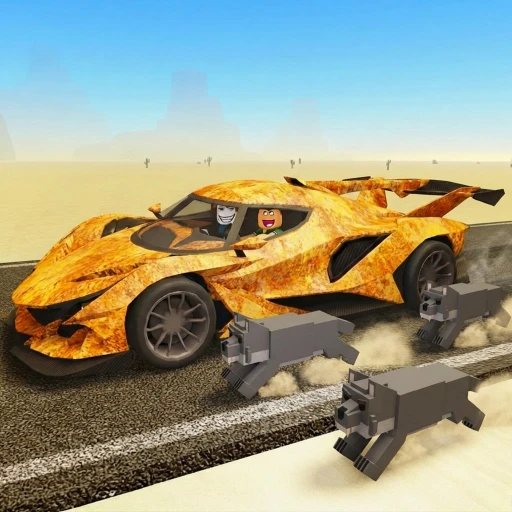
A Dusty Trip and Da Hood are two of the most talked-about Roblox experiences right now, but they couldn't be more different. One drops you into a sun-scorched desert with a broken-down car and a prayer. The other throws you onto gritty city streets where fists fly and alliances shift by the minute. Together they have racked up 5.43 billion visits as of August 16, 2026, though only one of them is still pulling big concurrent numbers — more on that below.
So which one deserves your time? That depends entirely on what kind of player you are. This breakdown covers gameplay, progression, visuals, community, monetization, and replay value so you can make an informed decision before jumping in. We've spent hundreds of hours across both titles, and the differences are sharper than you'd expect from two games on the same platform.
A Dusty Trip vs Da Hood — Quick Stats (2026)
| Category | A Dusty Trip | Da Hood |
|---|---|---|
| Genre | Road-Trip Survival | Hood Fighting / Roleplay |
| Place ID | 16389395869 | 2788229376 |
| Developer | Jandel's Road Trip | Da Hood Entertainment |
| Concurrent Players | Peaks ~21.5K (7d), 29.3K (30d) | Peaks ~4.2K (7d), 4.4K (30d) |
| Total Visits | 2.49 billion (Aug 16, 2026) | 2.94 billion (Aug 16, 2026) |
| All-Time Peak CCU | 572,612 (May 18, 2024) | 185,556 (Nov 14, 2020) |
| Core Loop | Build, repair, drive, survive | Fight, roleplay, trade, hustle |
| Key Features | Vehicle building, desert exploration, co-op survival | PvP combat, stomp mechanics, boombox, trading |
| Trading System | No formal trading | Cash and item trading between players |
| Mobile-Friendly | Playable (controls are tight) | Playable (combat harder on mobile) |
| Free-to-Play | Yes | Yes |
Gameplay — What Do You Actually Do?
A Dusty Trip
A Dusty Trip is a road-trip survival game built around one core objective: travel as far as possible across a procedurally shifting desert. You start each run near a gas station with a vehicle that's either missing parts or barely holding together. Your job is to scavenge for tires, engines, fuel tanks, and other components scattered across the environment, bolt them onto your ride, and hit the road.
The driving itself is only half the challenge. Fuel management is constant. Your vehicle takes damage from rough terrain, collisions, and environmental hazards like sandstorms. You need to stop regularly to refuel, patch up parts, and scavenge for supplies at roadside locations. Every decision matters. Do you push forward with a leaking radiator or stop to fix it and risk burning daylight?
Co-op play is where A Dusty Trip shines. Up to four players can ride together, with one person driving and others managing repairs, navigation, and scavenging mid-trip. The teamwork element turns a solid solo experience into something genuinely memorable. Some of the most popular A Dusty Trip strategies revolve around assigning specific crew roles for maximum distance runs.
Da Hood
Da Hood is a completely different beast. It's a PvP-focused fighting and roleplay game set in a city environment. You spawn into a neighborhood, and from that moment, you're either fighting other players, forming crews, or grinding cash through in-game activities. The core loop is combat. Pure and simple.
The fighting system uses a combination of melee combos, gun mechanics, and the infamous stomp mechanic that lets you finish off downed opponents. Combat feels fast and aggressive. Skilled players chain together combos, dodge shots, and use movement techniques that take serious practice to master. There's a steep learning curve, and new players will get knocked down repeatedly before they find their footing.
Beyond fighting, Da Hood offers roleplay elements. You can become a cop, join a gang, operate a store, or just cruise around the map with a boombox blasting audio. The game's open-ended structure means there's no single objective. Some players treat it as a fighting arena, others use it as a social hangout, and a dedicated group treats the economy and trading system as the main attraction. For more ways to get ahead, check our Da Hood Robux guide.
Progression — How Quickly Does It Hook You?
A Dusty Trip hooks you with a sense of tangible progress. Every run teaches you something new about vehicle assembly, fuel economy, and route planning. Your first few attempts will end within minutes as you struggle to find basic parts and figure out the crafting system. By your tenth run, you're building functional rigs and pushing past landmarks that seemed impossible earlier. The progression isn't level-based. It's skill-based, and that makes each personal record feel earned.
Currency-wise, A Dusty Trip uses Dusty Coins, Highland Tokens, and Bottle Caps as its primary economies. Dusty Coins are the most common, earned by traveling distance and completing milestones. Highland Tokens unlock premium vehicle parts and cosmetics. Bottle Caps serve as the rarest currency, used for exclusive items. A single long run can net you 200-500 Dusty Coins depending on distance reached.
Da Hood's progression is tied to cash accumulation and combat skill. You earn cash by completing activities, defeating other players, and participating in events. Cash buys weapons, vehicles, and cosmetic items from in-game shops. The first few hours feel chaotic. You're learning combos, figuring out which weapons are meta, and getting stomped by experienced players who've been at it for months. The learning curve is steep, but once combat clicks, the adrenaline rush of winning a 1v3 fight is hard to beat.
Between the two, A Dusty Trip provides a smoother onboarding experience. Da Hood throws you into the deep end and expects you to swim. Neither approach is wrong. They just appeal to different temperaments.
Edge: A Dusty Trip for new players who want a guided sense of progress. Da Hood for competitive players who thrive under pressure.
Graphics and Audio
A Dusty Trip leans into a stylized, slightly cartoonish desert aesthetic. The terrain stretches out in warm oranges and browns, with dust particles floating across the screen during sandstorms. Vehicle models have a chunky, tactile quality that makes the building mechanic feel satisfying. The audio design stands out here too. Engine rumbles change pitch based on speed, parts clank and rattle when they're damaged, and the ambient desert soundtrack sets a lonely, adventurous mood.
Da Hood goes for a grittier urban look. Buildings, streets, and interiors are designed to evoke a rough city neighborhood. Character models are basic by Roblox standards, but the game compensates with expressive animations during combat. Punches land with impact, stomps have screen shake, and gun effects feel appropriately loud. The boombox system lets players play custom audio, which means the soundscape in any Da Hood server is unpredictable and often hilarious.
Neither game pushes Roblox's graphical limits. Both run smoothly on lower-end hardware, which is a practical advantage for the platform's younger audience. A Dusty Trip wins on atmospheric cohesion. Da Hood wins on raw energy and player-driven audio chaos.
Edge: A Dusty Trip for consistent visual and audio design. Da Hood if you value player expression and don't mind the occasional earblast from someone's boombox.
Player Count and Community (July 2026)
Da Hood still holds the bigger lifetime total at 2.94 billion visits, but its live population has thinned dramatically. As of August 16, 2026 it peaks at roughly 4,400 concurrent players over a 30-day window — a long way from its November 2020 record of 185,556. It remains a Roblox staple with an entire subculture built around "hood" content on YouTube and TikTok, and montage videos, combo tutorials, and "rage quit" compilations still pull views, but the servers are a fraction of what they were.
A Dusty Trip is the newer contender and now the busier game by a wide margin. It has banked 2.49 billion visits and peaks around 21,500 concurrent players in a given week (29,324 over 30 days), against an all-time high of 572,612 set in May 2024. That is roughly five times Da Hood's current live population. The community is smaller but highly engaged. Discord servers dedicated to A Dusty Trip focus on sharing vehicle builds, distance records, and route optimization strategies. Content creators have latched onto the game's satisfying build-and-drive loop, producing tutorials and challenge videos that perform well on YouTube.
Community tone differs significantly. A Dusty Trip's player base skews cooperative and supportive. Players share tips, help newcomers with builds, and celebrate each other's distance records. Da Hood's community is more competitive and confrontational, which fits the game's combat-focused nature. Trash talk is part of the culture. If that bothers you, A Dusty Trip's community will feel like a breath of fresh air.
Edge: Da Hood for sheer community size and content volume. A Dusty Trip for a more positive and collaborative player base.
Game Passes and Monetization
A Dusty Trip runs a big store — 36 game passes on sale as of August 16, 2026, most of them weapons and vehicles. The cheap utility tier is where the value sits: sprint (20% faster run) at 99 Robux, Car Radio at 129 Robux, extra health (+300%) at 150 Robux, and big stomach (slower hunger drain) at 149 Robux. Double Caps costs 525 Robux and doubles your Bottle Cap income. Backpack upgrades run 180–679 Robux depending on the tier. Vehicles are the top of the ladder — the Quad Bike, Flame Truck, and Trailhawk all sit at 699 Robux, with the SUV and Classic Bus at 599 and 450. Weapon passes (Minigun, Railgun, Nuke Launcher, Gravity Gun and roughly twenty more) mostly land between 419 and 599 Robux.
Da Hood's store is far cheaper and much smaller in ambition — 14 passes, nearly all of them under 200 Robux. The Boombox is 120 Robux, Hair Glue 199, Mask 175, Pepper Spray 150, Bat 110, Knife 65, and Flashlight just 15. Utility and cosmetic passes (Animation Pack, Animation Pack++, Custom Ringtone, Anonymous Calls, House Limit Boost) sit at 100 Robux each, with Vehicle Lock at 89 and Custom Cursor at 50. There is no VIP mega-pass and nothing that lets you carry two weapons at once. Prices verified August 16, 2026.
Both games are fully playable without spending a single Robux, but the shapes are opposite. Da Hood sells a long list of small, cheap items — a knife here, a boombox there — and nothing costs more than 199 Robux. A Dusty Trip sells serious gear: guns, vehicles, and inventory space that genuinely change how far a run goes, at 400–700 Robux a piece. That makes A Dusty Trip the more expensive game to buy into and the one where paid items carry more weight in actual play.
Edge: Da Hood on pure price — almost everything is pocket change, and a fully kitted account costs less than two A Dusty Trip vehicle passes. A Dusty Trip's passes deliver more, but you pay for it.
Social Features
Co-op is baked into A Dusty Trip's DNA. The game is designed for groups of two to four players working together on a single vehicle. Voice chat compatibility, shared inventory systems, and role-based gameplay (driver, mechanic, navigator, scavenger) create natural teamwork dynamics. You don't need to bring friends either. Random matchmaking pairs you with other solo players, and the shared goal of pushing distance creates instant camaraderie.
Da Hood's social features revolve around emergent player interaction. There's no formal team system, but players naturally form crews, alliances, and rivalries. The boombox creates impromptu dance parties. Trading creates economic relationships. The cop-and-criminal dynamic creates roleplay narratives. It's less structured than A Dusty Trip's co-op, but the social sandbox is wider. You'll remember the random stranger who helped you fight off a three-person crew just as vividly as any planned co-op session.
Edge: A Dusty Trip for structured teamwork. Da Hood for unpredictable social encounters and emergent storytelling.
Replay Value
A Dusty Trip's replay value comes from the "one more run" loop. Every attempt plays out differently because of randomized part spawns, weather patterns, and terrain generation. You're always chasing a longer distance, a cleaner build, or a faster completion time. Seasonal events introduce limited-time vehicles and challenges that keep veteran players coming back. The game's developers at Jandel's Road Trip add new content every few weeks, and each update changes the meta enough to warrant fresh attempts.
Da Hood's longevity is tied to its social dynamics and skill ceiling. Combat mastery takes hundreds of hours. New weapons and balance patches shift the meta regularly. The trading economy gives collectors a reason to grind indefinitely. And because every server is shaped by the players in it, no two sessions play out the same way. You could log in for a quick fight and end up spending three hours in an impromptu roleplay scenario that nobody planned.
Both games have strong replay value, but they scratch different itches. A Dusty Trip is a game you return to when you want focused, goal-oriented sessions. Da Hood is a game you return to when you want chaotic, anything-can-happen sessions. After 100 hours in each, neither feels stale, which is more than most Roblox games can claim.
Earning Free Robux While You Play
Whether you're saving up for a vehicle pass in A Dusty Trip or a boombox in Da Hood, Robux makes both games more enjoyable. Earnaldo offers a straightforward way to earn free Robux by completing offers and tasks outside of Roblox, then withdrawing real Robux to spend on whichever game you prefer.
Check out our dedicated guides for each title: the A Dusty Trip free Robux guide and the Da Hood free Robux guide both walk through the best strategies for maximizing your earnings.
Earn Free Robux for A Dusty Trip or Da Hood
Want more Robux for game passes in either title? Earnaldo lets you earn free Robux by completing simple tasks — no generators, no scams, just real rewards.
Head-to-Head Verdict — A Dusty Trip vs Da Hood in 2026
The Verdict
Choose A Dusty Trip if you enjoy cooperative survival, creative vehicle building, and a relaxed-but-challenging gameplay loop. It's the better pick for players who want clear goals, a supportive community, and a game that rewards patience and planning.
Choose Da Hood if you want fast-paced PvP action, an open social sandbox, and the thrill of mastering a competitive combat system. It's built for players who love unpredictability, don't mind a steep learning curve, and enjoy the energy of a massive active community.
Overall: These two games serve completely different moods. A Dusty Trip is the road trip with friends where the journey matters more than the destination. Da Hood is the street corner where anything can happen in the next ten seconds. Neither is objectively "better." The right choice depends on whether you want to build something or break something. As of March 2026, both games are at their best, and playing both is a perfectly valid answer.
Who Should Play What?
- You love building and crafting: A Dusty Trip, because the vehicle assembly system is one of the most satisfying build mechanics on Roblox right now.
- You want competitive PvP action: Da Hood, because its combat system has genuine depth with combo chains, weapon switching, and movement tech.
- You are a solo player: A Dusty Trip, because its core loop works perfectly alone. Da Hood solo is a rough experience against organized crews.
- You create content: Da Hood, because its chaotic moments and PvP highlights generate the kind of clips that perform well on YouTube and TikTok.
- You prefer a chill session: A Dusty Trip, because driving through the desert with ambient sounds is genuinely relaxing between the tense survival moments.
- You want to earn Robux: Both work with Earnaldo to help you earn free Robux for game passes and cosmetics.
Frequently Asked Questions
A Dusty Trip, clearly, as of August 16, 2026. It peaked at 29,324 concurrent players over the past 30 days against 4,400 for Da Hood — roughly a 6.7x gap on live players. Da Hood still leads on lifetime visits, 2.94 billion to 2.49 billion, but that reflects its 2019 launch and its 2020–2021 peak years rather than where the players are now.
A Dusty Trip is the stronger choice for solo players. Its road-trip survival gameplay works well alone, as you can build, repair, and drive your vehicle at your own pace. Da Hood is heavily PvP-focused, and playing solo means you'll frequently get jumped by groups of players with no backup.
Both games are playable on mobile through the Roblox app. A Dusty Trip's vehicle building controls can feel clunky on a phone screen, while Da Hood's combat system benefits from mouse-and-keyboard precision. For the best experience with either title, PC or console is recommended.
A Dusty Trip's game passes focus on convenience and vehicle upgrades, with passes ranging from 50 to 799 Robux. Da Hood's game passes are combat-oriented, including weapon skins and boombox access, with prices from 75 to 1,500 Robux. A Dusty Trip generally offers more gameplay value per Robux spent.
A Dusty Trip is generally more suitable for younger players. Its survival-focused gameplay is cooperative and non-violent. Da Hood features PvP fighting, trash-talking in chat, and a rougher community culture that may not be appropriate for very young children. Parental discretion is advised for Da Hood.
Both games receive regular updates as of July 2026. A Dusty Trip's developer, Jandel's Road Trip, pushes content updates roughly every two to four weeks, adding new vehicles, terrain, and events. Da Hood's team releases updates on a similar schedule with new weapons, maps, and seasonal events.
Da Hood has the larger and louder community with massive YouTube and TikTok followings built around montage videos and combo tutorials. A Dusty Trip's community is smaller but more tightly knit, with active Discord channels focused on vehicle builds and distance records. Both have dedicated content creators producing daily videos.
Neither game pays you Robux directly, but you can earn free Robux through platforms like Earnaldo by completing tasks and offers. Those Robux can then be spent on game passes in either A Dusty Trip or Da Hood to enhance your experience.
About This Comparison
We've played both A Dusty Trip and Da Hood extensively to create this comparison. All stats, game pass prices, and player counts are current as of July 2026. Game data can change with future updates, so developers may adjust pricing and mechanics in upcoming patches.
This page is not affiliated with Jandel's Road Trip, Da Hood Entertainment, or Roblox Corporation. All trademarks and game content belong to their respective owners.