All Star Tower Defense vs Anime Vanguards (2026) — Which Roblox Game Is Better?
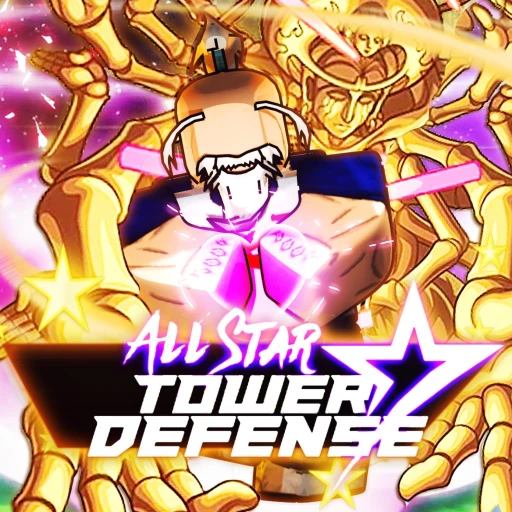
The anime tower defense genre on Roblox has never been more competitive. Two of the biggest names in the space are All Star Tower Defense (ASTD) and Anime Vanguards — one is the genre-defining veteran that helped popularize anime TD on the platform, and the other is the ambitious newcomer that has been climbing the charts since launch. If you only have time for one, this comparison will help you decide. If you play both, you will understand exactly what each game does better.
All Star Tower Defense launched in May 2020, developed by Top Down Games, and has accumulated a staggering 7.6 billion visits over its lifetime. It pioneered many of the conventions that newer anime TD games now follow. Anime Vanguards, developed by Starter Pack Studios, arrived later but wasted no time building a dedicated player base that now approaches 2 billion visits and regularly pulls far higher concurrent player numbers than many of its competitors.
Both games share the same fundamental premise: summon anime-inspired characters, deploy them on tower defense maps, upgrade their abilities, and survive increasingly brutal enemy waves. But the way they execute this formula differs in meaningful ways — from summoning mechanics and unit design to progression systems and monetization. This article covers every angle so you can make an informed choice.
All Star Tower Defense vs Anime Vanguards — Quick Stats (2026)
| Category | All Star Tower Defense | Anime Vanguards |
|---|---|---|
| Genre | Anime tower defense | Anime tower defense |
| Place ID | 4996049426 | 16146832113 |
| Developer | Top Down Games | Starter Pack Studios |
| Launch | May 2020 | Newer release |
| Total Visits | 7.6B+ | 1.9B+ |
| Concurrent Players | ~5K | ~45K |
| Core Loop | Summon, place, upgrade, defend | Summon, place, upgrade, defend |
| Unit Source | Star Remnants / Banners | Gacha banners |
| Unit Roster | Massive (300+ units) | Growing (expanding regularly) |
| Co-op | Yes | Yes |
| Trading | Yes | Yes |
| Mobile-Friendly | Yes | Yes |
| Free-to-Play | Yes | Yes |
Gameplay — Core Mechanics and How They Differ
All Star Tower Defense
All Star Tower Defense established many of the gameplay patterns that newer anime TD games have since adopted. You collect units through a summoning system using Star Remnants (the primary in-game currency), then deploy those units onto tower defense maps where waves of enemies follow set paths toward your base. Each unit occupies a tile on the map and attacks enemies that enter their range. Between waves, you can upgrade deployed units to increase their damage, range, and unlock special abilities.
What makes ASTD's gameplay distinctive is its sheer depth of unit interactions and team-building possibilities. With a roster that has grown to over 300 units across five years of continuous updates, the number of viable team compositions is enormous. Units are categorized by type — ground, air, hybrid — and by their damage profile, with some excelling at area damage against swarms and others specializing in single-target burst against bosses. The best teams balance these roles while taking advantage of unit synergies and passive buffs.
ASTD features a story mode that serves as the primary progression track for new players. You work through chapters that introduce different map layouts, enemy types, and difficulty spikes. Completing story stages rewards gems, units, and materials. Beyond story mode, infinite mode challenges you to survive as long as possible against endlessly scaling waves — a true test of your team composition and upgrade priority. Raids and special events rotate regularly, providing unique challenges with exclusive rewards.
The game's top-down perspective and unit placement system are straightforward to understand but difficult to master. Optimal placement requires knowledge of enemy pathing, unit range overlaps, and upgrade timing. Veterans who have played for years still discover new strategies when new units shift the meta.
Anime Vanguards
Anime Vanguards takes the core anime TD formula and refines it with modern game design sensibilities. The basic loop is familiar — summon units, place them on maps, survive waves — but the execution is noticeably polished. The summoning system incorporates stronger pity mechanics than ASTD, meaning you are guaranteed a high-rarity unit after a defined number of unsuccessful pulls. This single difference fundamentally changes how progression feels, particularly for free-to-play players who need to make every summon count.
Unit abilities in Anime Vanguards tend toward greater mechanical complexity. Many characters have active abilities with cooldowns, conditional triggers, or transformations that activate under specific circumstances. This adds a layer of real-time decision-making that goes beyond ASTD's more passive unit deployment. You are not just placing units and watching them attack — you are timing ability activations and managing cooldown rotations during intense wave sequences.
Map design in Anime Vanguards stands out for its creativity. Rather than relying solely on path length and branching, maps incorporate environmental elements that interact with both your units and the enemies. Terrain features can buff units placed on specific tiles, slow enemies through certain corridors, or create chokepoints that shift across different wave phases. Some maps even change layout between waves, forcing you to adapt your placement strategy mid-run.
The progression system is streamlined compared to ASTD. Anime Vanguards clearly communicates what you need to do next, what rewards you will earn, and how close you are to your next meaningful upgrade. The evolution system for units provides a visible path from a freshly summoned character to a fully powered endgame powerhouse, with each evolution stage unlocking new abilities and visual upgrades.
Edge: ASTD for raw depth and content volume built over five years. Anime Vanguards for modern polish, smoother onboarding, and more engaging active gameplay mechanics.
Progression — How Long Does It Take to Get Strong?
All Star Tower Defense
ASTD's progression system reflects its age and iterative development. New players begin in story mode and steadily unlock new maps, difficulties, and game modes as they complete chapters. The early game is generous — free summons, starter units, and code rewards provide a solid foundation. Mid-game progression slows as you need specific high-rarity units to tackle harder content, and acquiring those units depends on summoning luck and resource accumulation.
The upgrade system in ASTD is multi-layered. Units can be leveled, evolved into stronger forms, and enhanced with additional materials. Some units have multiple evolution paths, leading to different final forms with distinct ability sets. This branching evolution system adds strategic depth to progression — you need to plan which evolution path suits your team composition rather than blindly upgrading everything. The downside is that this complexity can be overwhelming for new players who face dozens of upgrade systems without clear guidance on priorities.
Endgame progression in ASTD revolves around collecting the rarest units, maxing their upgrade paths, and assembling teams capable of clearing the hardest infinite mode waves and raid content. This is a long-term commitment that rewards consistent daily play. The game has years of accumulated content, which means returning players or newcomers face a substantial catch-up period, but also have an enormous amount of content to work through.
Anime Vanguards
Anime Vanguards offers a more guided progression experience. The game clearly outlines your path from beginner to endgame, with milestone rewards and progression benchmarks that keep you motivated. The pity system plays a significant role here — because you can plan around guaranteed unit acquisitions, you can set goals and reliably achieve them rather than hoping for favorable RNG.
Unit progression in Anime Vanguards follows a cleaner evolution chain. Each unit has a defined upgrade path with clear material requirements at each stage. You always know exactly what you need and how far you are from the next power spike. This transparency reduces the frustration that can accompany complex upgrade systems and helps you make informed decisions about resource allocation.
Because Anime Vanguards is newer, the total amount of content is smaller than ASTD. This means the journey from beginner to endgame is shorter. Whether that is a positive or negative depends on your perspective — some players prefer reaching endgame quickly and focusing on optimization, while others enjoy a longer journey with more content to discover. Anime Vanguards compensates with regular content updates that expand the endgame consistently.
Edge: Anime Vanguards for clarity and accessibility of progression. ASTD for sheer volume and longevity of the progression journey.
Graphics and Audio — Visual and Sound Design
All Star Tower Defense
ASTD's visual design is functional and recognizable. Character models are stylized interpretations of popular anime characters, rendered in Roblox's aesthetic with enough detail to be instantly identifiable. The art style prioritizes clarity — you can easily distinguish between units on a crowded map, and enemy types are visually distinct. Ability effects range from simple projectiles to flashy screen-filling attacks for the rarest units.
The game's UI has been refined over multiple updates but still carries some legacy design choices from its 2020 origins. Menus can feel cluttered, particularly the inventory and upgrade screens that have accumulated features over years of additions. The audio design is serviceable — background music sets the tone without being intrusive, and ability sound effects provide satisfying feedback during combat. ASTD is not the most visually impressive game on Roblox in 2026, but its art direction is consistent and serves the gameplay well.
Anime Vanguards
Anime Vanguards benefits from launching later in the Roblox platform's evolution, taking advantage of improved rendering capabilities and newer design conventions. Character models are detailed with smooth animations, and ability effects are visually spectacular — high-rarity units have transformation sequences and ultimate abilities that look genuinely impressive within Roblox's engine. The overall visual presentation feels more cohesive than ASTD's, with a unified art style that extends from menus to gameplay.
The UI in Anime Vanguards is clean and modern. Menus are intuitive, information is well-organized, and the summoning interface in particular is designed to maximize the excitement of pulling new units — complete with dramatic animations and visual flourishes that make every summon feel like an event. Audio design is a step above average, with a soundtrack that shifts intensity based on wave progression and satisfying sound design for abilities and enemy defeats.
Edge: Anime Vanguards for overall visual polish, UI design, and presentation quality. ASTD for functional clarity and recognizable character designs.
Player Count and Community — March 2026
The raw numbers tell an interesting story. All Star Tower Defense has amassed over 7.6 billion visits across its lifetime — a figure that reflects five years of continuous play and positions it among the most visited games in Roblox history. Its current concurrent player count has settled to roughly 5,000 — a natural decline for a title that has been live for nearly six years, though it still sees spikes around major updates.
Anime Vanguards is approaching 2 billion visits and currently pulls tens of thousands of concurrent players (around 45,000 at recent readings, though the number swings heavily around updates) — many times ASTD's active count. This higher CCU suggests that Anime Vanguards has stronger current momentum and is attracting more daily active players, even though its total historical visits are lower. For a newer game, these are impressive numbers that indicate a healthy and growing player base.
The community landscape reflects these dynamics. ASTD has one of the most established communities in the Roblox anime TD space. Community wikis are exhaustive, Discord servers are massive, and content creators have produced thousands of guides, tier lists, and summoning videos. If you have a question about ASTD, someone has answered it. This community infrastructure is a genuine advantage for new players — the learning curve is steep, but the resources to climb it are abundant.
Anime Vanguards' community is younger but enthusiastic. Discord servers are active, and content creation is ramping up as the game grows. The community tends to be more welcoming to new players since a larger percentage of the player base is also relatively new. Content creators are increasingly covering Anime Vanguards alongside or in place of older anime TD titles, recognizing its growing audience. Trading communities are developing quickly, with value lists and trading etiquette being established in real time.
Both communities have significant overlap — many dedicated anime TD fans play both games and participate in both communities. The healthy competition between the games drives developers on both sides to keep delivering quality updates.
Game Passes and Monetization
All Star Tower Defense
ASTD offers several game passes that provide meaningful advantages. The VIP Game Pass at 300 Robux is one of the better-value passes on Roblox — it provides ongoing benefits like increased gem income, bonus rewards from map completions, and quality-of-life features that make daily play more efficient. The 3x Speed Game Pass at 799 Robux triples the game speed, which is a massive time-saver when grinding through maps you have already mastered. The Star Pass Ultra at 799 Robux provides seasonal battle pass rewards with exclusive units and cosmetics.
Beyond game passes, ASTD offers gem packs for purchase that accelerate summoning. The monetization is standard for the genre — nothing is locked exclusively behind paywalls, but spending Robux lets you summon more frequently and progress faster. The VIP pass in particular is considered excellent value by the community, and many long-term players recommend it as the single best Robux investment in the game. For free players, the game provides enough gems through codes, daily rewards, and gameplay to maintain steady progression without spending.
Anime Vanguards
Anime Vanguards offers its own suite of game passes and premium options. VIP benefits follow a similar model to ASTD — increased rewards, quality-of-life improvements, and bonus income. Gem packs are available for those who want to summon more frequently. The key monetization differentiator is how the pity system interacts with spending. Because you know approximately how many summons it takes to guarantee a specific unit, spending decisions in Anime Vanguards are more calculated and less speculative. You can look at a banner, count your gems, and know whether purchasing a gem pack will get you to your pity guarantee or not.
This predictability makes Anime Vanguards' monetization feel more respectful. You are less likely to spend impulsively or feel disappointed after a purchase because the pity system provides a safety net. Both games run seasonal sales and limited-time bundles, and both offer competitive value compared to other anime TD games on Roblox.
Edge: ASTD for its specifically well-priced VIP pass at 300 Robux and the practical value of 3x Speed. Anime Vanguards for more predictable and calculated spending thanks to its pity system.
Social Features — Co-op, Trading, and Community Interaction
Co-op multiplayer is central to both games, and this is where the anime TD genre shines. Tackling difficult maps with friends allows you to combine unit rosters, coordinate placement strategies, and take on content that would be impossible solo. Both ASTD and Anime Vanguards support co-op play, and both games are significantly more enjoyable when played with others.
ASTD's co-op system is mature and well-tested. The game supports multiplayer for most map types, and the community has developed established strategies for co-op play. Trading in ASTD is a major endgame activity — the trading economy is deep, with community-maintained value lists, dedicated trading Discord servers, and an active secondary market. The social infrastructure around ASTD is substantial, partly because the game has had five years to develop it.
Anime Vanguards also supports co-op and trading, with systems that are functional and improving with each update. The trading economy is newer and still developing, which some players see as an opportunity — unit values are more volatile, and early trades can pay off significantly as the market matures. The co-op balancing in Anime Vanguards is tuned so that multiplayer maps feel properly challenging rather than trivially easy, which encourages genuine coordination rather than just dumping extra units on the field.
Both games integrate with their respective Discord communities for LFG (looking for group), trading, and social interaction. If social features and community engagement are important to you, both games deliver — but ASTD has a head start in terms of established social infrastructure.
Edge: ASTD for established trading economy and deep community infrastructure. Anime Vanguards for co-op balancing and the opportunity of a developing trading market.
Replay Value — What Keeps You Coming Back?
Replay value in tower defense games comes from two sources: new content to clear and the desire to optimize your existing content runs. Both ASTD and Anime Vanguards deliver on both fronts, but in different proportions.
ASTD has five years of accumulated content. Hundreds of units to collect, dozens of maps across multiple difficulty tiers, story mode chapters, infinite mode leaderboards, rotating raids, and seasonal events. For a new player, ASTD has months of content to work through before you even approach the endgame. For veterans, the regular addition of new units shifts the meta and creates new team-building puzzles to solve. The depth of the summoning and upgrade systems means there is always something to work toward, whether it is evolving a new unit, chasing a specific banner character, or optimizing your infinite mode record.
Anime Vanguards has less total content but compensates with the quality and engagement of what it offers. Maps are replayable with different challenge modifiers, and the evolution system provides long-term goals for every unit you summon. Regular content updates add new units, maps, and events at a pace that keeps the game feeling fresh. The more active gameplay mechanics — ability timing, strategic cooldown management — make individual runs feel less autopilot than ASTD's more passive deployment approach, which adds inherent replayability.
Both games benefit from the anime IP factor — new banners featuring characters from popular anime series create natural excitement cycles that bring players back. When a highly anticipated character drops in either game, the community buzzes with activity as everyone summons, theorycrafts, and shares results.
Edge: ASTD for raw content volume and long-term collection depth. Anime Vanguards for per-session engagement and the quality of its replayable content.
Earning Free Robux While You Play
Tower defense games are ideal companions for Earnaldo because of their natural downtime. Both ASTD and Anime Vanguards have periods between waves, during lobby time, and while managing your inventory where you can complete Earnaldo tasks on a second device or in another tab. The strategic, less reflex-intensive nature of TD gameplay means multitasking does not hurt your in-game performance the way it would in a fast-paced action game.
The Robux you earn through Earnaldo can go directly toward game passes or gem packs in either game. For ASTD players, earning 300 Robux through Earnaldo gets you the VIP pass — a permanent upgrade that pays dividends every session. For Anime Vanguards players, earned Robux can fund gem purchases that bring you closer to pity guarantees on your most-wanted characters.
For game-specific earning strategies, check out our All Star Tower Defense free Robux guide and Anime Vanguards free Robux guide. You can also find redeemable codes in our ASTD codes page and Anime Vanguards codes page. If you are interested in how Anime Vanguards compares to another popular anime TD title, see our Anime Defenders free Robux guide as well.
Earn Free Robux for All Star Tower Defense or Anime Vanguards
Complete simple tasks on Earnaldo and withdraw real Robux — no downloads, no generators, no scams. Use your Robux for game passes, gem packs, or anything else in the Roblox catalog.
Head-to-Head Verdict — All Star Tower Defense vs Anime Vanguards in 2026
The Verdict
Choose All Star Tower Defense if you want the deepest, most content-rich anime tower defense experience on Roblox. Five years of development have produced an enormous roster of 300+ units, dozens of maps, multiple game modes, and a thriving trading economy. ASTD rewards long-term investment and offers a progression journey that can last months. Its VIP game pass is one of the best-value purchases on Roblox at just 300 Robux. If you are a collector who wants maximum variety, an established community with abundant guides, and an endgame with real staying power, ASTD is the proven choice.
Choose Anime Vanguards if you want a more modern, polished anime TD experience with quality-of-life features that respect your time. The pity system makes summoning more predictable and less frustrating, especially for free-to-play players. The gameplay is more actively engaging with ability timing and strategic cooldown management. Map design is creative and rewards adaptive thinking. The UI is clean, the visuals are impressive, and the progression system communicates your path forward clearly. If you are newer to the genre or want a TD game that feels contemporary and well-designed, Anime Vanguards is the right pick.
Overall: This is the veteran versus the challenger, and both are excellent. ASTD wins on content volume, community resources, and long-term depth. Anime Vanguards wins on game design polish, free-to-play generosity, and current player momentum (roughly 45K CCU vs ASTD's ~5K). The ideal approach, if your time allows, is to try both and see which gameplay loop resonates with you. Many players maintain accounts in both games, switching between them depending on which title has the more exciting current update or event.
Who Should Play What?
- You want the biggest unit collection: All Star Tower Defense. Over 300 units spanning five years of anime references, from Dragon Ball to Jujutsu Kaisen and everything in between.
- You hate gacha bad luck: Anime Vanguards. The pity system guarantees you will get featured units after a set number of pulls — no more endless unlucky streaks.
- You want active trading: All Star Tower Defense has the more established trading economy with mature value lists and dedicated trading communities.
- You are brand new to anime TD: Anime Vanguards. Its tutorials, UI, and progression system are designed for modern onboarding. ASTD can feel overwhelming for newcomers.
- You want the best budget game pass: ASTD's VIP at 300 Robux is hard to beat for value. Earn that much on Earnaldo and you are set for life.
- You want the most active current player base: Anime Vanguards leads with tens of thousands of concurrent players (around 45K) compared to ASTD's ~5K, suggesting more players to match with for co-op.
- You want long-term endgame depth: All Star Tower Defense. Five years of accumulated content means the endgame has layers upon layers of optimization, collection, and challenge.
- You want the most visually impressive experience: Anime Vanguards. Newer engine work and modern visual design give it an edge in presentation and ability effects.
Frequently Asked Questions
All Star Tower Defense has significantly more total visits at over 7.6 billion compared to Anime Vanguards' nearly 2 billion. However, Anime Vanguards currently pulls much higher concurrent player counts (around 45K vs ASTD's ~5K), suggesting stronger current momentum. ASTD's massive visit count reflects five years of accumulated play since its May 2020 launch.
Both games are fully playable without spending Robux. All Star Tower Defense provides a steady stream of free gems through codes, story mode, and daily rewards. Anime Vanguards is generally considered slightly more generous with its pity system and free summon income. Neither game locks essential content behind paywalls, though both reward spending with faster progression.
Yes, both games are fully playable on mobile through the Roblox app on iOS and Android. Tower defense gameplay works naturally with touchscreens since the core actions are tapping to place and upgrade units. Both games are well-optimized for mobile performance, though ASTD's older codebase can occasionally feel less smooth on lower-end devices compared to Anime Vanguards' newer engine work.
All Star Tower Defense has the larger roster by a significant margin, with over 300 units accumulated over five years of updates. The game draws from a massive range of anime series including Dragon Ball, Naruto, One Piece, Bleach, Jujutsu Kaisen, and many more. Anime Vanguards has a smaller but steadily growing roster with well-designed units that each feel mechanically distinct.
Yes, both games support co-op multiplayer. You can team up with friends to tackle maps together, combining your unit rosters for stronger team compositions. Co-op is a major part of the experience in both games, especially for harder content that benefits from coordinated unit placement and complementary team builds.
If you are completely new to the genre, Anime Vanguards offers a smoother onboarding experience with clearer tutorials and a more modern interface. Its pity system also means early summoning feels more rewarding. However, All Star Tower Defense has vastly more community guides, YouTube tutorials, and wikis available due to its longer history. Both are solid starting points — try whichever appeals to you visually and switch if it does not click.