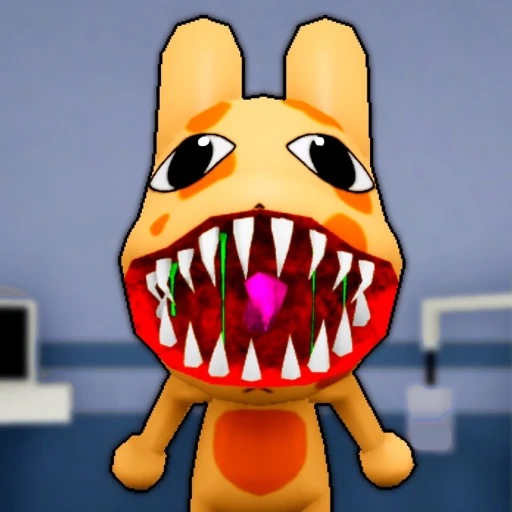
Animal Hospital Beginner's Guide – Treat Patients, Spot Anomalies & Keep Your Sanity
Updated September 8, 2026 — Added the Second Floor update (September 5, 2026): the upper floor, the Lab, the Sampler and DNA serums. Refreshed every live stat.
- September 8 — added the Second Floor update; re-read visits, favourites and the concurrent-player median.
- August 22 — full fact rebuild: treatment loop, Sanity thresholds, shop prices, class levelling costs.
Animal Hospital is not a spot-the-difference game. You check patients in, diagnose them and give them the right medicine — while a Sanity meter drains and some patients turn out to be anomalies. Here is the shift-by-shift unlock order, every Supplies Shop price, and the Sanity maths that decides your run.
In This Guide
What You Actually Do on a Shift
Animal Hospital was published on May 10, 2026 by the Animal Anomaly group, with Roytt credited as developer, and Roblox lists it under Survival. It is enormous: a 7-day median of 79,932 concurrent players (range 43,626–201,767 across 28 samples, September 1–8, 2026), 2.21 billion visits and 2,890,101 favourites as of September 8, 2026. The median has roughly halved since our August 22 check — 150,231 then — while lifetime visits kept climbing, so the game is past its launch surge rather than in trouble; the September 1–8 window still peaked above 200,000.
A run is a sequence of numbered shifts. A shift ends when every patient listed on the Check-In Office monitor has been checked in and treated. The loop for each patient is the same four steps:
- A patient reaches the check-in window. You admit them or close the shutters on them.
- They walk to a numbered room and lie on the bed. Rooms 1–5 are the Medical Wing; 6–8 the Emergency Wing. Since September 5, 2026 there is also an upper floor — treatment still happens down here, but the Lab is up there.
- You run DNA analysis and diagnostics — about nine seconds and two seconds respectively, before upgrades.
- The screen above the bed lists one to three treatments. Give the right ones and they recover in roughly 35 seconds.
The wrong treatment kills the patient and costs one of your three lives; Dr. Harlow says so outright at the end of Shift 6. The exception is an anomaly — killing one with the wrong treatment is not an animal death, but it pays less.
It is co-op for up to four players — the 30-player server cap is the lobby, not your team. More on the game at the Animal Hospital hub and in our Roblox alternatives roundup.

Clear the Four Tutorial Shifts Without Wasting Time
The first four shifts are scripted tutorials that hand you one system at a time. Knowing the order lets you pre-position items instead of waiting.
- Shift 1 — two scripted patients, never anomalies, always the same: stomach ache (herbs), then dried eyes (eye drops). Grab both in advance. Harlow then unlocks the shutters and security cameras.
- Shift 2 — anomalies, enemies and story characters start appearing. Barney, Ron from Accounting and Ratthew can show up and can always be admitted. At the end, Harlow opens the Emergency Wing (rooms 6–8) and the Supplies Shop.
- Shift 3 — no new systems. At the end Harlow unlocks a free, renewable taser in the Check-In Office.
- Shift 4 — Harlow announces an anomaly attack and an ambulance event dumps six patients in at once, some of them anomalies. Clearing it adds a bonus to that shift's pay.
If you already know the game, Skip Tutorial (Fast Start) — renamed from "Skip Doctor Dialogue" in the August 8, 2026 update — starts you at Shift 1 with the cameras, shutters, taser, Emergency Wing and shop unlocked: four patients, then an ambulance shift with six more.
Later on, Slime Shifts can appear from Shift 10, and around Shifts 11–12 the reporter Liz lends you a UV camera for 8–10 shifts.
Keep Your Sanity Above 0%
Sanity is your health bar, and it is the real fail state — reaching 0% kills you. You start a run with 61–65% base Sanity depending on class. Even doing nothing wrong, "job stress" drains 1 point every 50 seconds, so a player sitting at 100% would take 1 hour 23 minutes to die from stress alone.
| Action | Sanity change |
|---|---|
| Chocolate (full bar, 20 per bite) | +60 |
| Mint Tea (over ~30 seconds) | +15 to +30 |
| Coffee (full cup, 5 per sip) | +15 |
| Tasing an anomaly or Mimic | +2 |
| Completing a surgery | +1 |
| Head Banger asked to leave | −20 |
| Camera Monster jumpscare | −20 |
| Tasing a normal patient | −15 |
| Viewing a cursed photo | −10 |
| Bed Monster grab | −10, then −6 every 2 seconds |
Two built-in warnings are reliable gauges. Below 35% the music slows and the environment desaturates; below 30% the posters in Rooms 1, 2 and 7 start changing, more strongly the lower you go. Both reverse when you climb back over the threshold.
If a teammate hits 0%, the Teddy Bear ($1,000 in the Supplies Shop) revives one dead player. You cannot use it on yourself, so the safest player should carry it.

Spot Anomalies Before You Check Them In
Anomalies are animals with abnormal characteristics, and refusing them service is a main objective. They are not an instant loss: admitting one usually triggers an event — a death ritual, a monster emerging, or the patient turning into a Mimic — rather than ending the run, and several are not hostile to the player at all.
You have four detection tools, in rough order of reliability:
- The photo camera. Take a polaroid at the window: any difference on the print means the patient is always an anomaly. A cursed photo costs 10 Sanity to view.
- The Scanner ($150, one use). Scans a single patient and tells you outright whether they are an anomaly. The Secret Agent class carries one as a starter item.
- Security cameras. Four fixed feeds — check-in, lobby, medical, emergency — on the Check-In Office TV. Staring and twitching anomalies often only show up here. Cameras break at random; hold interact next to one to fix it.
- Plain appearance. Facial anomalies show at the window: three glowing red eyes, a crooked mouth with sharp teeth, a drawn-on smile with heavy under-eye bags, or hollow eyes. All of them also give the patient a low, distorted voice.
To refuse one, close the shutters with the red button in the Check-In Office, unlocked from Shift 2. Two exceptions: the Head Banger blocks the shutters while it bangs on the glass (asking it to leave costs 20 Sanity; coffee calms it down), and a Hollow Face anomaly always performs a Death Ritual during recovery — stay in the room and snuff the candles with eye drops, IV drops or coffee to avoid the Sanity hit.
The Second Floor and the Lab
The Second Floor update landed on September 5, 2026 and is the biggest structural change since launch: it added an upper floor to the hospital, a Lab on it, a new character (the Clown), six new staff skins including four maid variants and two Secret Agent skins, a redesign of the Nurse's Fluffy skin, new lore and new Journal achievements. The wiki's Updates page states the game patches on a bi-weekly cadence and puts the next drop at September 19, 2026, 16:00 UTC.
The Lab is a second job running alongside your shift, and it is optional — nothing on the treatment loop above changed. What it adds is a DNA experiment chain:
- Pick up the Sampler from its station in the Lab. It is free, and you normally get one sample per patient.
- Take a DNA sample from a patient lying in a bed on the first floor. Samples from ordinary patients come out pink; samples from anomalies come out green.
- Carry the sample up to the Lab and load it into the Sequencer. That starts a timed minigame: press "Collect" when the red line crosses a green sample icon. Each hit adds 5–10% progress, each miss takes 5% off, and leaving the minigame resets you to 0% and burns the sample.
- Put the finished sample on a bench and add the Lab's four ingredients in a specific order: Mushroom = T, Strange Jelly = A, Ginger = C, Milk = G. The cabinets around the room are labelled with those letters.
- Get the sequence right and a 30-second timer starts — take the dish to the Vial Press to finish it into a glass vial.
Pink and green serums are not interchangeable. Pink vials are thrown at patients, visitors and NPCs; green vials are drunk by you. Apply a pink recipe to a green sample or vice versa and the dish goes "Unstable" and is destroyed — it explodes, bloats, catches fire or vanishes. The explosion at least pays you the "Kaboom" achievement.
A few recipes worth knowing before you waste a sample. On the pink side, T-T-T turns an anomaly into a mimic and does nothing at all to a normal animal, G-A-T sets the target on fire, C-T-T makes them walk much faster and T-T-C much slower, and one Maple Syrup plus anything else acts as a grenade against anomalies and a taser against animals. On the green side the useful ones are defensive: C-C-A delays your Sanity drain by 5 seconds per dose up to a 20-second cap, G-G-A stacks +5% movement speed to a 150% cap, T-G-C cuts your detection radius by 5 to a −30 cap, and T-T-A adds a 5% dodge chance to a 15% cap. Avoid A-C-C, which simply costs you 15 Sanity.
Spend Your Shift Money in the Right Order
Money ($) is paid at the end of each shift on a performance grade — Excellent pays most, Critical least — plus a bonus after the Anomaly Attack every five shifts from Shift 5. You start on $0 unless your class grants starter money.
The Supplies Shop opens at the start of Shift 3 with three random items and a three-minute buying window. Each item is bought once per shift by one player, and prices rise with team size. A re-roll costs 19 Robux.
| Item | Cost | What it does |
|---|---|---|
| Coffee | $50 | +15 Sanity |
| Speed Boost | $75 | 3 uses, 120 seconds each |
| +1 Carry Capacity | $100 | Inventory 3 → 4 treatment slots |
| Mint Tea | $100 | +15 to +30 Sanity over time |
| 50% Faster DNA Analysis | $110 | 9s → 4.5s; stacks to roughly 2–3s |
| Patients Recover 25% Faster | $110 | 35s → about 26s |
| Chocolate Bar | $135 | +60 Sanity |
| Taser (1 use) / Scanner | $150 | Fend off or identify one anomaly |
| X-Taser | $250 | 3 listed uses (the wiki notes it currently gives 5) |
| Gun | $400 | 20 rounds |
| Deployable Camera | $600 | A fifth camera anywhere you place it |
| Teddy Bear | $1,000 | Revives one dead teammate (not yourself) |
Buy throughput before firepower. The two $110 upgrades compound over every remaining patient: faster DNA clears more patients per shift, faster recovery frees rooms sooner. The +1 carry slot at $100 is close behind, since three-treatment patients otherwise force a second trip to the cabinet.
Pick a Class That Fits How You Play
There are 11 classes, bought in the lobby with Animal Coins or Robux; you start with the free Intern. Each sets your starting Sanity, utility (carry capacity and starter items) and starter money, and levels up on EXP from checking in and treating patients: 200 EXP for level 2, 850 more for level 3, or 199 and 299 Robux to skip it.
- Secretary — +1 Sanity for every patient checked in. The safest pick if you work the window.
- Doctor / Surgeon — +1 Sanity for every patient healed, so they pay you for doing the main job.
- Psychologist — doubles all Sanity changes, good and bad. High ceiling, high risk.
- Security — starts with an X-Taser and gains a Deployable Camera at level 2.
- Firefighter — added July 25, 2026; fire-immune at level 3.
- Secret Agent — priciest at 790 Robux (region-dependent), with a gun and a scanner.
Skins are Animal Coin cosmetics and change no stats.
Does Animal Hospital have codes?
No. There is no code redemption box in the game as of August 21, 2026, so there is nothing to type in. Our Animal Hospital codes page tracks that status and lists the free rewards you get instead.
Earn Free Robux While You Play
Classes, skins and shop re-rolls in Animal Hospital all cost Robux. Earnaldo lets you earn real Robux by completing simple tasks, offers, and surveys, then withdraw straight to your account.
More Animal Hospital & Co-Op Horror
Everything we publish on this game lives on the Animal Hospital hub, with the live code status on the codes page and similar games in our Roblox alternatives list. If you want more co-op horror, try our Doors guide and Doors codes, the The Mimic guide, or 99 Nights in the Forest for survival co-op with a crafting layer.

Frequently Asked Questions
You work the night shift at a hospital for humanoid animals with up to three other players. Each patient is checked in at the window, sent to a room, run through DNA analysis and diagnostics, then given the one to three treatments the screen calls for. Some patients are anomalies you are meant to refuse instead.
You die. Sanity is the player health meter, starting at 61–65% depending on class, and it drains by 1 point every 50 seconds from job stress alone before any enemy touches you. Coffee (+15), Mint Tea (+15 to +30) and Chocolate (+60) restore it, and a teammate can revive you with a $1,000 Teddy Bear from the Supplies Shop.
No. Animal Hospital has no code redemption box as of August 21, 2026, verified against place ID 78515283254292. See our Animal Hospital codes page for the live status and the free rewards available instead.
How We Verified This Guide
We have no in-game access, so nothing here comes from us playing. The Second Floor section was read from animal-hospital.fandom.com's Updates, Lab and Sampler pages on September 8, 2026, and the live figures re-pulled the same day. The rest was cross-checked on August 22, 2026 against three sources: the live Roblox games API for universe 10148749921 / place 78515283254292 (name, description, creator, May 10 2026 creation date, visits, favourites); our own radar, which sampled concurrent players 26 times between August 15 and 22 and gives a 7-day median rather than one swingy reading; and animal-hospital.fandom.com, whose Sanity, Shifts, Treatment and Supplies Shop pages were all edited between August 8 and 22, 2026. The Supplies Shop price list has not been re-verified since that date. Where the wiki disagreed with itself — the taser unlocking at the end of Shift 3 or during Shift 4 — we took the majority. Anything unsourced was left out.
The place was last republished on August 20, 2026 at 05:12 UTC; the newest update documented on the wiki is the Lore Expansion Update of August 8, 2026, on a roughly two-week cadence. Play it on its official Roblox page, and tell us in our Discord if it has changed.