Last checked: June 10, 2026
Anime Card Collection Free Robux Guide (2026) — Tips, Codes & Strategies

Anime Card Collection by Crew Simulators has pulled in 26M+ visits on Roblox, and it's easy to see why. You open card packs, pull anime characters from One Piece, Dragon Ball Z, Jujutsu Kaisen, My Hero Academia, and One Punch Man, slot them into your binder, and watch the money roll in passively. It sounds simple, but the rarity system, binder optimization, and trading meta give the game a surprising amount of depth. This guide covers everything — active codes, card tier lists, binder strategies, money generation, trading tips, and the fastest routes through early game in April 2026.
Table of Contents
- What Is Anime Card Collection?
- Active Codes — April 2026
- Card Rarity System Explained
- Getting Started — New Player Walkthrough
- Binder System & Money Generation Guide
- Best Card Packs to Open in 2026
- Trading Guide — Values, Scams & Smart Deals
- Anime Series Breakdown & Best Cards
- Potions & Boosts — How They Work
- Frequently Asked Questions
What Is Anime Card Collection?
Anime Card Collection is a card collecting simulator on Roblox developed by Crew Simulators. The game launched and has grown steadily to 26M+ visits, attracting fans of both trading card games and anime gacha-style experiences. You can find it on Roblox using Place ID 76285745979410, or just search "Anime Card Collection" in the Roblox game browser.
The core gameplay loop is straightforward but addictive: you spend in-game money to open card packs, each pack containing randomized anime character cards with different rarities. Every card you pull goes into your collection, and from there you slot them into your binder. Cards sitting in your binder passively generate money over time, which you then reinvest into more packs. It's a snowball effect — the better your cards, the faster you earn, and the faster you earn, the better packs you can afford.
What makes the game sticky is the sheer variety of cards available. You're pulling characters from five of the biggest anime franchises on the planet: One Piece, Dragon Ball Z, Jujutsu Kaisen, My Hero Academia, and One Punch Man. Each series has its own pool of characters spanning every rarity tier, from Common Deku cards to Mythical Gojo pulls that'll make the entire server jealous. Crew Simulators adds new cards and series with regular updates (the game is currently on Update 28), so the collection never feels "complete."
If you've played games like Anime Card Clash or other card simulators on Roblox, you'll feel right at home here. The mechanics are similar, but Anime Card Collection leans harder into the binder and passive income systems, giving it a distinct identity in the crowded anime game space.

Active Anime Card Collection Codes — April 2026
Codes in Anime Card Collection give you free potions, boosts, and sometimes in-game currency. They're released alongside updates and on milestone celebrations, and they expire without warning. Here's every working code as of July 2026:
| Code | Reward | Status |
|---|---|---|
| TwentyFourthCode | Free Potions (Update 28) | Active |
The code selection is slim right now, but Crew Simulators typically drops new codes with each major update. Follow their Roblox group and social channels to catch codes within the first 24 hours of release — that's when most codes are active and the community hasn't burned through them yet.
How to Redeem Codes in Anime Card Collection
- Launch Anime Card Collection on Roblox (Place ID: 76285745979410)
- Look for the "Codes" button on the side of your screen — it's usually visible immediately after loading in
- Click the button to open the code redemption window
- Type or paste the code exactly as shown — codes are case-sensitive, so match the capitalization
- Hit "Redeem" and check your inventory for the rewards
If a code doesn't work, double-check the spelling and capitalization. If it still fails, the code has likely expired. Bookmark this page and check back regularly — we update the codes table as new ones drop.
Card Rarity System in Anime Card Collection (2026)
Understanding card rarities is the foundation of everything in Anime Card Collection. Every decision you make — which packs to open, which cards to keep, which to trade — flows from knowing what each rarity tier is worth.
Rarity Tiers Explained
| Rarity | Drop Rate | Money Generation |
|---|---|---|
| Common | Very High | Base rate — minimal income per tick but fills binder slots |
| Uncommon | High | Roughly 2x Common income. Decent filler for empty binder pages |
| Rare | Moderate | About 5x Common. First tier where cards feel impactful in your binder |
| Epic | Low | Around 15x Common. These are your mid-game workhorses |
| Legendary | Very Low | Roughly 50x Common. A single Legendary can outproduce an entire page of Commons |
| Mythical | Extremely Rare | 200x+ Common. Game-changing pulls that transform your income overnight |
The income multipliers between tiers are steep. A single Mythical card generates more passive money than an entire binder page filled with Commons. That's why rarity-chasing isn't just a vanity play — it's the core economic engine of the game. Every Mythical or Legendary you slot into your binder directly accelerates how fast you can afford better packs, which in turn increases your odds of pulling more high-rarity cards.
Hidden Rarity Mechanics
Not all cards within the same rarity tier are equal. Certain anime characters carry a slight bonus to money generation even within their rarity bracket. For example, the iconic protagonist cards (Luffy, Goku, Gojo) tend to have marginally higher income values than supporting characters at the same rarity. The difference is small — maybe 5-10% — but it adds up across a full binder.
There are also special variant cards that appear during limited-time events and update celebrations. These cards often have unique borders or visual effects and carry boosted income rates compared to their standard versions. If you pull a variant, keep it. They're worth significantly more in trades than regular versions of the same character.
Getting Started in Anime Card Collection — New Player Walkthrough (2026)
Your first 30 minutes in Anime Card Collection set the trajectory for your entire account. Here's the most efficient path from a fresh start to a functioning money-making machine, based on what works after Update 28.
- Redeem the active code TwentyFourthCode immediately. This gives you free potions that'll boost your early pack openings. Don't save the code for later — you want those potions working for you from minute one.
- Open every basic pack you can afford. Your starting currency is enough for several basic pack openings. Don't hold back hoping to save for premium packs — you need cards in your binder generating income as fast as possible.
- Slot every single card into your binder. Even Common cards generate money. An empty binder slot produces zero income, so a Common card is infinitely better than nothing. Fill every available slot immediately.
- Let your binder work while you explore. Walk around, check out the different pack stations, and learn the interface. Your binder is generating money in the background the entire time.
- Reinvest your first batch of passive income into more packs. Once you've accumulated enough from your binder, buy more packs. Replace Commons with any higher-rarity pulls. This is the core loop you'll repeat for the rest of the game.
- Check the trading hub for deals. Sometimes other players are offloading Rare or Epic cards cheaply because they pulled duplicates. You can grab these for significantly less than the expected pack cost to pull them yourself.
Common New Player Mistakes
The biggest mistake new players make is hoarding currency to buy premium packs right away. Premium packs have better odds, but they cost significantly more. You're better off opening 10 basic packs than 1 premium pack in the early game because you need volume — you need cards in your binder generating income. The math flips later once your passive income is strong enough to sustain premium pack purchases without downtime.
The second-biggest mistake is ignoring the binder entirely and treating the game like a pure gacha. Opening packs and admiring your pulls feels great, but cards outside your binder don't generate any money. If you pull a Legendary and leave it sitting in your inventory for three hours while you keep opening packs, you've lost three hours of Legendary-tier passive income. Slot cards immediately.
Binder System & Money Generation Guide (2026)
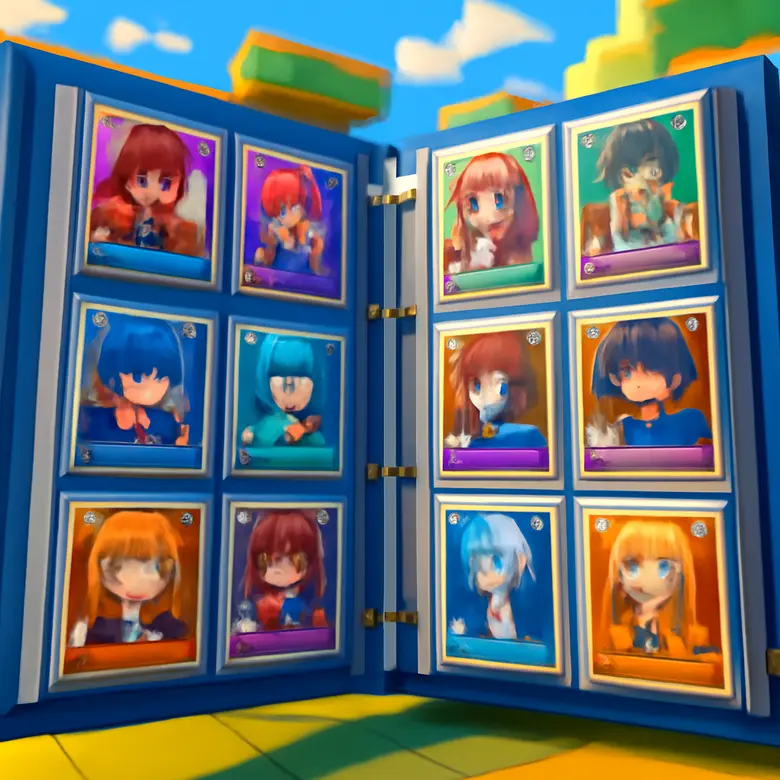
The binder is where Anime Card Collection separates itself from other card games on Roblox. It's not just a display case — it's your primary income source. Treating your binder as an investment portfolio rather than a trophy shelf is the key to progressing efficiently.
How Money Generation Works
Every card placed in your binder generates a set amount of in-game currency per tick (roughly every few seconds). The amount depends on the card's rarity, with higher-rarity cards producing exponentially more per tick. Your total binder income is the sum of all individual card incomes, so the goal is straightforward: maximize the total rarity value across all your binder slots.
This creates interesting decisions. If you pull an Epic card but all your binder slots are full of Rares, do you swap out a Rare? Absolutely — the Epic's income will outpace the Rare's by roughly 3x. But if you pull a second copy of a Rare you already have, you might be better off trading it for a card from a different series you're missing rather than having a duplicate slot.
Binder Optimization Strategy
Think of your binder in tiers. In the early game, you're just filling slots — any card is better than no card. In the mid-game, you're actively replacing lower-rarity cards with higher ones as you pull them. In the late game, you're hunting specific Mythical and Legendary cards to fill your last remaining "weak" slots.
The upgrade priority is simple: always replace your lowest-rarity card first. If you have one Common and one Uncommon in your binder and you pull a Rare, replace the Common. This maximizes the income jump from each upgrade. It sounds obvious, but during the excitement of rapid pack openings, plenty of players forget to manage their binder and leave money on the table.
Maximizing Passive Income Overnight
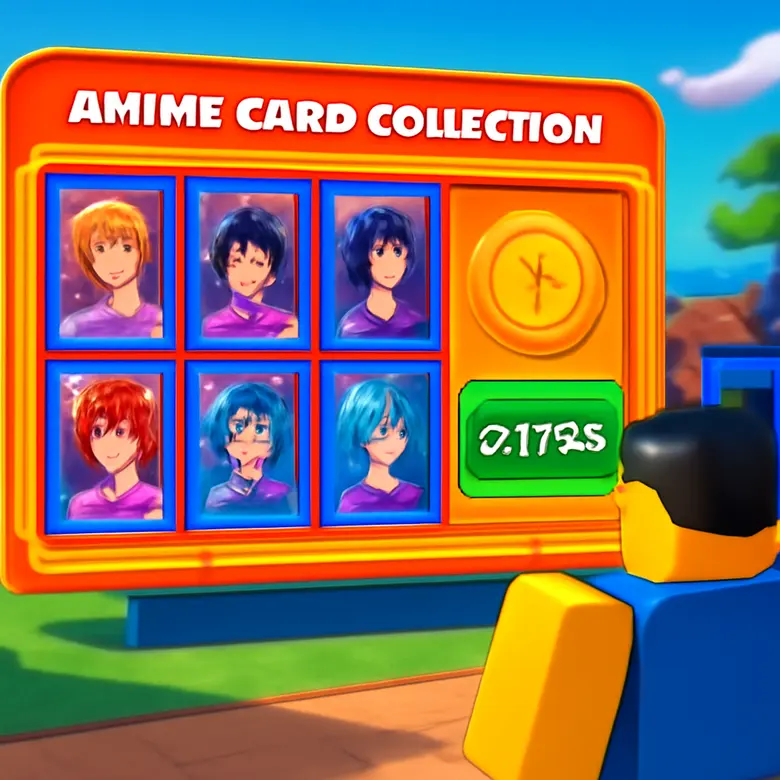
One of the best things about Anime Card Collection's binder system is that it works while you're away. Before logging off for the night, make sure every binder slot is filled with the highest-rarity card you have available. When you log back in, you'll have a pile of accumulated currency waiting to be spent on packs. Players who optimize their binder before every logout session consistently outpace those who don't by a significant margin over the course of a week.
Best Card Packs to Open in Anime Card Collection (2026)
Not all card packs are created equal. Each pack type has different costs, different rarity odds, and different anime series pools. Knowing which pack to buy at each stage of the game is what separates efficient players from those who stall out mid-game.
Pack Tier Comparison
| Pack Type | Cost | Best For |
|---|---|---|
| Basic Pack | Low | Early game binder filling. High volume, mostly Commons and Uncommons |
| Standard Pack | Medium | Mid-game upgrades. Better Rare odds, occasional Epic pulls |
| Premium Pack | High | Late mid-game. Solid Epic rates with realistic Legendary chances |
| Ultra Pack | Very High | Endgame. Best Legendary and Mythical odds in the game |
| Anime-Specific Packs | Varies | Targeting cards from a specific series for collection completion or trading |
When to Upgrade Your Pack Tier
The transition points are simple. Move from Basic to Standard packs once your binder is completely full and your lowest card is Uncommon. Switch to Premium packs once your passive income comfortably covers the cost of a Premium pack every 10-15 minutes of idle time. Only touch Ultra packs when your binder is mostly Epic or better and you're specifically hunting Legendary and Mythical cards to fill your last few weak slots.
Jumping to a higher pack tier too early is one of the most common progression traps in the game. If you're opening one Premium pack every hour because you can barely afford them, you'd be better off opening six Standard packs in that same hour. Volume matters more than individual pack quality until your income supports the higher tier comfortably.
Pack Strategy Verdict
Standard packs offer the best value-per-currency for most players through the mid-game. They hit the sweet spot between cost and rarity odds. Only transition to Premium and Ultra packs when your binder income can sustain the higher cost without creating gaps in your opening frequency.
Trading Guide for Anime Card Collection — Values, Scams & Smart Deals (2026)
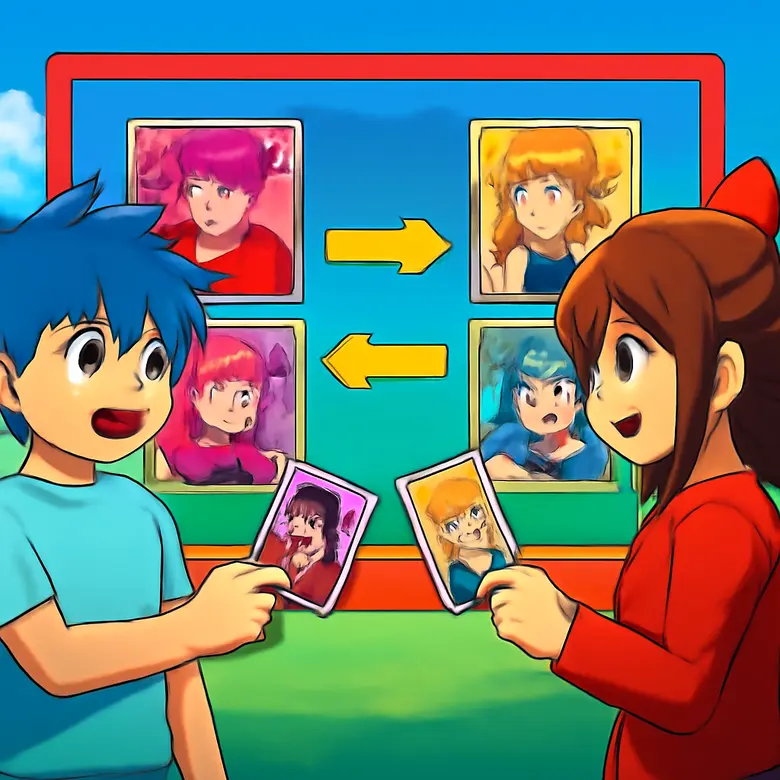
Trading is where the real meta-game lives in Anime Card Collection. The pack-opening RNG can be cruel, but smart trading lets you bypass bad luck entirely. You can complete entire series sets, fill binder gaps, and acquire specific high-rarity cards without pulling them yourself.
Understanding Card Values
Card values in trading aren't based purely on rarity. Three factors determine what a card is worth in a trade: rarity tier, character popularity, and scarcity. A Legendary Goku card from Dragon Ball Z is worth more than a Legendary side character from My Hero Academia because Goku has higher demand. Similarly, cards from older updates or limited events carry premium trade value because fewer copies exist in circulation.
Before entering any trade, spend a few minutes in the trading hub watching what other players are offering and accepting. This gives you a feel for the current market. Card values shift with every update as new cards enter the pool and certain older cards become harder to pull.
Avoiding Common Trading Scams
The most common scam is the "last-second swap." A player offers a Legendary card, you accept, and right before confirming they swap it for an Epic card with a similar name or appearance. Always double-check every card in a trade before hitting confirm. Take an extra three seconds to verify — it's never worth rushing.
Another common tactic is value manipulation. Someone will tell you a card is "worthless" to get you to trade it cheaply, when it's actually a desirable variant or limited-edition pull. Know your cards. If you aren't sure about a card's value, don't trade it. Hold it until you can research what it's actually worth.
Smart Trading Strategies
The best traders in Anime Card Collection follow a simple rule: trade sideways or up, never down. If you're giving up a Legendary, you should be getting a Legendary of equal or higher value back. If you're trading two Epics, you should be getting one Epic that's worth more than both of yours combined (through character popularity or variant status).
Duplicate Legendaries are your best trading asset. If you pull a second copy of a Legendary you already have in your binder, that duplicate is pure trade currency. Don't slot it into a second binder page — use it to acquire a Legendary you don't have yet. Different cards diversify your collection and often net you series completion bonuses.
Anime Series Breakdown & Best Cards (2026)
Anime Card Collection features five anime franchises, each with its own card pool. Here's what you need to know about each series and which cards are worth chasing.
One Piece Cards
One Piece has one of the deepest card pools in the game. The standout cards are Gear 5 Luffy (Mythical) and Kaido (Legendary), both of which carry top-tier money generation rates. The One Piece series also has some of the best-looking card art in the game, which drives trading demand higher than pure rarity would suggest. If you're building a One Piece-themed binder page, characters like Zoro, Shanks, and Law fill the Epic and Rare slots nicely.
Dragon Ball Z Cards
Dragon Ball Z is the crowd favorite. Ultra Instinct Goku (Mythical) is arguably the most sought-after card in the entire game, not because it generates the most money (it's competitive but not always the top), but because everyone wants it. From a pure income perspective, Beerus (Legendary) and Golden Frieza (Legendary) are slightly better value because they're easier to obtain through trades. Vegeta and Gohan round out the strong Epic tier for DBZ.
Jujutsu Kaisen Cards
JJK cards were added in a later update and have quickly become some of the most traded in the game. Domain Expansion Gojo (Mythical) is a top-3 card overall for money generation. Sukuna (Legendary) is the most commonly traded Legendary in the game because of his popularity. The JJK series benefits from being newer, which means fewer copies in circulation and higher perceived trade value across the board.
My Hero Academia Cards
MHA has solid representation but tends to fly under the radar compared to the bigger franchises. Prime All Might (Mythical) is excellent for money generation and surprisingly obtainable through trades because demand is lower than for Goku or Gojo. Deku, Bakugo, and Todoroki fill the Legendary and Epic tiers. If you're looking for high-value cards at lower trade costs, MHA is your best bet right now.
One Punch Man Cards
One Punch Man has the smallest card pool but some of the most iconic characters. Serious Punch Saitama (Mythical) has top-tier money generation, and Boros (Legendary) is a sleeper pick — he generates nearly as much as some Mythicals from other series. The OPM pool is small enough that you can realistically complete the entire series set faster than any other franchise, which appeals to completionist players.
Potions & Boosts in Anime Card Collection (2026)
Potions are consumable items that temporarily boost various aspects of your gameplay. They're available through codes (like the free potions from TwentyFourthCode), in-game purchases, and occasionally as rewards for milestones. Understanding when and how to use them separates casual players from efficient grinders.
Potion Types and Effects
Luck potions increase your odds of pulling higher-rarity cards from packs. These are the most valuable potions in the game, hands down. Popping a luck potion right before a pack-opening marathon can mean the difference between pulling mostly Uncommons and snagging a few Epics or even a Legendary. Time your luck potions to coincide with your biggest purchase sessions — don't waste them on a single basic pack.
Money generation potions temporarily boost the income rate from your binder. These are best used during active play sessions when you can continuously reinvest the boosted income into more packs. Using a money potion and then logging off is wasteful — the boost expires by timer, not by earnings, so you want to maximize how much currency you cycle through during the window.
Speed potions affect pack-opening speed and cooldowns. These are niche but useful during intense grinding sessions where you're opening dozens of packs in a row. They pair well with luck potions for maximum efficiency during your big purchasing pushes.
Potion Stacking and Timing
Some potions stack with each other, meaning you can run a luck potion and a money potion simultaneously. When you have multiple potions available, the optimal play is to activate them all at the start of a dedicated grinding session. Pop the luck potion, pop the money potion, and spend the next 15-30 minutes opening packs and upgrading your binder non-stop. This concentrated approach gets far more value than spreading potions across separate casual sessions.
Anime Card Collection vs. Similar Games on Roblox
The anime card game space on Roblox is competitive. If you enjoy Anime Card Collection, there are several other games worth checking out, each with its own twist on the formula.
Anime Card Clash takes a more PvP-focused approach where you battle other players using your card collections. The emphasis is on building a competitive deck rather than maximizing passive income. If you want head-to-head competition with your anime cards, that's the game to try.
Anime Adventures blends anime characters with tower defense mechanics. It's a completely different genre but draws from a similar pool of anime franchises. Many Anime Card Collection players bounce between both games because the anime character overlap scratches the same collector itch.
Anime Champions Simulator is closer to a traditional RPG where you collect and level anime characters for combat. The collection mechanics overlap significantly with Anime Card Collection, but the endgame is PvE progression rather than passive income generation. It's worth trying if you want more active gameplay alongside your collecting.
Want Free Robux for Anime Card Collection?
Earnaldo lets you earn free Robux by completing simple tasks. Use those Robux toward card packs, potions, or any other game pass in Anime Card Collection — no credit card needed.
Advanced Strategies for Anime Card Collection (2026)
The Compound Growth Strategy
Experienced players treat Anime Card Collection like a financial simulator. The idea is simple: maximize your reinvestment rate. Every coin your binder generates should go immediately back into packs. Don't let currency sit idle. The faster you cycle money from binder into packs and back into upgraded binder cards, the faster your overall income grows. Think compound interest, but with anime cards.
During the first few hours of a new account, your income growth is slow because you're working with low-rarity cards. But once you hit a critical mass of Rare and Epic cards in your binder, the income acceleration becomes dramatic. Most players hit this inflection point around 2-3 hours in if they're reinvesting aggressively. After that, the pace of upgrades increases rapidly.
Series Completion Bonuses
Completing an entire anime series set (collecting one of every character from a single franchise) unlocks bonus rewards. These bonuses vary by series but typically include a permanent income multiplier for all cards from that series in your binder. One Punch Man is the easiest series to complete due to its smaller card pool, making it the first completion target for most players. Dragon Ball Z is the hardest because it has the largest character roster.
Update Cycling Strategy
When Crew Simulators drops a new update with fresh cards, the meta shifts temporarily. New cards have inflated trade values, old pack odds sometimes get adjusted, and there's usually a new code to redeem. Smart players prepare for updates by stockpiling currency in advance, then burning through it immediately after the update drops. You get first access to the new cards while demand is high and supply is low, positioning you to make favorable trades with everyone scrambling to get the newest pulls.
Multi-Account Optimization
Some dedicated players maintain multiple accounts to trade cards between them. While this is technically allowed, it's time-intensive and only worth it if you're genuinely trying to complete every series as fast as possible. For most players, focusing on one account and trading with the broader community is more efficient and more fun.
Frequently Asked Questions — Anime Card Collection (2026)
Anime Card Collection is a card collecting simulator developed by Crew Simulators on Roblox (Place ID: 76285745979410). You open card packs featuring characters from One Piece, Dragon Ball Z, Jujutsu Kaisen, My Hero Academia, and One Punch Man. Cards go into your binder where they passively generate money, which you reinvest into more packs. The game has 26M+ visits and receives regular updates.
As of April 2026, the active code is TwentyFourthCode, which gives free potions. This was released alongside Update 28. Codes expire without notice, so redeem it as soon as possible. New codes are typically released with each major update from Crew Simulators.
Look for the Codes button on the side of your screen after loading into the game. Click it to open the code entry window, type or paste the code exactly as shown (they're case-sensitive), and hit redeem. Your rewards will appear in your inventory immediately.
Cards placed in your binder passively generate money over time. Higher rarity cards produce significantly more per tick — a single Mythical can generate 200x more than a Common card. The key is filling every binder slot with the highest-rarity cards available and continuously upgrading your weakest slots as you pull better cards from packs.
Cards range from Common, Uncommon, Rare, Epic, Legendary, to Mythical. Each tier has different pull rates from packs, with Common being the most frequent and Mythical being extremely rare. The income difference between tiers is exponential — Legendary cards produce roughly 50x more money than Commons, and Mythicals push past 200x.
Yes. You can earn in-game currency to open packs and build your entire collection without spending Robux. Game passes and potions accelerate progression but every card in the game is obtainable through normal gameplay. Free players can reach endgame binder setups with enough time and smart trading.
The game currently features cards from five anime franchises: One Piece, Dragon Ball Z, Jujutsu Kaisen, My Hero Academia, and One Punch Man. Each series has characters spanning all rarity tiers, and Crew Simulators regularly adds new characters and occasionally new series with major updates.
Yes, trading is a core feature. You can exchange cards with other players through the trading hub to fill collection gaps, offload duplicates, or target specific high-rarity cards. Always verify both sides of a trade before confirming to avoid scams, and spend time in the trading hub watching market activity before making your first trade.