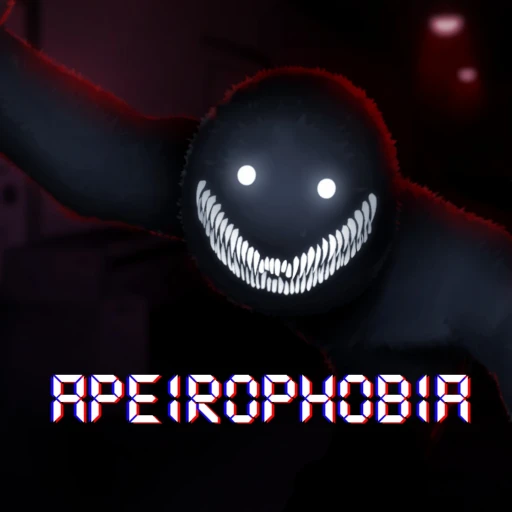
Apeirophobia is a horror exploration game on Roblox built around the Backrooms concept — those unsettling, infinite liminal spaces that took over the internet a few years back. You navigate 16 levels of fluorescent-lit hallways, flooded poolrooms, and pitch-black corridors using nothing but a flashlight and a camera. There are no weapons. You can't fight anything. If something finds you, your only options are to run, hide, or die.
Think of it as Outlast on Roblox. The game was recently revamped in early 2026 with updated visuals, reworked level layouts, and rebalanced entity behavior, making this the best time to jump in if you've been curious. We've played through every difficulty mode dozens of times since the revamp, and this guide covers everything you need to know to survive your first run. For a full overview of the game, check our Apeirophobia hub page.
Table of Contents
Your First 30 Minutes
When you first load into Apeirophobia, select Easy difficulty. Don't pick Normal, Hard, or Nightmare yet. Easy mode gives you the full 16-level experience with more forgiving entity speeds and extra breathing room on puzzle timers. You'll still get scared. You'll still die. But you won't be punished for learning.
The game drops you into Level 0: The Lobby. This is your tutorial space — an endless-looking expanse of yellow-carpeted rooms with buzzing fluorescent lights overhead. There are no entities here, so take your time. Walk around, get used to the first-person camera, and practice toggling your flashlight on and off. The Lobby teaches you the vibe of Apeirophobia without any immediate danger.
Your two pieces of equipment matter more than you'd think. The flashlight illuminates dark areas and is essential in later levels where visibility drops to almost nothing. The camera can reveal hidden items, clues, and environmental details that aren't visible to the naked eye. Both are accessed through your inventory, and you'll swap between them constantly.
Look for black arrows painted on walls. These mark the path toward each level's exit. If you ever feel turned around or lost in a maze section, stop moving and scan the walls for an arrow. They're your most reliable navigation tool from Level 0 through Level 15.
Core Mechanics Explained
Entities & How to Survive Them
Entities are the hostile creatures that patrol specific levels. Each one has a distinct behavior pattern and a specific counter-strategy. Learning these patterns is the single most important skill in Apeirophobia. Here's what you'll encounter.
| Entity | Behavior | How to Survive |
|---|---|---|
| The Hound | Crawls on all fours, blind, incredible hearing | Crouch immediately, stop all movement, wait for it to pass |
| The Howler | Tall spindly black figure, fast, relies on line of sight | Break line of sight by ducking behind walls and obstacles |
| The Starfish | Long fleshy arms, hangs in fixed areas | Spatial puzzle — stay out of arm reach, time your movement |
| The Titan Smiler | Massive glowing face, chases through obstacles | Pure parkour — keep running, don't stop, navigate obstacles at speed |
The Hound is the first entity most players encounter, and it teaches you the game's core survival lesson: noise kills. This creature is completely blind but reacts to any sound you make. Running, walking upright, and even using your flashlight at close range can trigger it. When you hear The Hound's crawling sounds, immediately crouch and go still. Wait for it to move past before continuing.
The Howler works on the opposite principle. It can see you but can't track you through solid objects. When a Howler spots you, sprint to the nearest wall or corner and break its line of sight. Maze sections are actually your advantage against Howlers because every turn is a potential escape route. The key is knowing where the nearest cover is before you need it.
The Starfish is less of a chase threat and more of a spatial puzzle. It hangs in fixed locations and extends long arms that can reach surprising distances. You need to observe its pattern, identify the safe path through its reach zone, and time your movement through the gap. Rushing past a Starfish without studying it first is how most deaths happen.
The Titan Smiler is the most intense encounter. A massive glowing face chases you through obstacle-filled corridors, and the only strategy is forward momentum. You can't hide from it and you can't outsmart it. You just need to run, jump, and navigate the environment without stopping. This is where parkour skills and level knowledge pay off most.
Puzzles & Progression
Every level has an exit condition. Sometimes it's finding a key hidden in the environment. Other times it's collecting colored orbs scattered across the map. A few levels require completing environmental challenges like activating switches in the right order or navigating a specific path through a hazard.
Your camera is useful here. Some items and clues only appear when viewed through the camera lens. If you're stuck in a level and can't find the last key or orb, try scanning the room through your camera. It's a mechanic the game doesn't explain well, and many players never discover it on their own.
Stealth & Sound
Apeirophobia treats sound as a core mechanic, not just atmosphere. Your movement state directly affects how much noise you produce. Running is the loudest. Walking is moderate. Crouching is nearly silent. Sound-based entities like The Hound respond to these noise levels in real time, so your movement choice is a constant tactical decision.
Environmental audio gives you information too. Flickering lights mean an entity is nearby or about to spawn. A shift in the ambient sound — the background hum changing pitch or cutting out entirely — is the game warning you that something has changed. These cues are subtle, which is why headphones make such a massive difference.
Difficulty Modes
Apeirophobia offers four difficulty settings, and the differences are significant.
Easy gives you generous lives, slower entities, and more time on puzzles. This is where you learn the game. Normal speeds things up and tightens the windows. Hard limits you to just 2 lives for the entire run — once you die twice, it's back to the beginning. Nightmare gives you a single life. One death ends everything. Hard and Nightmare are designed for players who already know every level layout and every entity pattern. They're not where you start.
10 Beginner Mistakes to Avoid
We tracked the most common failure patterns across first-time playthroughs after the 2026 revamp. These 10 mistakes are responsible for most early deaths and ragequits. Fixing even a few of them will significantly improve how far you get on each run.
- Starting on Normal or Hard difficulty. Easy mode isn't a watered-down version of the game. It's the same 16 levels with the same entities, just with enough breathing room to actually learn the mechanics. Players who start on Normal spend more time on death screens than on gameplay, and they don't learn anything useful from those deaths.
- Running from The Hound. Your instinct when you hear something crawling toward you is to sprint away. Against The Hound, this is fatal. Running produces the most noise in the game, and The Hound tracks sound with precision. Crouch, go completely still, and let it pass. This feels wrong the first few times, but it works every time.
- Panic-running through levels. When something scares you, the urge to sprint blindly down a corridor is overwhelming. But running creates noise that attracts sound-based entities, and it sends you crashing into hazards you could have seen coming. Controlled movement — even when you're frightened — is the difference between survival and a restart.
- Ignoring the camera. Many beginners never pull out their camera because the flashlight feels more immediately useful. But the camera reveals hidden items, keys, and environmental clues that are invisible otherwise. If you're stuck on a level and can't find the exit item, the camera is almost always the answer.
- Leaving the flashlight on constantly. Your flashlight is essential in dark areas, but keeping it on all the time creates problems. Some entities react to light, and in certain levels the flashlight acts as a beacon that draws attention. Get comfortable toggling it — turn it on when you need to see, turn it off when you're hiding or moving through a stealth section.
- Not following black wall arrows. The black arrows painted on walls aren't random decoration. They point toward the exit. Players who ignore them end up wandering in circles through maze sections, burning time and increasing their exposure to entity patrols. When lost, find an arrow and follow it.
- Standing in open space during entity encounters. Corridors and maze walls are your best friends. Open rooms with no cover are death traps when an entity is active. Always be aware of the nearest wall, corner, or piece of cover you can duck behind. Position yourself near these before an entity even appears.
- Rushing past The Starfish without observing its pattern. The Starfish has a fixed reach pattern. Its arms extend and retract on a cycle. Players who run straight at it die immediately. Spend 10 seconds watching its pattern from a safe distance, identify the gap in its reach, and then move through. Patience costs you 10 seconds. Dying costs you the level.
- Playing without headphones. This sounds like a minor preference, but it's genuinely a mechanical disadvantage. Audio cues tell you which direction an entity is approaching from, how close it is, and whether the environment is about to change. Without spatial audio, you're relying entirely on visual information in a game designed around darkness.
- Skipping Level 0 exploration. Level 0 (The Lobby) is safe and has no time pressure. Some players rush through it in 30 seconds to get to the "real" game. But The Lobby is where you should practice your flashlight toggle speed, camera swapping, crouch movement, and general navigation. Spending 5 minutes there saves you 20 minutes of fumbling in later levels where entities are hunting you.
Best Starter Strategy
Here's the exact approach we recommend for your first week with Apeirophobia. This strategy prioritizes learning over completion speed and builds the right habits from the start.
- Play on Easy mode exclusively. Don't switch difficulties until you've completed all 16 levels at least once. Easy mode gives you the full experience with room to learn. Trying Hard or Nightmare before you know the layouts is just self-punishment with no educational value.
- Spend 5 full minutes in Level 0. Practice toggling your flashlight, swapping to your camera, crouch-walking, and scanning walls for arrows. These micro-skills need to be automatic before you face your first entity. Level 0 is the only place you can practice them without risk.
- Learn one entity at a time. When you encounter a new entity type, die to it on purpose once or twice just to observe its behavior from up close. Watch how fast it moves, what triggers it, and how it reacts when it loses track of you. This "study death" approach teaches you more than 10 successful escapes where you got lucky.
- Use your camera in every new room. Before moving on, sweep the room with your camera. You'll find hidden items, clues, and environmental details the flashlight alone won't reveal. This habit becomes second nature and prevents the "I can't find the last key" frustration that stalls most players.
- Memorize entity spawn locations level by level. Entities appear in predictable locations. After 2 or 3 runs through a level, you'll know exactly where The Hound patrols and where The Howler waits. This foreknowledge lets you pre-plan your routes instead of reacting in panic.
- Master crouching before mastering speed. The impulse to move quickly is strong, but crouching past a sound-based entity is more reliable than trying to outrun it. Once you can crouch-navigate entity zones consistently, then you can start optimizing your speed through safe sections.
- Attempt Normal mode after 2 Easy completions. Two full Easy runs give you solid level knowledge and entity familiarity. Normal mode increases the pressure but doesn't fundamentally change the game. Your Easy mode skills transfer directly — the entities are just faster and less forgiving.
When to Spend Robux (and When Not To)
Apeirophobia is free-to-play, and every level can be completed without spending a single Robux. The entire 16-level experience is available to all players regardless of purchases. That said, the game does offer some optional purchases, so here's an honest breakdown.
What's Potentially Worth It
Cosmetic items and effects don't affect gameplay but can enhance the experience if you're invested in the game long-term. If you've played through Easy and Normal and you know you'll keep coming back, spending Robux on a skin or flashlight effect you genuinely like is a reasonable purchase. You're supporting the developers of a game you enjoy.
Game passes that offer quality-of-life improvements can save frustration during the learning phase. If there's a pass that helps with navigation or provides minor convenience features, it's worth considering after you've confirmed that you enjoy the core gameplay. The key word there is "after."
What's Not Worth It (Yet)
Don't buy anything before finishing Easy mode. Horror games are polarizing. Some players love Apeirophobia's atmosphere and keep coming back for months. Others realize after 30 minutes that they'd rather play something with less anxiety. You need to know which camp you're in before spending Robux.
Skip anything that promises to reduce difficulty. The satisfaction of Apeirophobia comes from learning entity patterns and mastering stealth mechanics through experience. If you bypass that learning process, you're removing the part of the game that actually makes it rewarding. No purchase replaces the need to understand how The Hound works or where The Howler patrols.
Avoid impulse purchases after a frustrating death. Dying to the same entity 5 times in a row creates a temptation to buy whatever might help. Step away for 10 minutes instead. You'll come back calmer, apply what you learned from those deaths, and probably clear the section on your next attempt. That's more satisfying than any purchase.
If you want Robux without spending real money, check our Apeirophobia codes page for active codes, and visit Earnaldo for verified ways to earn free Robux through simple tasks.
Earn Free Robux While You Play
Want more Robux for Apeirophobia and other Roblox games? Earnaldo lets you earn free Robux by completing simple tasks — no surveys, no downloads, just real rewards.
Frequently Asked Questions
Apeirophobia is a horror exploration game on Roblox inspired by the Backrooms concept. You navigate 16 levels (0 through 15) of liminal spaces, solving puzzles and avoiding hostile entities using only a flashlight and camera. The game was recently revamped in early 2026 with updated visuals and reworked levels.
There are 16 levels numbered 0 through 15. Level 0 (The Lobby) is a safe tutorial area where you learn controls. Each subsequent level introduces new environments, puzzles, and entity types. Difficulty ramps up significantly after Level 3.
There are 4 modes: Easy, Normal, Hard (you get 2 lives), and Nightmare (you get 1 life). Easy mode is the best choice for first-time players because entities are slower and more forgiving. We recommend completing the game on Easy before attempting Hard or Nightmare.
The Hound is blind but has incredible hearing. When you hear it nearby, immediately crouch and stop all movement. Don't run, don't use your flashlight, and don't make any noise. Wait for it to crawl past before continuing. Running near The Hound is almost always fatal because it locks onto sound instantly.
Yes, the developers occasionally release codes for in-game rewards. Check our Apeirophobia codes page for the latest active codes — we update it regularly.
Earnaldo lets you earn free Robux by completing simple tasks — no surveys, no shady downloads. You can use that Robux to buy game passes in Apeirophobia without spending real money. Visit Earnaldo to get started.