Archived vs DOORS (2026) -- Which Roblox Game Is Better?
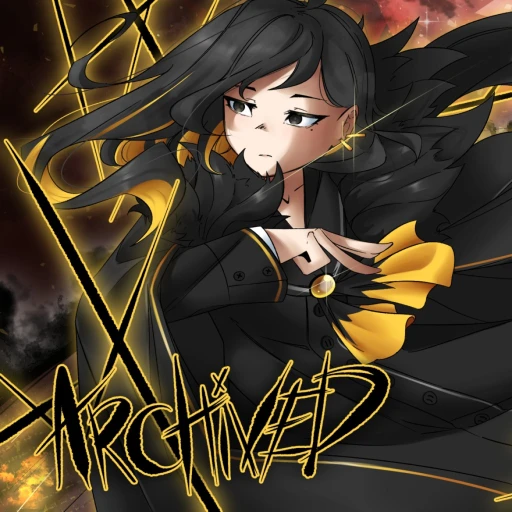
Roblox houses thousands of games that lean into darker themes, but two titles stand out for completely different reasons. Archived is a Project Moon-inspired RPG built around factions, permadeath, and deep character progression. DOORS is a procedurally generated horror experience where you navigate a seemingly endless hotel while dodging entities that kill in an instant. One game asks you to build a character and live with every consequence. The other asks you to survive a gauntlet where knowledge is your only shield.
On the surface, comparing these two seems unusual. Archived is an RPG with faction warfare, skill trees, and permanent death. DOORS is a horror exploration game with procedural rooms and entity encounters. They occupy different genres entirely. But both games share something important: they reward players who invest time learning their systems, they punish carelessness with severe consequences, and they build atmospheric worlds that feel distinct from the typical Roblox experience. Players who enjoy one often find themselves drawn to the other precisely because both games refuse to hold your hand.
This comparison covers every category that matters — gameplay mechanics, progression depth, visual and audio design, player counts, monetization, social features, and replay value — so you can determine which game fits your playstyle in 2026. If you already play one of these titles, this breakdown will help you decide whether the other deserves a spot in your rotation.
Archived vs DOORS -- Quick Stats (2026)
| Category | Archived | DOORS |
|---|---|---|
| Genre | Project Moon-inspired RPG | Horror exploration |
| Place ID | 14038329225 | 6516141723 |
| Developer | Archived Library | LSPLASH |
| Total Visits | 80.4M+ | 5B+ |
| Concurrent Players | ~862 | ~5K+ |
| Core Loop | Build character, join faction, survive permadeath | Navigate rooms, avoid entities, reach the end |
| Perspective | Third-person RPG | First-person exploration |
| Key Mechanic | Permadeath with faction warfare | Procedural room generation with entities |
| PvP | Yes (faction-based) | No |
| Session Length | 30-60+ minutes | 15-30 minutes per run |
| Content Updates | Regular (factions, traits, balancing) | Major floors + entity additions |
| Mobile-Friendly | Playable (better on PC) | Yes (works well on touch) |
| Free-to-Play | Yes | Yes |
Gameplay -- What Do You Actually Do?
Archived
Archived drops you into a dark, layered world inspired by the storytelling and mechanical philosophy of Project Moon games like Lobotomy Corporation and Library of Ruina. The first decision you make — choosing a faction — shapes your entire experience. Liu, Zwei, and Thumb each offer distinct gameplay paths, narrative perspectives, and mechanical advantages that make faction selection feel genuinely consequential rather than cosmetic. Your faction determines which NPCs trust you, which areas open up, which skills become available, and which players become your natural enemies.
The combat system blends PvE encounters against hostile NPCs and environmental threats with PvP confrontations against players from rival factions. Skill trees branch in meaningful directions, forcing you to specialize rather than generalize. A character built for raw damage output plays fundamentally differently from one built for survivability or utility. Traits add another layer of customization, granting passive bonuses and situational advantages that interact with your skill choices in ways that reward theory-crafting and experimentation.
Permadeath is the defining feature that separates Archived from most Roblox RPGs. When your character dies, that character is gone. The skills you unlocked, the trait combinations you discovered, the faction reputation you built — all of it resets. This single mechanic transforms every encounter from routine to meaningful. A PvP fight against a rival faction member is not just a competitive matchup. It is a fight where the loser potentially loses dozens of hours of character investment. The stakes are real in a way that respawn-based games cannot replicate, and that weight makes every decision — from whether to engage a dangerous enemy to whether to explore an unfamiliar area — carry genuine tension.
The atmosphere leans heavily into dark, oppressive environments that complement the high-stakes gameplay. The world feels hostile by design, not just through enemy placement but through environmental storytelling that communicates danger before you encounter it. Areas are visually distinct and carry different threat profiles, teaching observant players to read their surroundings and adjust their approach accordingly.
DOORS
DOORS places you in the lobby of a mysterious hotel and asks you to open the first door. From that moment, you are navigating a sequence of procedurally generated rooms where each one might contain an entity designed to end your run without warning. The rooms are dark, the corridors are narrow, and the atmosphere is calibrated to make you uncomfortable even during the stretches where nothing is actively hunting you.
The entity system is what makes DOORS work as both a horror game and a skill-based challenge. Every entity follows specific behavioral rules that you must learn through observation, failure, and repetition. Rush charges through rooms at high speed, requiring you to find a hiding spot before it arrives. Ambush bounces back and forth through a sequence of rooms, demanding precise timing as you duck in and out of cover. Halt presents a dark hallway where on-screen instructions must be followed exactly or you die instantly. Screech attacks from behind if you fail to turn around quickly enough. Eyes punishes you for looking directly at it. Figure patrols certain rooms using sound-based detection, forcing you to navigate silently around a powerful threat that cannot see you but can hear everything.
The procedural generation ensures that no two runs feel identical. Room layouts, entity spawn points, item placements, and puzzle configurations shuffle every time you start a new attempt. A full run through Floor 1 covers 100 rooms and takes between 15 and 30 minutes depending on your speed, knowledge, and the specific entity combinations the game generates. Floor 2 added an entirely new hotel section with fresh entities, mechanics, and environmental puzzles that test even veteran players who mastered the original content.
Where Archived builds tension through permanent consequences, DOORS builds tension through the immediate unknown. You do not know what is behind the next door. You do not know which entity will appear or when. Your survival depends entirely on how well you have studied the rules and how quickly you can execute the correct response when something appears without warning.
Edge: Archived for mechanical depth, faction-driven narrative, and long-term character investment. DOORS for accessibility, procedural variety, and moment-to-moment tension. These games solve completely different design problems — Archived asks how much you are willing to risk for progress, while DOORS asks how well you can perform under sudden pressure.
Progression -- How Does Each Game Keep You Playing?
Archived
Archived offers one of the deepest progression systems on Roblox, and it is also one of the most punishing. Character progression operates across multiple interconnected layers. Skill trees provide permanent upgrades that define your combat role and playstyle. Traits grant passive bonuses that interact with your skills in ways that reward careful planning and experimentation. Faction reputation opens doors to exclusive content, NPCs, and areas that remain locked to outsiders.
The depth of this system is where Archived separates itself from casual RPGs on the platform. Building an optimized character requires understanding how skills synergize with each other, which traits complement your chosen playstyle, and how your faction's strengths interact with the content you intend to tackle. The theory-crafting community around Archived is active and analytical, sharing build guides, tier lists, and optimization strategies that reflect the genuine complexity of the underlying systems.
Permadeath makes every step of this progression feel earned and fragile simultaneously. Reaching the point where your character has a fully realized build with synergistic traits and deep faction investment represents a genuine accomplishment — and the knowledge that a single catastrophic fight could erase all of it creates a persistent tension that never fades. Some players find this exhilarating. Others find it exhausting. There is no middle ground with permadeath, and Archived does not apologize for that design choice.
The progression between characters is knowledge-based. When your character dies, your understanding of the game's systems survives. Your second character benefits from everything you learned building your first one. Your fifth character is built with the efficiency and awareness that only comes from losing four predecessors. This meta-progression — player skill growing while character progress resets — creates a loop that rewards dedication without trivializing the stakes.
DOORS
DOORS approaches progression from a fundamentally different angle. Within a single run, you collect items — keys, lockpicks, vitamins, lighters, and other tools — that aid survival but do not persist between attempts. Room milestones track how far you have reached, achievements mark specific accomplishments, and badges provide tangible evidence of your progression through the game's challenges. Cosmetics including flashlight skins and visual effects offer longer-term collection goals for players who want visible markers of their experience.
The meaningful progression in DOORS is identical in philosophy to Archived's meta-progression: it lives in your head. Your first encounter with any entity will probably kill you. Your twentieth encounter with that same entity will see you responding with calm precision because you internalized the audio cues, timing windows, and correct counterplay. Multiply this learning curve across over a dozen entities, two full floors of content, various puzzle mechanics, and the nuanced interactions between different entity combinations, and you get a progression system that makes you measurably better at the game over hundreds of hours.
Floor 2 demonstrated that LSPLASH understands how to extend this loop. By introducing entirely new entities with unfamiliar behaviors, the update pushed veteran players back into the learning phase — the same vulnerability and discovery that made their first Floor 1 runs compelling. Major content updates function as progression resets that renew the game's challenge without invalidating previously acquired knowledge.
Edge: Archived for sheer depth of character-building systems and the emotional weight that permadeath adds to every progression milestone. DOORS has the more accessible progression loop and benefits from regular content expansions, but Archived's interconnected skill trees, traits, and faction systems create a more complex and rewarding investment for players willing to engage with its demands.

Graphics and Audio
Archived
Archived commits fully to a dark, oppressive visual identity that draws from its Project Moon inspirations. The environments are designed to communicate danger and unease through color palette, lighting, and architectural design rather than through graphical complexity alone. Dark corridors, dimly lit faction headquarters, and hostile territories each carry distinct visual signatures that experienced players learn to read. The art direction prioritizes atmospheric consistency — every area feels like it belongs to the same bleak, dangerous world.
Character design reflects the faction system's thematic depth. Liu, Zwei, and Thumb each carry visual identities that communicate their philosophy and combat approach. Skill effects are readable without being excessive, which matters in a game where combat encounters carry permadeath stakes and visual clarity can mean the difference between survival and losing a character. The UI design is functional and fits the dark aesthetic without sacrificing usability.
The audio design supports the atmosphere with ambient soundscapes that shift based on location and threat level. Combat audio provides clear feedback on damage dealt and received, skill activation, and environmental hazards. The soundtrack leans into dark, atmospheric compositions that complement the world's tone without overwhelming the gameplay-critical audio cues. Playing Archived with headphones provides a noticeably richer experience, particularly in areas where ambient audio signals approaching threats before they become visible.
DOORS
DOORS sets the standard for atmospheric audio design on Roblox, and that is not a statement made casually. Every entity has distinct audio cues that function as both warning systems and horror amplifiers. The ambient soundscape — distant thuds, muffled footsteps, electrical hums, and environmental creaks — maintains a constant baseline of tension that the game can escalate or release with precise control. Music swells and drops with timing that feels deliberate and earned. The silence between entity encounters is as carefully engineered as the jump scares themselves.
Visually, DOORS builds its hotel through environmental storytelling rather than raw graphical fidelity. Lighting is used strategically — rooms alternate between dim ambient illumination and near-total darkness, forcing players to manage light sources and creating zones where entities can emerge from shadows without warning. The art direction favors atmospheric consistency over visual spectacle, and every room feels connected to the same decaying, haunted structure. The procedural generation maintains visual coherence across randomly assembled layouts, which is a technical accomplishment that keeps the hotel feeling like a real place rather than a random collection of tiles.
LSPLASH built a game where closing your eyes and listening would still be an unsettling experience. The sound design is not decorative — it is a core gameplay mechanic. Players who learn to read audio cues survive longer than players who rely on visuals alone, which makes DOORS one of the rare games where the audio department deserves as much credit as any other aspect of the design.
Edge: DOORS for audio design that functions as both atmosphere and gameplay mechanic. Archived delivers a cohesive dark visual identity that serves its RPG systems well, but DOORS' sound design is genuinely best-in-class on Roblox and represents a core pillar of the experience rather than a supporting element.
Player Count and Community (July 2026)
The numbers tell a clear story about reach, but they do not tell the full story about quality. DOORS has accumulated over 5 billion total visits and consistently pulls 5,000 or more concurrent players at any given time. It occupies a position in Roblox culture that extends beyond the game itself — DOORS entities appear in fan art, memes, YouTube compilations, and cross-game references across the platform. The community is large, active, and deeply invested in lore analysis, speedrunning, challenge runs, and content creation. DOORS is not just a popular game. It is a cultural touchstone for the Roblox horror community.
Archived operates at a completely different scale with 80.4 million visits and approximately 862 concurrent players. Those numbers are modest compared to DOORS, but they represent something specific: a dedicated player base that chooses Archived despite its punishing difficulty and complex systems. The Archived community skews toward players who enjoy deep RPG mechanics, theory-crafting, and the high-stakes gameplay that permadeath creates. Discord discussions revolve around build optimization, faction strategy, trait synergies, and the philosophical debates about risk versus reward that permadeath naturally generates.
The content creation landscapes reflect these community differences. DOORS content thrives on reaction videos, jump scare compilations, entity guides, and lore theories that appeal to a broad audience. Archived content tends toward build guides, faction analysis, gameplay strategies, and narrative discussions that serve a more specialized audience. Both communities are healthy relative to their size, with active developer communication and regular engagement on Discord and social platforms.
LSPLASH has established a reputation for delivering major DOORS updates that justify extended wait periods between releases. The Archived Library team maintains consistent communication and regular balancing updates that keep the faction meta fresh and the community engaged. Both developers demonstrate the kind of long-term commitment that sustains player trust.
Edge: DOORS for total reach, cultural impact, and community size. Archived has a passionate and engaged community that punches above its weight relative to its player count, but DOORS' 5 billion visits and platform-wide cultural presence represent a scale of influence that most Roblox games never approach.
Game Passes and Monetization
Archived
Archived takes a restrained approach to monetization that aligns with its hardcore RPG identity. Game passes provide convenience features and cosmetic options without creating pay-to-win advantages that would undermine the permadeath system's integrity. The core experience — factions, skill trees, traits, combat, exploration, PvP — is fully accessible without spending Robux. This matters more in a permadeath game than in most other contexts, because pay-to-win mechanics in a game where death is permanent would fundamentally break the experience.
The monetization philosophy reflects an understanding of what the Archived player base values. These are players who chose a punishing RPG over easier alternatives. Selling them shortcuts would contradict the game's identity and alienate the community that keeps the game alive. The result is a monetization model that feels honest — purchases enhance the experience without undermining the challenge that defines it.
DOORS
DOORS monetizes through a combination of game passes and in-game purchases that enhance the experience without gating content. Revive tokens allow you to continue a run after dying, which is particularly valuable during deep runs where you have invested significant time and reached rooms you have never seen before. Flashlight skins, character cosmetics, and visual effects provide customization options for players who want to personalize their hotel experience. The pricing is reasonable across the board, and nothing in the store feels designed to exploit frustration or create artificial barriers.
The key detail is that every piece of DOORS content is accessible to free players. You can reach the final door of every floor, encounter every entity, and experience every puzzle without spending a single Robux. Purchases provide convenience and personalization, not access. This approach has clearly worked — DOORS' massive player base demonstrates that a fair free-to-play model can coexist with sustainable revenue when the underlying game is strong enough to stand on its own merits.
Edge: Tie. Both games handle monetization responsibly and honestly. Archived's restraint makes sense for a permadeath game where pay-to-win would be destructive. DOORS' approach makes sense for a horror game where the experience should be universally accessible. Neither game tries to pressure players into spending, and both deliver their complete core experiences to free players.

Social Features -- Playing with Others
Archived
The social experience in Archived is shaped by the faction system and permadeath in ways that create uniquely intense player interactions. Faction membership divides the player base into groups with competing interests, which means that encountering another player is not a neutral event. A fellow faction member might be an ally worth grouping with for mutual protection and cooperative PvE content. A member of a rival faction represents a potential threat — and in a permadeath game, that threat carries weight that standard PvP games cannot match.
This dynamic creates a social texture that few Roblox games achieve. Trust becomes a meaningful resource. Alliances form around shared risk. Betrayals sting because the consequences are permanent. The social layer of Archived is not designed for casual interaction — it is designed for meaningful interaction where the relationships you form and the enemies you make have real impact on your survival and progression.
Group PvE content benefits from complementary builds. A group where one player specializes in damage, another in survivability, and a third in utility covers more threats than three identically built characters. The skill tree and trait systems create natural party roles that reward players who coordinate their character development with their regular group members.
DOORS
DOORS supports cooperative runs where groups navigate the hotel together, pooling their knowledge and resources to push deeper into the room sequence. The shared horror experience is what makes DOORS multiplayer memorable — the moment when Rush is approaching and everyone scrambles for closets simultaneously, or when one player spots Screech behind the group and warns everyone just in time. These moments become stories that friend groups reference long after the session ends.
The cooperative dynamic in DOORS centers on knowledge pooling rather than role specialization. One player might recognize the audio cue for an approaching entity while another remembers the correct response to Halt's instructions. The group becomes stronger as individual knowledge combines, which makes DOORS an excellent game for mixed-experience groups where veteran players can guide newer members through encounters they have already survived.
DOORS also functions well with random players because the cooperative elements are straightforward — stay together, share items, communicate warnings — and do not require voice chat to function effectively. The gap between random lobbies and organized friend groups exists but is narrower than in most cooperative games, which makes DOORS accessible to players who do not have a dedicated gaming group.
Edge: Archived for depth of social interaction and the meaningful consequences that faction-based relationships create. DOORS wins for accessibility and shared-experience storytelling. Archived's social layer is richer and more complex, but DOORS' cooperative format is more welcoming and works well regardless of group composition.
Replay Value -- Will You Still Play Next Month?
Archived
Archived builds replay value into its fundamental design through permadeath. Every character death creates a natural restart point that is both punishing and motivating. You lost your build, your faction progress, and your invested time — but you also gained knowledge that makes your next character stronger from the moment you create it. The cycle of building, losing, and rebuilding with greater understanding is the core engagement loop, and it sustains dedicated players across hundreds of hours.
The faction system multiplies replay value by offering meaningfully different experiences. A Liu playthrough involves different content, different NPCs, different combat encounters, and different social dynamics than a Zwei or Thumb playthrough. Players who want to experience everything Archived offers need multiple characters across multiple factions, and permadeath ensures that even repeating a faction path feels different because your accumulated game knowledge lets you make different choices and pursue different build strategies.
The skill tree and trait systems provide build diversity that encourages experimentation. Once you complete one optimized build and see how it performs in practice, the natural next step is to try a different approach — different skills, different traits, different faction, different playstyle. The theory-crafting community continuously discovers new synergies and strategies that give returning players fresh goals to pursue.
The limitation is content volume. Archived's development team is smaller, and the cadence of major content additions is slower than DOORS' established update pipeline. Between major updates, replay value depends primarily on faction variety, build experimentation, and PvP dynamics rather than new content discovery.
DOORS
DOORS has structural replay value baked into its procedural generation. No two runs produce identical room sequences, entity combinations, or item distributions. The desire to push further — higher room numbers, faster completion times, more consistent entity responses, challenge run completions — provides intrinsic motivation that does not depend on external rewards. The game generates its own variety every time you start a new run.
Floor 2 proved that LSPLASH can deliver major content expansions that effectively double the game's scope. New entities with unfamiliar behaviors forced veteran players back into the discovery phase, and new room mechanics introduced fresh challenges that tested skills acquired over years of Floor 1 mastery. The update model prioritizes quality over frequency — each major update renews the game in substantial ways rather than adding incremental adjustments.
The cooperative format amplifies replay value because different group compositions create different run dynamics. Solo runs, duo runs, and full squads each present different challenges and require different strategies. An entity that is manageable with a group covering for each other becomes significantly more threatening when you are alone. This variability extends the effective content of the game without requiring new rooms or entities.
Edge: DOORS for structural variety through procedural generation and proven multi-year content expansion. Archived offers deep replay value through permadeath cycles, faction variety, and build diversity, but DOORS' procedural system generates fresh experiences by default, and its update track record demonstrates sustained long-term support that has kept billions of players returning since 2022.
Earning Free Robux While You Play
Both Archived and DOORS pair naturally with Earnaldo for earning free Robux alongside your gaming sessions, though the earning windows differ based on each game's structure.
Archived's longer session format — typically 30 to 60 minutes or more — includes natural downtime during exploration, between combat encounters, and while managing your skill tree and trait selections. These quieter moments provide windows to check Earnaldo earning progress or complete quick tasks without interrupting your gameplay flow. The game's pacing naturally alternates between intense combat and calmer preparation phases, creating a rhythm that accommodates earning activity without forcing you to choose between playing and earning.
DOORS operates on shorter 15 to 30 minute run cycles with lobby time between attempts. When a run ends — whether from an entity encounter or a successful completion — you have a natural transition period before starting your next attempt. That downtime is well-suited for completing Earnaldo tasks, checking withdrawal progress, or setting up your next earning session. Failed runs that end early create additional windows that would otherwise be idle time.
For game-specific earning strategies, check our dedicated guides: Archived free Robux guide and DOORS free Robux guide. Stay updated with the latest working codes on our Archived codes and DOORS codes pages. For more ways to earn, see our Anime Spirits free Robux guide as well.
Earn Free Robux for Archived or DOORS
Complete simple tasks on Earnaldo and withdraw real Robux — no downloads, no generators, no scams.
Head-to-Head Verdict -- Archived vs DOORS in 2026
The Verdict
Choose Archived if you want a Roblox experience with genuine consequences, deep character-building systems, and a dark atmosphere that rewards long-term investment. The permadeath mechanic transforms every encounter into something that matters. The faction system creates social dynamics — alliances, rivalries, betrayals — that feel meaningful because losing a character means losing real progress. Skill trees and traits offer theory-crafting depth that rivals dedicated RPGs outside of Roblox. Archived is not for everyone, and it does not try to be. It is for players who want their choices to carry weight and their victories to feel earned through risk.
Choose DOORS if you want one of the best-designed horror games on any platform, not just Roblox. The entity system is mechanically brilliant — each entity follows clear rules that are fair to learn and satisfying to master. The procedural generation keeps every run unpredictable. The sound design is the best on Roblox and functions as a core gameplay mechanic rather than decoration. With over 5 billion visits and a cultural presence that extends across the entire Roblox ecosystem, DOORS has proven itself as a generational game. It is accessible, terrifying, and deep enough to sustain years of play.
Overall: These games appeal to different players and solve different design challenges. Archived is the better choice for RPG enthusiasts who value character depth, permanent consequences, and faction-driven social dynamics. DOORS is the better choice for horror fans who value atmospheric tension, procedural variety, and knowledge-based mastery. DOORS has the larger audience, the more established content pipeline, and the broader cultural reach. Archived has the deeper mechanical systems and the more intense emotional investment. If forced to recommend one to a general Roblox audience, DOORS gets the nod for its accessibility and proven staying power. But for players specifically seeking an RPG with real stakes and meaningful progression, Archived offers something that DOORS does not attempt and that very few Roblox games achieve.

Who Should Play What?
- You want deep RPG character building: Archived. Skill trees, traits, and faction systems create build diversity that rewards theory-crafting and long-term planning.
- You want genuine horror and jump scares: DOORS. Its entity system and atmospheric audio are purpose-built to frighten you in ways that remain effective after hundreds of hours.
- You enjoy high-stakes gameplay with permanent consequences: Archived. Permadeath makes every decision matter and every survival feel earned.
- You prefer shorter sessions with immediate tension: DOORS. Fifteen to thirty minute runs deliver complete experiences with procedural variety built in.
- You enjoy PvP with meaningful stakes: Archived. Faction-based PvP where death is permanent creates intensity that standard PvP games cannot replicate.
- You want a game that works well on mobile: DOORS. The movement and hiding mechanics translate well to touchscreens, while Archived's combat and menu systems are better suited to mouse and keyboard.
- You play with a regular group: Both work well with friends, but Archived rewards coordinated group builds and faction strategy, while DOORS rewards shared knowledge and collective survival.
- You want to earn Robux while playing: Both pair well with Earnaldo. Archived's longer sessions and DOORS' between-run downtime both provide natural earning windows.
Frequently Asked Questions
DOORS is significantly more popular by raw numbers. It has accumulated over 5 billion visits since launch and regularly pulls 5,000 or more concurrent players. Archived sits at around 80 million visits with roughly 862 concurrent players. DOORS has a much larger cultural footprint and a broader audience. Archived has a smaller but deeply dedicated player base that values the depth and difficulty of its RPG systems. Popularity does not determine quality, and both games deliver strong experiences within their respective genres.
Archived is harder in terms of long-term consequences and mechanical complexity. Permadeath means a single mistake can erase hours of character progression, and the faction system, skill trees, and trait builds require genuine study to optimize. DOORS is harder in terms of moment-to-moment survival, where split-second reactions to entities determine whether a run continues or ends. Archived punishes poor long-term planning. DOORS punishes poor reflexes and lack of game knowledge. Both are demanding games, but Archived's permadeath system makes its difficulty feel more permanent and punishing.
Yes, both games are playable on mobile through the Roblox app on iOS and Android. DOORS translates well to touchscreens because the core mechanics involve movement, hiding, and environmental awareness. Archived is more challenging on mobile due to its combat system, skill usage, and menu navigation, all of which benefit from the precision of a mouse and keyboard setup. Both games are best experienced with headphones for the full atmospheric audio.
Yes, both games release codes periodically for free in-game rewards. Check our Archived codes page and DOORS codes page for the latest working codes, updated regularly throughout April 2026. Codes typically grant currency, consumable items, or cosmetic rewards that help with gameplay.
Archived features both PvP and PvE content. The faction system creates natural conflicts between players aligned with different organizations like Liu, Zwei, and Thumb. PvP encounters carry real weight because permadeath means losing a fight can cost you a fully built character. DOORS is a purely PvE experience where the enemies are procedurally spawned entities within the hotel. If player-versus-player competition matters to you, Archived is the only option between these two games.
No. Both games are fully playable without spending Robux. Archived's core RPG experience — factions, skill trees, traits, combat, and exploration — is accessible to free players. DOORS provides revive tokens and cosmetics for purchase, but no content is locked behind a paywall. Free players have access to the complete gameplay experience in both titles. You can play hundreds of hours of either game without spending anything and still enjoy everything they offer.