Blue Lock Incremental vs Blue Lock: Rivals (2026) — Which Roblox Game Is Better?
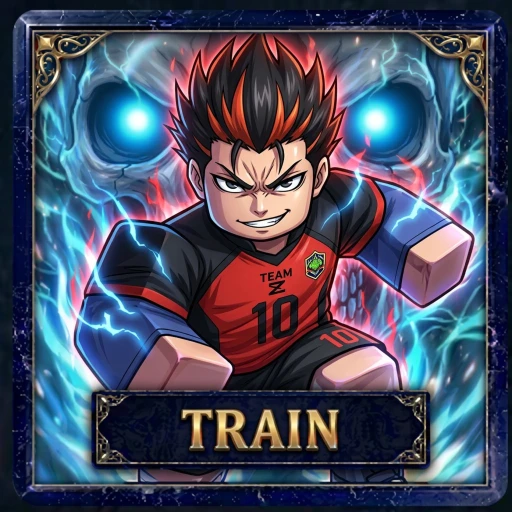
Two Roblox games carry the Blue Lock name, draw from the same anime franchise, and pull thousands of concurrent players every day. But they could not be more different in how they actually play. Blue Lock Incremental by Ditto Inc is an idle and incremental game where you train stats, roll for gear across seven rarity tiers, fight through story arcs, and Rebirth for permanent multipliers. Blue Lock: Rivals by the Blue Lock Rivals Team is a real-time 5v5 competitive soccer game with Ego abilities, style gacha spins, and flow-based character builds.
Same franchise, completely different experiences. One rewards patience, AFK farming, and long-term number optimization. The other demands mechanical skill, team coordination, and split-second decision-making on the pitch. If you are choosing where to invest your time and Robux, this head-to-head comparison covers every category that matters.
Table of Contents
- Quick Stats Comparison Table
- Gameplay — What Do You Actually Do?
- Progression — How Quickly Does It Hook You?
- Gacha and Rolling Systems
- Graphics and Audio
- Game Passes and Monetization
- Community and Updates
- Mobile Experience
- Codes and Free Resources
- Final Verdict — Which Should You Play?
- Frequently Asked Questions
Blue Lock Incremental vs Blue Lock: Rivals — Quick Stats (2026)
| Category | Blue Lock Incremental | Blue Lock: Rivals |
|---|---|---|
| Genre | Anime / Incremental / Idle | Anime / Sports / Soccer (5v5) |
| Place ID | 94883166535252 | 18668065416 |
| Developer | Ditto Inc | Blue Lock Rivals Team |
| Concurrent Players | ~5,000-15,000 | ~5,000-10,000 |
| Source Material | Blue Lock anime/manga | Blue Lock anime/manga |
| Core Loop | Train stats, roll gear, Rebirth | 5v5 soccer, Ego abilities, style gacha |
| Gacha Categories | Weapons, Playstyles, Egos, Talents | Styles, Flows |
| Rarity Tiers | Common to Immortal (7 tiers) | Common to Mythic+ (style-based) |
| AFK Progression | Yes (Auto-Evolve system) | No (active matches only) |
| Competitive Mode | Story Arcs (PvE) | Ranked Matches (PvP) |
| Mobile-Friendly | Yes | Yes |
| Free-to-Play | Yes | Yes |
Gameplay — What Do You Actually Do?
Blue Lock Incremental
Blue Lock Incremental is built around numbers going up. You start each run by training your character's core stats — shooting power, speed, dribbling technique, and stamina — through repetitive drills that generate XP and Yen. The training process is largely automated once you enable Auto-Evolve, which runs every 15 seconds and grants passive Yen and bonus rolls without any input from you.
Between training sessions, you spend Yen or free rolls from codes to pull randomized gear from four separate pools: Weapons, Playstyles, Egos, and Talents. Each pool has its own rarity distribution running from Common up through Uncommon, Rare, Epic, Legendary, Mythic, and Immortal. The items you equip determine your damage output, XP multipliers, and Yen generation rates. An Immortal-tier Ego pull is genuinely transformative — it can triple your training speed overnight.
Story Arcs serve as the game's PvE content. You fight through progressively harder stages that test whether your stats and gear are strong enough to advance. When your XP gains start to plateau and arc progression stalls, that is when you trigger a Rebirth. Rebirth resets your stats and progress but grants permanent multipliers that compound across every future run. The timing of each Rebirth is the most important strategic decision in the game.
For a full breakdown of codes, upgrade paths, and Rebirth timing, see our Blue Lock Incremental guide.
Blue Lock: Rivals
Blue Lock: Rivals is a completely different animal. You control a single character in real-time 5v5 soccer matches where movement, passing, shooting, and dribbling all happen through direct input. Matches last around 6 to 8 minutes, and the pace is relentless — the ball rarely stays in one spot, and a single misread can lead to a goal against your team.
The standout mechanic is the Ego system. Your Ego meter builds as you tackle opponents, complete passes, and score goals. When the meter fills, you activate your character's signature ability. Isagi gains enhanced spatial awareness for precision long-range shots. Nagi becomes nearly impossible to dispossess while dribbling. Bachira unlocks chain dribble moves that weave through defenders. The Ego system adds a layer of timing and momentum management that pure soccer games lack entirely.
Character building revolves around styles and flows. You roll for styles through gacha spins, and each style changes your character's stat distribution and playstyle on the pitch. Flows are passive buffs — you equip up to three — that further customize your build. Two players running the same style can feel wildly different depending on their flow loadout. The build depth keeps matches varied even after hundreds of games.
Ranked matches are where most players spend their time after learning the basics. The ranking system places you against similarly skilled opponents, and climbing the ladder requires consistent mechanical play alongside smart Ego timing. For strategies and the latest codes, check the Blue Lock: Rivals guide.
Edge: Blue Lock: Rivals for players who want skill-based competition. Blue Lock Incremental for players who prefer idle progression.
Progression — How Quickly Does It Hook You?
Blue Lock Incremental hooks you with the Rebirth loop. Your first 30 minutes feel slow as you figure out the training system and earn your initial Yen. But once you get your first few rolls and equip Rare or Epic gear, the numbers start climbing noticeably. The first Rebirth — usually after 2 to 4 hours of play — is the pivotal moment. When you see your second run moving at double or triple the speed of your first, the incremental loop clicks. From there, each Rebirth cycle gets shorter and more rewarding, creating a compounding satisfaction curve that is hard to walk away from.
The game also rewards AFK play through Auto-Evolve. You can leave the game running while you do other things, and your character continues generating Yen and triggering auto-rolls every 15 seconds. This passive progression means your account is always making progress, even during downtime. For players who prefer minimal active input, this is a major selling point.
Blue Lock: Rivals hooks you faster but requires more sustained effort. Your first match delivers the full gameplay experience — no tutorial grind, no waiting for systems to unlock. You are immediately dribbling, passing, and shooting in a competitive environment. The Ego system creates dramatic moments within your first few games that feel cinematic and rewarding.
However, the style gacha can slow things down. If you are rolling for a specific style or set of flows, the RNG can feel punishing. Your first handful of free spins from codes might not land anything above Common, and grinding enough currency for more spins takes several matches. The NEL Battle Pass helps by giving daily objectives that reward Ego Tokens and cosmetics, but the progression is tied to active play time. You cannot AFK your way to a better build.
In our assessment, Blue Lock Incremental offers smoother long-term progression because the Rebirth system guarantees forward momentum. You always come back stronger. Blue Lock: Rivals offers more exciting individual moments but can feel stagnant if the gacha does not cooperate during your current session.
Edge: Blue Lock Incremental for long-term progression. Blue Lock: Rivals for moment-to-moment excitement.
Gacha and Rolling Systems
Both games lean on gacha mechanics, but the implementations differ in scope and impact.
Blue Lock Incremental's Four-Pool System
Blue Lock Incremental gives you four separate categories to roll: Weapons, Playstyles, Egos, and Talents. Each category has its own roll pool with identical rarity distributions — roughly 40% Common, 25% Uncommon, 18% Rare, 10% Epic, 4.5% Legendary, 2% Mythic, and 0.5% Immortal. You equip one item from each category, meaning you are always chasing upgrades across four slots simultaneously.
The volume of rolling is high. Codes like V5UPDATE grant free rolls that bypass the Yen cost entirely. Between code rolls and Yen-funded pulls, an active player might complete 50 to 100 rolls per session. Most of those will be Common or Uncommon, but the sheer volume means Epic and Legendary pulls happen often enough to maintain engagement. Immortal drops are the white whale — at roughly 1 in 200 pulls, they might take days or weeks of consistent play to see.
Blue Lock: Rivals' Style and Flow System
Blue Lock: Rivals concentrates its gacha into two categories: styles and flows. Styles are the headliner. Each style overhauls your character's stat distribution and moveset. Pulling a top-tier style like Isagi NEL or Nagi Flow State feels like unlocking a new character in a fighting game — your entire approach to matches shifts. Flows are subtler but compound over time. The right three-flow combination can turn a mid-tier style into a competitive threat.
The rolling volume is lower than Blue Lock Incremental. Style spins cost more relative to your earn rate, and the game does not have an equivalent to Auto-Evolve that generates passive roll currency. Codes from updates like the NEL patch provide Lucky Spins that help, but between code drops you are earning spins through match grinding alone. Each individual pull carries more weight because you get fewer of them.
The psychological experience is different too. In Blue Lock Incremental, rolling feels like a constant background activity — you pull, equip if it is better, and move on. In Blue Lock: Rivals, each roll feels like an event because a good style pull can change your competitive experience for weeks.
Edge: Blue Lock Incremental for rolling volume and variety. Blue Lock: Rivals for individual roll impact.
Graphics and Audio
Blue Lock: Rivals wins on visual presentation. The game uses cel-shaded character models that closely match the Blue Lock anime's art style. Ego activations trigger dramatic screen effects with character-specific animations — Isagi's spatial awareness ability creates a zoomed-in slow-motion sequence, while Bachira's dribble chains produce fluid particle trails. The soccer pitch is clean and readable, which matters when you need to track 10 players moving at high speed.
Sound design in Blue Lock: Rivals reinforces the anime feel. Ego activations have voiced call-outs, the ball makes satisfying contact sounds on shots, and the crowd reacts to near-misses and goals. The audio feedback loop makes every successful play feel weighty and earned.
Blue Lock Incremental takes a simpler approach. The visual design focuses on menu interfaces, stat screens, and rolling animations. Character models exist but are not the focal point — you spend most of your time looking at numbers, upgrade trees, and gear comparison panels. The rolling animation is well-produced with rarity-specific visual effects (Immortal pulls get a golden explosion), but the game is fundamentally a UI-driven experience rather than a visual showcase.
Audio in Blue Lock Incremental is minimal. Background music loops play during training, and sound effects accompany rolls and level-ups. The audio design is functional but forgettable. This is not necessarily a flaw — for an idle game that many players run in the background, loud or complex audio would be a negative.
Neither game pushes Roblox's graphical limits, but Blue Lock: Rivals delivers a noticeably more polished visual and audio experience. That said, Blue Lock Incremental's simplicity means it runs smoother on low-end devices and consumes less battery on mobile.
Edge: Blue Lock: Rivals for graphics and audio. Blue Lock Incremental for performance on weaker hardware.
Game Passes and Monetization
Both games are free-to-play with optional game passes that accelerate progression without gating content.
Blue Lock Incremental keeps its monetization lightweight. The game does not rely heavily on game passes. Progression is primarily driven by active play, AFK farming through Auto-Evolve, and code redemptions. The passes that do exist tend to offer convenience features — faster training speeds, bonus Yen multipliers, and extra roll opportunities. Nothing in the game pass lineup is mandatory for reaching endgame content, and the Rebirth system ensures every player eventually catches up regardless of spending.
Blue Lock: Rivals has a more developed monetization structure. The VIP pass costs 499 Robux and provides ongoing benefits like bonus style spins and cosmetic perks. Additional passes range from 50 to 200 Robux and cover specific features like Lucky Spins and stat tracking. The NEL Battle Pass adds a seasonal progression track with free and premium tiers. None of these passes give paying players an unfair competitive advantage — the ranked ladder is skill-based, and style performance depends more on the player than the rarity of the pull.
Total spending potential is higher in Blue Lock: Rivals, but neither game forces purchases. A free-to-play player in Blue Lock Incremental will progress at roughly 70 to 80 percent the speed of someone who buys passes, thanks to the generous code system and Auto-Evolve. A free-to-play player in Blue Lock: Rivals will have fewer style spins but can compete at any rank with solid mechanics and a Common-tier build.
Community and Updates
Blue Lock: Rivals has the larger and more vocal community. With billions of total visits and an active competitive scene, the game generates consistent content from YouTubers, tier list creators, and Discord communities. Major updates like the NEL patch produce waves of discussion, guide content, and code hunting. The developer team (Blue Lock Rivals Team) communicates through Discord and Twitter, with update previews typically dropping 3 to 5 days before the patch goes live.
Blue Lock Incremental has a growing but smaller community. Ditto Inc publishes codes through social channels and releases updates that add new story arcs, rarity tiers, and gear categories. The community discussion tends to center on optimization — best Rebirth timing, optimal upgrade orders, and drop rate analysis. It is a more numbers-focused community compared to Blue Lock: Rivals' mechanics-and-skill-focused conversations.
Update frequency is comparable. Both games receive patches every 2 to 4 weeks, with codes released alongside major updates. Blue Lock: Rivals tends to have bigger, more feature-complete updates (new characters, new modes, balance patches), while Blue Lock Incremental updates often add vertical progression (new tiers, new arcs, higher stat caps). For anime game fans looking at related titles, our Anime Vanguards guide covers another popular option in the anime Roblox space.
Mobile Experience
Blue Lock Incremental is the stronger mobile game by a wide margin. The entire gameplay loop — training, rolling, upgrading, and navigating menus — works through simple taps. There is no precision timing required, no complex input sequences, and no fast-moving elements to track. The Auto-Evolve system means you can start a session, lock your phone, and come back later to find meaningful progress. Battery consumption is low because the rendering demands are minimal.
Blue Lock: Rivals works on mobile, but it is a compromised experience. The touch controls handle movement, passing, and shooting, but the precision required for competitive play suffers without a physical controller or keyboard. Dribbling past defenders, timing Ego activations, and reading opponent movements are all harder on a touchscreen. Casual matches are perfectly playable, but climbing the ranked ladder on mobile puts you at a disadvantage against PC and controller players.
If mobile is your primary platform, Blue Lock Incremental is the clear choice. If you play on PC or with a controller and occasionally switch to mobile for light sessions, Blue Lock: Rivals can work, but expect to play more carefully.
Codes and Free Resources
Both games release codes regularly, and both give meaningful rewards for free.
Blue Lock Incremental typically has 2 to 4 active codes at any given time. Codes grant free rolls (bypassing Yen costs) and Yen boosts that accelerate your upgrade purchases. As of May 2026, codes like V5UPDATE and BLUELOCK are confirmed working. Codes in this game expire within 1 to 3 weeks, so redeeming quickly matters. The code input is accessed through the Ticket button in the top-right corner of the screen.
Blue Lock: Rivals releases codes around major updates. The NEL patch dropped three codes (NELSTYLESPINS, NELLUCKY, NELPASS) that gave Lucky Spins, style rerolls, and Battle Pass progress. Code volume per update is slightly lower than Blue Lock Incremental, but the individual code rewards tend to be more impactful because each style spin carries higher per-pull value.
For both games, following the developer social channels and checking community Discords is the fastest way to catch codes before they expire. We maintain updated code lists in our Blue Lock Incremental guide and Blue Lock: Rivals guide.
Earn Free Robux for Both Games
Whether you are buying game passes in Blue Lock: Rivals or accelerating progression in Blue Lock Incremental, free Robux stretches your budget. Earnaldo lets you earn Robux by completing offers and surveys — no downloads, no risk.
Final Verdict — Which Should You Play?
The Bottom Line
Blue Lock Incremental and Blue Lock: Rivals are not competing for the same player. They share a franchise and a platform, but they target fundamentally different play styles. Choosing between them comes down to what you want from your Roblox time.
Choose Blue Lock Incremental if: you enjoy idle games, incremental progression, and watching numbers compound over time. The Auto-Evolve system makes it perfect for multitasking — run it in the background while you do homework, watch videos, or play other games. The Rebirth system provides a clear sense of long-term progress that never plateaus permanently. If you are on mobile, this is the stronger option. If you prefer PvE challenges over PvP competition, the story arc system gives you goals to work toward without the pressure of ranked matchmaking.
Choose Blue Lock: Rivals if: you want competitive, skill-based gameplay with real-time soccer action. The Ego system creates highlight-reel moments that feel earned, and the ranked ladder gives you a measurable skill progression that idle games cannot replicate. If you enjoy the Blue Lock anime specifically for its competitive striker philosophy, this game captures that energy far better than an idle format. PC and controller players get the best experience, and the community is large enough that finding matches is never an issue.
Play both if: you have the time. They complement each other surprisingly well. Run Blue Lock Incremental in the background with Auto-Evolve while you actively play Blue Lock: Rivals matches. Your incremental account progresses passively while you scratch the competitive itch. When you need a break from ranked matches, check in on your Blue Lock Incremental stats, trigger a Rebirth if the timing is right, and roll for gear. The two games fill different moods without overlapping.
Neither game is objectively better. Blue Lock Incremental is the better idle game. Blue Lock: Rivals is the better competitive game. The right choice depends entirely on how you prefer to spend your time on Roblox.
Frequently Asked Questions
Both games sit in a similar concurrent player range. Blue Lock Incremental averages 5,000 to 15,000 players, while Blue Lock: Rivals averages 5,000 to 10,000 with spikes during major updates. Blue Lock: Rivals has more total visits due to its longer presence on the platform and broader appeal as an action game. Both communities are active and growing as of July 2026.
Blue Lock Incremental is significantly better for casual players. Its idle and incremental mechanics let you progress while AFK through the Auto-Evolve system. You can start your training drills, close the game, and come back later to find meaningful progress. Blue Lock: Rivals requires active input for every match since it is a real-time competitive soccer game with no passive farming.
Yes. Blue Lock Incremental typically has 2 to 4 active codes at any time, offering free rolls and Yen boosts. Blue Lock: Rivals releases codes around major updates, providing style spins and Ego Tokens. Both games rotate codes every few weeks, so redeem them as soon as you find them. Check our individual game guides for the latest working codes.
Yes, both run on mobile through the Roblox app. Blue Lock Incremental is the better mobile experience because its tap-based interface and Auto-Evolve system work perfectly on touchscreens. Blue Lock: Rivals supports touch controls for movement, passing, and shooting, but competitive play suffers without a keyboard or controller for precision input.
It depends on preference. Blue Lock Incremental has four separate gacha pools (Weapons, Playstyles, Egos, Talents) with seven rarity tiers from Common to Immortal. You roll more frequently and have more slots to fill. Blue Lock: Rivals focuses on styles and flows with fewer but more impactful rolls. If you like constant small upgrades, choose Incremental. If you prefer rare, game-changing pulls, choose Rivals.
No. Blue Lock Incremental is developed by Ditto Inc, and Blue Lock: Rivals is developed by the Blue Lock Rivals Team. They are separate studios that both built Roblox games around the Blue Lock anime and manga franchise. The games share characters and themes but have completely different gameplay systems, progression loops, and development teams.