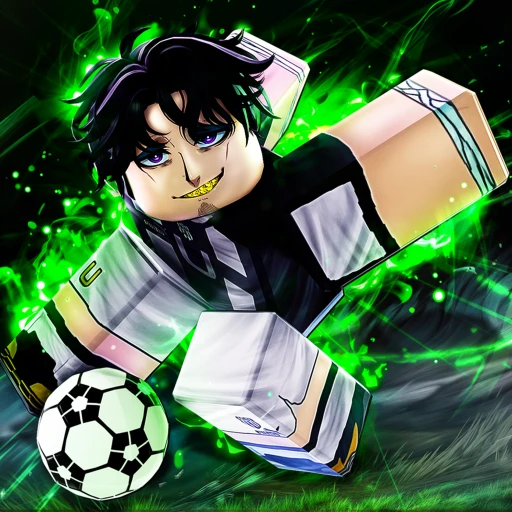
Blue Lock Rivals vs Jujutsu Shenanigans (2026) -- Which Roblox Game Is Better?
Two of the most successful anime-inspired games on Roblox right now take completely different sports and combat fantasies and turn them into addictive multiplayer experiences. Blue Lock Rivals channels the intensity of the Blue Lock anime into a 5v5 soccer arena where zone abilities and playstyles matter as much as goal-scoring instincts. Jujutsu Shenanigans puts Jujutsu Kaisen's cursed techniques, domain expansions, and raw PvP combat into your hands with a roster of over twenty unique fighting styles. One game asks you to be the best striker on the pitch. The other asks you to be the last sorcerer standing.
Both games have earned massive audiences -- Blue Lock Rivals has crossed 4.5 billion visits with a 96.6% approval rating, while Jujutsu Shenanigans has surpassed 5 billion visits and regularly pulls over 100,000 concurrent players. These are not niche experiences. They represent two of the strongest anime adaptations Roblox has produced, and choosing between them depends entirely on whether you want competitive team-based sports action or skill-driven 1v1 combat.
This comparison breaks down every major system in both games so you can decide which one fits your playstyle. We will cover core gameplay, combat and ability systems, progression, community, competitive depth, and presentation before delivering a final verdict. If you are short on time, the quick stats table below gives you the essential numbers at a glance.
Quick Stats: Blue Lock Rivals vs Jujutsu Shenanigans at a Glance
| Category | Blue Lock Rivals | Jujutsu Shenanigans |
|---|---|---|
| Developer | Chrollo | Jujutsu Shenanigans Team |
| Roblox Place ID | 18668065416 | 9391468976 |
| Genre | Anime Soccer | Anime Fighting |
| Concurrent Players | ~14,000 | ~109,000 |
| Total Visits | 4.5B+ | 5B+ |
| Player Rating | 96.6% | ~95% |
| Core Loop | 5v5 soccer with zone abilities | PvP combat with cursed techniques |
| Key Mechanics | Zones, styles, team play | Cursed techniques, domain expansions |
| PvP Format | Team-based (5v5) | 1v1 and free-for-all |
| Competitive Mode | Ranked matches, seasons | Arena matchmaking, win streaks |
| Monetization | Optional passes, cosmetics | Optional passes, cosmetics |
| Average Session | 20-45 minutes | 20-40 minutes |
The numbers tell a story of two games that have both found enormous success through very different formulas. Now let us dig into what makes each one tick.
Gameplay and Core Loop
Blue Lock Rivals: Anime Soccer With Superpowers
Blue Lock Rivals translates the high-stakes individualism of the Blue Lock anime into a 5v5 soccer game where personal skill and team coordination collide. Every match drops you onto the pitch with four teammates against five opponents, and your goal is straightforward: score more than the other team. What separates this from a standard soccer game is the zone ability system that gives each player a unique tactical edge during play.
Zone abilities activate when specific conditions are met during a match -- building up momentum through successful passes, dribbles, or defensive plays charges your zone meter. Once activated, zone abilities transform the flow of the game. Some zones enhance your shooting power to the point where goalkeepers struggle to react. Others boost your speed and ball control, letting you weave through defenders with precision. A few focus on defensive denial, shutting down entire sections of the pitch and forcing opponents to rethink their approach. The variety of zones means every player on the field can contribute something different, and learning which zones complement each other within a team composition is a key strategic layer.
Styles add another dimension to player identity. Your chosen style affects your baseline stats and movement patterns on the pitch, determining whether you play as a clinical finisher, a creative playmaker, a physical defender, or a hybrid role. The interaction between your style and your zone ability creates a build system that rewards experimentation. A playmaker with a speed-boosting zone plays nothing like a playmaker with a shooting-enhancement zone, even though the base style is the same.
Matches are fast and structured. Games last around 5-8 minutes, with clear halves and a scoreboard that tracks individual contributions alongside team performance. The pacing ensures you are always engaged -- there is no downtime, no long queues between action sequences, and no filler content. You finish a match, check your stats, and jump into the next one. This loop is ideal for players who want competitive, structured gameplay in manageable time blocks.
The 96.6% approval rating reflects how well the formula works. Blue Lock Rivals nails the feeling of being an anime protagonist on the soccer field, and the combination of zone abilities and styles gives it a strategic depth that pure soccer games on Roblox lack. For the latest rewards and freebies, check out our Blue Lock Rivals codes guide.
Jujutsu Shenanigans: Cursed Technique Combat at Full Speed
Jujutsu Shenanigans takes a completely different approach. There is no ball, no pitch, and no team to coordinate with. The game drops you into an open arena and hands you a cursed technique inspired by the Jujutsu Kaisen anime. From there, the entire experience revolves around fighting other players using your chosen technique's unique moveset.
Each cursed technique functions like a character in a fighting game. Infinity lets you manipulate space, creating barriers and deflecting attacks while controlling the distance between you and your opponent. Cursed Speech forces other players into specific actions, disrupting their combos and creating openings. Malevolent Shrine unleashes a domain expansion that deals devastating area damage and reshapes the battlefield itself. With over twenty techniques available, the roster offers enough variety that hundreds of hours of play still surface new matchups and interactions you have not encountered before.
Combat is physics-driven and spectacle-heavy. Landing a clean combo sends your opponent ragdolling across the map. Domain expansions fill the screen with dramatic visual effects and grant temporary power boosts that can turn a losing fight into a victory. Walls crumble, the ground cracks, and multi-player brawls turn into chaotic anime fight sequences where particle effects and flying bodies fill every frame. The game leans hard into the over-the-top nature of its source material, and the result is consistently exciting.
The skill ceiling is high. Basic attacks are easy to land, but stringing together optimal combos, reading your opponent's technique, timing your domain expansion, and managing spacing all require practice and game knowledge. Watching a top-level player fight looks fundamentally different from watching a beginner. The gap is not just about reaction speed -- it is about understanding every technique's strengths, weaknesses, startup frames, and recovery windows. For active codes and freebies, see our Jujutsu Shenanigans codes page.
Sessions are naturally self-paced. You can jump in for a few quick fights and leave, or you can spend an hour grinding win streaks and practicing new techniques. The lack of structured match lengths means you control your own session duration, which appeals to players who want flexibility in how they spend their time.
Edge: Blue Lock Rivals for structured gameplay with clear objectives and team dynamics. Jujutsu Shenanigans wins for combat depth and individual expression, but Blue Lock Rivals delivers a more complete game loop with defined matches, team roles, and scoring systems that give every session a clear narrative arc.

Combat and Ability Systems
Blue Lock Rivals: Zone Abilities as Tactical Tools
Combat in Blue Lock Rivals is indirect but intense. You are not punching opponents -- you are outmaneuvering them, outpacing their defensive positioning, and using your zone abilities to create scoring opportunities or shut down their attacks. The "combat" happens through contested ball possession, tackles, interceptions, and the strategic deployment of zone abilities at decisive moments.
Zone abilities are the centerpiece of the system. Each zone ability has a charge time, an activation window, and a cooldown period. Knowing when to activate your zone is as important as knowing what it does. Pop a speed zone too early, and you will burn through its duration before reaching the goal. Activate a shooting zone when you are too far from the net, and you waste its power. The timing element adds a fighting-game-like rhythm to what is fundamentally a sports game, and it is this hybrid quality that makes Blue Lock Rivals feel unique on the platform.
Defensive play has its own strategic layer. Tackling at the right angle strips the ball cleanly. Mistiming a tackle leaves you out of position and creates a gap your opponent can exploit. Goalkeeping is a position that requires reading the shooter's zone ability, predicting shot placement, and committing to a dive at the exact right moment. The defensive skill ceiling is surprisingly high, and dedicated defensive players can carry matches just as effectively as star strikers.
Team coordination amplifies everything. A well-timed pass to a teammate who has their zone ability ready creates combinations that feel choreographed. Two players chaining speed and shooting zones together can produce unstoppable fast-break goals. A defender activating a denial zone while a midfielder recovers possession creates a turnover that swings the entire match. The team-based combat system rewards communication and synergy in ways that solo-focused games cannot replicate.
Jujutsu Shenanigans: Mechanical Mastery and Matchup Knowledge
Combat in Jujutsu Shenanigans is direct, personal, and relentless. Every technique has light attacks, heavy attacks, special moves, and a domain expansion ultimate. The combo system rewards players who learn optimal attack strings -- chaining a light attack series into a special move, canceling recovery frames with a dash, and finishing with a heavy that sends the opponent into a wall for bonus damage. The mechanical depth rivals dedicated fighting games, which is remarkable for a Roblox title.
Matchup knowledge is the hidden layer that separates good players from great ones. Each technique has specific strengths and vulnerabilities against other techniques. Infinity struggles against techniques with grab-type moves that bypass its barriers. Cursed Speech is strong against aggressive rushdown techniques but weak against ranged attackers who stay outside its effective range. Learning these interactions takes time, and the matchup chart shifts with every balance patch the developers release.
Domain expansions are the game's signature mechanic. Activating a domain creates a temporary zone of power where your technique's abilities are amplified and your opponent is trapped within the expansion's boundaries. The counterplay involves either escaping the domain before it activates, using your own domain to counter, or finding the specific weakness in your opponent's expansion. Domain clashes -- where two players activate their expansions simultaneously -- produce some of the most visually spectacular moments in any Roblox game.
The physics engine deserves special mention. Ragdoll effects on hit are not just visual flair -- they affect positioning. Hitting an opponent into a wall extends your combo potential. Launching someone off a ledge buys you recovery time. The environment becomes part of your toolkit, and skilled players use the arena geometry to maximize their damage output and control the pace of each fight.
Edge: Jujutsu Shenanigans. The combat system is the entire game, and it delivers. The technique variety, combo depth, matchup complexity, and domain expansion mechanics create a fighting experience that stands with the best on the platform. Blue Lock Rivals' zone abilities are well-designed tactical tools, but they serve a sports game rather than defining a complete combat system.
Progression and Long-Term Motivation
Blue Lock Rivals: Climbing the Ranks
Blue Lock Rivals structures its progression around a ranked system that mirrors competitive sports games. You start at a base rank and climb by winning matches, with your individual performance influencing how much rank points you gain or lose per game. Reaching higher ranks unlocks cosmetic rewards, exclusive styles, and bragging rights within the community. Seasonal resets keep the ladder fresh and give everyone a reason to push for higher placements each cycle.
Beyond ranked play, the game offers style and zone unlocks that expand your tactical options over time. New styles become available as you accumulate match experience, and zone abilities can be earned through gameplay milestones. This unlock system creates a steady drip of new content that keeps returning players engaged without locking competitive viability behind a grind wall. A new player with access to basic styles and zones can still compete against veterans -- they just have fewer options to choose from.
Cosmetic progression includes character skins, goal celebrations, and visual effects for zone activations. These do not affect gameplay but provide visible markers of experience and dedication. In a game where you see other players constantly during matches, cosmetics carry social weight. Wearing a ranked reward skin communicates your competitive history without saying a word.
The seasonal model keeps the game alive long-term. Each season introduces new cosmetic rewards, potential balance changes, and sometimes new zone abilities or styles. Players have a reason to return at the start of each season even if they took a break during the previous one. This cadence mirrors successful competitive games outside of Roblox and gives Blue Lock Rivals a structured content pipeline that sustains interest across months. For tips on earning Robux to spend on premium content, visit our Blue Lock Rivals free Robux guide.
Jujutsu Shenanigans: Skill as the Ultimate Currency
Progression in Jujutsu Shenanigans is measured primarily through personal improvement. There is no formal ranked ladder in the traditional sense. Instead, the game tracks win streaks, and achieving consecutive victories rewards you with bonus currency and cosmetic markers. The win-streak system creates natural competitive tension within every server -- losing your streak feels consequential, and extending it feels triumphant.
Technique unlocks provide tangible progression goals. New cursed techniques become available through gameplay, giving you fresh movesets to learn each time you unlock one. The process of picking up a new technique, stumbling through its basic combos, and gradually developing mastery creates a progression loop that resets every time you try something new. Players who have mastered five or six techniques have a fundamentally different relationship with the game than someone who only knows one.
Cosmetic skins tied to the Jujutsu Kaisen universe provide additional motivation. Character-specific outfits, anime-accurate visual effects, and seasonal limited items give collectors something to chase. The cosmetic system is well-integrated with the game's aesthetic, and wearing a rare skin in a server full of players who recognize its significance carries real social currency.
The community-driven competitive scene adds a layer of progression that the game's formal systems do not capture. Skilled players build reputations across servers. Content creators highlight impressive plays, and being featured in a compilation video or recognized by a known player provides motivation that no ranking system can manufacture. This organic competitive ecosystem thrives because the combat system is deep enough to sustain it. More details on earning for this game are in our Jujutsu Shenanigans free Robux guide.
Edge: Blue Lock Rivals. The structured ranked system, seasonal resets, and clear progression milestones give players concrete goals to work toward. Jujutsu Shenanigans' skill-based progression is deeply satisfying for self-motivated players, but Blue Lock Rivals provides better scaffolding for players who need visible targets and measurable advancement.
Community and Player Base
Blue Lock Rivals: Dedicated and Growing
Blue Lock Rivals has built a dedicated community around the intersection of anime fandom and competitive sports gaming. With approximately 14,000 concurrent players and over 4.5 billion total visits, the player base is substantial enough to ensure fast matchmaking at all hours while remaining small enough that regular players recognize each other in ranked queues.
The community skews toward players who enjoy both the Blue Lock anime and competitive team games. Discord servers buzz with match VOD reviews, style tier lists, zone ability discussions, and team recruitment posts. The overlap between anime fandom and competitive gaming creates a community culture that values both flashy plays and strategic depth. Highlight clips of zone-enhanced goals get shared alongside tactical breakdowns of high-ranked matches.
Content creation around Blue Lock Rivals tends to focus on ranked gameplay, style guides, and zone ability tutorials. The structured nature of the game -- with clear matches, scores, and rankings -- makes it natural for content creators to produce educational and competitive content. Tournament streams attract engaged viewerships, and community-organized competitive events add an esports-adjacent layer to the experience.
The 96.6% approval rating is notable because it indicates broad satisfaction across the player base. In a competitive game where losses are inevitable, maintaining that level of approval requires fair matchmaking, responsive balance updates, and consistent content delivery. The developers have earned their community's trust through steady communication and follow-through on announced features.
Jujutsu Shenanigans: Massive and Content-Rich
Jujutsu Shenanigans commands one of the largest active communities on Roblox. With approximately 109,000 concurrent players and over 5 billion total visits, the game has achieved a scale that few Roblox titles reach. The player base is enormous and consistently active, which means you will never struggle to find opponents regardless of when you play.
The community benefits from Jujutsu Kaisen's status as one of the most popular anime franchises globally. Players come for the anime connection and stay for the combat system. This pipeline of new players keeps the community fresh while the competitive depth retains veterans. The result is a community with multiple layers -- casual fans who enjoy fighting with their favorite characters' abilities alongside hardcore competitive players who treat the game as a serious fighting platform.
Social media presence is massive. YouTube, TikTok, and Twitter are saturated with Jujutsu Shenanigans content. Combo tutorials, technique tier lists, domain expansion compilations, and "road to mastery" series generate millions of views. The content ecosystem is self-sustaining -- popular creators drive new players into the game, those players create their own content, and the cycle continues. This organic growth engine is a significant competitive advantage that keeps Jujutsu Shenanigans relevant and visible.
In-game social dynamics are straightforward. Servers function as open arenas where players fight, spectate, and interact. There are no formal clans or factions, but the community self-organizes around technique preferences, competitive ambitions, and content creation. The informal structure matches the game's pick-up-and-play philosophy and keeps the barrier to social engagement low.
Edge: Jujutsu Shenanigans for sheer community size and content output. The massive player base, content creator ecosystem, and social media presence are unmatched. Blue Lock Rivals has a more focused and arguably more strategically engaged community, but JS dominates in scale and cultural reach.
Competitive Depth and Replay Value
Blue Lock Rivals: Team Strategy Meets Individual Skill
The competitive depth in Blue Lock Rivals comes from the intersection of individual skill and team coordination. A mechanically gifted player can carry matches through superior dribbling, zone ability timing, and finishing. But a coordinated team of average-skilled players who combine their zones effectively and communicate about positioning will consistently beat a collection of talented individuals who do not work together. This tension between solo carry potential and team synergy creates a competitive environment where multiple paths to victory coexist.
Ranked play adds stakes that casual matches lack. Every ranked game affects your standing, and the visible rank badge next to your name tells other players exactly where you fall on the competitive spectrum. The pressure of ranked matches changes how people play -- zone abilities get saved for critical moments rather than used casually, defensive positioning becomes more disciplined, and goal-scoring opportunities are manufactured with greater patience and precision.
The meta evolves with each balance patch. When the developers adjust a zone ability's power or a style's stats, the competitive tier list shifts. Players who adapt quickly gain an edge during the transition period, and the constant evolution prevents any single strategy from dominating indefinitely. This meta rotation keeps the competitive scene dynamic and rewards players who stay informed about balance changes.
Replay value is sustained by the combination of ranked seasons, style variety, and the inherent unpredictability of team-based competition. No two matches play out identically because team compositions, zone combinations, and opponent tendencies vary constantly. The game offers enough variance to remain fresh across hundreds of sessions while providing enough structure to make each session feel purposeful.
Jujutsu Shenanigans: Fighting Game Depth on Roblox
Jujutsu Shenanigans achieves competitive depth through its fighting game fundamentals. The technique roster functions like a character select screen, and each technique has favorable and unfavorable matchups. Learning your main technique's optimal combos is just the beginning -- understanding what every other technique can do, recognizing startup animations, and knowing when to punish overcommitments are skills that develop over dozens of hours of play.
The win-streak system creates natural competitive stakes without a formal ranking. Losing at zero wins carries no penalty, but losing at a five-win streak stings. This asymmetric risk profile encourages players to play more carefully as their streak grows, which changes the dynamic of fights at different streak levels. High-streak players become targets for others seeking the satisfaction of ending someone's run, creating organic competitive narratives within every server.
Technique balance updates function like character patches in traditional fighting games. When a technique receives a nerf, players who relied on it must adapt -- either finding new approaches with the adjusted moveset or switching to a different technique entirely. When a previously weak technique gets buffed, early adopters who already know its combos gain a temporary advantage over the field. These meta shifts keep the competitive landscape moving and prevent stagnation.
Replay value in Jujutsu Shenanigans is nearly limitless for players who enjoy fighting games. The skill ceiling is high enough that improvement is always possible, the technique variety ensures there is always something new to learn, and the massive player base guarantees you will face opponents of all skill levels. The game does not need seasonal content drops to stay relevant -- the combat system itself provides infinite replay value through the pursuit of mastery.
Edge: Tie. Both games deliver strong competitive depth through different mechanisms. Blue Lock Rivals offers structured team-based competition with ranked seasons and meta evolution. Jujutsu Shenanigans provides fighting-game-level individual depth with matchup complexity and mechanical mastery. The better competitive experience depends entirely on whether you prefer team strategy or solo combat.
Presentation and Polish
Blue Lock Rivals: Clean, Fast, and Readable
Blue Lock Rivals prioritizes visual clarity. The pitch is clean and well-lit, player models are distinct, and zone ability effects are visually impressive without cluttering the screen. During a fast-paced match with ten players on the field and multiple zone abilities activating, you can always tell where the ball is, where your teammates are, and what your opponents are doing. This readability is critical for a competitive sports game and demonstrates strong visual design discipline.
The anime influence shows in character designs, goal celebrations, and zone activation animations. Zone activations feature dramatic camera shifts and visual flourishes that capture the over-the-top energy of the Blue Lock anime without interrupting gameplay flow. Goal replays add cinematic flair to scoring moments, making every goal feel consequential and visually rewarding. The sound design supports the action with satisfying ball-contact sounds, zone activation cues, and crowd reactions that scale with the importance of each play.
Performance optimization is solid. Despite the visual complexity of ten players with active zone effects on a single pitch, the game maintains consistent frame rates on most devices. This technical stability is essential for a competitive game where frame drops during critical moments can cost you goals and matches.
Jujutsu Shenanigans: Anime Spectacle Brought to Life
Jujutsu Shenanigans goes all-in on visual spectacle. Domain expansions transform the environment with dramatic lighting changes, particle effects, and screen-filling visual sequences that faithfully recreate the anime's most iconic moments. Cursed technique animations are detailed and distinct -- you can identify which technique an opponent is using from across the arena based on their visual effects alone. The art direction captures the dark, intense aesthetic of Jujutsu Kaisen and translates it into Roblox's engine with impressive fidelity.
Environmental destruction adds visual weight to combat. Hitting an opponent into a wall leaves cracks. Domain expansions reshape the terrain. Multi-player brawls leave arenas looking like genuine battlefields by the time they conclude. This destructibility is not just visual polish -- it communicates the power of your attacks and reinforces the feeling that every fight has real impact on the world around you.
Sound design is a standout feature. Hit effects are punchy and satisfying, technique activation sounds are distinct and recognizable, and the soundtrack maintains high energy throughout every session. The audio feedback when you land a domain expansion or finish a long combo is deeply satisfying and contributes significantly to the addictive quality of the combat.
Edge: Jujutsu Shenanigans for raw visual and audio impact. The anime spectacle, environmental destruction, and sound design create a more viscerally exciting presentation. Blue Lock Rivals excels in visual clarity and competitive readability, which is arguably more important for its genre, but JS delivers the more memorable sensory experience.
Monetization and Fairness
Both games follow a fair monetization model. Blue Lock Rivals sells optional game passes and cosmetic items through its in-game store, but zone abilities and styles -- the elements that determine competitive viability -- are accessible through gameplay. Spending Robux lets you customize your appearance and access convenience features, but it does not give you a competitive advantage on the pitch.
Jujutsu Shenanigans takes a similar approach. Cursed techniques are unlocked through play, and Robux purchases are limited to cosmetics, skins, and convenience items. No technique is gated behind a paywall, and no purchase provides a combat advantage. The playing field is level for all players regardless of spending, which is essential for a PvP-focused game.
Both developers have earned community goodwill by maintaining this fair approach. In a Roblox ecosystem where pay-to-win mechanics are common, the commitment to cosmetic-only monetization builds trust and keeps competitive integrity intact. Neither game will punish you for playing without spending, and neither will reward you with power for opening your wallet.
The Verdict
Choose Blue Lock Rivals if...
You want structured, team-based competition wrapped in an anime soccer package. Blue Lock Rivals delivers the thrill of competitive sports gaming with the strategic depth of zone abilities and style builds. Its 96.6% approval rating across 4.5 billion visits speaks to a game that consistently satisfies its players. If you enjoy ranked ladders, team coordination, seasonal competition, and the specific rush of scoring a zone-enhanced goal in the final seconds of a match, Blue Lock Rivals is built for you. The game proves that anime sports adaptations on Roblox can be both mechanically deep and wildly popular.
Choose Jujutsu Shenanigans if...
You want the best PvP fighting experience on Roblox, full stop. Jujutsu Shenanigans has built an entire game around its combat system and refined it to a level that rivals dedicated fighting games. With 109,000 concurrent players, over twenty cursed techniques, domain expansions that reshape the battlefield, and a skill ceiling that keeps you improving for hundreds of hours, it is the definitive choice for players who measure themselves against individual opponents. The massive community, active content ecosystem, and constant balance evolution ensure the game stays fresh and competitive long after your first fight.

Who Should Play What?
Play Blue Lock Rivals if you:
- Enjoy team-based competitive games with clear win conditions
- Love the Blue Lock anime and want to live out its soccer fantasy
- Prefer structured matches with defined roles and scoring
- Want a ranked system with seasonal resets and visible progression
- Like strategic gameplay where timing and positioning matter
- Play best when cooperating with teammates toward a shared goal
- Value a high approval rating and consistent developer support
Play Jujutsu Shenanigans if you:
- Love fast-paced PvP combat where individual skill determines outcomes
- Want to master complex cursed techniques with deep combo systems
- Are a fan of Jujutsu Kaisen and its domain expansion battles
- Prefer flexible session lengths without rigid match structures
- Enjoy a massive community with endless opponents to test yourself against
- Like flashy anime-inspired combat with physics-driven spectacle
- Want a game with fighting-game-level matchup depth on Roblox
Both games represent the best of what anime-inspired Roblox development looks like in 2026. They share a commitment to fair monetization, active development, and high production quality, but they serve fundamentally different player fantasies. Try both, find the one that clicks with your competitive instincts, and invest your time where it feels most rewarding.
Earn Free Robux for Both Games
Whether you are unlocking new styles in Blue Lock Rivals or grabbing skins in Jujutsu Shenanigans, Earnaldo helps you earn free Robux through straightforward tasks. No surveys, no scams -- real Robux you can spend on either game.
Frequently Asked Questions
Blue Lock Rivals is more accessible for newcomers. Its 5v5 soccer format is intuitive -- you run, pass, shoot, and use zone abilities to gain an edge. Jujutsu Shenanigans drops you into PvP combat with over twenty cursed techniques, each with unique combos and counterplay. The learning curve is steeper because you need matchup knowledge alongside mechanical skill. If you want to jump in and contribute from your first match, Blue Lock Rivals is the easier starting point.
Both games offer strong competitive depth, but in different ways. Blue Lock Rivals rewards team coordination, positioning, and zone ability timing within a structured 5v5 soccer framework. Jujutsu Shenanigans rewards individual mechanical skill, combo execution, and matchup knowledge in 1v1 and free-for-all PvP. If you prefer team-based competition, Blue Lock Rivals has the edge. If you want to prove yourself in solo combat, Jujutsu Shenanigans is the stronger choice.
Yes, both games support playing with friends. Blue Lock Rivals is built around 5v5 team play, making it a natural fit for groups. You can queue together and coordinate zone abilities during matches. Jujutsu Shenanigans lets you join the same server as friends for sparring, free-for-all brawls, or teaming up in group fights. Both games are more enjoyable with friends, though Blue Lock Rivals benefits more from coordinated teamwork.
Both games receive regular updates in 2026. Blue Lock Rivals adds new zone abilities, styles, ranked season rewards, and balance patches on a consistent schedule. Jujutsu Shenanigans introduces new cursed techniques, balance adjustments, and seasonal content frequently. The update cadence is comparable, though Jujutsu Shenanigans tends to push smaller patches more often while Blue Lock Rivals delivers larger content drops.
No. Blue Lock Rivals offers optional game passes and cosmetic items, but zone abilities and styles are unlocked through gameplay. Competitive matches are determined by skill, positioning, and teamwork rather than spending Robux. Jujutsu Shenanigans follows a similar approach where purchases are cosmetic and do not grant combat advantages.
Jujutsu Shenanigans has the larger active player base, averaging around 109,000 concurrent players compared to Blue Lock Rivals' approximately 14,000. However, Blue Lock Rivals has accumulated over 4.5 billion visits and maintains a higher approval rating at 96.6%. Both games have healthy, active communities, but Jujutsu Shenanigans offers a larger pool of opponents at any given time.
Blue Lock Rivals and Jujutsu Shenanigans represent two distinct approaches to anime-inspired gaming on Roblox. One channels competitive sports intensity through team-based soccer with superpowered zone abilities. The other delivers raw PvP combat depth through a roster of cursed techniques and domain expansions. Both games are at the top of their respective categories in 2026, and both deserve your attention if anime-inspired competitive gameplay appeals to you.