Craft Food vs Bee Swarm Simulator (2026) — Which Roblox Game Is Better?
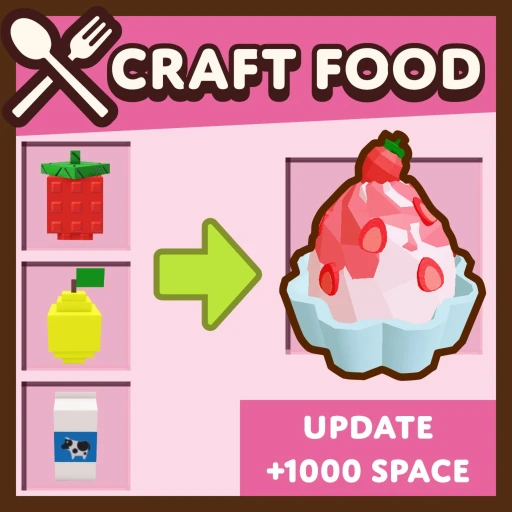
Two simulators. Two entirely different fantasies. Craft Food from the Craft Food Team launched in November 2025 and has already captured the attention of millions of Roblox players with its massive recipe catalog, satisfying ingredient-combining mechanics, and a profit-per-second economy that makes idle progress feel genuinely rewarding. Bee Swarm Simulator from developer Onett has been a Roblox institution since 2018, building one of the platform's deepest progression systems around bees, pollen, honey, and a quest structure that keeps players engaged across hundreds of hours.
On the surface these games could not look more different — one puts you behind a kitchen counter crafting dishes, the other drops you into flower fields with a swarm of bees at your command. But underneath the themes, both are simulators built on the same fundamental promise: collect, combine, optimize, and watch your numbers grow. Both reward patience. Both are free to play with optional spending. And both have communities that pour serious time into guides, strategies, and tier lists. This comparison breaks down every category that matters so you can decide which simulator deserves your hours, or whether both belong in your daily rotation.
Craft Food vs Bee Swarm Simulator — Quick Stats (2026)
| Category | Craft Food | Bee Swarm Simulator |
|---|---|---|
| Genre | Cooking / crafting simulator | Bee collecting / hive simulator |
| Developer | Craft Food Team | Onett |
| Place ID | 102574559184919 | 1537690962 |
| Concurrent Players | ~5K | ~49K |
| Total Visits | 40.7M | 4.1B+ |
| Approval Rating | 99% | ~94% |
| Launch Year | 2025 | 2018 |
| Core Loop | Combine ingredients, cook dishes, earn profit/sec | Collect bees, harvest pollen, make honey |
| Key Features | 500+ recipes, ingredient crafting, idle income | Bee types, quests, bosses, seasonal events |
| PvP | No | No |
| Mobile-Friendly | Yes | Yes |
| Average Session | 20–40 min | 30–60 min |
| Free-to-Play | Yes | Yes |
Gameplay — What Do You Actually Do?
Craft Food
Craft Food puts you in control of a kitchen where the entire game revolves around discovering and creating dishes. You start with a handful of basic ingredients — flour, eggs, butter, sugar — and combine them at your cooking station to produce recipes. Each successful combination unlocks a new dish in your recipe book, earns you coins, and contributes to your profit-per-second rate, which generates passive income even when you are not actively cooking.
The recipe system is the heart of the experience, and with over 500 recipes already in the game, there is an enormous amount to discover. Recipes range from simple combinations like bread and basic salads to elaborate multi-step dishes that require intermediate ingredients you have to craft first. A cake does not come from dumping raw materials into a pan — you might need to combine flour and eggs into batter, batter and sugar into cake mix, and cake mix with frosting to produce the final product. This layered crafting creates genuine puzzle-solving moments as you work out which combinations lead to which results.
The profit-per-second system transforms every dish you discover into a permanent economic upgrade. Each new recipe increases your passive income rate, which means your earnings compound over time. Early-game recipes might add fractions of a coin per second, but as you unlock rarer and more complex dishes, the jumps in income become substantial. This creates a satisfying loop where experimentation is always rewarded — even failed combination attempts give you information about what does and does not work, narrowing down the possibility space for undiscovered recipes.
Kitchen upgrades and expansion add another progression layer. As your income grows, you can upgrade your cooking stations for faster production, unlock new ingredient sources, and expand your kitchen to handle more simultaneous dishes. The game encourages efficiency — optimizing which dishes to prioritize based on their profit contribution, which ingredients to keep stocked, and how to sequence your crafting for maximum output. For players who enjoy optimization puzzles, Craft Food delivers a surprisingly deep experience wrapped in an accessible cooking theme.
Bee Swarm Simulator
Bee Swarm Simulator takes a slower, more layered approach to the simulator genre. You start with a small hive and a few basic bees. Walking into flower fields triggers your bees to collect pollen, filling your backpack. You return to the hive, convert pollen into honey, and spend that honey on new bees, better equipment, and access to higher-level zones gated behind progression requirements.
The strategic depth lives in your hive composition. There are dozens of bee types across Common, Rare, Epic, Legendary, Mythic, and Event tiers. Each bee carries unique abilities — some generate bonus tokens on the field, others boost movement speed, increase critical pollen collection, or summon attacks against field mobs. Building a strong hive is not about stacking the rarest bees you can find. It is about understanding synergies: red-pollen bees for red fields, blue-pollen bees for blue fields, Gifted bees whose passive bonuses stack across your entire swarm. A thoughtfully composed hive of thirty bees will outperform a random collection of fifty.
Bear NPCs hand out structured quest chains that provide direction and goals across hundreds of hours. Black Bear offers straightforward collection tasks. Brown Bear assigns randomized field-specific challenges. Science Bear introduces crafting and upgrade mechanics. Spirit Bear, the endgame quest giver, demands feats that take weeks of dedicated play to complete. These quest lines create a progression spine that gives the game structure well beyond the free-form loop of collect-and-spend.
Boss encounters add combat variety. The Tunnel Bear, Stump Snail, Coconut Crab, and other boss mobs require your bees to fight, and your bee composition directly affects your damage output and survivability. Seasonal events — especially the annual Beesmas celebration — add temporary content, limited-edition bees, event-specific currencies, and exclusive rewards that create urgency and excitement for both new and veteran players.
Progression — How Quickly Does It Hook You?
Craft Food hooks you almost instantly. Within your first thirty seconds you are combining ingredients and watching your first dish materialize. The recipe book fills one entry at a time, and the visual feedback of discovering something new — the dish appearing, your profit-per-second ticking upward, the recipe catalog expanding — creates a loop that feels immediately rewarding. The game understands the appeal of collection completion. Every blank space in your recipe book is a puzzle to solve, and the early recipes are simple enough that you experience several "eureka" moments within your first few minutes.
The mid-game stays compelling because the recipe complexity scales intelligently. Once you have exhausted the obvious two-ingredient combinations, you start experimenting with intermediate products. Realizing that you need to craft a sauce before you can make a pasta dish, or that combining two finished dishes produces a meal set with dramatically higher profit, keeps the experimentation loop fresh. Your profit-per-second climbs steadily, creating visible progress even during sessions focused on exploration rather than optimization.
Bee Swarm Simulator takes longer to reveal its depth. The first hour is pleasant — you buy bees, discover their abilities, fill your backpack with pollen, and start accumulating honey. But the game does not rush you. The first gate requires a certain number of bees and discovery progress, and reaching it takes genuine effort rather than a quick sprint. The satisfaction comes from understanding the systems rather than from instant payoffs. Learning that your Brave Bee's token ability stacks with your Lion Bee's critical bonus, or that placing your bees in the Pineapple Patch during a specific quest yields better rewards — these discoveries create their own kind of excitement, one built on knowledge rather than speed.
Mid-game Bee Swarm Simulator asks for patience. Honey requirements climb steeply. Quest chains demand specific field collections that take hours. The Stump Snail boss takes literal days of continuous damage to defeat. Players who thrive on extended grinds find it deeply rewarding. Players who need constant forward momentum may find the pacing frustrating compared to Craft Food's steady drip of new discoveries.
Edge: Craft Food for immediate satisfaction and a consistently rewarding discovery loop. Bee Swarm Simulator for players who find fulfillment in mastery and long-haul progression. Craft Food keeps you moving forward in every session. Bee Swarm Simulator asks you to invest before it pays off, but the payoff is deeper when it arrives.
Graphics and Audio
Craft Food leans into a clean, colorful aesthetic that makes every dish look appealing. Ingredients are rendered with distinct shapes and bright colors that make identification easy even on smaller screens. When you combine items successfully, the resulting dish appears with a polished presentation — plated, garnished, and visually satisfying in a way that makes collection feel rewarding. The kitchen environments are detailed without being cluttered, and upgrades to your cooking stations are reflected visually, giving you a tangible sense of your restaurant growing over time.
Audio in Craft Food is designed for comfort during extended sessions. Cooking sounds — sizzling pans, bubbling pots, the chime of a completed dish — create a cozy atmosphere without becoming grating. The soundtrack stays in the background, upbeat enough to maintain energy but never intrusive. It is the kind of audio design that supports two-hour sessions without fatigue, which matters for a game built around experimentation and idle progress.
Bee Swarm Simulator opts for a warmer, more grounded presentation that has aged gracefully over its eight-year lifespan. Flower fields are colorful without being overwhelming — the Sunflower Field glows golden, the Blue Flower Field shimmers in cool tones, and endgame fields like Pepper Patch have distinct visual personalities. Bees are charming and individually designed, with Gifted bees displaying a golden aura that provides instant visual feedback on your hive's strength. The map itself tells a visual story as you progress through zones, from the friendly starting fields to the imposing 35 Bee Zone gates.
Audio in Bee Swarm Simulator is understated and effective. Pollen collection creates satisfying pops. Honey conversion has a warm resonance. Boss encounters shift the soundtrack to something more urgent. The Beesmas event transforms the entire map with snow, decorations, and holiday-themed music. The sound design supports long sessions by staying pleasant without demanding attention, which makes it well-suited for players who listen to music or podcasts while they play.
Edge: A genuine tie. Craft Food offers a more modern, polished visual package. Bee Swarm Simulator's art style has charm and personality that eight years of refinement have only improved. Both games sound great for extended play. Your preference here comes down to whether you find kitchens or flower fields more visually appealing.
Player Count and Community (July 2026)
Bee Swarm Simulator dominates the raw numbers with roughly 49,000 concurrent players and over 4.1 billion total visits. Those figures reflect nearly eight years of continuous presence on Roblox. The community is large, deeply knowledgeable, and remarkably well-organized. Veteran players maintain comprehensive wikis, optimization spreadsheets, and strategy guides that rival any Roblox community resource. Developer Onett communicates through substantial but infrequent update announcements that generate genuine excitement among a player base that has learned to trust the quality of each content drop.
Craft Food currently sits at approximately 5,000 concurrent players with 40.7 million total visits — modest numbers by comparison, but extraordinary context matters here. The game launched in November 2025, making it barely five months old. A 99% approval rating is nearly unheard of on Roblox at any scale, and it signals a game that is delivering on its promises to virtually everyone who plays it. The community is smaller but enthusiastic and growing. Recipe discovery guides, profit optimization spreadsheets, and ingredient combination databases are already emerging from dedicated players.
The trajectory matters as much as the current numbers. Bee Swarm Simulator has proven its ability to sustain a massive audience across years. Craft Food is in its growth phase, and its near-perfect approval rating suggests it has the quality foundation to scale significantly. Games with 99% ratings on Roblox tend to grow through word of mouth in ways that games with lower ratings do not. Whether Craft Food reaches Bee Swarm Simulator's heights remains to be seen, but the early signals are strong.
The community cultures reflect the games they surround. Bee Swarm Simulator's community is methodical and encyclopedic — discussions center on hive optimization, quest strategies, and field efficiency calculations refined over years. Craft Food's community is exploratory and collaborative — players share recipe discoveries, debate the most profitable crafting paths, and work together to map out the game's enormous recipe tree. Both communities are welcoming to newcomers.
Monetization and Game Passes
Craft Food takes a light approach to monetization. The game is fully playable and completable without spending a single Robux. Game passes and premium options exist to accelerate progress — faster cooking times, expanded ingredient slots, and income multipliers — but they function as convenience upgrades rather than content gates. Nothing in the recipe catalog is locked behind a paywall. The 99% approval rating suggests that players feel respected by the monetization model, which is one of the strongest signals a game can send about its design priorities.
Bee Swarm Simulator sells fewer passes at moderate price points. The Bear Bee pass at 800 Robux provides a powerful event bee. Extra hive slots and the Mondo Flag round out the pass selection. Prices stay under 800 Robux across the board. Developer Onett has maintained a philosophy of keeping paid items as optional accelerators rather than competitive advantages. Royal Jellies, Star Treats, and other premium consumables can be purchased with Robux but are also available through normal gameplay, events, and quest rewards.
Both games share a philosophy that puts gameplay first and monetization second. Neither game makes you feel punished for playing free. Neither creates artificial friction designed to push you toward purchases. This is increasingly rare on Roblox, where many simulators design their core loops around monetization pressure. Both Craft Food and Bee Swarm Simulator earn their revenue by being good enough that players want to support them, not by making the free experience frustrating enough that players feel forced to spend.
Edge: Slight edge to Craft Food for its 99% approval rating, which speaks directly to how players feel about the monetization balance. Bee Swarm Simulator's approach is also excellent and battle-tested over eight years. You will not feel pressured to spend in either game.
Replay Value — Will You Still Play Next Month?
Craft Food's replay value is driven by the sheer scale of its recipe catalog. With over 500 recipes — and more added through regular updates — the discovery loop sustains engagement across weeks of daily play. Even after you have found the majority of recipes, the optimization layer kicks in: which dishes generate the highest profit per second, which crafting sequences are most efficient, and how to maximize your passive income during offline periods. The game also benefits from an update cadence that adds new ingredients, recipes, and features, which means the recipe book keeps expanding faster than most players can fill it.
The idle income system creates a natural reason to log in daily. Your profit-per-second accumulates while you are away, and returning to collect earnings, invest in upgrades, and push for the next batch of recipe discoveries makes for satisfying short sessions. The game works equally well as a quick 15-minute check-in and as a two-hour exploration session, which gives it flexibility that many simulators lack.
Bee Swarm Simulator has proven its staying power across nearly eight years of continuous activity. The game still draws 49K concurrent players because the optimization loop genuinely rewards hundreds of hours of investment. There are always more bees to discover, more quest chains to complete, more boss encounters to tackle, and more events to participate in. Onett's updates arrive infrequently but land with tremendous impact — each one adds substantial content that gives veterans new goals and draws lapsed players back.
The solo nature of Bee Swarm Simulator works in its favor for longevity. Returning after a break feels like picking up a personal project rather than catching up to a meta you missed. There is no trading market to track, no competitive ladder to decay from, and no social pressure to stay current. You play at your own pace, and your hive is exactly where you left it. That consistency makes it one of the best Roblox games for players who dip in and out over months or years.
Edge: Bee Swarm Simulator for proven long-term retention. Eight years of active players is an argument that no five-month-old game can match, regardless of quality. Craft Food has the foundation for similar longevity — the recipe system is inherently expandable and the approval rating is extraordinary — but it has not had time to prove it yet. Both games reward regular play without punishing breaks.
Earning Potential — Free Robux While You Play
If you use Earnaldo to earn Robux alongside your gaming sessions, both Craft Food and Bee Swarm Simulator offer natural windows for multitasking. The key is identifying idle moments where you are waiting rather than actively playing, and using those gaps to complete quick tasks on Earnaldo's earn page.
Craft Food is particularly well-suited for Earnaldo multitasking. The profit-per-second system generates income passively, which means there are built-in moments where you are waiting for coins to accumulate before your next purchase or upgrade. Between cooking batches, while ingredients restock, and during the natural pauses between recipe experimentation sessions, you can switch to Earnaldo without losing any in-game progress. The idle nature of the income system means your kitchen keeps earning while you complete tasks.
Bee Swarm Simulator's downtime is built into the core loop. While your bees collect pollen in a field, you have thirty to sixty seconds of idle time per cycle. Boss respawn timers create longer gaps. AFK honey collection setups — particularly popular among mid-game and endgame players — generate extended idle windows where switching to Earnaldo costs you nothing in terms of in-game progress. The natural pace of the game makes it one of the best Roblox titles for simultaneous Robux earning.
For game-specific tips on maximizing your Robux earnings while you play, check our Craft Food free Robux guide, Bee Swarm free Robux guide, or browse our Craft Food codes and Bee Swarm Simulator codes pages for active redemption codes.
Earn Free Robux for Craft Food or Bee Swarm Simulator
Complete simple tasks on Earnaldo and withdraw real Robux — no downloads, no generators, no scams.
Head-to-Head Verdict — Craft Food vs Bee Swarm Simulator in 2026
The Verdict
Choose Craft Food if you want a fresh, immediately satisfying simulator with one of the best approval ratings on Roblox. The recipe discovery system is genuinely engaging — combining ingredients feels like solving puzzles, and the profit-per-second economy rewards every discovery with tangible progress. With over 500 recipes already and regular updates expanding the catalog, there is no shortage of content for new players. The idle income system makes it perfect for casual sessions, and the 99% approval rating tells you that the development team is getting the balance right. If you enjoy cooking games, crafting systems, or collection-driven gameplay, Craft Food delivers all three.
Choose Bee Swarm Simulator if you want a proven, deeply layered experience with years of content to explore. Nearly eight years of development have created a game with hundreds of hours of structured progression, dozens of bee types to collect and optimize, challenging boss encounters, and seasonal events that reward long-term commitment. Onett's development philosophy ensures that every piece of content is accessible without spending Robux. If you enjoy building something personal, optimizing it over time, and progressing at your own pace through a world that has been polished across thousands of updates, Bee Swarm Simulator is one of the most rewarding simulators on Roblox.
Overall winner: Bee Swarm Simulator — but Craft Food is the one to watch. Bee Swarm Simulator's massive player base, eight years of proven content, deep progression systems, and battle-tested staying power make it the safer recommendation for anyone looking for a simulator they can play for months. But Craft Food's 99% approval rating, innovative recipe system, and rapid growth trajectory make it one of the most exciting new games on Roblox. If Craft Food maintains its current quality through 2026 and beyond, this verdict could easily flip. Playing both is the smartest move — the games complement each other perfectly, with Craft Food's quick discovery sessions pairing naturally with Bee Swarm Simulator's longer optimization grind.
Who Should Play What?
- You want instant gratification: Craft Food. Your first recipe completes within thirty seconds and the profit starts flowing immediately.
- You prefer long-term, deep progression: Bee Swarm Simulator. Building the perfect hive across hundreds of hours is genuinely rewarding.
- You enjoy puzzle-like discovery: Craft Food. Figuring out which ingredient combinations unlock new recipes is addictive and satisfying.
- You want structured quests and goals: Bee Swarm Simulator. The bear NPC quest chains provide hundreds of hours of directed gameplay.
- You play mostly on mobile: Both work well on touchscreens. Craft Food's combining mechanics feel particularly natural on touch devices.
- You want to earn Robux while playing: Both pair well with Earnaldo, but Craft Food's idle profit system makes multitasking slightly easier.
- You love seasonal events: Bee Swarm Simulator. Beesmas is one of the best recurring events on Roblox.
- You want a game everyone loves: Craft Food. A 99% approval rating means virtually every player enjoys the experience.
Frequently Asked Questions
Bee Swarm Simulator is significantly more popular by raw numbers, with roughly 49K concurrent players and over 4.1 billion total visits accumulated since 2018. Craft Food averages around 5K concurrent players with 40.7 million visits since its November 2025 launch. However, Craft Food holds a near-perfect 99% approval rating, which is extraordinarily rare on Roblox and suggests strong growth potential ahead.
Both work well. Craft Food has natural idle moments while waiting for dishes to cook, ingredients to restock, and profit-per-second income to accumulate. Bee Swarm Simulator provides downtime while bees collect pollen in fields and during boss respawn timers. Either game lets you switch to Earnaldo's earn page during natural pauses without losing progress. Play whichever game you enjoy more — longer sessions mean more earning opportunities.
Yes. Both games are fully playable on mobile through the Roblox app on iOS and Android. Craft Food's drag-and-combine recipe mechanics work intuitively on touchscreens. Bee Swarm Simulator's movement and collection mechanics work well on touch devices, though navigating between fields can feel slightly less precise than on desktop. Neither game requires fast reflexes or precision inputs.
Bee Swarm Simulator has more total content after nearly eight years of development, including dozens of bee types, multiple quest chains from different bear NPCs, boss encounters, seasonal events, and a crafting system. Craft Food already offers over 500 recipes with regular updates expanding the catalog, but it launched in November 2025 and is still building. Both games receive active developer support and regular content updates.
Craft Food is easier to pick up immediately. You combine ingredients, cook dishes, and start earning profit within your first minute. The recipe system is intuitive and every experiment teaches you something. Bee Swarm Simulator has a gentle start with guided quests from bear NPCs, but understanding bee types, hive composition, and field optimization strategies takes longer to fully grasp. Both games are welcoming to new and casual players.
Yes. Craft Food receives frequent updates from the Craft Food Team, adding new recipes, ingredients, kitchen upgrades, and seasonal content. The game's rapid growth since November 2025 has been supported by a consistent update cadence. Bee Swarm Simulator's updates arrive less frequently but are massive in scope — developer Onett is known for large content drops that add new bees, quests, fields, and event mechanics. Both development teams communicate actively with their communities.