Dandy's World vs DOORS (2026) -- Which Roblox Horror Game Wins?
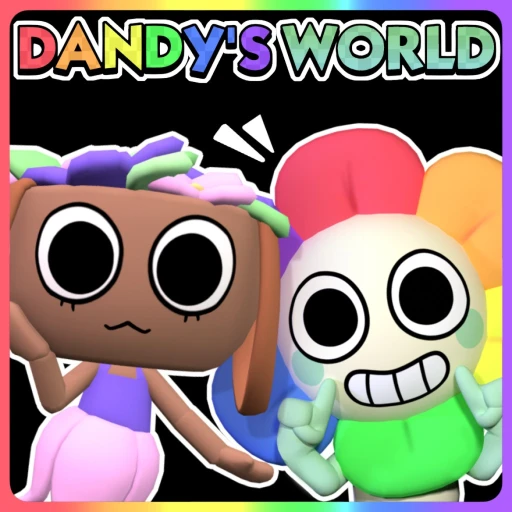
Roblox horror has two undisputed heavyweights in 2026, and they could not be more different. Dandy's World drops you into the corrupted halls of Gardenview Center with up to seven other players, arms your team with collectible characters who each bring unique abilities, and challenges you to survive encounters with nightmarish creatures called Twisteds through QTE skill checks and coordinated teamwork. DOORS hands you a flashlight and a prayer, then sends you through 100+ procedurally generated hotel rooms where entities named Rush, Ambush, Seek, Figure, and Screech wait to end your run in an instant.
Between them, these two games account for over 14 billion visits. Dandy's World from BlushCrunch Studio holds tens of thousands of concurrent players and a 92.53% approval rating. DOORS from LSplash sits at 7.4 billion visits with a 92.9% rating. They share the horror survival label, but the moment you load into either game, you understand they are built on entirely different philosophies. One is about teamwork, collection, and strategic preparation. The other is about memorization, reflexes, and survival instinct. This breakdown covers every angle so you can figure out which one deserves your time.
Dandy's World vs DOORS -- Quick Stats (2026)
| Category | Dandy's World | DOORS |
|---|---|---|
| Developer | BlushCrunch Studio | LSplash (LSPLASH) |
| Roblox Place ID | 16116270224 | 6516141723 |
| Genre | Mascot horror survival | Procedural room-crawling horror |
| Total Visits | 7B+ | 7.4B+ |
| Peak CCU | 143K | 100K+ (spikes during updates) |
| Player Rating | 92.53% | 92.9% |
| Team Size | Up to 8 players | Solo or co-op (up to 4) |
| Core Loop | Collect characters, explore Gardenview Center, survive Twisteds via QTE skill checks | Open doors, avoid entities, solve puzzles, survive 100+ rooms |
| Horror Style | Mascot horror / cartoon corruption | Environmental tension / jump scares |
| Key Game Passes | Star-Time (200R), Show-Time (200R), +2 Sticker Wheels (199R) | Revive (25R per use), Knobs Doubler (199R) |
| Mobile-Friendly | Yes | Yes |
| Free-to-Play | Yes | Yes |
Gameplay -- What Happens When You Hit Play?
Dandy's World
You select a character from your unlocked roster, join a lobby of up to 8 players, and enter Gardenview Center -- a once-cheerful entertainment complex that has been overrun by corrupted mascot creatures called Twisteds. Every character in your collection has distinct stats and abilities: some are built to tank damage during encounters, others excel at scouting ahead, and a few specialize in support roles that keep the rest of the team alive during intense moments.
The core survival mechanic revolves around QTE (Quick Time Event) skill checks. When a Twisted catches up to you or your team triggers an encounter, the game presents timed button prompts that determine whether you escape, take damage, or get eliminated. These skill checks are not just random button mashing -- they scale in speed and complexity based on the floor level and the specific Twisted you are facing. Higher floors introduce Twisteds with faster, more punishing QTE sequences that demand genuine reflexes.
Exploration is the other half of the equation. Gardenview Center is divided into themed zones, each with its own environmental hazards, hidden collectibles, and specific Twisted enemies. Your team moves through rooms together, scavenging resources, solving environmental obstacles, and deciding when to push deeper versus when to play it safe. The 8-player team dynamic means coordination is not optional -- a full squad that communicates and assigns roles will outperform a random group every time. Character selection before a run is a genuine strategic decision because bringing the wrong composition to a difficult floor can end a session before it really starts.
The mascot horror aesthetic gives the game a distinct identity. The Twisteds are recognizable as former Gardenview Center mascots -- bright colors, exaggerated features, friendly designs -- but warped into something deeply unsettling. Cracked smiles, distorted proportions, and jerky animations turn familiar shapes into sources of dread. It is creepy without crossing into graphic territory, which makes it accessible to a wider age range than many horror games on Roblox.
DOORS
DOORS puts you in a procedurally generated hotel and gives you one objective: keep opening doors and survive whatever is on the other side. Room 1 is simple. Room 10 introduces real danger. By room 50, you are rationing flashlight batteries, listening for audio cues, and making split-second decisions about whether to hide in a closet or sprint for the next door. The brilliance of DOORS is that its entire design philosophy fits in one sentence: every entity teaches you a rule, and breaking that rule kills you.
Rush fills the corridor with a flickering light warning before charging through at lethal speed -- you learn to dive into the nearest closet or hiding spot the moment you see the flash. Ambush mimics Rush but reverses direction multiple times, punishing players who leave their hiding spot too early. Seek triggers a cinematic chase sequence through flooded corridors where you sprint, dodge obstacles, and follow the only viable path at top speed. Figure stalks specific rooms and hunts by sound, forcing you to crouch-walk and avoid making noise. Screech lurks in dark rooms and whispers from behind -- look at it in time and it retreats, ignore it and you take damage.
Each entity is a puzzle with a specific solution, and the game never tells you what that solution is. You learn by dying. You learn by watching other players die. You learn by reading audio and visual cues that become second nature over dozens of runs. The procedural generation means room order and entity placement shift between runs, so pure memorization is not enough -- you need genuine pattern recognition and adaptability.
Floor 1 covers rooms 1 through 100 and serves as the foundational experience. Floor 2 escalates with new entity types, more elaborate room puzzles, tighter resource budgets, and environmental hazards that punish carelessness. LSplash designed each floor to be a complete experience, and the jump in difficulty between floors is significant enough that completing Floor 1 does not guarantee you will survive Floor 2's opening rooms.
Progression -- How Deep Does the Grind Go?
Dandy's World has built one of the most layered progression systems in Roblox horror. The character collection is the centerpiece -- you earn tokens and special items through gameplay that feed into a gacha-style unlock system. Every run has a chance to reward you with a new character, and duplicate pulls are not wasted because they funnel into upgrading your existing roster. Upgrades boost base stats and unlock enhanced versions of character abilities, which directly affects how well you perform on harder floors.
Beyond the character system, Dandy's World tracks floor completion records, awards badges for specific accomplishments, and runs seasonal events that introduce limited-time characters and exclusive cosmetics. The progression gives you constant short-term targets (unlock the next character, upgrade your main to the next tier) alongside long-term goals (complete your full roster, clear the hardest floor with a perfect run). For players who thrive on visible progress and tangible rewards, the system delivers consistently.
DOORS takes the opposite approach. There are no permanent stat upgrades, no character unlocks, and no carried-over advantages between runs. Every session starts from scratch with the same base capabilities. What accumulates is player skill. The more runs you complete, the faster you recognize entity tells, the better you manage limited resources, and the deeper you push into the hotel. DOORS tracks achievements for reaching milestones, discovering secret areas, and surviving specific encounters, but these are records of accomplishment rather than mechanical advantages. The Knobs currency lets you purchase cosmetics between runs, adding a light collection layer without affecting gameplay balance.
Edge: Dandy's World. Its character collection, upgrade paths, and seasonal content provide the kind of tangible, trackable progression that keeps players returning daily. DOORS' skill-based progression is rewarding in a different way, but it does not generate the same sense of forward momentum that visible unlocks and stat increases create.
Graphics and Atmosphere
Dandy's World commits fully to the mascot horror identity that has become its signature. Gardenview Center is built on visual contrast -- bright, inviting spaces designed for families that have been corrupted and twisted into something wrong. Cheerful murals are defaced with unsettling imagery. Neon signs flicker and display garbled text. The architecture shifts from welcoming to claustrophobic as you push deeper into each zone. Character models are polished and expressive, with the Twisted enemies standing out as genuine achievements in Roblox character design. Their animations are deliberately uncanny -- movements that are almost normal but warped just enough to trigger discomfort. The lighting system plays a major role, shifting from warm safety in hub areas to harsh, clinical light in danger zones that makes every shadow feel threatening.
Sound design in Dandy's World reinforces the corrupted theme park atmosphere. Distorted carnival music plays in the background, mechanical grinding punctuates tense moments, and each Twisted has distinct audio cues that experienced players learn to recognize. The overall package is visually ambitious for a Roblox game and demonstrates what the platform can achieve when a studio prioritizes art direction.
DOORS goes dark from the first room and never lets up. The hotel setting is defined by narrow corridors, cramped rooms, dim lighting, and a persistent feeling of being enclosed. Visual design is deliberately restrained -- muted colors, minimal decoration, and environments that all feel subtly wrong without announcing why. The power of DOORS' atmosphere is in what it withholds. Rooms are just empty enough to feel abandoned. Corridors are just long enough to build anxiety before you reach the next door. Entity designs range from abstract threats (a pair of eyes materializing in darkness) to fully realized horrors (Figure's towering silhouette advancing through a library). The variety keeps players off-balance across dozens of runs.
Audio cues are not just atmosphere in DOORS -- they are survival tools. Each entity produces specific sounds before appearing. Rush creates a distant rumbling. Screech whispers from behind. Halt's screen effects warn you to stop moving. Players who learn to read the audio environment survive longer than those who rely solely on visual information. LSplash understood that what you hear in a horror game matters as much as what you see, and DOORS' sound design reflects that understanding.
Edge: DOORS. Its restrained, deliberate approach to atmosphere creates a more consistently tense experience. Dandy's World is visually impressive and its corrupted mascot designs are outstanding, but DOORS builds dread through restraint and subtlety in a way that is harder to replicate and more effective at sustaining tension across long play sessions.
Player Count and Community (July 2026)
Dandy's World has established itself as a permanent fixture in Roblox horror, reaching 7 billion+ visits with a steady base of tens of thousands of concurrent players and a 92.53% approval rating. BlushCrunch Studio's game has attracted a community that splits between competitive players optimizing character builds and team compositions, and casual fans drawn to the collectible roster and mascot designs. Fan art, character tier lists, ability breakdowns, and team composition guides fill the game's Discord server and community wikis. Content creators gravitate toward the game's visual personality, and character reveal trailers generate substantial hype cycles. The 8-player team format naturally creates community interaction -- you meet people in public lobbies, coordinate strategies, and build friend lists through shared survival runs.
DOORS has crossed 7.4 billion visits with a 92.9% rating, making it one of the most-played and highest-rated horror games Roblox has ever produced. LSplash's game built a community defined by deep investment in lore analysis, entity behavior documentation, speedrunning, and collaborative discovery. Floor 2's release was a landmark Roblox event that drew creators, streamers, and competitive players into a race to complete the expanded content. The game's clean design and high tension make it one of the most-streamed Roblox titles on YouTube and Twitch. Our DOORS vs Murder Mystery 2 breakdown covers how DOORS stacks up against another popular Roblox horror title.
Both communities are active and passionate. Dandy's World skews slightly younger due to its cartoonish mascot aesthetic, while DOORS attracts a broader horror audience that includes older players and dedicated content creators who appreciate its design philosophy.
Game Passes and Monetization
Dandy's World offers three primary game passes through the Roblox store. Star-Time (200 Robux) provides premium benefits during play sessions including enhanced drop rates and bonus resources. Show-Time (200 Robux) unlocks access to exclusive content and showtime events within Gardenview Center. +2 Sticker Wheels (199 Robux) adds extra spins to the sticker wheel system, accelerating your collection progress. The monetization model aligns with the collection-driven gameplay -- spending Robux does not unlock content that free players cannot reach, but it does speed up the path to a complete roster. Free players can access every character and every floor through gameplay alone, though the grind timeline extends significantly without passes.
DOORS keeps its monetization intentionally minimal. The Revive option (25 Robux per use) lets you continue a run after dying instead of restarting from room 1 -- a tempting option when you die on room 80+ of a deep run. The Knobs Doubler (199 Robux) increases your cosmetic currency earn rate. The Premium Flashlight (149 Robux) provides better battery life and brightness, which is a quality-of-life upgrade rather than a power advantage. LSplash has maintained a monetization philosophy where spending money never gives you a survival advantage -- everything that affects gameplay is earned through skill.
Both games are genuinely free-to-play. Neither locks core content behind mandatory purchases, and neither creates pay-to-win dynamics. The difference is philosophical: Dandy's World monetizes time savings within its collection system, while DOORS monetizes convenience and cosmetics without touching gameplay balance.
Social Features and Multiplayer
Dandy's World is built from the ground up as a multiplayer experience. The 8-player team format creates social dynamics that go beyond simply playing in the same room. Before each run, teams discuss character selection -- who brings a tank, who brings a scout, who covers support. During runs, players call out Twisted positions, coordinate QTE responses, and make group decisions about exploration paths. After runs, the lobby becomes a social space for comparing loot, showing off new character unlocks, and planning the next attempt. Private servers let friend groups run dedicated sessions with optimized compositions, and the shared experience of surviving a difficult floor together creates genuine bonding moments.
DOORS supports both solo and co-op play, and the social experience differs dramatically between modes. Solo DOORS is a pure survival challenge -- just you, the hotel, and your accumulated knowledge. It is one of the most focused horror experiences on Roblox and the mode that many veteran players prefer. Co-op DOORS introduces shared risk: one player opening a door at the wrong moment can trigger an entity that threatens the entire group. This creates tension that is social rather than purely mechanical -- you are worried about your teammates' decisions as much as your own. Communication matters in co-op, but the game does not require it. Skilled groups can coordinate through smart play and visual cues alone.
Edge: Dandy's World. Its 8-player team format, character-driven roles, and coordination requirements create richer multiplayer interactions. DOORS works well with friends, but its design does not depend on social features the way Dandy's World does. The flip side is that DOORS' solo mode provides an experience Dandy's World cannot match for players who prefer playing alone.
Replay Value -- What Keeps You Coming Back?
Dandy's World drives replay value through its collection and upgrade systems. With a large roster of characters to unlock and upgrade, plus regular additions from BlushCrunch Studio that expand the available pool, there is always another target to chase. The floor-based structure means each zone can be replayed with different team compositions, and the difficulty scaling ensures that early floors remain relevant for farming resources even after you have cleared harder content. Seasonal events introduce limited-time challenges with exclusive character variants and cosmetics, creating urgency that pushes active players to log in during event windows.
The QTE skill check system also contributes to replay value in a way that collection alone cannot. Getting better at the mechanical execution of skill checks is a satisfying progression arc that runs parallel to the collection grind. A player with a fully upgraded roster who cannot execute QTE sequences will still struggle on advanced floors, which means there is always room to improve regardless of collection status.
DOORS generates replay value through mastery and procedural variation. No two runs produce identical room sequences, and entity encounter order shuffles enough to prevent rote memorization from being a complete solution. The skill ceiling is high -- speedrunners demonstrate that runs can always be optimized further, and the gap between completing a floor and completing it efficiently is enormous. Floor 2's release injected months of fresh content into the game by introducing new entities, room types, and mechanical challenges that forced even veteran players to relearn fundamentals.
Future floor releases will likely produce similar spikes in engagement. LSplash has established a content model where each major update is substantial enough to re-engage the entire player base rather than just active daily players. The trade-off is longer wait times between content drops compared to Dandy's World's frequent smaller updates.
Edge: Tie. Dandy's World provides more frequent, smaller reasons to log in -- new characters, seasonal events, daily targets. DOORS provides less frequent but more impactful reasons -- each new floor is a seismic event that redefines the experience. Your preference depends on whether you want a steady drip of new content or occasional massive expansions.
Earning Free Robux While You Play
Both games pair naturally with Earnaldo for earning free Robux between sessions. Dandy's World has built-in downtime during lobby phases, team assembly, and between floor attempts that gives you windows to complete earning tasks. DOORS has natural breaks during matchmaking, after failed runs, and during the planning phase before starting a new attempt.
Earning free Robux through Earnaldo means you can pick up game passes like Dandy's World's Star-Time or Show-Time without spending your own money, or bank Robux for DOORS revives on deep runs where losing progress would be painful. For step-by-step strategies on maximizing your earnings alongside each game, check our Dandy's World free Robux guide and DOORS free Robux guide.
Earn Free Robux for Dandy's World or DOORS
Complete simple tasks on Earnaldo and withdraw real Robux -- no downloads, no generators, no scams.
Head-to-Head Verdict -- Dandy's World vs DOORS in 2026
The Verdict
Choose Dandy's World if you want horror with strategic depth and social dynamics. BlushCrunch Studio has built a game where character selection, team composition, and QTE execution create layers of engagement that go far beyond simple survival. With 7 billion+ visits, tens of thousands of concurrent players, and a 92.53% rating, Dandy's World has proven that mascot horror can sustain a massive, dedicated player base. It is the better choice for groups, collectors, and players who want visible progression they can track and optimize over time. The 8-player team format makes it one of the best multiplayer horror experiences on Roblox.
Choose DOORS if you want pure, undiluted horror that rewards skill above everything else. LSplash created a game where every entity is a lesson, every room is a decision, and every completed run feels genuinely earned. At 7.4 billion+ visits and a 92.9% rating, DOORS set the standard for what Roblox horror can be, and Floor 2 proved the team can raise that bar with each major release. It is the better choice for solo players, horror purists, and anyone who measures progress by how much they have learned rather than what they have collected.
The bottom line: Dandy's World is the better multiplayer horror game. DOORS is the better pure horror game. If you play Roblox with a group of friends and enjoy collecting, upgrading, and strategizing together, Dandy's World will keep your squad engaged for months. If you want a tense, knowledge-driven survival experience that is just as compelling alone as it is with others, DOORS remains the gold standard on the platform. Both games have earned their spot at the top of Roblox horror.
Who Should Play What?
- You love collecting characters and building team compositions: Dandy's World. The deep roster of characters with unique abilities and the upgrade system give collectors and strategists everything they need.
- You want pure survival horror with no safety nets: DOORS. It strips the genre to essentials and executes every one of them at a high level.
- You always play with a group of friends: Dandy's World. The 8-player teams and character-driven roles create the best group horror experience on Roblox.
- You prefer solo play or small squads: DOORS. It was designed to be a complete, fully realized experience for a single player navigating alone.
- You enjoy learning enemy patterns and perfecting your responses: DOORS. Rush, Ambush, Seek, Figure, Screech -- each entity is a puzzle to solve, and mastering them is deeply satisfying.
- You want horror that is creepy but not overwhelming: Dandy's World. The mascot aesthetic keeps the scares unsettling without pushing into territory that younger players cannot handle.
- You care about progression systems and tangible rewards: Dandy's World. Character unlocks, upgrades, and seasonal exclusives provide constant forward momentum.
- You want a game where your skill is the only thing that matters: DOORS. No upgrades, no advantages, no shortcuts -- just you and your knowledge of the hotel.
Frequently Asked Questions
DOORS leads in total visits with 7.4 billion+ compared to Dandy's World's 7 billion+. However, Dandy's World regularly holds higher concurrent player counts, typically in the tens of thousands. Both games maintain approval ratings above 92% and consistently rank among the top horror experiences on the platform. Popularity depends on which metric you prioritize -- total historical visits or current active players.
DOORS is generally considered harder. Navigating 100+ procedurally generated rooms requires memorizing entity behaviors for Rush, Ambush, Seek, Figure, Screech, and others -- a single wrong move on a deep run erases all your progress. Dandy's World uses QTE skill checks and Twisted encounters that scale in difficulty, but the 8-player team format and character abilities provide more safety nets and recovery options.
Yes. Dandy's World supports multiplayer teams of up to 8 players exploring Gardenview Center together, with character selection and team composition forming a core strategic layer. DOORS allows co-op play where groups progress through rooms together. Both games are better with friends, but DOORS also works well as a solo experience -- something Dandy's World is not designed around.
Both offer substantial content. DOORS features two major floors with 100+ procedurally generated rooms, dozens of unique entities with distinct mechanics, and multiple secret areas and Easter eggs. Dandy's World provides a large roster of collectible characters with unique abilities, the expansive Gardenview Center with themed zones, and frequent character additions through updates. DOORS leads in environmental variety and entity design depth. Dandy's World leads in character collection breadth and team strategy options.
Both contain horror elements at different intensity levels. Dandy's World uses a mascot horror aesthetic where corrupted cartoon characters called Twisteds are unsettling but remain cartoonish in design -- closer to Five Nights at Freddy's than a slasher film. DOORS features darker environments, louder jump scares, chase sequences, and more intense entity encounters. For younger or more sensitive players, Dandy's World is the gentler entry point into Roblox horror.
Dandy's World offers Star-Time (200 Robux) for premium session benefits, Show-Time (200 Robux) for exclusive event access, and +2 Sticker Wheels (199 Robux) for accelerated collection progress. DOORS offers Revive (25 Robux per use) to continue deep runs after death, Knobs Doubler (199 Robux) for faster cosmetic currency, and Premium Flashlight (149 Robux) for improved battery life. Neither game requires any purchases to experience the full game.