Demon Slayer Tycoon vs Demonfall (2026) -- Which Roblox Game Is Better?
The Demon Slayer franchise has inspired dozens of Roblox games, but two titles stand out for very different reasons. Demon Slayer Tycoon blends the beloved Kimetsu no Yaiba universe with classic tycoon mechanics -- you build a base, unlock breathing styles, collect Nichirin swords, and battle demons while your droppers generate cash in the background. Demonfall takes the opposite route, dropping you into a sprawling open-world RPG where every breathing technique requires mastery, every demon encounter tests your stamina management, and PvP fights can end in seconds if your timing slips.
Both games draw from the same source material, but the experiences they deliver could not be more different. One is a relaxing progression loop wrapped in anime nostalgia. The other is a mechanically demanding RPG that has been refined over five years of active development. If you have been wondering which Demon Slayer game on Roblox deserves your hours -- or whether you should play both -- this comparison will break it all down.
We will cover gameplay loops, combat depth, progression systems, community health, monetization, and long-term replayability. Let us start with the numbers.
Quick Stats: Demon Slayer Tycoon vs Demonfall at a Glance
| Category | Demon Slayer Tycoon | Demonfall |
|---|---|---|
| Developer | Demon Slayer Tycoon Studio | Fireheart Studio |
| Roblox Place ID | 74882431545932 | 4855457388 |
| Genre | Anime Tycoon / Base Builder | Action RPG / Fighting |
| Release | 2025 | 2020 (5+ years live) |
| Total Visits | Growing (newer title) | 974M+ |
| Current Version | Active development | Update 5.6 |
| Core Loop | Build base, earn cash, unlock breathing styles | Quest, fight, master breathing or BDAs |
| Breathing Styles | Water, Flame, Thunder + more | 10+ including Sun, Moon, Stone |
| Play as Demon | Limited (enemy encounters) | Full demon path with 11 BDAs |
| PvP | Arena battles (casual) | Open-world + arena PvP (competitive) |
| Average Session | 20-40 minutes | 45-90 minutes |
| Monetization | Optional passes, cosmetics | Optional passes, cosmetics |
The table reveals two games built on the same anime foundation but engineered for entirely different audiences. Let us dig into what each game actually feels like to play.
Gameplay Loop and Core Experience
Demon Slayer Tycoon: Build, Collect, and Slash
Demon Slayer Tycoon follows the proven Roblox tycoon formula and layers Demon Slayer theming on top of it. When you spawn into the game, you start with an empty plot and a basic cash dropper. Your first few minutes are spent walking over cash pickups, purchasing new base components, and watching your Demon Slayer headquarters grow from a dirt patch into a compound worthy of the Demon Slayer Corps.
The tycoon progression is satisfying in the way all good tycoon games are. Each purchase unlocks something visible -- a new room, a training area, a weapon rack displaying your collected Nichirin swords. The dopamine loop of earn-spend-upgrade-repeat is well-tuned, and there is always another upgrade just within reach. The developers have paced the economy so that free players can progress at a reasonable rate while game passes offer speed boosts for those who want to accelerate.
Where Demon Slayer Tycoon distinguishes itself from generic tycoons is its breathing style system. As you progress, you unlock iconic techniques from the anime -- Water Breathing, Flame Breathing, Thunder Breathing, and more. Each breathing style comes with its own visual effects and combat abilities that you can use against demon NPCs and other players. Unlocking Tanjiro's Water Breathing forms or Zenitsu's Thunder Clap and Flash feels genuinely rewarding because these are abilities fans recognize from the show.
The character collection aspect adds another layer. You can unlock outfits and gear inspired by Tanjiro, Nezuko, Zenitsu, Inosuke, and the Hashira. These cosmetic milestones give you long-term goals beyond the tycoon upgrades themselves, and they serve as visible markers of your progress when other players visit your base or encounter you in PvP.
Sessions tend to be shorter and more casual. You can log in, collect your idle earnings, make a few upgrades, run a quick PvP match, and log out in under thirty minutes feeling like you accomplished something. That accessibility is a major strength for players who do not have hours to commit in a single sitting.
Demonfall: An Open-World RPG That Demands Your Attention
Demonfall is a fundamentally different proposition. When you create a character, you choose between the Slayer and Demon factions. Slayers learn breathing styles by finding trainer NPCs scattered across the world, completing their quests, and practicing the techniques until they become second nature. Demons unlock Blood Demon Arts through the Alchemist NPC after reaching level 5, gaining access to 11 distinct supernatural ability sets that function entirely differently from breathing styles.
The open world is expansive and deliberately designed. Villages serve as safe zones where you can shop, take quests, and interact with other players. Beyond the villages, the wilderness is filled with demon NPCs, rare spawns, and environmental hazards that scale in difficulty as you venture further from starting areas. The world design encourages exploration and rewards curiosity -- hidden caves contain rare items, secluded training spots offer bonus experience, and random encounters keep travel dangerous.
Questing is the primary progression vehicle. Main quests advance your character through the ranks of the Demon Slayer Corps or the demon hierarchy, while side quests offer experience, yen, and crafting materials. The quest design ranges from simple kill-count tasks to multi-stage storylines that take you across the entire map. Boss encounters -- including world bosses like Gyutaro and Kaigaku -- demand group coordination and punish solo attempts.
The Infinity Castle raid system represents Demonfall's endgame content. These instanced challenges pit groups of players against waves of enemies and powerful bosses, with difficulty scaling to reward organized teams. Update 5.6 increased experience gains from Infinity Castle bosses and world bosses by 20%, making the endgame grind more respectful of player time while maintaining the challenge.
Sessions run long because the game is dense with activities. Between questing, training new breathing forms, farming materials, running raids, and engaging in PvP encounters, an hour passes quickly. Demonfall is not a game you check into for ten minutes -- it wants your full attention, and it rewards that commitment with deep, layered content.
Edge: Depends on your time. Demon Slayer Tycoon wins for casual, pick-up-and-play sessions where you want to see visible progress without heavy time investment. Demonfall wins for players seeking a substantial RPG experience with meaningful mechanical depth. Neither approach is objectively better -- they serve different moods and schedules.
Combat Systems Compared
Demon Slayer Tycoon: Accessible and Anime-Faithful
Combat in Demon Slayer Tycoon is designed to be approachable. When you unlock a breathing style, you gain a set of abilities mapped to simple inputs. Water Breathing gives you flowing slash attacks. Thunder Breathing delivers quick-strike combos. Flame Breathing hits hard with area-of-effect damage. The animations are faithful to the anime, and landing a full breathing combo on a demon NPC or another player produces satisfying visual feedback.
The PvP arena system lets you test your breathing techniques against other players in structured matches. These encounters are fun and provide a competitive outlet, but the combat mechanics are not designed for the same level of depth as a dedicated fighting game. Hits are relatively forgiving in terms of timing, combos have generous input windows, and the damage model favors longer exchanges over one-shot kills. This makes PvP accessible to players of all skill levels, which aligns with the game's casual philosophy.
Against demon NPCs, combat serves primarily as a progression tool. You fight demons to earn cash and experience, unlock new breathing forms, and test your current loadout against increasingly difficult enemies. The PvE encounters are enjoyable but straightforward -- pattern recognition and timely ability use will carry you through most content without requiring frame-perfect execution.
The combat system works well within the tycoon framework. It adds variety to the earn-spend loop and gives you reasons to care about which breathing style you unlock next. However, players looking for mechanically challenging fights will find the ceiling relatively low compared to dedicated combat games on Roblox.
Demonfall: Precision, Stamina, and Mastery
Demonfall's combat system is built around stamina management and precise timing. Every attack, dodge, and breathing technique consumes stamina from a shared pool. Spam your attacks carelessly, and you will find yourself exhausted and vulnerable mid-fight. Manage your resources wisely, and you can chain together devastating combos that leave opponents with no chance to recover.
The breathing style system is where combat depth reveals itself. Each of the ten-plus breathing styles has unique movesets with different range profiles, damage types, and combo potential. Water Breathing excels at fluid transitions between attacks. Stone Breathing -- added in Update 5.6 -- favors heavy, ground-based strikes that control space. Sun Breathing sits at the top of most tier lists for its versatility and raw damage output. Learning a breathing style means understanding not just its moves but its optimal spacing, combo routes, and matchup advantages.
Blood Demon Arts add an entirely separate combat dimension for demon players. These 11 ability sets use stamina rather than a breathing bar, and they range from close-range brawling tools to area-denial techniques that reshape how fights play out. The Daki BDA and String BDA moves introduced in recent updates give demon players new options for controlling space and punishing aggressive slayers. Hybrid characters who combine breathing with demon abilities occupy a unique niche that rewards players willing to invest the time to master both systems.
PvP in Demonfall is intense and punishing. Open-world PvP means you can be attacked while questing, farming, or traveling between locations. Arena PvP offers more structured encounters, but even these demand genuine mechanical skill. The difference between a good Demonfall player and a great one is visible in their stamina management, combo extension techniques, and ability to read opponent patterns. The skill ceiling is high enough to sustain competitive play across thousands of hours.
The physics and hitbox systems are refined after five years of development. Attacks connect where they look like they should, dodge timing is consistent, and the netcode handles most latency situations gracefully. These technical foundations matter enormously for a combat-focused game, and Demonfall delivers the kind of mechanical reliability that competitive players demand.
Edge: Demonfall. For combat quality, Demonfall outclasses Demon Slayer Tycoon by a wide margin. Its stamina system, breathing style depth, Blood Demon Art variety, and competitive PvP scene represent some of the best melee combat available on Roblox. Demon Slayer Tycoon's combat is enjoyable and anime-faithful, but it is designed as a complement to tycoon gameplay rather than as a standalone system.
Progression and Long-Term Goals
Demon Slayer Tycoon: Visible Growth at Every Step
The progression in Demon Slayer Tycoon is tangible and visually satisfying. Your base physically grows as you invest cash into new structures. Your character transforms as you unlock new outfits -- going from a basic trainee to wearing Hashira-level gear feels like a genuine journey. Each breathing style you unlock adds new combat options, and the progression from Water Breathing basics to advanced techniques like Flame or Thunder gives you clear milestones to chase.
The cash economy creates a steady dopamine loop. Droppers generate income even when you are not actively fighting, which means every login starts with a burst of progress. Upgrading your droppers increases passive income, which accelerates the next round of upgrades. This compound growth effect is core to what makes tycoon games engaging, and Demon Slayer Tycoon implements it cleanly.
Joining the game's Roblox group rewards you with 2,500 bonus cash, which is a smart onboarding touch that gets new players past the slowest part of early progression. Seasonal events and limited-time content add urgency to the grind, encouraging regular logins and giving veteran players reasons to return after completing the core progression path.
The primary risk is that the tycoon loop can feel repetitive once you understand its patterns. The core cycle of earn-upgrade-earn does not fundamentally change as you progress -- it just gets faster and flashier. Players who need mechanical variety in their progression may find the late game less engaging than the early rush of unlocking new systems.
Demonfall: The Long Road to Mastery
Demonfall's progression operates on two parallel tracks. The first is character progression -- leveling up, learning breathing styles, unlocking Blood Demon Arts, upgrading equipment, and climbing the faction ranks. This track provides structured goals with clear rewards and keeps you moving through the game's content in a logical sequence.
The second track is player skill progression, and this is where Demonfall's long-term engagement lives. When you first learn Water Breathing, you will use its moves individually and miss half your attacks. After twenty hours of practice, you will chain moves into fluid combos that maximize damage and minimize stamina waste. After a hundred hours, you will be reading opponent patterns and adapting your breathing style choice to counter their build before the fight begins. This skill curve never truly plateaus because there is always a better player to learn from and a new matchup to study.
The inventory system caps at 500 items and the money limit sits at 99K yen, which forces strategic resource management. You cannot hoard indefinitely -- you need to make meaningful decisions about what to keep, what to sell, and what to invest in. These constraints create economic depth that goes beyond simple accumulation.
The faction system adds social progression. Rising through the ranks of the Demon Slayer Corps or the demon hierarchy grants access to exclusive content, abilities, and areas. Your faction choice shapes your entire experience, and rerolling as the opposite faction effectively doubles the game's content for dedicated players who want to see both sides of the story.
Edge: Demonfall for overall progression depth. The combination of character advancement, skill development, faction progression, and raid content creates a multi-layered system that sustains engagement across hundreds of hours. Demon Slayer Tycoon's progression is more immediately satisfying and visually rewarding, but it lacks the mechanical depth that keeps competitive players invested long-term.
Community and Social Features
Demon Slayer Tycoon: Growing and Welcoming
As a newer title, Demon Slayer Tycoon's community is in its growth phase. The player base skews toward casual fans of Demon Slayer who enjoy tycoon mechanics, which creates a generally friendly and low-pressure social environment. Base visits are a natural social feature -- players enjoy touring each other's builds, comparing collections, and showing off rare unlocks.
The community Discord and social channels focus on sharing base designs, discussing optimal dropper configurations, and trading tips about breathing style unlocks. The content is practical and welcoming to newcomers, with experienced players frequently helping new arrivals understand the progression systems. This supportive atmosphere is typical of tycoon game communities and makes the game an accessible entry point for younger or less experienced Roblox players.
PvP in the community is casual rather than toxic. Because combat is not the primary focus, losses in the arena do not carry the same emotional weight as they do in competitive fighting games. Players tend to view PvP as a fun diversion rather than a measure of their worth, which keeps interactions positive.
Demonfall: Veteran, Competitive, and Content-Rich
Demonfall's community has had five years to mature, and the result is a large, knowledgeable, and highly organized player base. Nearly one billion total visits have passed through the game, and the active player community sustains a rich ecosystem of content creators, competitive clans, and community events.
The Demonfall Wiki on Fandom is one of the most comprehensive game wikis in the Roblox space, with detailed pages covering every breathing style, Blood Demon Art, NPC location, quest walkthrough, and game mechanic. Community-maintained tier lists rank breathing styles and BDAs by competitive viability, and these lists spark active debate that drives engagement across Reddit, Discord, and YouTube.
Content creators produce everything from beginner guides to high-level PvP montages, breathing style tutorials, and Infinity Castle raid strategies. The variety of community content reflects the depth of the game itself -- there is enough mechanical complexity to sustain thousands of hours of educational and entertainment content.
The competitive scene is well-established. Clan battles, tournament events, and informal rivalries give skilled players outlets for their abilities beyond random PvP encounters. The community self-organizes around faction allegiance, with Slayer and Demon players maintaining their own social circles and competitive hierarchies.
The trade-off is that Demonfall's community can be intimidating for newcomers. Experienced players have thousands of hours of knowledge, and the gap between a new player and a veteran is enormous. Getting defeated repeatedly in open-world PvP before you understand basic combat mechanics is a common and discouraging early experience.
Edge: Demonfall for community size, content depth, and competitive infrastructure. Demon Slayer Tycoon wins for approachability and newcomer friendliness. Your preference depends on whether you want to join an established competitive ecosystem or a growing community where you can be part of the early wave.
Graphics, Sound, and Presentation
Demon Slayer Tycoon: Clean and Colorful
Demon Slayer Tycoon benefits from being a newer title built with current Roblox Studio capabilities. The base designs are clean and colorful, with structures that reference iconic locations from the anime without overloading the engine. Breathing style animations are flashy and anime-accurate -- Water Breathing produces flowing blue effects, Flame Breathing lights up the screen with orange and red particles, and Thunder Breathing crackles with electric energy.
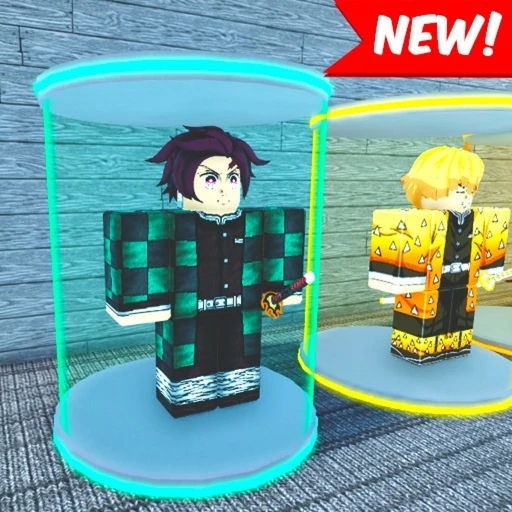
The character models and outfit designs faithfully recreate the look of popular characters. Wearing Tanjiro's green-and-black checkered haori or Zenitsu's yellow robe feels authentic, and the attention to costume detail shows genuine respect for the source material. The tycoon base aesthetic is functional and visually coherent, avoiding the cluttered look that plagues many Roblox tycoon games.
Sound design is serviceable, with appropriate effects for breathing techniques and combat encounters. The audio does not reach the same heights as the visual presentation, but it does not detract from the experience either.
Demonfall: Atmospheric and Battle-Scarred
Demonfall's visual identity has evolved significantly over its five-year lifespan. The current build features a moody, atmospheric open world that captures the dark tone of the Demon Slayer manga. Forests feel dangerous at night, villages glow with warm lantern light, and boss arenas are designed to create memorable visual moments during climactic encounters.
Breathing style effects are detailed and distinct. Each technique produces unique particle effects, screen impacts, and environmental interactions that communicate both the power and the elemental nature of the attack. Blood Demon Art effects are deliberately different in aesthetic -- darker, more ominous, and visually threatening -- which reinforces the gameplay distinction between Slayer and Demon paths.
The combat sound design deserves particular mention. Sword clashes produce satisfying metallic rings, breathing technique activations have distinct audio cues that experienced players learn to recognize, and the impact sounds when a heavy attack connects convey genuine weight. These audio details serve a functional purpose in competitive play -- skilled players use sound cues to react to attacks they cannot see on screen.
Edge: Tie. Both games look good for different reasons. Demon Slayer Tycoon is cleaner and more colorful, with polished anime aesthetics that appeal to fans of the show. Demonfall is moodier and more atmospheric, with combat effects designed for both spectacle and competitive readability. Neither game disappoints visually.
Monetization and Value
Demon Slayer Tycoon: Fair Tycoon Economy
Demon Slayer Tycoon monetizes through optional game passes that accelerate progression and cosmetic items that change your character's appearance. Cash multipliers, VIP passes, and premium dropper upgrades let paying players progress faster, but the free experience is tuned to be enjoyable without spending. The group bonus of 2,500 cash is a nice free perk that demonstrates the developers' willingness to reward engagement over spending.
The monetization model is standard for Roblox tycoons and does not cross into pay-to-win territory. Paying players reach the same destination faster, but they do not access exclusive gameplay content or gain competitive advantages in PvP. This approach is fair and transparent.
Demonfall: Five Years of Refined Fair Play
Demonfall's monetization has been refined over five years of community feedback. Game passes offer convenience features like increased inventory space and cosmetic options, but every breathing style, every Blood Demon Art, and every piece of content is accessible through gameplay. The recent change to a 99K yen money cap and 500-item inventory limit applies equally to all players, ensuring the playing field remains level.
The sheer volume of free content in Demonfall represents outstanding value. Ten-plus breathing styles, 11 Blood Demon Arts, an expansive open world, Infinity Castle raids, world bosses, PvP systems, faction mechanics, and ongoing content updates -- all accessible without spending a single Robux. For a free Roblox game, the content density rivals paid indie titles.
Edge: Demonfall for raw value per hour played. The volume of free content is staggering. Demon Slayer Tycoon offers fair monetization within its tycoon framework, but it cannot match the sheer quantity of gameplay that Demonfall provides at no cost.
The Verdict
Choose Demon Slayer Tycoon if...
You want a relaxing, accessible Demon Slayer experience that blends satisfying tycoon progression with anime-faithful combat. Demon Slayer Tycoon is the right choice for players who enjoy building, collecting, and progressing at their own pace without the pressure of competitive mechanics. It is a strong pick for fans of the anime who want to inhabit the world of Kimetsu no Yaiba without committing to the steep learning curve of a full RPG. Short sessions, visible progress, and a welcoming community make it one of the most approachable Demon Slayer games on Roblox in 2026.
Choose Demonfall if...
You want a deep, mechanically demanding RPG that treats the Demon Slayer source material with the same seriousness as the manga itself. Demonfall is for players who measure their progress in skill gained rather than cash collected. With ten-plus breathing styles, 11 Blood Demon Arts, an open world full of genuine challenges, competitive PvP, and five years of refined content, Demonfall is the definitive Demon Slayer experience on Roblox. If you want combat that rewards mastery, a community that pushes you to improve, and enough content to sustain hundreds of hours of play, Demonfall is the answer.
Who Should Play What?
Play Demon Slayer Tycoon if you:
- Love tycoon games and want Demon Slayer theming
- Prefer casual, short play sessions with visible progress
- Want to build and customize a Demon Slayer base
- Enjoy collecting character outfits and Nichirin swords
- Are new to Roblox combat games and want an easy entry point
- Like anime-faithful breathing style animations
- Want a relaxing game you can play while chatting with friends
Play Demonfall if you:
- Want deep, skill-based combat with a high skill ceiling
- Enjoy open-world RPGs with exploration and questing
- Want to play as a demon with Blood Demon Arts
- Appreciate competitive PvP where mechanical skill determines outcomes
- Love long sessions with multiple activities and goals
- Want raid content and world boss encounters
- Are looking for a game that sustains hundreds of hours of play
For more details on earning free Robux for either game, check out our Demon Slayer Tycoon free Robux guide, our Demonfall free Robux guide, and our Jujutsu Shenanigans free Robux guide for another top anime fighter.
Earn Free Robux for Demon Slayer Games
Whether you are buying game passes in Demon Slayer Tycoon or grabbing cosmetics in Demonfall, Earnaldo helps you earn free Robux through simple tasks. No surveys, no scams -- real Robux rewards you can spend on any Roblox game.
Frequently Asked Questions
Demon Slayer Tycoon is far more beginner-friendly. Its tycoon mechanics are straightforward -- place droppers, collect cash, upgrade your base, and unlock new breathing styles at your own pace. Demonfall throws you into an open-world RPG with stamina management, combo timing, and NPC quests that demand real mechanical skill from the start. If you are new to Roblox combat games, Demon Slayer Tycoon is the smoother entry point.
Demonfall has significantly deeper and more polished combat. Its breathing style system features precise hitboxes, stamina management, and combo chains that reward practice and timing. Demon Slayer Tycoon includes PvP battles and breathing techniques, but the combat is lighter and designed to complement tycoon progression rather than serve as the core experience. Players who prioritize combat depth should choose Demonfall.
In Demonfall, you can choose to become a demon and unlock Blood Demon Arts -- there are currently 11 BDAs available, each with unique abilities and playstyles. You can even become a Hybrid that combines demon powers with breathing techniques. Demon Slayer Tycoon focuses primarily on the slayer side of the story, with demon-themed content appearing as enemies and boss encounters within the tycoon framework rather than a full playable demon path.
Demonfall has maintained a consistent update schedule into 2026, with Update 5.6 adding new breathing styles like Stone Breathing, new Blood Demon Arts including Daki BDA and String BDA moves, and ongoing balance patches. Demon Slayer Tycoon is a newer game that receives regular content drops focused on new tycoon upgrades, breathing style unlocks, and seasonal events. Both games have active development teams.
No. Demonfall offers game passes for convenience items like extra inventory slots and cosmetic options, but every breathing style, Blood Demon Art, and gameplay feature is accessible through normal play. Demon Slayer Tycoon follows a similar fair monetization model where Robux purchases provide cosmetic upgrades and quality-of-life boosts without granting competitive advantages over free players.
Demonfall has more total content after five years of development. It features a large open world with multiple maps, 10+ breathing styles, 11 Blood Demon Arts, an Infinity Castle raid system, world bosses, PvP arenas, and deep faction mechanics. Demon Slayer Tycoon is a newer experience that focuses its content around tycoon base-building, breathing style progression, and PvP encounters. Demonfall offers more raw volume, while Demon Slayer Tycoon provides a more focused and streamlined package.
Both Demon Slayer Tycoon and Demonfall prove that the Kimetsu no Yaiba franchise translates brilliantly to Roblox -- just in very different ways. One gives you a relaxing base-building experience draped in anime nostalgia. The other demands mastery and rewards it with some of the deepest combat on the platform. Whichever direction calls to you, both games are worth your time, and switching between them lets you experience the full range of what Demon Slayer games on Roblox have to offer in 2026.