Demonology vs Blox Fruits (2026) — Which Roblox RPG Is Worth Your Time?
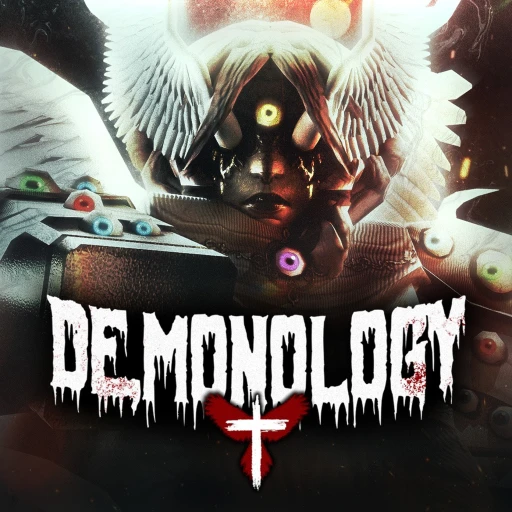
Two Roblox RPGs, two completely different worlds. Demonology, developed by Blaqk Magic Blue, drops you into a dark, occult-themed realm where you summon demons, climb intricate skill trees, and take on increasingly punishing boss fights. Blox Fruits, built by Gamer Robot Inc., puts you on the open seas of a One Piece-inspired world where devil fruit powers, ocean exploration, and a fiercely competitive PvP bounty system have made it one of the most-played games on the entire platform. Both are free to play. Both reward hours of grinding. But they are built around entirely different philosophies, and the one that fits you depends on what you actually want from an RPG.
Demonology sits at 359.2 million total visits with a 95.1% approval rating — one of the highest like ratios for any RPG in its visit range — and maintains roughly 10,000 concurrent players. Those numbers tell a clear story: the people playing Demonology are genuinely enjoying it. The game has a focused identity, a loyal community, and a design that rewards players who stick with it past the opening hours. It is not trying to be everything at once.
Blox Fruits is a different conversation. Billions of visits. Consistently over 100,000 concurrent players, often far more. A fruit trading economy that functions like a small financial market. An update history spanning years of new seas, boss reworks, fruit releases, and balance patches. It is one of the defining games of the Roblox platform, and the sheer weight of its content and community sets a bar that almost nothing else comes close to matching.
This comparison puts them side by side across every category that matters: gameplay feel, progression depth, boss and combat systems, social features, monetization, and what actually keeps you logging back in after the first week. If you are trying to decide where to invest your time — or where to spend Robux you have earned through Earnaldo — this is the breakdown you need.
Demonology vs Blox Fruits — Quick Stats (2026)
| Category | Demonology | Blox Fruits |
|---|---|---|
| Genre | RPG / Action | RPG / Action / Adventure |
| Place ID | 18199615050 | 2753915549 |
| Developer | Blaqk Magic Blue | Gamer Robot Inc. |
| Rating | 95.1% positive | Very high (billions of votes) |
| Total Visits | 359.2M | Billions |
| Concurrent Players | ~10K | 100K+ (peak much higher) |
| Theme | Dark occult, demon summoning | Anime / One Piece inspired |
| Core Loop | Skill trees, demon summoning, boss fights | Quests, devil fruits, PvP bounties |
| Progression System | Skill tree branches, summon upgrades | Fruit awakenings, fighting styles, 3 seas |
| Trading System | Limited | Extensive fruit trading economy |
| PvP Scene | Present, PvE-primary | Central — bounty hunting system |
| Notable Game Passes | 2x Money (399R), 2x EXP (50R), VIP | Fruit Notifier (2,700R), Dark Blade (1,200R), 2x Money (450R) |
| Mobile-Friendly | Yes | Yes |
| Free-to-Play | Yes | Yes |
Gameplay — Dark Summoner RPG vs One Piece Open World
Demonology
Demonology builds its identity around a central premise that sets it apart from most Roblox RPGs: you are not just a warrior who hits things harder as you level up. You are a summoner who binds demons to your will, builds a skill tree that defines your combat role, and faces boss encounters designed to punish players who do not understand their own build. From the moment you start, the game communicates that it expects you to engage with its systems seriously.
The demon summoning mechanic is the heart of everything. Different demons serve different functions — offensive summons deal direct damage, defensive ones protect you or absorb hits, and utility summons buff your stats or debuff enemy resistances. Progressing your summons requires investment, and the strongest demons are locked behind substantial grind and boss completion. This creates a natural power curve that never feels arbitrary: the time you put in directly translates to what you can field in combat.
The skill tree is deep for a Roblox game. You make real choices that branch your character in meaningful directions — a player who goes deep into offensive summoning plays entirely differently from one who builds around defensive binding and crowd control. These choices are not easily reversed, which raises the stakes of every decision and gives the game a genuine RPG identity. Late-game builds take many hours to complete, and players who have put in the time are visibly more capable than newcomers in every encounter.
Boss fights are the centerpiece of the experience. Demonology's bosses are not simple damage sponges with a few attacks. They have phased encounters, attack patterns that require positioning, and mechanics that punish reckless play. Clearing a difficult boss for the first time feels earned in a way that many Roblox games fail to deliver. The dark aesthetic — shadow-drenched arenas, demonic visual effects, sinister sound design — makes every major fight feel appropriately weighty.
Blox Fruits
Blox Fruits drops you into a sprawling ocean world divided into three seas of increasing challenge and reward. The loop is immediately clear: find NPCs offering quests, defeat the required enemies, collect experience and Beli, level up, and move toward the next island. That clarity in the early game is deliberate — it hooks new players fast and creates momentum before the full depth of the systems reveals itself.
The devil fruit system is what makes Blox Fruits distinct. Fruits spawn randomly across the map and grant permanent special abilities when eaten. The roster spans elemental powers like Magma, Ice, Light, and Darkness; transformation fruits like Leopard, Dragon, and Phoenix; and special fruits like Venom, Gravity, and Spirit. Each fruit has its own moveset, visual identity, and combat application. Finding a rare fruit on the ground, or trading for one in a server, is one of the game's most exciting moments at any stage of progression.
Beyond fruits, you combine fighting styles, swords, and stat allocations to round out your build. The awakening system adds a second layer: raid completions let you unlock enhanced versions of select fruits one move at a time, with awakened abilities that visually and mechanically transform how the fruit plays. A player who has fully awakened their fruit is using what is effectively a different kit from someone running the unawakened version. This gives Blox Fruits a long tail of build refinement that sustains engagement through hundreds of hours.
The Three Sea structure provides a clear long-term arc. The First Sea is a tutorial in practice, teaching you the quest loop and basic combat on forgiving enemies. The Second Sea raises the bar with tougher islands, better gear requirements, and your first exposure to the more complex systems. The Third Sea is endgame territory — the hardest bosses, the rarest fruits, the most cutthroat PvP. Each sea feels like a distinct phase of the game rather than the same content at higher numbers.
Edge: Blox Fruits for total content width and long-term system depth. Demonology for focused dark RPG identity and boss fight quality.
Progression — Skill Trees vs Awakenings
Demonology's progression is vertical and deliberate. Your skill tree branches determine your role, your summons determine your firepower, and both demand sustained investment to reach meaningful power levels. There are no shortcut mechanics that let a new player punch above their weight — the game respects the grind and expects you to respect it back. This creates a strong sense of earned power at every tier. When you unlock a new demon or push into a new branch of your skill tree, you feel the difference in the very next fight.
The game passes Blaqk Magic Blue has designed reinforce this philosophy. The 2x Experience pass at just 50 Robux is one of the most affordable meaningful purchases in any Roblox RPG. It does not skip the skill tree — it simply accelerates the path to the next decision point. The 2x Money pass at 399 Robux serves a similar role for the economy side of upgrades, helping you fund summon progression without softblocking on Beli.
Blox Fruits takes a multi-track approach. Fruit acquisition, fruit awakening, fighting style mastery, sword upgrades, stat allocation, and level progression all advance simultaneously, and progress in one track does not slow progress in others. This parallel structure means there is almost always something to work toward regardless of where you are in the game. A new player clearing First Sea quests is leveling up, learning their fruit, and building toward awakening in the same session.
The awakening grind in Blox Fruits is the most demanding part of the progression curve. Raid completions reward fragments, and each awakened move costs fragments to unlock. Fully awakening a fruit takes multiple raid sessions, which require a competent group for the harder fruits. This is where the social dimension of Blox Fruits' progression becomes relevant — you need other players, and finding a good raid group is its own sub-activity.
For players who want a focused progression path with clear milestone unlocks, Demonology's skill tree is more satisfying. For players who want multiple tracks advancing at once and enjoy the complexity of managing several build variables simultaneously, Blox Fruits wins on depth.
Edge: Demonology for clarity and milestone satisfaction. Blox Fruits for progression breadth and long-term variety.
Boss Fights and PvE Challenge
This is where Demonology stands most confidently against a game ten times its size. Boss fight design in Demonology is genuinely strong. Bosses have distinct phases, recognizable attack patterns, and mechanics that change how you position and time your demon summons. First-time attempts on harder bosses often end in failure — not because of random chance, but because the encounter teaches you something you need to know before you can clear it. That design philosophy creates boss fights worth remembering, not just DPS checks with a health bar.
The dark theme amplifies the tension. Bosses in Demonology feel like genuine threats — visually imposing, atmospherically appropriate, with sound design that makes their attacks feel impactful. The aesthetic commitment carries through the entire experience, and boss fights are the moments where that commitment pays off most clearly.
Blox Fruits has bosses too, and at the endgame tier they are no joke. Raid bosses in the Third Sea require coordinated groups with appropriate builds and a working knowledge of the encounter mechanics. World bosses offer regular challenges and drop valuable items that feed the trading economy. However, a significant portion of the game's early and mid-game bosses are simpler by design — they serve the quest-driven loop more than they serve as stand-alone challenges. The game is balanced to serve its massive player base across all skill levels, and that means the difficulty ceiling on PvE is not as high as Demonology's.
For players whose favorite part of RPGs is fighting well-designed bosses repeatedly until the clear feels clean, Demonology is the better game. For players who want boss content as one part of a broader RPG ecosystem, Blox Fruits covers it adequately.
Edge: Demonology for boss fight design and PvE challenge depth.
PvP — Bounty Hunting vs Build Testing
Blox Fruits built its PvP system around the bounty mechanic, and it shows. Every player has a bounty value that grows as they win fights and shrinks as they lose them. Hunting high-bounty players is a permanent background activity in every server — someone with a large bounty is always at risk, and skilled PvP players can turn bounty hunting into their primary game mode. The large player population ensures that PvP is available constantly, with dedicated PvP zones and open-world combat both serving different types of players. Fruit matchup knowledge, combo routing, and build optimization are all meaningful skills that separate average PvP players from elite ones.
Demonology includes PvP as part of its broader RPG package. Your build — specifically which demons you have upgraded and which branches of the skill tree you have developed — determines your PvP ceiling. Testing a build against other players gives you practical feedback on how your skill tree choices perform in real combat. However, PvP is clearly secondary to the PvE experience that Demonology is designed around. The community is primarily here to fight bosses and develop summon builds, not to climb a bounty ladder.
If you want a game where PvP is the end goal and everything else builds toward it, Blox Fruits is the obvious choice. If you want PvP as a way to stress-test your RPG build between boss sessions, Demonology provides that without forcing you to engage with it as the primary activity.
Graphics, Theme, and Atmosphere
Demonology commits to its dark aesthetic without compromise. The color palette runs through blacks, deep purples, and sulfurous oranges. Demon designs range from unsettling to genuinely impressive, with high-level summons featuring elaborate visual effects that signal their power. Boss arenas are built for atmosphere — shadowed corridors, ritual circles, corrupted environments that make it clear something genuinely dangerous lives there. The sound design leans into this with low, menacing audio during tense encounters and satisfying crunch sounds on summoned attacks landing. For a Roblox game, the tonal consistency is remarkable.
Blox Fruits takes a brighter, more anime-inspired direction. Each sea and island has a distinct visual identity — tropical islands full of color in the First Sea give way to more imposing environments in later content. Devil fruit abilities are designed to be visually distinct and exciting, with the goal of making combat feel spectacular to watch as well as play. Awakened fruits in particular produce impressive particle effects and transformation animations. The overall aesthetic is cheerful and vibrant where Demonology is dark and oppressive, and neither choice is wrong — they serve entirely different emotional tones.
Players who prefer grim, atmospheric RPGs with genuine dark fantasy presentation will find Demonology more immersive. Players who want colorful, energetic anime action will feel at home in Blox Fruits from the first session.
Player Count and Community (July 2026)
The scale difference between these two games is significant, and it matters for different reasons than you might expect. Blox Fruits maintains over 100,000 concurrent players as a baseline and regularly spikes far higher around major updates. Its total visit count runs into the billions. The content ecosystem surrounding it — YouTube tutorials, TikTok clips, Discord trading servers, tier list debates, update prediction threads — is massive. Whatever question you have about Blox Fruits, the answer is already out there in a video or forum post. The trading community alone operates at a scale that requires dedicated servers with assigned middlemen and posted market rates.
Demonology runs at roughly 10,000 concurrent players with 359.2 million total visits and a 95.1% approval rating. That like ratio is the critical data point — it tells you that the people who find the game stick with it and like what they find. The community is smaller but clearly engaged. The Discord server functions as the primary hub for build discussion, boss strategy, and update news. Content creators cover Demonology on a smaller scale, but the guides and build breakdowns that exist are thorough because the player base is made up of players who actually understand the game.
The practical difference shows up in server feel. A Blox Fruits server is always populated with traders calling out offers, PvP players marking themselves as targets, and grinders running the same quest chain in parallel. A Demonology server is quieter — more focused, with players clearly working toward specific goals. Neither atmosphere is inherently better, but they attract different types of players.
Blaqk Magic Blue has maintained a steady update cadence and communicates transparently through the Discord about upcoming content. Gamer Robot Inc. operates at much larger scale, with major updates that shift the entire game meta and social media announcements that generate significant hype cycles.
Edge: Blox Fruits for community resources, trading activity, and content ecosystem volume. Demonology for player retention rates (reflected in its approval rating) and focused community atmosphere.
Game Passes and Monetization
Demonology Game Passes
- 2x Experience — 50 Robux: Doubles all experience earned. At 50 Robux this is one of the most cost-effective purchases available in any Roblox RPG. The skill tree in Demonology demands a substantial time investment, and this pass meaningfully shortens the path to meaningful build milestones without breaking the progression structure. A clear first buy for any serious player.
- 2x Money — 399 Robux: Doubles Beli earned from all sources. Currency funds summon upgrades and certain skill tree unlocks, so this pass accelerates the economic side of character progression. More situational than the EXP pass depending on your play style, but valuable for players who want to push summon tiers faster.
- VIP: Grants cosmetic benefits and server perks, positioning you as a dedicated community member. Value here is tied to how much you care about in-server recognition and any gameplay-adjacent bonuses included in the current version of the pass.
Blox Fruits Game Passes
- 2x Money — 450 Robux: Doubles all Beli earned from quests and combat. Currency becomes a real bottleneck in the Second and Third Seas where upgrade costs scale sharply. This pass pays for itself over hundreds of hours of play and is one of the more reasonable purchases in the game relative to its price.
- Dark Blade — 1,200 Robux: One of the strongest swords in the game with a unique moveset. A direct combat upgrade that remains relevant through endgame content and competitive PvP. For sword-focused builds this is a high-value purchase; for pure fruit players it is more optional.
- Fruit Notifier — 2,700 Robux: Sends a notification whenever a devil fruit spawns anywhere on the map, identifying which fruit it is. At its price point, this is designed for serious traders and fruit hunters who want to intercept rare spawns before other players. It is the most premium pass in the game and primarily serves players deeply invested in the fruit economy.
Neither game hides essential content behind its game passes. Both are fully completable and genuinely enjoyable without spending a single Robux. Demonology's passes are notably more affordable — the 2x EXP pass at 50 Robux is exceptional value. Blox Fruits' passes carry higher price points, but the game's depth and longevity mean high-value passes like the Fruit Notifier can justify themselves over long play sessions. The right purchase depends on which game you are committing to and how intensely you plan to play it.
Social Features and Trading
Blox Fruits has one of the most developed player-driven economies on Roblox. The fruit trading system is its own sub-game — players track which fruits are in demand, hold rare fruits across game sessions, and negotiate trades with the same seriousness that some people bring to real markets. Server-wide trading channels, Discord servers with maintained value lists, and community-assigned middlemen for high-value trades all exist because the community built the infrastructure organically. Crew systems let organized groups coordinate raids, secure trading partners, and claim territory in PvP zones. Social interaction in Blox Fruits is unavoidable in the best way.
Demonology's social structure is smaller but functional. The Discord server is where the community actually lives — players post builds, share boss strategies, coordinate group attempts on the hardest encounters, and discuss skill tree decisions with other invested players. In-game, cooperation forms naturally around challenging bosses that benefit from multiple participants. The game does not have a trading economy of comparable depth to Blox Fruits, but the community it has built around its boss content and build theorycrafting is genuine and engaged.
If you want a rich social ecosystem with active trading, crew politics, and an ever-shifting metagame, Blox Fruits gives you that in abundance. If you want a community united around shared investment in a focused RPG, Demonology's Discord is worth joining before you even start playing.
Replay Value — What Keeps You Coming Back in 2026
Blox Fruits offers the broader replay value proposition almost by default. The sheer volume of fruits to collect and awaken, the depth of the PvP bounty ladder, the trading economy's shifts with every update, and the regular addition of new content through updates all combine to create a game that is genuinely hard to fully exhaust. Players with thousands of hours still have fruits they have never used, awakening paths they have not completed, and trading goals they are working toward. The game sustains long-term engagement through volume and variety.
Demonology's replay value is more concentrated. The five-plus branches of the skill tree and the range of demon build possibilities create genuine incentive to roll alternate characters and approach the game from a different angle. Completing the boss roster on harder difficulties and fully upgrading your preferred demon set represents a significant long-term goal. The game is not as wide as Blox Fruits, but the depth within its core systems is enough to sustain players who are specifically drawn to its flavor of RPG.
New players choosing a primary game: Blox Fruits offers a safer bet on sustained engagement simply because the content ceiling is higher and the community activity around every feature is greater. Returning players who have already experienced Blox Fruits and want something with different mechanics and a different atmosphere will find Demonology a fresh experience.
Edge: Blox Fruits for content volume and sustained long-term engagement. Demonology for focused replayability through build variety and boss mastery.
Earn Free Robux for Either Game
Earnaldo lets you complete straightforward tasks — surveys, app trials, short offers — and withdraw real Robux to your account, no downloads or generators required. Put it toward Demonology's 2x EXP pass or Blox Fruits' Fruit Notifier and skip the wait.
Head-to-Head Verdict — Demonology vs Blox Fruits in 2026
The Verdict
Choose Demonology if you want a dark, atmospheric RPG on Roblox built around summoning, skill trees, and genuinely challenging boss encounters. At 95.1% approval with 359.2 million visits, the game has earned its reputation among players who find it. The skill tree gives you real choices that matter. The boss fights are designed well enough to be worth learning. The 50 Robux EXP pass is one of the best value purchases in any Roblox game. If the idea of building a demon summoner and systematically clearing a dark fantasy world appeals to you, Demonology delivers on that premise without compromise.
Choose Blox Fruits if you want the largest, most feature-rich RPG available on Roblox. Billions of visits, consistently over 100,000 concurrent players, a thriving fruit trading economy, three seas of content, dozens of fruits with awakening paths, and a PvP bounty system that provides a permanently renewable competitive loop. Blox Fruits is the larger game by every measurable scale, and that scale translates directly into more content, more community activity, and more reasons to keep playing year after year.
Overall winner: Blox Fruits on raw metrics — content volume, player count, feature breadth, and long-term sustainability. But the win is not a dismissal of Demonology. They are built for different players. Blox Fruits is the right call if you want the safest bet on long-term engagement. Demonology is the right call if you want a focused dark RPG with excellent boss design and a community that actually plays the game for its mechanics. Both games are free to try. There is no reason not to test each and let the experience speak for itself.
Who Should Play What?
- You want a dark, atmospheric RPG with a strong identity: Demonology. The theme is consistent, the boss design is purposeful, and no other Roblox game does demon summoning at this level of quality.
- You want the biggest community and the most content: Blox Fruits. With 100K+ concurrent players and a constantly evolving game, you will never run out of things to do or people to do them with.
- You enjoy meaningful skill tree decisions and RPG build-crafting: Demonology. The build choices you make have real consequences, and optimizing a demon summoner build is a satisfying puzzle.
- You want an active PvP competitive scene: Blox Fruits. The bounty hunting system and massive player base create the most developed PvP ecosystem in any Roblox RPG.
- You are budget-conscious about game passes: Demonology — the 2x EXP pass at 50 Robux is hard to beat anywhere on the platform. Earn Robux through Earnaldo and it costs almost nothing in terms of task time.
- You want a trading economy and in-game market to participate in: Blox Fruits. The fruit trading system is one of the most developed player economies on Roblox, with established value tracking and community infrastructure.
- You prefer cooperative PvE and tight-knit server communities: Demonology. The smaller player base means servers feel more personal, and the boss content naturally encourages cooperation.
- You want One Piece-themed anime gameplay: Blox Fruits, without question. The fruit system, ocean exploration, and pirate aesthetic are built directly from One Piece inspiration.
Frequently Asked Questions
Blox Fruits is far more popular. It regularly draws over 100,000 concurrent players and has accumulated billions of total visits, placing it among the most-played Roblox experiences ever created. Demonology averages around 10,000 concurrent players with 359.2 million total visits and a 95.1% approval rating — strong numbers for an RPG of its scope, but a different scale entirely. That gap in population does not make Demonology a worse game; it means Blox Fruits has a larger community and content ecosystem while Demonology offers a more focused, curated experience.
Both games offer layered combat but in different ways. Demonology builds its system around skill trees, demon summoning, and boss fight mechanics that reward knowledge of enemy patterns and careful ability management. Blox Fruits centers on devil fruit abilities combined with fighting styles, swords, and awakening moves, creating a wide variety of viable PvP and PvE builds. Demonology's combat feels more deliberate and RPG-rooted. Blox Fruits rewards faster reflexes and build optimization. The better fit depends on whether you prefer strategic depth or action-oriented variety.
Yes. Earnaldo lets you complete simple tasks — surveys, app trials, and offers — then withdraw real Robux directly to your account. You can put that Robux toward Demonology's 2x Money or 2x Experience passes, or toward Blox Fruits' Fruit Notifier or Dark Blade. There are no generators or hacks involved, just straightforward task completion. See the Demonology free Robux guide and Blox Fruits free Robux guide for more detail.
Blox Fruits has the more developed PvP ecosystem. Its bounty hunting system, dedicated PvP zones, and massive player pool create a competitive scene that thousands of players grind daily. Demonology includes PvP elements and boss-focused combat that tests your skill tree build, but it is primarily a PvE-focused game. If competitive player-versus-player combat is your main draw, Blox Fruits is the stronger choice. If you prefer structured boss fights and cooperative PvE with PvP as a secondary activity, Demonology works well.
Both games are accessible to newcomers at the entry level, but they ramp up differently. Demonology's skill tree and demon summoning system have a meaningful learning curve — early decisions about your build can affect how smoothly later boss fights go. Blox Fruits' early game is very forgiving with clear quest structures and easy enemies to help you find your footing. However, Blox Fruits' endgame systems — fruit awakening, trading, and competitive PvP — are considerably more complex. New players comfortable with RPG mechanics will adapt to Demonology quickly. Players completely new to the genre may find Blox Fruits' early game gentler to start with.
Both games offer genuine value from their game passes. Demonology's 2x Experience pass at 50 Robux is one of the most cost-effective purchases available in any Roblox RPG, meaningfully cutting grind time without breaking the economy. Blox Fruits' passes are pricier — the Fruit Notifier runs 2,700 Robux — but they carry more impact given the depth of the fruit trading system. For tight budgets, Demonology's passes deliver more value per Robux spent. For players invested long-term in Blox Fruits, certain passes pay for themselves across hundreds of hours. You can earn Robux for either game through Earnaldo without spending real money.