Dig to Escape vs DOORS (2026) — Which Roblox Escape Game Should You Play?
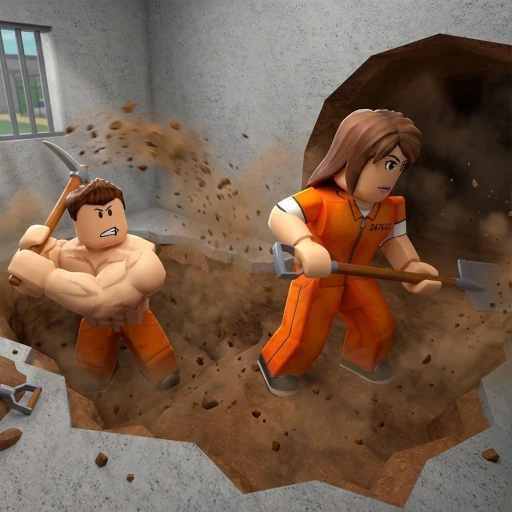
Both Dig to Escape and DOORS revolve around one central idea: get out before it's too late. But how you escape, what you're escaping from, and why you keep coming back could not be more different. One hands you a shovel and drops you in a prison. The other locks you in a procedurally generated hotel crawling with entities that want you dead. Both are free, both are wildly popular, and both deserve a closer look before you decide where to spend your next Roblox session in 2026.
Dig to Escape by Breakout Funs has been on a steep growth trajectory, amassing 299 million visits and holding a remarkable 97.8% approval rating. Players pick a class, coordinate with up to 13 teammates, and dig their way to freedom through five distinct endings that reward exploration and strategic thinking. It's a team-based prison escape experience built on cooperation, creativity, and the satisfying loop of carving your own path to freedom.
DOORS by LSPLASH needs little introduction at this point. With over 5 billion visits, it remains one of the defining horror games on Roblox. Procedurally generated rooms, a roster of lethal entities with unique behaviors, and an atmosphere thick with dread have turned it into a cultural phenomenon that extends well beyond the platform itself. Every door you open might be safe. Every door might kill you. That uncertainty is the entire point.
This comparison breaks down how these two escape-themed games differ across gameplay, progression, graphics, player count, monetization, social features, and replay value. By the end, you'll know exactly which one fits your play style — or whether you should be playing both.
Table of Contents
- Quick Stats Comparison
- Gameplay — Digging Out vs Surviving Through
- Progression — Classes and Endings vs Entity Mastery
- Graphics and Atmosphere
- Player Count and Community
- Game Passes and Monetization
- Social and Multiplayer Features
- Replay Value
- Head-to-Head Verdict
- Who Should Play What?
- Frequently Asked Questions
Dig to Escape vs DOORS — Quick Stats (2026)
| Category | Dig to Escape | DOORS |
|---|---|---|
| Genre | Prison Escape / Strategy | Horror / Escape |
| Developer | Breakout Funs | LSPLASH (Lightning_Splash) |
| Place ID | 92122513197996 | 6516141723 |
| Total Visits | 299M+ | 5B+ |
| Approval Rating | 97.8% | ~93% |
| Max Players per Server | 14 | 4 |
| Core Loop | Pick class, dig tunnels, escape prison via 5 endings | Navigate 100 doors, survive entities |
| Perspective | Third-person | First-person |
| Horror Elements | None | Yes (entities, jump scares, atmosphere) |
| Number of Endings | 5 | 1 main completion (100 doors) |
| Class System | Yes (multiple classes) | No |
| Procedural Generation | No | Yes |
| Session Length | 10–20 minutes | 15–30 minutes |
| Mobile-Friendly | Yes | Yes |
| Free-to-Play | Yes | Yes |
Gameplay — Digging Out vs Surviving Through
Dig to Escape
Dig to Escape puts you inside a prison, hands you a class with specific abilities, and tells you to find your way out. That's the setup. Everything that follows depends on your decisions, your teammates, and how creative you're willing to get with the game's digging mechanics.
The core mechanic is exactly what the title suggests: you dig. But digging in this game is not mindless clicking. Where you dig matters enormously. The prison is a layered environment with structural elements, guard patrols, hidden rooms, and pathways that lead to different outcomes depending on which direction you tunnel. Dig in the wrong spot and you waste time or trigger obstacles. Dig in the right spot and you might uncover a shortcut that your entire team can use.
The class system adds a strategic layer that separates Dig to Escape from simpler escape games. Each class brings unique tools and abilities that serve different roles in a team breakout. Some classes excel at fast digging, clearing through rock and soil faster than others. Some are built for support, helping teammates stay alive or navigate hazards. Others are specialists designed around specific escape routes or ending conditions. Playing with a balanced team composition dramatically changes what endings are achievable and how efficiently you can reach them.
The five endings are where the design really shines. Rather than offering a single win condition, Dig to Escape branches its escape paths so that different strategies, class combinations, and levels of exploration lead to fundamentally different conclusions. Finding all five endings requires extensive knowledge of the prison layout, experimentation with class abilities, and coordination with your team. Some endings are straightforward. Others are hidden behind multi-step puzzles that the community spent weeks discovering after launch.
With 14 players per server, sessions are genuinely social. The prison buzzes with activity — players digging in parallel, calling out discoveries in chat, coordinating escape plans, and occasionally sabotaging each other's tunnels (intentionally or not). The larger player count creates a sense of a living environment where multiple escape attempts happen simultaneously.
DOORS
DOORS takes the escape concept in a completely different direction. You enter a hotel that operates on nightmare logic — procedurally generated rooms stretch out in a sequence of 100 doors, and behind any of them might be safety, loot, or an entity that ends your run on the spot.
There are no classes, no team roles, and no branching paths. The objective is singular and unforgiving: reach door 100, survive every entity encounter along the way, and get out. The challenge comes from the entities themselves. Each one operates under specific rules that you must learn through experience — which usually means dying to them first and understanding their behavior second.
Rush tears through a sequence of rooms at high speed, and your only option is to hide in a closet or under a bed before it reaches you. Ambush does the same thing but bounces back and forth, forcing you to repeatedly hide and emerge. Seek triggers a dramatic chase sequence through collapsing hallways. Figure is blind and tracks you by sound, requiring you to crouch-walk and hold your breath at key moments. Halt traps you in a dark corridor with visual instructions that you must follow precisely. Screech materializes behind you and attacks if you don't turn around quickly enough. Eyes floats through rooms and damages you if you look directly at it.
That entity roster creates a knowledge-based progression system. Your first runs will end early and frequently. You'll die to threats you didn't know existed. Over time, those deaths become lessons, and you develop an instinctive understanding of audio cues, visual warnings, and spatial awareness that transforms your play. The procedural generation keeps that knowledge from becoming rote — you know what Rush sounds like, but you never know exactly when it's coming.
Edge: Dig to Escape for players who want strategic, team-based escape gameplay with meaningful class choices and multiple outcomes. DOORS for players who want a high-stakes solo or small-group survival experience where knowledge and reflexes determine everything.
Progression — Classes and Endings vs Entity Mastery
Dig to Escape
Progression in Dig to Escape works on two levels. The surface level is the completion tracker: which of the five endings have you found? Each ending represents a distinct escape route with its own requirements, and many players treat the game as a completion challenge — discovering all five is a badge of honor in the community. Some endings are accessible to new players with basic coordination. Others demand advanced class usage, hidden knowledge, and teamwork that only comes from experience.
The deeper progression comes from class mastery. Each class plays differently enough that switching between them feels like approaching the game from a new angle. A player who has spent hours perfecting one class will still need to relearn positioning, timing, and tunnel strategy when they pick up a different one. That variety naturally extends the game's lifespan because you're effectively getting multiple gameplay experiences within a single title.
The class-based approach also means that replaying familiar endings with different class compositions reveals new strategies. An ending you completed easily with a support-heavy team might play completely differently when you try it with an aggressive digging composition. That combinatorial depth keeps sessions feeling fresh even after you've technically seen all the content.
DOORS
DOORS measures progression through survival depth. How far can you get? The first time you reach door 50 is a milestone. The first time you clear all 100 doors is a genuine achievement that represents hours of accumulated game knowledge. The game tracks your highest door reached, total runs, death causes, and collectibles gathered — giving you concrete metrics to chase even after a successful completion.
The entity knowledge system functions as an invisible skill tree. Every entity you learn to handle is a permanent upgrade to your capabilities. You don't gain stat boosts or unlock abilities — you gain understanding. That understanding is what turns a panicking beginner into a methodical veteran who can navigate the hotel with calm precision. It's one of the most satisfying progression systems on Roblox because it's entirely skill-based and impossible to shortcut with money.
LSPLASH periodically adds new floors and entities through major content updates. These additions reset part of the learning curve for veterans, introducing unfamiliar threats that force experienced players to engage with the game's core loop again — observe, die, learn, adapt. That update cadence keeps the community active and ensures that mastering DOORS is an ongoing project rather than a one-time achievement.
Edge: Dig to Escape for breadth of content and the satisfaction of discovering multiple endings. DOORS for depth of mastery and the deeply personal progression of getting better at surviving.
Graphics and Atmosphere
Dig to Escape
Dig to Escape opts for a clean, readable visual style that prioritizes gameplay clarity over atmospheric detail. The prison environment is well-designed with distinct zones, clear material types that communicate diggable versus solid surfaces, and enough visual variety to keep tunneling interesting across different areas of the map.
The lighting is functional — bright enough to see where you're going but with subtle environmental touches that differentiate above-ground areas from underground tunnels. As you dig deeper, the environment shifts in color temperature and detail, giving you a visual sense of progress without relying on a minimap or HUD indicator. The character models and animations are polished by Roblox standards, with class-specific visual elements that help you identify teammates' roles at a glance.
The audio design supports the gameplay without dominating it. Digging sounds have satisfying weight, environmental audio shifts between zones, and the absence of horror elements means the soundtrack can afford to be more energetic and encouraging. It's a game that wants you to feel empowered, not threatened, and its audiovisual design reflects that.
DOORS
Atmosphere is the foundation of everything DOORS does. The hotel environment is designed to unsettle you before a single entity appears. Hallways stretch slightly too long. Rooms are lit by inconsistent, flickering light sources that leave pools of shadow in uncomfortable places. The architecture follows an internal logic that feels wrong in ways you can't always articulate — doors appear where walls should be, rooms connect in patterns that shouldn't work spatially, and the deeper you go, the more the environment deteriorates.
The first-person perspective amplifies every visual choice. You can't see behind you, which means Screech's audio cue is the only warning you get. Dark corners feel genuinely threatening because your field of view can't cover everything. The lighting is masterful for a Roblox game — LSPLASH uses darkness as a gameplay mechanic rather than just an aesthetic choice. Lighters and candles become essential tools, and their limited glow creates a constant tension between visibility and the safety of ignorance.
The sound design is where DOORS truly stands apart. Every entity has a distinct audio signature that experienced players learn to identify instantly. Ambient sounds layer over each other — creaking wood, distant thuds, faint whispers — creating an auditory landscape that keeps your nervous system on alert even during safe rooms. Jump scare audio is calibrated to startle without feeling cheap, and the silence between scares is just as carefully designed as the scares themselves.
Edge: DOORS by a wide margin for atmosphere, horror visual design, and audio engineering. Dig to Escape for clean, readable visuals that serve strategic gameplay without distraction.
Player Count and Community (July 2026)
DOORS holds a commanding lead in raw player numbers with over 5 billion total visits and consistently 30,000 to 50,000 concurrent players at peak hours. It has been a top-tier Roblox game for years, and its cultural footprint extends to YouTube, TikTok, fan art communities, and Roblox merchandise. Entity designs have become recognizable characters in their own right, and the lore surrounding the hotel generates endless theory content from creators.
Dig to Escape is considerably newer in its growth phase but the numbers tell a compelling story: 299 million visits and a 97.8% approval rating that puts it among the highest-rated escape games on the platform. That rating is particularly notable because it reflects sustained player satisfaction — a 97.8% approval at nearly 300 million visits means the game is consistently delivering on its promises to a broad audience.
The community dynamics around each game differ significantly. The DOORS community is oriented around horror content, entity lore, and survival strategy. Content creators produce entity guides, speedrun attempts, and reaction videos that perform well across social platforms. The community has a strong identity built around shared fear — players bond over entity encounters and swap survival tips.
Dig to Escape's community is built around discovery, teamwork, and achievement. Players share ending guides, class tier lists, optimal tunnel routes, and team composition strategies. The discussion is more tactical and collaborative than DOORS' horror-focused conversation. The high server count of 14 players means individual sessions generate more social interaction, and regular players often develop preferred team compositions and escape strategies with their friend groups.
Both communities are active on Discord, YouTube, and TikTok in 2026. DOORS has the larger established fanbase, but Dig to Escape is in the rapid-growth phase where community energy is high and new content discoveries happen frequently.
Game Passes and Monetization
Both games follow the free-to-play model standard on Roblox. All core content is accessible without spending Robux, and game passes offer optional quality-of-life improvements or cosmetic perks.
Dig to Escape
Dig to Escape keeps its monetization straightforward. Game passes focus on cosmetic items, visual enhancements, and convenience features that don't fundamentally alter the escape gameplay. No game pass gives a player a digging advantage that makes escape trivially easy or locks specific endings behind a paywall. The developer's approach is clearly designed to preserve the game's cooperative balance — in a 14-player server, having one player with a massive paid advantage would undermine the team dynamic that makes the game work.
The monetization feels proportionate to the game's scope. Passes are priced reasonably, and the free experience is complete enough that most players will never feel pressured to buy anything. The 97.8% approval rating suggests that the player base is satisfied with the value proposition on both the free and paid sides.
DOORS
DOORS offers a small set of meaningful game passes. The Revive pass (75 Robux) is the most notable — it lets you continue a run after dying, which is a genuine learning aid that removes the most punishing aspect of the game during practice runs. The x2 Knobs pass (149 Robux) doubles your in-game currency earnings for cosmetic purchases. VIP (399 Robux) provides cosmetic benefits and minor perks. None of these passes give players an unfair advantage in entity encounters. Survival is always a skill check, regardless of what you've purchased.
The Revive pass does create an interesting dynamic: experienced players consider it training wheels that they no longer need, while new players see it as a worthwhile investment that accelerates their learning curve. It's a smart monetization design that extracts value from the difficulty itself without making the game pay-to-win.
Edge: Roughly even. Both games monetize fairly without creating pay-to-win dynamics. DOORS' Revive pass is a clever design that genuinely helps new players. Dig to Escape's commitment to preserving team balance is equally commendable.
Social and Multiplayer Features
This is one of the biggest differentiators between the two games, and it comes down to a simple question: how many friends do you want to bring?
Dig to Escape
Dig to Escape supports 14 players per server, making it one of the most socially scalable escape games on Roblox. That large player count transforms sessions into organized chaos. Multiple teams can work on different escape routes simultaneously. Players coordinate through chat, call out discoveries, share resources, and occasionally compete for the same tunnel path. The social energy in a full server is palpable — there's always something happening, always someone finding something new, always a reason to communicate.
The class system adds a social layer because effective escapes require coordinated class choices. Before a round begins, experienced players negotiate roles — who's digging, who's supporting, who's handling specific ending requirements. That pre-round planning mirrors the kind of team composition discussion you see in games with much larger development budgets. It creates natural social interaction that goes beyond "let's play together" and into "let's strategize together."
For large friend groups, Dig to Escape is one of the rare Roblox games that can accommodate everyone. Getting six or eight friends into the same server and coordinating an escape creates a shared experience that few other games can match in terms of scale and cooperation.
DOORS
DOORS caps its lobbies at 4 players, creating a tight, intimate co-op experience. Every team member matters. Every mistake is visible. Every entity encounter is a shared moment of panic. The smaller group size means you develop a close dynamic with your teammates — you learn who stays calm under pressure, who panics when Rush comes, who always remembers to check for Screech, and who accidentally looks at Eyes every single time.
The shared horror experience is where DOORS co-op truly excels. Fear is a social emotion, and experiencing jump scares, tense Figure encounters, and narrow escapes with friends creates memories that become inside jokes and war stories. The 4-player limit ensures that everyone is actively engaged — there's no hiding in a crowd or letting teammates carry you through.
Communication in DOORS tends to be more urgent and reactive. You're warning teammates about hazards, calling out entity sounds, and coordinating hiding spots in real time. In Dig to Escape, communication is more strategic and planning-oriented. Both are rewarding social experiences, but they target different social dynamics.
Edge: Dig to Escape for large groups and strategic team coordination. DOORS for tight-knit co-op and shared emotional experiences with a small squad.
Replay Value
Both games are designed to be played repeatedly, but their replay hooks work through different mechanisms.
Dig to Escape
Dig to Escape anchors its replay value in breadth. Five endings provide five distinct objectives to chase. Multiple classes mean each ending can be approached in different ways. The 14-player servers ensure that no two sessions play out identically because human coordination (and chaos) is inherently unpredictable. Even after finding all five endings, the game retains value through class experimentation, speedrun optimization, and the social experience of helping newer players discover endings for the first time.
The game also benefits from the "one more run" factor that prison escape fantasy naturally creates. The satisfaction of successfully breaking out of prison is a complete emotional arc — plan, execute, escape, celebrate — that resets cleanly at the start of every session. Each run tells its own mini-story, and the class system gives you enough variation to keep that story interesting across dozens of sessions.
DOORS
DOORS generates replay value through depth and procedural variation. Every run shuffles room layouts, entity spawns, and item distributions, so memorizing a specific sequence never works. The knowledge you carry between runs is behavioral — how entities work — rather than spatial — where things are. That design choice means you're always adapting within each run while your overall skill steadily improves.
The content update cadence adds another replay layer. When LSPLASH releases a new floor with new entities, the entire community resets to a learning mindset. Veterans who had mastered the existing content suddenly face unfamiliar threats, and the cycle of observe, die, learn, adapt begins again. That periodic reset keeps DOORS from ever feeling fully "complete" — there's always something new to master on the horizon.
Achievement hunting provides additional replay motivation. Completing specific challenges, reaching milestone door numbers, collecting items, and discovering secrets all encourage players to return with specific goals beyond simple survival.
Edge: DOORS for long-term procedural variety and the endless depth of entity mastery. Dig to Escape for structured replay through endings, classes, and team composition variety.
Earning Free Robux While You Play
Whether you end up choosing Dig to Escape, DOORS, or both, Earnaldo gives you a way to earn free Robux that you can put toward game passes in either title. Dig to Escape's lobby periods and between-round downtime are natural windows to check available tasks. DOORS has similar lobby time before runs begin. The Robux you earn through Earnaldo work across the entire Roblox platform, so you can spend them wherever you like.
For game-specific earning strategies, check our Dig to Escape free Robux guide and the DOORS free Robux guide.
Earn Free Robux for Dig to Escape or DOORS
Complete simple tasks on Earnaldo and withdraw real Robux — no downloads, no generators, no scams.
Head-to-Head Verdict — Dig to Escape vs DOORS in 2026
The Verdict
Choose Dig to Escape if you want a strategic, team-driven prison escape game with multiple endings, a class system that rewards experimentation, and servers large enough to bring your entire friend group along. The 97.8% approval rating at nearly 300 million visits is not a coincidence — Breakout Funs has built something that consistently delivers satisfying escape experiences. The five endings provide structured goals, the class system provides variety, and the 14-player servers provide a social energy that few Roblox games match. It is the stronger pick for players who value teamwork, strategic planning, and the satisfaction of discovering hidden content with friends.
Choose DOORS if you want a horror-driven escape experience with atmospheric dread, deep knowledge-based progression, and one of the best entity systems in any Roblox game. DOORS asks more of you emotionally and mechanically — it will scare you, frustrate you, and kill you repeatedly before it rewards you with the satisfaction of survival. That investment pays off in a game that feels genuinely masterful at what it does. Co-op runs with close friends create unforgettable moments, and the procedurally generated rooms ensure that mastery is a journey rather than a destination.
Overall: These games serve fundamentally different moods. Dig to Escape is what you play when you want to feel clever, cooperative, and triumphant. DOORS is what you play when you want to feel tense, frightened, and relieved. Neither is objectively better because they're targeting different player emotions. If you enjoy escape-themed games on Roblox, playing both is the right call — Dig to Escape for team nights with a big group, DOORS for smaller, more intense sessions with close friends.
Who Should Play What?
- You want strategic team-based escapes: Dig to Escape. The class system and five endings reward planning and coordination over reflexes.
- You want horror and jump scares: DOORS. No other Roblox escape game matches its atmosphere and entity design.
- You have a large friend group (5+ players): Dig to Escape. Its 14-player servers accommodate everyone. DOORS caps at 4.
- You prefer a small, tight-knit squad: DOORS. The 4-player co-op creates intimate shared experiences.
- You want multiple goals to chase: Dig to Escape. Five endings and multiple classes give you structured variety.
- You want knowledge-based mastery: DOORS. Learning every entity's behavior is one of the most satisfying progression loops on Roblox.
- You want a game without horror: Dig to Escape. It has zero scare elements — pure strategy and teamwork.
- You want free Robux for game passes in either game: Earnaldo works alongside both during lobby downtime.
Related Guides
Dig to Escape Free Robux Guide
Earning strategies and tips for getting free Robux as a Dig to Escape player in 2026.
GuideDOORS Free Robux Guide
Entity survival tips and free Robux strategies for DOORS players.
GuideForsaken Free Robux Guide
Free Robux earning methods for Forsaken players on Roblox.
GuidePiggy Free Robux Guide
Tips and strategies to earn free Robux while playing Piggy.
Frequently Asked Questions
DOORS is significantly more popular in raw numbers, with over 5 billion total visits and 30,000 to 50,000 concurrent players. Dig to Escape has 299 million visits and is growing rapidly thanks to its 97.8% approval rating and strong word-of-mouth. Both games are thriving in 2026, but DOORS has a multi-year head start in terms of total player count.
DOORS is generally considered harder due to its entity memorization requirements and permadeath system where a single mistake ends a 100-door run. Dig to Escape has its own challenges — certain endings require specific strategies, class coordination, and knowledge of hidden routes — but the difficulty curve is more gradual and forgiving. Both games reward experienced players, just in different ways.
Yes. Dig to Escape supports up to 14 players per server, making it one of the larger multiplayer escape games on Roblox. DOORS supports up to 4 players in co-op. Both games are significantly more enjoyable with friends, though Dig to Escape accommodates larger groups while DOORS offers a more intimate co-op horror experience.
No. Dig to Escape is not a horror game. It focuses on strategic digging, class-based teamwork, and prison escape puzzles. DOORS is built around jump scares, atmospheric horror, and entity encounters designed to frighten players. If you want scares, play DOORS. If you want strategic escape gameplay without the horror element, Dig to Escape is the better fit.
Yes, both games are completely free to play. Each offers optional game passes for cosmetic items or quality-of-life perks, but all core gameplay content is accessible without spending Robux. You can enjoy both games fully without any purchases.
Both offer strong replay value through different mechanisms. Dig to Escape has 5 distinct endings, multiple classes to try, and team-based strategies that change every session. DOORS has procedurally generated rooms, dozens of entities to master, and content updates that add entirely new floors. Players who want variety through teamwork and endings gravitate toward Dig to Escape, while those who want mastery-based progression prefer DOORS.