ER:LC vs LifeTogether RP (2026) — Which Is Better?
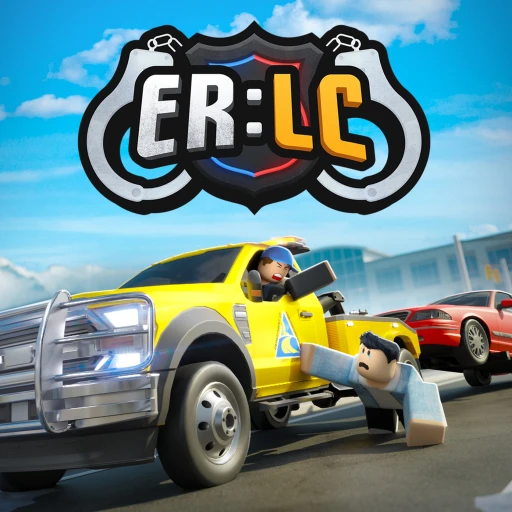
Emergency Response: Liberty County (ER:LC) and LifeTogether RP both sit in the Roblox roleplay category, but they couldn't approach the genre more differently. ER:LC is a structured emergency services simulation where you patrol highways, respond to 911 calls, and chase down criminals across an open-world county. LifeTogether RP is a freeform life simulation where you pick any character, decorate a house, grab a phone, and build whatever story you want with the people around you. Together they've accumulated over 4.5 billion visits as of July 2026.
If you've been bouncing between the two or wondering which one deserves your time, this comparison breaks down everything that matters. We'll cover gameplay depth, progression systems, visual quality, community dynamics, monetization, social features, and long-term replay value. By the end, you'll know exactly which game fits the way you like to play.
ER:LC vs LifeTogether RP — Quick Stats (2026)
| Category | ER:LC | LifeTogether RP |
|---|---|---|
| Genre | Emergency Services Simulation | Life Simulation / Town & City RP |
| Place ID | 2534724415 | 13967668166 |
| Developer | Police Roleplay Community (PRC) | Cinnamon Software |
| Released | November 2018 | July 2023 |
| Total Visits | 1.4B+ | 3.1B+ |
| Favorites | 2.7M+ | 10.7M+ |
| Approval Rating | ~91% | ~91% |
| Core Loop | Patrol, respond, arrest, rescue | Socialize, decorate, roleplay freely |
| In-Game Currency | Yes — cash & XP | No traditional currency system |
| Roles | Police, Sheriff, Fire, Civilian, Criminal, DOT | Any character you choose |
| Mobile Support | Yes — dedicated mobile servers | Yes |
| Free-to-Play | Yes | Yes |
The numbers tell part of the story. LifeTogether RP has attracted more than double the total visits despite launching nearly five years after ER:LC. That reflects the broader appeal of casual life simulation roleplay compared to a niche emergency services game. But raw visit counts don't capture the full picture — ER:LC's player base is smaller yet more committed, with sessions that often run an hour or longer as players work through realistic patrol scenarios.
Gameplay — What Do You Actually Do?
Emergency Response: Liberty County
ER:LC drops you into a sprawling county that includes a city center, rural countryside, and a smaller town connected by highways. You pick a role at the start of every session — police officer, sheriff deputy, firefighter, Department of Transportation worker, civilian, or criminal — and each role comes with distinct responsibilities, vehicles, and tools. This isn't a game that tells you to "just hang out." Every role has a purpose, and the best sessions happen when all of those roles interact naturally.
As a police officer or sheriff deputy, you'll patrol roads, pull over speeders, respond to robbery calls, conduct traffic stops, and arrest wanted criminals. The game gives you a full set of tools for this: a radar gun, spike strips, handcuffs, tasers, and lethal weapons for dangerous situations. Chases play out across the entire map, and because vehicles handle with actual weight and momentum, a high-speed pursuit through downtown traffic feels genuinely tense. Radio communication between officers adds a layer of coordination you won't find in most Roblox games.
Firefighters and EMS responders handle a completely different set of scenarios. You'll put out structure fires, respond to vehicle accidents, and revive injured players. The fire mechanics require you to position your truck correctly and manage hose pressure, which sounds mundane on paper but creates real problem-solving moments when a house fire is spreading and civilians are still inside. The medical system lets you treat and transport injured players to the county hospital.
Civilians and criminals round out the ecosystem. Civilians can work jobs, drive around, and create roleplay scenarios. Criminals can rob locations, evade police, and create the chaos that gives emergency responders something to respond to. The interplay between these roles is what makes ER:LC tick — without criminals causing trouble, officers would have nothing to do, and without officers enforcing laws, the server would devolve into chaos. For a deeper look at how to get started, check our ER:LC free Robux guide.
Edge: ER:LC for structured, role-based gameplay
LifeTogether RP
LifeTogether RP takes the opposite approach. There are no assigned roles, no required objectives, and no formal economy driving your actions. You spawn into a neighborhood, pull out your in-game phone, and the world is yours to shape. The phone is the central mechanic — you use it to access your home settings, send messages to other players through LifeSnap (the game's built-in social media app), check the map, and manage your character.
The housing system is where most players spend their time. You can own one of 12 unique properties ranging from the free Cosy Mountain Home and Elegant Spanish Villa to premium options like the Modern Edge Manor and French Luxury Mansion. Once inside your home, the customization runs deep. You can place and arrange furniture, control lighting, adjust curtains, start the fireplace, set the ambient temperature, check security camera footage, and lock or unlock doors — all from your in-game phone. Players who enjoy interior design and creating lived-in spaces will sink hours into this system alone.
Jobs exist in LifeTogether RP, but they don't pay currency the way you'd expect. Instead of grinding a cash balance, jobs function as roleplay props. You can work at various buildings around the map, and each job connects to a physical location that other players interact with. The emphasis is on the social experience of doing the job rather than the reward you get for completing it. This design decision keeps the game accessible — nobody falls behind because they didn't grind enough shifts — but it also means there's no economic motivation to keep you playing.
LifeSnap deserves its own mention. It mirrors real social media, letting players send photos, messages, and updates to each other. People use it for everything from genuine roleplay communication to trolling and meme sharing. It adds a layer of social texture that most Roblox games simply don't have. You can learn more about the game's features on our LifeTogether RP hub page.
Edge: LifeTogether RP for creative freedom and social roleplay

Progression — How Quickly Does It Hook You?
These two games define "progression" in fundamentally different ways, and understanding that difference is key to knowing which one you'll stick with.
ER:LC uses a traditional cash-and-XP system. Completing objectives — arresting criminals, responding to calls, putting out fires, working DOT shifts — earns you cash and experience points. Cash lets you purchase better-performing vehicles, weapons, and equipment. XP tracks your overall rank and unlocks certain items and privileges. The progression curve is steady but meaningful. Your first few sessions as a police officer will be spent in a standard cruiser with basic equipment. After several hours, you'll have enough saved for a faster pursuit vehicle or a specialized tool that changes how you approach situations.
The endgame in ER:LC is about mastery and reputation. Once you've unlocked the vehicles and gear you want, the goal shifts to becoming known on your server as a reliable officer, a skilled pursuit driver, or a firefighter who actually knows what they're doing. Private server communities with their own CAD systems (Computer Aided Dispatch) take this further, creating almost professional-grade roleplay environments where your reputation matters. The February 2026 update introduced a Private Server API V2 with live player locations, pushing this even deeper for serious RP groups.
LifeTogether RP doesn't have conventional progression at all. There's no XP bar to fill, no cash to grind, and no unlockable items gated behind playtime. Your "progression" is the story you create, the house you decorate, the relationships you build with other players, and the scenarios you act out. For some players, this is liberating — you can jump into a fully featured experience on your very first session without feeling like you're behind everyone else. For others, the lack of tangible goals means there's no pull to come back tomorrow.
New players in LifeTogether RP can claim a free house, customize it, and start roleplaying within minutes of joining their first server. There's no waiting period, no level gate, and no grind before the "real" game starts. The tradeoff is that long-term players don't have much to show for their time beyond memories and creative builds. Premium properties offer some sense of aspiration, but they're purchased with Robux rather than earned through gameplay.
Edge: ER:LC for goal-oriented players; LifeTogether RP for players who want immediate access
Graphics and Presentation
Both games look good by Roblox standards, but they've made different visual choices that reflect their design priorities.
ER:LC leans toward realism. The county map features detailed road systems, realistic building architecture, functional traffic lights, and terrain that shifts between urban density and rural farmland. Vehicles are modeled with attention to real-world proportions — police cruisers have working light bars, fire trucks carry visible equipment, and civilian cars look like they belong on an actual road. The lighting system handles day-night cycles well, and nighttime patrols with your headlights cutting through darkness create genuine atmosphere. The Spring Map update in March 2026 refreshed the environmental details further, and the new hospital built by Eagle Construction shows that PRC keeps investing in visual upgrades.
LifeTogether RP goes for a cleaner, more stylized aesthetic. The neighborhood maps are colorful and inviting, with a slightly cartoony look that matches the casual tone of the game. Houses are designed to look cozy and aspirational rather than architecturally accurate. Interior decoration is where the visual system shines — furniture pieces have good detail, lighting reacts to your settings, and a well-decorated home genuinely looks impressive. The overall visual package prioritizes warmth and accessibility over gritty realism.
Edge: ER:LC for environmental realism; LifeTogether RP for interior design and cozy aesthetics
Community and Social Experience
The communities around these games couldn't be more different in tone, and that difference shapes every session you play.
ER:LC attracts a community that takes roleplay seriously. The game's design encourages this — when you're playing as a police officer conducting a traffic stop, the interaction only works if both parties commit to the scenario. The most active ER:LC communities run on private servers with strict roleplay rules, custom CAD/MDT systems, and chain-of-command structures that mirror real departments. Groups like the Los Angeles Roleplay community and California State Roleplay have built entire ecosystems around the game. New players sometimes find this intimidating, especially if they join a server mid-scenario and don't know the protocols.
Public servers are more relaxed but still lean serious compared to most Roblox games. You'll encounter players who follow traffic laws, use proper radio codes, and treat emergency calls with appropriate urgency. You'll also encounter players who just want to drive fast and cause mayhem, which creates natural conflict for law enforcement players to resolve.
LifeTogether RP has a younger, more casual community that's focused on social interaction and creative expression. The vibe in most servers is friendly and collaborative rather than competitive. Players invite each other into their homes, share LifeSnap posts, and create spontaneous roleplay scenarios about everyday life — going to school, running a business, hosting house parties. The lack of combat mechanics and competitive objectives means there's less toxicity than you'd find in PvP-focused Roblox games.
The flipside is that LifeTogether RP servers can feel aimless if you're not naturally inclined toward freeform social roleplay. Without structured objectives to unite players around shared goals, the quality of your session depends almost entirely on who else happens to be in the server and whether they're interested in the same type of roleplay you are.
Edge: ER:LC for organized, serious RP communities; LifeTogether RP for casual, friendly social spaces
Game Passes and Monetization
Both games are free-to-play, but they handle monetization in distinct ways that reflect their design philosophies.
ER:LC sells individual game passes that range from 75 Robux to 750 Robux. The cheapest passes cover starter perks like the 75K Starter Cash, while mid-range options include the Big Guns pass (185 Robux), Classic Cars pass (180 Robux), and Premium Housing pass (135 Robux). At the top end, the SWAT game pass costs 750 Robux and unlocks tactical gear, specialized liveries, and SWAT-specific vehicles. None of these passes break the game's balance — a free player can still be a competent officer or firefighter — but they add variety to your loadout and let you specialize in ways that free players can't.
LifeTogether RP takes a subscription-first approach. The Life Premium membership runs 649 Robux per month and unlocks everything in the game's catalog, including premium houses like the Modern Edge Manor, Penthouse, and French Luxury Mansion. Individual premium properties can also be purchased separately with Robux if you don't want the full subscription. The game has no traditional code redemption system despite its popularity, which means there aren't periodic freebies to supplement the premium offerings.
The key difference is in how spending feels. In ER:LC, you buy a pass once and own it permanently. In LifeTogether RP, the subscription model means your premium access disappears if you stop paying. For players on a budget, ER:LC's one-time purchases offer better long-term value. For players who want access to everything and don't mind recurring costs, LifeTogether RP's subscription simplifies the decision.
Edge: ER:LC for one-time purchases and granular control; LifeTogether RP for all-in-one access
Social Features
Social interaction is core to both games, but the tools they give you differ in scope and intent.
ER:LC builds social features around teamwork. The radio system lets officers communicate across the map, coordinate pursuits, and call for backup. Fire teams need to coordinate at emergency scenes. The Private Server API V2 (released February 2026) now supports live player locations and vehicle color data, which means third-party CAD systems can show dispatchers exactly where every unit is in real time. These aren't casual social features — they're tools designed for collaborative roleplay that feels professional.
Player interaction in ER:LC tends to happen through gameplay. You meet people during traffic stops, pursuits, fire scenes, and civilian encounters. Friendships form through shared server time and mutual respect for each other's roleplay commitment. The game doesn't have a built-in social media feature or messaging system beyond proximity chat and the radio.
LifeTogether RP treats social features as the main event. LifeSnap is a full in-game social media platform where players post photos, share updates, and send direct messages. The phone interface lets you text other players, check the map for friends, and manage your home remotely. You can invite players to your house, give them tours, and host events. The social toolkit is broader and more accessible than anything ER:LC offers, which makes sense given that socializing is the primary activity rather than a byproduct of gameplay.
Edge: ER:LC for teamwork-oriented communication; LifeTogether RP for broad social features
Replay Value and Long-Term Appeal
How long will you keep coming back? That depends on what you find rewarding.
ER:LC has strong long-term appeal for players who enjoy procedural storytelling. No two patrol sessions play out the same way because the scenarios depend on what other players in the server are doing. Monday night might bring a quiet patrol with a couple of traffic stops. Tuesday afternoon might erupt into a multi-unit pursuit across the county with a hostage situation at the end. The game generates its own content through player interaction, which means it never truly "runs out" of things to do. Monthly updates from PRC add new vehicles, map areas, and gameplay features that keep the experience from stagnating.
The role variety extends replay value further. If you've spent 50 hours as a police officer, switching to firefighter gives you an entirely different experience with new mechanics, new equipment, and new scenarios to respond to. Playing as a civilian or criminal flips your perspective on every system you've learned. Console players now have their own dedicated matchmaking servers (added January 2026), which improved the experience for a significant chunk of the player base.
LifeTogether RP lives and dies by your imagination and your social connections. If you have a group of friends who consistently play together and enjoy creating stories, the game can last indefinitely. The housing system provides ongoing creative projects — there's always a new way to decorate, a new property to try, and a new aesthetic to pursue. Update 22 added new apartments and penthouses, giving veterans fresh spaces to customize.
The risk for LifeTogether RP is that solo players or players without a consistent group can burn out faster. Without built-in objectives or progression to chase, your motivation has to come from within. Players who thrive on external goals — leaderboards, unlockables, achievements — may find that the game doesn't give them enough reason to log in after the initial novelty fades.
Edge: ER:LC for procedural variety and role switching; LifeTogether RP for creative builders with a solid friend group
Final Verdict
These games serve different needs, and neither one is objectively "better" than the other. Emergency Response: Liberty County is the stronger choice if you want structured roleplay with defined roles, tangible progression, teamwork-driven gameplay, and a community that takes the experience seriously. It rewards players who enjoy learning systems, cooperating with strangers, and generating stories through emergent gameplay. LifeTogether RP is the better pick if you want a relaxed social space with deep home customization, zero grind, and the freedom to roleplay any scenario you can imagine. It thrives when you bring friends and treat it as a creative sandbox rather than a game with a win condition. Both titles hold a ~91% approval rating for a reason — they're each doing their own thing very well.
Who Should Play What?
Choose ER:LC if you...
Want clearly defined roles with real responsibilities. Enjoy the fantasy of being a police officer, firefighter, or sheriff deputy. Prefer games where your actions have consequences and the world reacts to what you do. Like working as part of a team with radio communication and coordinated responses. Want a progression system that rewards your time with better vehicles and equipment. Don't mind a learning curve in exchange for deeper, more realistic gameplay sessions.
Choose LifeTogether RP if you...
Prefer open-ended roleplay without rules or assigned roles. Love decorating and customizing homes down to the smallest detail. Want a game you can jump into immediately without grinding or learning complex systems. Enjoy social media-style features like LifeSnap for communicating with other players. Play primarily with a group of friends and want a shared space to create stories together. Value a chill, low-pressure atmosphere over competitive or high-stakes scenarios.
Frequently Asked Questions
LifeTogether RP has more total visits with over 3.1 billion compared to ER:LC's 1.4 billion. LifeTogether RP also pulls higher concurrent player counts, regularly hitting 50K-75K during peak hours. However, ER:LC maintains a dedicated niche audience and a strong 91% approval rating that reflects genuine quality rather than just broad appeal.
It depends on the type of roleplay you prefer. ER:LC is built for structured emergency services roleplay with defined roles like police officer, firefighter, and sheriff deputy. LifeTogether RP is better for open-ended life simulation roleplay where you can be any character, decorate a home, and create your own stories without fixed objectives or rules dictating your experience.
Both games are playable on mobile through the Roblox app. ER:LC introduced dedicated mobile matchmaking servers in January 2026 to improve the experience for touchscreen players. LifeTogether RP's phone-based UI system works naturally on mobile devices since the in-game interactions mirror real smartphone usage patterns.
ER:LC offers more individual game passes ranging from 75 to 750 Robux, including the SWAT pass, Big Guns pass, and Premium Housing pass. LifeTogether RP uses a subscription model with Life Premium at 649 Robux per month for full catalog access. ER:LC gives more control over spending while LifeTogether RP simplifies everything into one subscription tier.
Both games receive regular updates. ER:LC follows a monthly update schedule from Police Roleplay Community, with the March 2026 update adding a Spring Map and new hospital. LifeTogether RP reached Update 22 in early 2026, which introduced new apartments and penthouses. Both development teams are actively maintaining and expanding their games.
LifeTogether RP is more beginner-friendly because there are no combat mechanics to learn, no currency to grind, and the in-game phone guides you through most actions intuitively. ER:LC has a steeper learning curve since each role carries distinct responsibilities, and serious roleplay servers expect you to understand radio codes, traffic laws, and emergency procedures.
Earn Free Robux for Game Passes
Whether you're saving for ER:LC's SWAT pass or LifeTogether RP's Life Premium subscription, Earnaldo helps you earn Robux without spending real money.