Escape Getting Crushed for Brainrots vs Shrink for Brainrots (2026) -- Which Roblox Game Is Better?
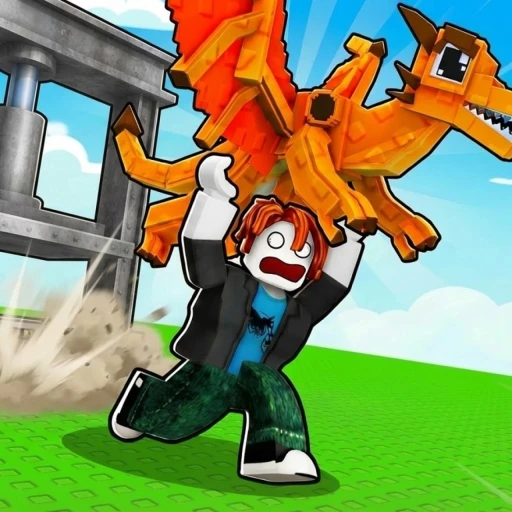
Hazard-avoidance brainrot games have become a staple of the Roblox landscape in 2026, and two of the most inventive entries in this subgenre are Escape Getting Crushed for Brainrots and Shrink for Brainrots. Both games challenge you to avoid being destroyed by environmental hazards while collecting brainrot characters, but each one uses a wildly different core mechanic to deliver that experience. One sends massive objects crashing down on you. The other shrinks you down to microscopic size.
Escape Getting Crushed for Brainrots, developed by Grow a Polnareff, holds a 91.06% approval rating and puts you in arenas where walls close in, ceilings drop, and giant objects fall from the sky. Your survival depends on reading the patterns, finding safe zones, and knowing when to sprint for cover. Shrink for Brainrots takes a conceptually different approach. Instead of avoiding something large, you become something small. The shrinking mechanic changes how you interact with the game world, opening new paths and hiding spots while creating unique dangers at every size level.
If you are a fan of hazard-avoidance brainrot games and wondering which of these two deserves your time, this comparison breaks down every meaningful difference. We will cover gameplay mechanics, difficulty, brainrot collection, progression, monetization, and community. By the time you reach the verdict, you will know exactly which game suits your playstyle.
Quick Stats: Escape Getting Crushed vs Shrink at a Glance
| Category | Escape Getting Crushed for Brainrots | Shrink for Brainrots |
|---|---|---|
| Developer | Grow a Polnareff | Shrink Studios |
| Roblox Place ID | 78326551441316 | 82397737462020 |
| Approval Rating | 91.06% | ~93% |
| Genre | Hazard Avoidance / Brainrot Collector | Shrinking Mechanic / Brainrot Collector |
| Hazard Type | Crushing walls, falling objects, closing rooms | Size-dependent hazards, scaling dangers |
| Core Loop | Dodge crushers, find safe zones, collect brainrots | Shrink, explore at micro-scale, collect brainrots |
| Skill Type | Reaction speed, pattern recognition | Spatial awareness, multitasking |
| Progression | Round-based with ability unlocks | Shrink-level based with size upgrades |
| Multiplayer | Public servers | Public servers, size-based co-op |
| Game Passes | Optional boosts, VIP | Optional boosts, VIP |
| Session Length | 10-25 minutes | 15-30 minutes |
| Mobile Friendly | Yes, but better on desktop | Yes, good across devices |
The stats highlight two games with shared DNA but distinct execution. Let us dig into what playing each one actually feels like.
Gameplay and Core Mechanics
Escape Getting Crushed: Dodge and Survive
Escape Getting Crushed for Brainrots is a game about spatial awareness under pressure. Each round places you in an arena where hazards descend from above, close in from the sides, or rise from below. Walls move inward with increasing speed. Giant blocks fall from the ceiling and shatter on impact. Pistons extend from floors and walls to crush anyone standing in the wrong spot. Your job is to read these patterns, predict where the safe zones are, and position yourself correctly before each hazard activates.
The hazard variety is the game's strongest feature. Early rounds introduce simple crushing patterns -- a wall closes from one side, and you move to the other. But as rounds progress, the complexity escalates dramatically. Multi-directional crushers force you to find the single safe tile in a shrinking grid. Sequential ceiling drops require you to memorize timing patterns and move between impact zones. Random debris events throw unpredictable elements into otherwise patterned sequences, keeping even experienced players on edge.
Movement abilities unlock as you progress, giving you new ways to handle increasingly dangerous hazards. A dash ability lets you cover ground quickly when a crusher is about to hit. A brief invincibility shield provides a last-resort save. A hover ability lets you momentarily float above ground-level hazards. These abilities have cooldowns, so using them at the right moment is a strategic decision layered on top of the moment-to-moment dodging.
Brainrot collection happens during brief calm windows between crusher sequences. Brainrots spawn across the arena, and you have a narrow time window to grab them before the next hazard phase begins. The rarest brainrots tend to spawn in the most dangerous positions -- directly in the path of incoming crushers -- which means collecting them requires waiting until the last possible moment before the hazard hits and dashing to safety after grabbing the drop.
Shrink for Brainrots: Small World, Big Possibilities
Shrink for Brainrots takes a conceptually different approach to hazard avoidance. Instead of dodging large objects that come toward you, the game shrinks you down so that ordinary objects become the hazards. A pencil rolling off a desk becomes a log that can flatten you. A dripping faucet becomes a waterfall. A house cat becomes a boss-level predator. The shrinking mechanic reframes everyday environments as dangerous landscapes, and the result is a game that feels genuinely creative.
The core mechanic works on a shrink scale. You start at normal size and progressively shrink as you play. Each shrink level changes what you can interact with, where you can go, and what threatens you. At one-quarter size, you can slip through gaps in fences and under furniture. At one-tenth size, blades of grass tower over you and insects become legitimate threats. At microscopic sizes, dust particles float like boulders and water droplets are pools you can swim through.
The shrinking is not just a visual gimmick. Each size level genuinely changes the gameplay. Pathways that were blocked at normal size become accessible when you shrink. Hazards that were trivial at larger sizes become deadly when you are small enough to be affected by them. And brainrots are scattered across all size levels, meaning you need to shrink to specific sizes to reach certain collectibles. Some brainrots are only visible and collectible at microscopic scale, while others require you to be at full size to reach elevated platforms.
Managing your shrink level adds a resource-management dimension that Escape Getting Crushed lacks. Shrinking consumes energy that regenerates slowly, and staying at a shrunk size drains energy continuously. You need to plan your shrink usage carefully -- shrinking at the wrong time can leave you too small to escape a hazard, while staying too large prevents you from accessing valuable brainrot spawns.
Edge: Shrink for Brainrots for creativity, mechanical depth, and a unique gameplay concept that no other brainrot game replicates. Escape Getting Crushed for Brainrots for immediate, high-intensity action that gets your adrenaline pumping from the first round.
Difficulty and Learning Curve
Escape Getting Crushed: Reaction-Speed Testing
The difficulty in Escape Getting Crushed for Brainrots is primarily reaction-based. Early rounds are forgiving, with slow-moving crushers and obvious safe zones that give you plenty of time to position yourself. The difficulty escalates by increasing crusher speed, reducing safe zone size, introducing multi-directional hazards, and adding random elements that break predictable patterns.
The learning curve centers on pattern recognition. Each hazard type has visual and audio tells that signal where the safe zones will be. Walls that glow red before they move. Ceiling cracks that appear before blocks fall. Floor vibrations that precede rising pistons. Learning these tells is the primary skill, and experienced players can read a round's hazard pattern within the first few seconds and position themselves optimally.
The difficulty can feel frustrating for players with slower reaction times. Later rounds demand split-second positioning adjustments that leave almost no margin for error. The ability cooldown system means you cannot rely on dashes and shields to save you every time -- you need the underlying dodging skill to survive consistently.
Shrink: Cognitive Multitasking
Shrink for Brainrots tests a different set of skills. The difficulty comes from managing multiple systems simultaneously: your shrink level, your energy meter, your position relative to hazards that change based on your size, and the brainrot spawn locations that shift across size levels. It is a game that asks you to think rather than react, though reaction speed still matters in certain situations.
The learning curve is gentler than Escape Getting Crushed's because the game gives you more time to process situations. Hazards at the early shrink levels are slow-moving and telegraphed, and the energy system forces you to make deliberate choices rather than panicking. New players can take their time learning how each size level works, which hazards to watch for, and where brainrots spawn at different scales.
The difficulty deepens as you reach smaller sizes. At microscopic scale, the hazards are faster relative to your character size, the environment is harder to navigate, and the energy drain means you cannot stay small for long. Players who master the transition between sizes -- shrinking to grab a brainrot, expanding to dodge a hazard, and shrinking again to access a hidden path -- reach a flow state that feels uniquely satisfying.
Edge: Escape Getting Crushed for Brainrots for players who want a clear, immediate skill test that rewards reaction speed and pattern recognition. Shrink for Brainrots for players who prefer cognitive challenges that reward planning and multitasking over raw reflexes.

Brainrot Collection and Rewards
Escape Getting Crushed: Grab Under Pressure
The brainrot collection in Escape Getting Crushed for Brainrots is integrated into the hazard-dodging loop. Common brainrots spawn in relatively safe positions during calm phases, while rarer variants appear in dangerous spots during active crusher sequences. The rarest brainrots -- crush-themed legendaries, debris variants, and pressure-exclusive drops -- only spawn during the most intense hazard rounds, directly in the paths of incoming crushers.
This creates some of the most intense collection moments in the brainrot genre. Grabbing a legendary brainrot that spawns exactly where a ceiling block is about to land requires precise timing. You need to dash in, collect the brainrot, and dash out within a window of roughly two seconds. Miss the timing and you get crushed. Nail it and you earn a rare drop that most players never collect. The high-risk collection dynamic makes every rare catch feel genuinely thrilling.
The game-exclusive brainrots include flattened variants, pressure-diamond brainrots, and rubble-themed collectibles that visually represent the crushing theme. These exclusives are popular in the broader trading community because they are among the most challenging brainrots to obtain in any brainrot game.
Shrink: Explore to Collect
Shrink for Brainrots distributes its collection across the size spectrum. Each shrink level has brainrots that can only be seen and collected at that specific size. Normal-size brainrots sit on elevated surfaces. Half-size brainrots are tucked under furniture and behind objects. Quarter-size brainrots line the edges of floorboard gaps. Microscopic brainrots float in dust clouds and cling to surface textures that are invisible at larger scales.
The collection mechanic rewards thorough exploration at every size level. Players who rush through at a single size will miss the majority of available brainrots. The game encourages you to cycle through sizes systematically, checking each environment at multiple scales to find everything it has to offer. This exploration-based collection feels more meditative and complete than the reaction-based collection in Escape Getting Crushed.
Size-themed exclusive brainrots include micro-brainrots that are visually tiny, giant-scale variants that tower over normal characters, and scaling brainrots that change size dynamically. The roster is slightly larger than Escape Getting Crushed's current offering, bolstered by frequent updates that add new size-level variants with each patch.
Edge: Escape Getting Crushed for Brainrots for the thrill of high-risk, high-reward collection moments that feel genuinely earned. Shrink for Brainrots for a deeper, more exploration-based collection system with a larger roster and more variety in how brainrots are obtained.
Progression and Long-Term Goals
Escape Getting Crushed: Round Mastery
Progression in Escape Getting Crushed for Brainrots revolves around surviving higher rounds and unlocking movement abilities. Playing rounds earns currency that you spend on ability upgrades and cosmetic customizations. Each ability upgrade -- faster dash, longer shield duration, higher hover -- meaningfully changes how you approach hazard sequences and pushes the round ceiling higher.
Leaderboard competition drives long-term engagement. The round-based structure means there is always a next milestone to reach, and every upgrade brings it closer. The competitive community around high-round survival is active and creates ongoing motivation to optimize your movement, improve your pattern recognition, and perfect your ability timing.
The progression pace is reasonable for the first several ability tiers but slows in the late game. The final ability upgrades require significant currency investment, which means grinding mid-tier rounds for extended periods. This is standard for the genre but can feel tedious for players who want to reach the endgame quickly.
Shrink: Deeper and Deeper
Progression in Shrink for Brainrots is built around unlocking smaller shrink levels and upgrading your energy capacity. Each new shrink level you unlock opens an entirely new layer of gameplay with its own hazards, brainrots, and environmental interactions. Going from half-size to quarter-size is not just a numerical change -- it transforms the game world around you and introduces mechanics you have not encountered before.
The energy system creates a secondary progression track. Upgrading energy capacity lets you stay shrunk for longer, explore more thoroughly at small sizes, and attempt micro-level challenges that were previously impossible. The combination of shrink-level unlocks and energy upgrades means you are progressing along two parallel tracks, which provides a steady stream of meaningful milestones.
Long-term goals include reaching the smallest possible shrink level, completing the brainrot collection across all sizes, and mastering the art of rapid size transitions during hazardous situations. The game also features challenge modes that test your ability at specific shrink levels with modified rules, adding replay value beyond the core progression.
Edge: Shrink for Brainrots for a progression system that genuinely changes the game experience at each tier. Escape Getting Crushed's progression enhances your existing capabilities, while Shrink's progression transforms the entire gameplay landscape.
Monetization and Value
Escape Getting Crushed: Fair and Transparent
Escape Getting Crushed for Brainrots offers optional game passes that include VIP arena access with exclusive brainrot spawns, a double currency earning rate, and cosmetic character effects. The VIP arena provides access to brainrots that do not spawn in the standard arenas, which is the most meaningful gameplay advantage. Free players can still reach high rounds and collect the majority of brainrots without spending Robux.
The monetization is straightforward and non-aggressive. There are no randomized purchase mechanics, no time-limited premium offers, and no pay-to-win ability boosts. If you want the VIP brainrots, you buy the pass. If you do not, you still have access to the complete core experience.
Shrink: Similar but Slightly Better
Shrink for Brainrots follows a comparable monetization model with VIP passes for exclusive environments and bonus currency. The key difference is that Shrink's VIP content is primarily cosmetic -- exclusive shrink effects, character skins, and visual trails that do not affect gameplay performance. All shrink levels, all brainrots in the core game, and all gameplay mechanics are fully accessible without spending Robux.
The development team has been careful to keep all size-based gameplay content available to free players. Upgrades that affect shrink capacity and energy come through gameplay earning, not premium purchases. This keeps the playing field even and ensures that progression milestones feel earned rather than purchased.
For tips on earning Robux for either game, check out our Escape Getting Crushed for Brainrots free Robux guide and our Shrink for Brainrots free Robux guide.
Edge: Shrink for Brainrots by a slim margin. Its VIP content is purely cosmetic, while Escape Getting Crushed's VIP arena gates some brainrots behind a purchase. Both models are fair overall.

Multiplayer and Social Features
Escape Getting Crushed: Shared Chaos
Multiplayer in Escape Getting Crushed for Brainrots is built around shared-arena survival. You dodge hazards alongside other players in the same space, creating chaotic, entertaining moments where a group of players scrambles to find safe zones simultaneously. Watching someone get crushed right next to you while you barely survive adds to the excitement and creates natural laugh-out-loud moments.
The social dynamic is primarily observational -- you see other players succeeding and failing, which provides both entertainment and learning opportunities. Watching how an experienced player navigates a hazard pattern you are struggling with can teach you techniques faster than trial and error alone. There is no formal co-op mechanic, but the shared experience creates a social atmosphere.
Shrink: Size-Based Cooperation
Shrink for Brainrots introduces an interesting multiplayer dynamic through its size mechanic. Players at different shrink levels can see and interact with different parts of the environment. A normal-sized player can move objects to create paths for a micro-sized friend. A small player can slip through gaps to reach a switch that opens a door for larger players. This size-based cooperation is not always necessary but adds a layer of teamwork that most brainrot games lack.
The social experience extends to the discovery element. Exploring environments at different sizes with friends and calling out brainrot locations you have found creates a collaborative treasure-hunt dynamic. The variety of perspectives -- one player seeing the world as a giant landscape while another sees it as a normal room -- generates funny and engaging moments naturally.
Edge: Shrink for Brainrots. The size-based cooperation mechanic adds genuine multiplayer depth that Escape Getting Crushed does not have. Both games are social, but Shrink gives friends meaningful ways to help each other.
Performance and Accessibility
Escape Getting Crushed for Brainrots runs well on most devices with some caveats. The physics-based crushing effects and particle systems can cause frame drops on older mobile devices during the most intense hazard sequences. Desktop performance is consistently smooth. The controls are straightforward -- move and use abilities -- but the speed demands of later rounds make desktop play notably easier than mobile. The game does not have a formal tutorial, relying instead on early round difficulty being low enough to teach through play.
Shrink for Brainrots handles performance well across devices because the game cleverly adjusts visual detail based on your current shrink level. At normal size, the environment renders at standard Roblox quality. At micro sizes, distant objects simplify because you cannot see them from that perspective anyway. This adaptive rendering keeps frame rates consistent even on lower-end hardware. The controls work well on both touch and keyboard-mouse, partly because the gameplay is less reaction-speed dependent and allows more deliberate input.
Both games are accessible to new players, though Shrink for Brainrots has a slightly steeper initial learning curve because the shrink mechanic takes a few minutes to fully understand. Escape Getting Crushed is immediately intuitive -- things fall, you move out of the way.
Edge: Shrink for Brainrots for consistent performance through its clever adaptive rendering. Escape Getting Crushed for Brainrots for immediately intuitive gameplay that anyone can understand in seconds.
Community and Updates
Escape Getting Crushed: Niche and Dedicated
Escape Getting Crushed for Brainrots has a dedicated community that appreciates its chaotic, high-energy gameplay. The 91.06% approval rating is strong, though it sits below the brainrot genre average, partly due to the difficulty spikes that frustrate some casual players. Content creators produce highlight reels of dramatic dodges and crushing near-misses that perform well on short-form video platforms.
Developer Grow a Polnareff updates the game with new hazard types, arena layouts, and brainrot additions on a regular cadence. The community provides feedback on hazard balance, and the development team has shown willingness to adjust crushers that the community identifies as unfairly punishing.
Shrink: Growing and Inventive
Shrink for Brainrots has built a larger community around its unique concept. The shrinking mechanic generates distinctive content that stands out in social media feeds -- videos of players exploring ordinary rooms at microscopic scale, discovering hidden brainrots in impossible-seeming locations, and cooperating across size levels. The novelty factor helps the game attract new players who might scroll past more conventional brainrot titles.
Updates add new environments, shrink levels, and brainrot variants at a brisk pace. The development team has been creative about using the shrink mechanic in new ways -- seasonal events that modify shrink physics, challenge modes that lock you at specific sizes, and environment-specific hazards that interact with the size system in surprising ways.
Edge: Shrink for Brainrots for a larger, growing community and a unique concept that generates distinctive content. Escape Getting Crushed has a loyal following but operates in a more crowded niche within the brainrot genre.
The Verdict
Our Recommendation: Different Dangers, Different Strengths
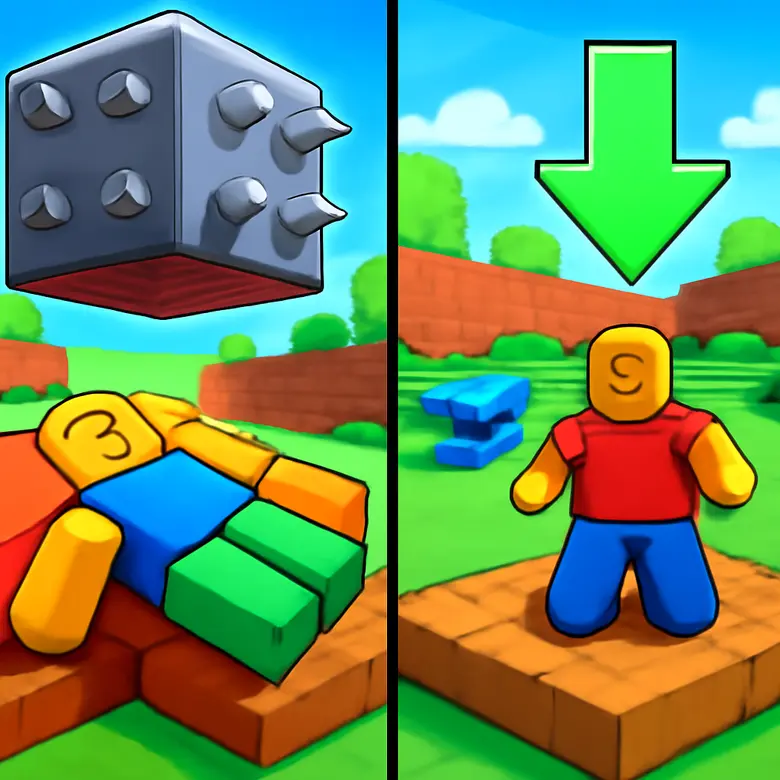
Escape Getting Crushed for Brainrots and Shrink for Brainrots both deliver hazard-avoidance gameplay with brainrot collecting, but they do it in meaningfully different ways. Escape Getting Crushed is the better choice if you want immediate, adrenaline-fueled action where your reaction speed and pattern recognition are constantly tested. Its crushing hazards are visually dramatic, the high-risk brainrot collection creates genuinely thrilling moments, and the ability-based progression lets you push further into increasingly intense rounds. The 91.06% approval rating reflects a game that excels at what it does while acknowledging that its difficulty spikes are not for everyone. Shrink for Brainrots is the better choice if you want a more creative, exploration-driven experience with deeper mechanical systems. The shrinking concept is genuinely innovative, the size-based brainrot collection rewards thorough exploration, and the multiplayer cooperation across size levels adds social depth that most brainrot games lack. Its progression system transforms the entire gameplay experience at each tier rather than just making you faster or stronger. For most players, Shrink for Brainrots edges ahead because its unique concept, deeper progression, and stronger multiplayer integration provide more sustained engagement. But Escape Getting Crushed for Brainrots delivers an intensity and immediacy that Shrink cannot match, and players who prioritize adrenaline over exploration will find it the more exciting choice.
Who Should Play What?
Play Escape Getting Crushed for Brainrots if you:
- Want fast-paced, reaction-based gameplay with high stakes
- Enjoy pattern recognition under time pressure
- Like the thrill of high-risk brainrot collection moments
- Prefer immediately intuitive gameplay you can jump into instantly
- Enjoy chaotic multiplayer moments in shared arenas
- Want dramatic visual spectacle from physics-based crushing hazards
Play Shrink for Brainrots if you:
- Want a creative, unique gameplay mechanic unlike anything else on Roblox
- Enjoy exploration and discovering hidden content at different perspectives
- Prefer cognitive multitasking over pure reaction speed
- Like progression systems that transform the gameplay experience
- Want meaningful multiplayer cooperation through size-based teamwork
- Appreciate consistent performance across all device types
Earn Free Robux While You Play
Whether you are dodging crushers or shrinking to microscopic scale, Earnaldo helps you earn free Robux through simple tasks. No surveys, no scams -- just real Robux rewards for your Roblox account.
Frequently Asked Questions
Escape Getting Crushed for Brainrots tends to be harder in the moment because the crushing hazards move fast and require quick reactions to dodge. Shrink for Brainrots is harder strategically because managing your shrink levels while collecting brainrots requires balancing multiple systems simultaneously. Players who struggle with reaction speed find Escape Getting Crushed harder, while players who struggle with multitasking find Shrink harder.
Both games have large brainrot rosters with game-specific exclusives. Shrink for Brainrots has a slightly larger collection because it has been receiving frequent updates with new micro-sized and giant-sized brainrot variants. Escape Getting Crushed for Brainrots has a strong roster of crush-themed exclusives including flattened variants and debris-themed brainrots that are popular among collectors.
Yes, both games support multiplayer. Escape Getting Crushed for Brainrots lets you dodge hazards alongside friends in shared servers, which adds to the chaos and fun. Shrink for Brainrots allows cooperative play where friends at different shrink levels can access different areas and trade brainrots they find. Both games are more enjoyable with friends.
Both games release codes periodically that reward free currency, brainrots, and boosts. New codes are typically released during major updates and milestone celebrations. We maintain updated code lists for both games to help you claim every available reward.
Shrink for Brainrots has slightly better mobile performance because its gameplay is less dependent on split-second reactions. Escape Getting Crushed for Brainrots is playable on mobile but the fast-moving crushing hazards can be harder to dodge on touchscreens compared to keyboard and mouse. Both games are fully functional on mobile devices.
Earnaldo lets you earn free Robux through simple tasks and offers. The Robux you earn can be used for game passes in Escape Getting Crushed for Brainrots, Shrink for Brainrots, or any other Roblox game. Visit earnaldo.com to start earning today.
Escape Getting Crushed for Brainrots and Shrink for Brainrots represent two creative approaches to hazard-avoidance brainrot gaming. Whether you prefer the pulse-pounding intensity of dodging falling objects or the inventive exploration of a world seen through a microscopic lens, both games offer well-crafted experiences that have earned their place in the Roblox brainrot lineup for 2026.