Evade vs DOORS (2026) — Which Roblox Horror Game Is Better?
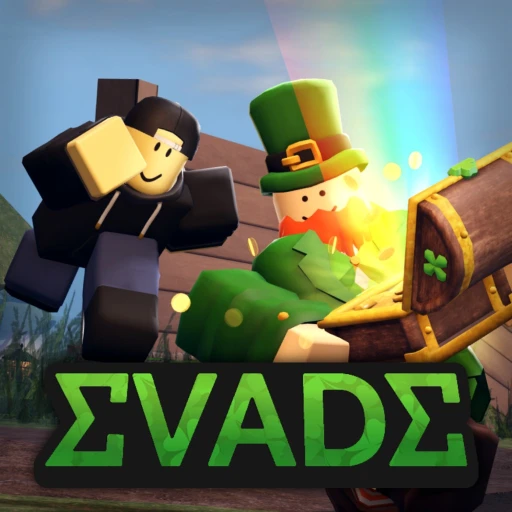
Roblox has no shortage of horror games, but two titles have risen to the top and stayed there: Evade and DOORS. Combined, they represent over 15 billion visits and have defined what horror looks like on the platform. But they could not be more different in how they deliver scares. Evade throws you into open maps and sends waves of relentless Nextbots to chase you down in a frantic parkour survival experience. DOORS locks you inside a procedurally generated hotel and forces you to creep through room after room, never knowing what entity is waiting behind the next door.
One is loud, fast, and adrenaline-fueled. The other is quiet, methodical, and dread-inducing. Both are free to play, both are massively popular, and both have passionate communities that will argue their game is the superior horror experience. This comparison breaks down every major category so you can decide which one deserves your time — or whether you should simply play both.
Evade vs DOORS — Quick Stats (2026)
| Category | Evade | DOORS |
|---|---|---|
| Genre | Horror / Action Parkour | Horror / Exploration Survival |
| Place ID | 9872472334 | 6516141723 |
| Developer | Hexagon Dev Community | LSPLASH |
| Launch | June 2022 | August 2022 |
| Total Visits | 8.7B+ | 7.4B+ |
| Approx. CCU | ~34,000 | Varies (spikes on updates) |
| Rating | High | 92.9% |
| Core Loop | Run, hide, survive Nextbots | Explore rooms, learn entities, escape |
| Perspective | Third-person | First-person |
| Session Length | 5–15 minutes per round | 15–30 minutes per run |
| Scare Style | Chase panic / adrenaline | Jump scares / atmospheric dread |
| Unique Threats | 253 Nextbots | 20+ entities with unique behaviors |
| Mobile-Friendly | Yes | Yes |
| Free-to-Play | Yes | Yes |
Gameplay — Chase Horror vs Exploration Horror
Evade
Evade drops you into a map with other players and one objective: do not get caught. Nextbots — AI-controlled enemies with various meme faces and internet culture references — spawn and relentlessly chase players across the map. There is no puzzle to solve, no key to find, no sequence to memorize. You run, you jump, you parkour across obstacles, and you pray the Nextbot chasing you gets distracted by someone else.
The gameplay loop is deceptively simple but mechanically deep. Experienced players learn to exploit map geometry, use elevation to their advantage, and time their movements to bait Nextbots into inefficient pathing. Different Nextbots have different speed values and behavior patterns — some are slow but persistent, others are terrifyingly fast but lose interest more easily. With 253 Nextbots in the game as of 2026, the variety is staggering. Every round feels different because the combination of map, Nextbot selection, and player count creates unique survival scenarios.
The parkour element elevates Evade above a simple chase game. Maps are designed with verticality and shortcuts in mind. Players who master the movement system — sprint timing, jump angles, obstacle vaulting — survive dramatically longer than those who just run in straight lines. There is a genuine skill ceiling here, and watching top players navigate a map while multiple Nextbots converge on their position is genuinely impressive.
Rounds are fast, typically lasting between five and fifteen minutes. When you die, you spectate until the round ends or all players are eliminated. The quick cycle means you are never waiting long to jump back in, which makes Evade ideal for casual sessions where you want immediate action without long setup times.
DOORS
DOORS takes the opposite approach to horror. You spawn in the lobby of a mysterious hotel, step through the first door, and begin navigating a sequence of procedurally generated rooms. The pace is deliberate. You move through dark corridors, search furniture for items, listen for audio cues, and prepare yourself mentally for whatever entity might be lurking in the next room.
Every entity in DOORS has specific behaviors that you must learn to survive. Rush charges through a sequence of rooms and requires you to hide in closets or under beds before it arrives. Ambush bounces back and forth through rooms, forcing you to repeatedly duck into cover as it passes. Halt presents a long dark hallway where you must follow on-screen instructions to proceed safely. Screech attacks from behind if you fail to look at it when it makes a sound. Eyes will damage you if you stare at them. Each entity is a puzzle with a specific solution, and death is the teacher.
The procedural generation keeps runs fresh. Room layouts, item placements, entity spawns, and environmental details shuffle every time you start a new run. A full successful run takes fifteen to thirty minutes, and reaching the final door is a genuine accomplishment that requires knowledge, reflexes, and composure under pressure. The game rewards patience, observation, and memorization — skills that improve naturally over many attempts.
Co-op play transforms DOORS into a shared survival experience. Running the hotel with friends means someone can scout ahead, share healing items, or warn the group about incoming threats. It also means someone inevitably panics during a Rush encounter, fails to hide in time, and takes the whole group down with them. These shared moments of terror and failure are what make DOORS one of the most talked-about co-op experiences on Roblox.
Edge: Evade for accessibility and immediate action. DOORS for depth, tension, and the satisfaction of mastering complex mechanics. This comes down to whether you prefer your horror fast or slow.
Progression — How Do You Grow as a Player?
Evade
Evade tracks your survival stats, including rounds survived, total time alive, and Nextbots evaded. These metrics feed into a sense of personal improvement — you can see yourself lasting longer and handling more difficult situations over time. The game also features a leveling system that rewards playtime with cosmetic unlocks and bragging rights.
The real progression in Evade is mechanical. Learning to read Nextbot AI behavior, mastering map-specific parkour routes, and developing situational awareness under pressure are skills that make you measurably better. A new player running in panic will survive minutes at most. An experienced player exploiting terrain and movement tech can survive entire rounds without breaking a sweat. That gap represents hundreds of hours of transferable skill development.
Evade also benefits from its massive Nextbot roster. As new Nextbots are added — and 253 is an enormous number — players must adapt to unfamiliar speed values and chase patterns. The game never lets you get fully comfortable because the threat landscape keeps expanding.
DOORS
DOORS progression is knowledge-based above all else. The game tracks your highest door reached, total runs completed, and entity encounters. But the real measure of progress is how far you can consistently reach. A player who once died at Door 10 and now regularly reaches Door 50 has not gained any stats or power-ups — they have simply learned the game better.
Badges and achievements provide milestone markers. Reaching certain door thresholds, surviving specific entity encounters, and discovering hidden secrets all award recognition. Cosmetic items like flashlight skins and visual effects are available as long-term goals. But DOORS never gives you a gameplay advantage for playing longer. A first-time player and a thousand-hour veteran enter each run on equal footing — the difference is entirely in their knowledge and reflexes.
Content updates from LSPLASH add entirely new floors with new entities, mechanics, and environmental puzzles. Each major update essentially resets the learning curve for everyone, which keeps veteran players engaged and gives the community something new to collectively figure out.
Edge: DOORS for meaningful knowledge-based progression that feels earned. Evade for continuous mechanical improvement with a massive variety of threats to master.
Graphics and Audio — How They Deliver the Horror
Evade
Evade's visual style is intentionally absurd. The Nextbots use exaggerated meme faces, internet culture references, and intentionally uncanny imagery as their visual identities. This creates a unique horror tone — the threats are simultaneously funny and terrifying. Seeing a giant distorted face sliding toward you at high speed is both hilarious and genuinely panic-inducing. The cognitive dissonance between the humor and the threat is a core part of Evade's identity.
Maps range from industrial warehouses to open fields to urban environments. The visual design is functional rather than atmospheric — maps are built for gameplay clarity, ensuring you can always see paths, obstacles, and threats. Lighting is generally bright enough to navigate without difficulty, which makes sense for a game where spatial awareness and quick reactions matter more than atmosphere.
Audio in Evade serves as a critical gameplay element. Nextbot proximity sounds alert you to incoming threats before you can see them. The intensity of the chase music ramps up as Nextbots close in, creating an adrenaline soundtrack that perfectly matches the gameplay. The sound design is less about creating mood and more about conveying information — and it does that job effectively.
DOORS
DOORS is a masterclass in atmospheric design within the Roblox engine. The hotel environment is dark, cramped, and oppressive. Flickering lights, creaking floorboards, distant sounds, and claustrophobic room layouts all work together to maintain a constant baseline of unease. Even when nothing dangerous is happening, DOORS makes you feel like something is about to happen — and that anticipation is the foundation of good horror.
The first-person perspective is critical to the atmosphere. You can only see what is directly in front of you, which means threats can approach from your blind spots. The limited field of view forces you to constantly check your surroundings, turning simple room navigation into a tense exercise in vigilance. Entity designs range from unsettling to genuinely frightening, with each one having a distinct visual identity that players learn to recognize instantly.
Audio design in DOORS is exceptional. Ambient sounds shift subtly to signal danger before you can see it. Each entity has unique audio cues — Rush creates a distant rumbling that grows louder, Screech makes a quiet whisper that demands immediate response, and Halt distorts the audio environment entirely. Players learn to play with headphones because the audio information is often more important than visual information. The sound design alone puts DOORS in the top tier of Roblox experiences.
Edge: DOORS by a wide margin for pure atmospheric horror and audio design. Evade's visual style is effective for its genre but serves a completely different purpose — comedy-horror rather than traditional horror.
Player Count and Community (July 2026)
Evade has surpassed 8.7 billion total visits since its June 2022 launch and maintains approximately 34,000 concurrent players at any given time. The community is massive and active across YouTube, TikTok, and Discord. Content tends to focus on funny moments, Nextbot compilations, and parkour highlights. The meme culture surrounding Nextbot faces has given Evade a unique identity in the Roblox content ecosystem — it is one of the few horror games that generates as many laughs as screams.
DOORS has accumulated 7.4 billion visits since its August 2022 launch and boasts a 92.9% positive rating — one of the highest among major Roblox games. Its community skews slightly older and is deeply invested in lore theories, entity analysis, and speedrunning. YouTube content around DOORS tends to be longer-form — guide videos, lore breakdowns, and full run recordings perform well alongside the expected jump scare compilations. The DOORS community treats the game as something to be studied and mastered, not just played.
Both games benefit from strong developer communication. Hexagon Dev Community maintains Evade with frequent Nextbot additions and seasonal events. LSPLASH delivers less frequent but more substantial content updates for DOORS that reshape the entire game experience. Both communities are welcoming to new players, though DOORS players are more likely to share tips and strategies while Evade players are more likely to share clips and memes.
The Roblox horror community as a whole has grown significantly, and both games serve as entry points. Many players discover one game first and then try the other, and titles like Forsaken have also benefited from the audience these two games have built.
Edge: Evade for raw player count and consistent CCU. DOORS for community depth, rating, and content quality.
Game Passes and Monetization
Evade
Evade offers three primary game passes:
- Boombox — 300 Robux: Lets you play music in-game, adding a social and comedic layer to the chase experience. Playing upbeat music while being chased by a terrifying Nextbot is peak Evade energy.
- Emote Pack — 350 Robux: Unlocks a set of emotes for self-expression during rounds. Taunting a Nextbot before sprinting away is a rite of passage.
- VIP — 499 Robux: Provides various perks including visual effects and lobby benefits. The most comprehensive pass available.
None of these game passes provide gameplay advantages. You cannot buy speed boosts, extra health, or Nextbot-repelling items. The monetization is entirely social and cosmetic, which means free players compete on a perfectly level playing field. The total cost to buy every game pass is 1,149 Robux — reasonable by Roblox standards and far from predatory.
DOORS
DOORS monetizes through revive tokens and cosmetic items. Revive tokens let you continue a run after dying, which is useful for learning entity behaviors without restarting from scratch. While this could theoretically be seen as a gameplay advantage, it functions more as a learning aid — experienced players rarely need revives because they know how to handle every entity. Cosmetic items like flashlight skins, visual effects, and character accessories provide additional ways to spend Robux without affecting gameplay balance.
The monetization in DOORS is restrained and respectful. There are no loot boxes, no randomized mechanics, and no pressure to spend. The core experience — including all entities, rooms, and mechanics — is fully accessible to free players. Revive tokens smooth out the difficulty curve for newcomers without trivializing the challenge for veterans.
Edge: Tie. Both games handle monetization well. Evade's passes are purely social and cosmetic. DOORS' revives are helpful but not essential. Neither game pressures players to spend, and both deliver their complete experiences for free.
Social Features — Playing Together
Evade
Evade is inherently social. Large lobbies mean you are always surrounded by other players, and the shared experience of being chased creates instant camaraderie — or betrayal, if someone leads a Nextbot directly into your hiding spot. The Boombox game pass adds a layer of self-expression that most horror games lack. Voice chat compatibility means you can coordinate with friends or trash-talk strangers as Nextbots descend on the server.
The spectator system after death keeps you engaged with the round. Watching surviving players navigate increasingly desperate situations is entertaining in its own right, especially when friends are involved. The community has also developed informal social norms — coordinated emotes, parkour challenges during downtime, and cooperative strategies for particularly difficult Nextbot combinations.
Evade's meme-driven culture makes it one of the more socially welcoming Roblox experiences. The humor embedded in the Nextbot designs sets a tone that is more fun than frightening for most players, lowering the barrier for people who might otherwise avoid horror games.
DOORS
DOORS co-op mode is one of its strongest features. Running the hotel with a group of friends transforms the experience from solo survival horror into a cooperative adventure where communication and teamwork genuinely matter. Sharing items, calling out entity warnings, and collectively navigating dark rooms creates a bond forged in mutual terror.
The social dynamics in DOORS are more intimate than Evade's. Smaller group sizes mean every player's actions affect the whole team. One person's mistake during a Rush encounter can end everyone's run. One person's clutch lockpick on a critical door can save the group. These high-stakes moments create stories that players retell and share, driving DOORS' popularity on content platforms.
DOORS also has a robust community knowledge-sharing ecosystem. Wikis, guides, Discord servers, and YouTube channels dedicated to entity behavior and room strategies give new players resources to improve. The community actively encourages learning and helping others, which is unusual for competitive gaming spaces.
Edge: Evade for casual social features and large-group energy. DOORS for meaningful cooperative gameplay and shared storytelling moments.
Replay Value — Will You Still Be Playing in Six Months?
Evade
Evade's replay value is driven by three factors: the enormous Nextbot roster, the map variety, and the inherently unpredictable nature of multiplayer chase dynamics. With 253 Nextbots, you encounter different combinations every round. Maps offer different terrain challenges and parkour opportunities. And other players — their skill levels, their decisions, their panic — ensure no two rounds ever play out identically.
The developer's consistent update schedule keeps the content fresh. New Nextbots are added regularly, often tied to trending memes and internet culture, which gives the game a living, evolving feel. Seasonal events and limited-time modes provide additional reasons to return. The quick round format also helps — you can play one round in five minutes or marathon for hours, and the game accommodates both playstyles equally well.
The mechanical skill ceiling provides long-term motivation for competitive players. There is always a harder map, a faster Nextbot, or a more impressive parkour line to master. Speedrunning, challenge runs, and self-imposed difficulty modifiers give experienced players ways to keep the game fresh even after hundreds of hours.
DOORS
DOORS has exceptional replay value rooted in procedural generation and knowledge depth. Every run shuffles room layouts, entity spawns, and item placements, making each attempt genuinely different. The desire to reach higher door numbers, discover hidden secrets, and master new entity behaviors provides clear long-term goals. Speedrunning DOORS has become a competitive niche within the community, with players optimizing routes and techniques to shave seconds off their times.
Major content updates from LSPLASH fundamentally change the game. New floors introduce entirely new entity rosters and environmental mechanics, effectively providing a fresh experience within the existing framework. Each update resets the learning curve for everyone, creating community-wide events where players collectively figure out new entity behaviors and room puzzles. These update cycles generate massive player spikes and content creator coverage.
The lore dimension adds another layer of replayability. Hidden messages, environmental storytelling, and cryptic clues scattered throughout the hotel give completionists and theory crafters reasons to explore beyond pure survival. DOORS rewards careful observation in ways that many players do not discover until dozens of runs in.
Edge: Tie. Both games have proven multi-year staying power. Evade wins on volume and variety of content. DOORS wins on depth and the quality of each individual run. Neither game is at risk of running out of things to offer.
Earning Free Robux While You Play
If you use Earnaldo to earn free Robux, both games offer natural multitasking windows. Evade's spectator mode after elimination gives you downtime to check Earnaldo tasks between rounds, and the quick round format means you cycle between playing and earning efficiently. DOORS has lobby time between runs where you can complete Earnaldo tasks, though the longer run format means fewer natural break points during active gameplay.
For game-specific strategies on earning Robux, check out our dedicated guides:
- Evade free Robux guide — how to earn while playing Evade
- DOORS free Robux guide — how to earn while playing DOORS
- Evade codes — latest active codes for free rewards
- DOORS codes — latest active codes for free items
- Forsaken free Robux guide — another top horror game with earning strategies
Earn Free Robux for Evade or DOORS
Complete simple tasks on Earnaldo and withdraw real Robux — no downloads, no generators, no scams. Use your earnings to buy game passes in either game.
Head-to-Head Verdict — Evade vs DOORS in 2026
The Verdict
Choose Evade if you want fast-paced, adrenaline-driven horror that is equal parts terrifying and hilarious. Evade excels at delivering immediate thrills — you load in, you run, you scream, you laugh, you queue again. The parkour mechanics give it a skill ceiling that rewards investment, the 253 Nextbots ensure variety, and the social atmosphere makes it one of the most entertaining multiplayer experiences on Roblox. It is the horror game for people who want to have fun being scared.
Choose DOORS if you prefer slow-burn horror that rewards patience, observation, and mastery. DOORS is a more deliberately designed experience — every entity, every room, every sound effect exists to create an atmosphere of persistent dread. The knowledge-based progression makes improvement feel deeply satisfying, and the co-op mode creates some of the most memorable shared gaming moments on the platform. It is the horror game for people who want to be genuinely unsettled.
Overall: These are the two best horror games on Roblox, and they complement each other perfectly. Evade is chase horror — fast, loud, and social. DOORS is exploration horror — slow, atmospheric, and cerebral. Most players will enjoy both because they satisfy completely different cravings. If you can only pick one, ask yourself this: do you want to run from the monster, or do you want to creep past it? Your answer is your game. If you enjoy the horror genre on Roblox in general, both of these plus Forsaken should be on your playlist.
Who Should Play What?
- You want instant action: Evade. No setup, no learning curve for basics — just run and survive from the first second.
- You want atmospheric horror: DOORS. The first-person perspective and sound design create genuine dread that Evade does not attempt.
- You have short play sessions: Evade. Five-minute rounds fit into any schedule. DOORS runs take fifteen to thirty minutes.
- You want meaningful co-op: DOORS. Every teammate's actions affect the group, making cooperation essential.
- You want large-group social energy: Evade. Big lobbies, Boombox music, and meme culture create a party atmosphere even during horror.
- You enjoy mastering complex systems: DOORS. Learning 20+ entity behaviors and their counters is a deep and rewarding challenge.
- You enjoy parkour and movement tech: Evade. The movement system has real depth and rewards mechanical skill.
- You want the best mobile experience: Evade. Third-person perspective and wider field of view play better on touchscreens.
- You enjoy lore and world-building: DOORS. The hotel is full of hidden narrative threads and mysteries.
- You want to earn Robux while playing: Both work with Earnaldo, but Evade's shorter rounds and spectator mode make multitasking slightly easier.
Frequently Asked Questions
Evade leads slightly in total visits with over 8.7 billion compared to DOORS' 7.4 billion. Both launched in 2022 and have grown at remarkable rates. Evade maintains around 34,000 concurrent players consistently, while DOORS sees major spikes during content updates. Both are firmly in the top tier of Roblox horror games and show no signs of slowing down.
DOORS is generally considered scarier due to its first-person perspective, dark environments, jump scares, and oppressive atmosphere. Evade creates tension through the adrenaline of being chased by Nextbots rather than traditional horror. DOORS builds dread and fear of the unknown, while Evade generates panic and survival instinct. Players who dislike jump scares may actually prefer Evade's chase-based horror, which is intense but rarely startling in the same way.
Yes, both games support multiplayer and are excellent with friends. Evade supports large lobbies where you and your friends run from Nextbots together, creating chaotic and hilarious moments. DOORS supports co-op runs through the hotel where you share items, warn each other about entities, and experience scares together. Both games are significantly more enjoyable with a group than solo.
Both games work on mobile through the Roblox app on iOS and Android. Evade's third-person movement and wider field of view are generally more forgiving on touchscreens. DOORS' first-person controls can feel more restrictive on mobile, and the horror atmosphere is best experienced on a larger screen with headphones. For pure mobile playability, Evade has a slight advantage, but both are fully functional.
No, both games are completely free to play. Evade offers optional game passes — Boombox (300 Robux), Emote Pack (350 Robux), and VIP (499 Robux) — that add social features without gameplay advantages. DOORS sells revive tokens and cosmetic items. Neither game locks core content behind a paywall, and free players have access to the full experience.
Evade by Hexagon Dev Community receives frequent updates that add new Nextbots, maps, and seasonal content. With 253 Nextbots and counting, the content pipeline is consistent and fast. DOORS by LSPLASH releases larger but less frequent updates that add entire new floors, entities, and mechanics. Both developers are actively maintaining and expanding their games in 2026, just with different update philosophies.