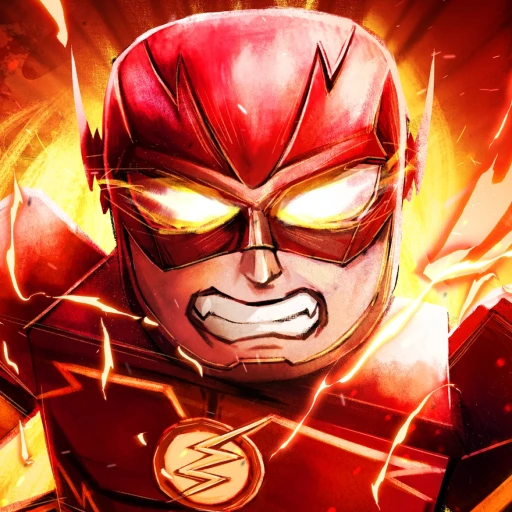
Flashpoint Worlds Collide vs Blade Ball (2026) -- Which Roblox Game Is Better?
Flashpoint Worlds Collide and Blade Ball both sit firmly in the action PvP category on Roblox, yet they deliver wildly different combat experiences. One puts you in the shoes of a DC-inspired speedster tearing through a city at lightning pace. The other drops you into a tense arena where a single poorly timed deflection means instant elimination. If you have been bouncing between these two titles and cannot decide which one deserves your session time, this comparison breaks down every angle that matters in 2026.
We cover gameplay loops, combat mechanics, progression depth, visuals, community size, monetization, social features, and long-term replay value. By the end you will know exactly which game fits your play style -- or why you might want to keep both in your favorites list.
Quick Stats at a Glance
| Category | Flashpoint Worlds Collide | Blade Ball |
|---|---|---|
| Developer | Varis Studios | Wiggity |
| Release Date | June 2023 | June 2023 |
| Genre | Superhero Action / PvP | Competitive Ball-Deflection PvP |
| Total Visits | ~172 Million | ~6.1 Billion |
| Concurrent Players (Avg) | 2K -- 10K | 15K -- 50K |
| Favorites | ~2.7 Million | ~12.4 Million |
| Roblox Place ID | 13796645198 | 13772394625 |
| Platform | PC, Mobile, Xbox | PC, Mobile, Xbox |
| In-Game Currency | Cash, Ignition | Coins |
| Core Loop | Run, Fight, Unlock Suits | Deflect, Survive, Upgrade Abilities |
1. Gameplay and Core Loop
Flashpoint Worlds Collide
Flashpoint Worlds Collide is built around the superhero speedster fantasy. You choose a character inspired by DC's Flash, suit up, and race through a sprawling city at breakneck speed. The core loop revolves around three pillars: battling enemies (both NPC villains and other players), completing story-driven missions, and racing other speedsters through the streets to prove who handles the fastest movement best.
Cash serves as the main currency for purchasing new suits and upgrades, while Ignition fuels your special abilities. Leveling up grants skill points that feed into stat upgrades, creating a build-crafting layer that rewards time investment. Each speedster character plays differently, and unlocking the full roster takes real dedication. Missions range from stopping street-level crime to confronting high-tier villains, giving you a sense of escalating stakes as your character grows stronger.
Blade Ball
Blade Ball strips competitive PvP down to its purest form. A homing ball targets one player at a time, accelerating with each deflection until someone fails to parry and gets eliminated. You carry a sword, and the entire match boils down to timing your deflection at the precise moment the ball reaches striking distance. Misjudge by a fraction of a second and you are out.
Rounds are fast -- typically under two minutes -- and lobbies cycle quickly, meaning you are never far from the next match. Between rounds you can spend Coins on new abilities, weapon skins, and finisher effects. The ability system adds strategic depth: powers like Raging Deflect boost deflection speed, Telekinesis lets you manipulate the ball mid-flight, and Forcefield gives you an automatic deflect shield. Choosing which abilities to equip and upgrade creates meaningful loadout decisions even within this streamlined format.
Edge: Blade Ball for instant gratification and quick-round PvP. Flashpoint Worlds Collide for players who want a broader gameplay loop that mixes PvE, PvP, and open-world exploration.
2. Combat Mechanics
The combat philosophies behind these two games could not be more different, and that divide is the single biggest factor in deciding which one you will enjoy.
Flashpoint Worlds Collide
Combat in Flashpoint is combo-driven and ability-heavy. You chain attacks together, weave in speed-based dodges, and unleash suit-specific powers that vary from lightning throws to time-slowing maneuvers. PvP encounters play out like fighting game exchanges: spacing matters, reading your opponent's approach matters, and knowing when to engage versus disengage at super speed gives skilled players a significant advantage. The movement system itself becomes a weapon -- you can close gaps or escape danger faster than almost any other Roblox game allows.
Against NPCs, the combat leans toward an action-RPG feel. You take on groups of enemies, manage cooldowns, and position yourself to handle multiple threats. Boss fights against named villains test your combo and movement skills while rewarding meaningful loot.
Blade Ball
Blade Ball combat is deceptively simple on the surface but demands serious precision at higher levels. The deflection window tightens as the ball gains speed through successive parries, and top players develop frame-level timing that turns each exchange into a high-stakes reflex duel. Your facing angle matters -- you need to meet the ball at roughly 70 to 90 degrees with your sword to achieve a clean deflect.
Abilities layer on top of this foundation. Raging Deflect turns your next parry into a blistering-speed return shot that opponents struggle to react to. Telekinesis lets you curve the ball toward a specific target, turning a defensive move into an offensive play. Knowing when to activate each ability transforms the game from pure reflex into reflex plus strategy, and that combination is what keeps the competitive scene thriving.
Edge: Flashpoint Worlds Collide for combat variety and combo depth. Blade Ball for raw competitive precision and clutch moments.
3. Progression and Unlockables
Flashpoint Worlds Collide
Progression in Flashpoint revolves around leveling up, earning Cash, and collecting Ignition. Each level grants skill points that you allocate across stats like speed, damage, and ability power, letting you tailor your speedster to your preferred play style. New suits unlock as you hit milestones or complete specific mission chains, and each suit brings its own visual flair and ability loadout. The grind feels purposeful because every session pushes you closer to a tangible unlock or a meaningful stat bump.
Varis Studios drops redemption codes regularly, giving away free Cash, EXP boosts, and occasionally exclusive suits. Check our Flashpoint Worlds Collide codes page for the latest working codes.
Blade Ball
Blade Ball takes a leaner approach to progression. Coins earned through matches go toward unlocking and upgrading abilities, spinning the cosmetic wheel, and purchasing weapon skins and finisher effects. The ability upgrade path is the closest thing to a traditional RPG system here: each ability has multiple tiers, and maxing out a single ability takes sustained play. Cosmetics are plentiful, with rare swords and finishers carrying social status in lobbies.
The game also features a battle pass system that rotates seasonal content, giving dedicated players exclusive rewards on a timed cadence. Codes drop between updates too -- visit our Blade Ball codes page for the current list.
Edge: Flashpoint Worlds Collide for RPG-style stat building and suit collecting. Blade Ball for cosmetic variety and seasonal content loops.
4. Graphics and Visual Design
Flashpoint Worlds Collide
Flashpoint delivers one of the more visually ambitious Roblox experiences in the superhero space. The city environment is dense with buildings, streets, and atmospheric lighting that sells the comic-book setting. Speed effects -- motion blur, lightning trails, and impact flashes -- make traversal feel cinematic. Suit designs carry strong visual identity, with each speedster costume looking distinct even at a distance. The overall aesthetic leans toward a stylized DC Comics tone that works well within Roblox's engine limitations.
Blade Ball
Blade Ball opts for clean, readable arenas over environmental detail. Maps are relatively simple by design, ensuring that the ball is always visible and player silhouettes stand out clearly against the background. Where the game invests its visual budget is in weapon skins, finisher animations, and the ball trail effects. A well-timed deflection triggers satisfying particle bursts, and rare finisher effects add flair to eliminations. The art direction serves competitive clarity first and cosmetic expression second, which is the right priority for a game built on split-second reactions.
Edge: Flashpoint Worlds Collide for environmental detail and world-building atmosphere. Blade Ball for clean competitive readability and polished effect work.
5. Player Count and Community
There is no contest on raw numbers. Blade Ball has crossed 6 billion total visits and maintains a concurrent player count that regularly sits between 15,000 and 50,000 players. Its 12.4 million favorites and 8.1 million upvotes reflect a massive, engaged community that has sustained interest for nearly three years since launch.
Flashpoint Worlds Collide is a smaller title by comparison, with approximately 172 million visits and 2.7 million favorites. Its concurrent player count typically ranges from 2,000 to 10,000, though the game has been trending upward throughout 2025 and into 2026. The community is active but more niche, centered around superhero game enthusiasts and DC fans.
Both games maintain active Discord servers and wiki pages. Blade Ball's larger player base means faster matchmaking and more community-created content. Flashpoint's smaller community can be an advantage for players who prefer tighter social circles and calmer lobbies.
Edge: Blade Ball for sheer community size and matchmaking speed. Flashpoint Worlds Collide for a more focused, growing community.
6. Game Passes and Monetization
Flashpoint Worlds Collide
Flashpoint offers game passes that unlock premium suits, XP multipliers, and Cash boosts. The monetization is straightforward: pay for convenience or exclusive cosmetics, and the rest of the game remains accessible through normal play. Nothing behind a paywall blocks core progression, though certain rare suits do require a game pass purchase. Prices sit in the typical Roblox range, with most passes costing between 50 and 500 Robux.
Blade Ball
Blade Ball monetizes through ability unlocks, the cosmetic wheel, and its rotating battle pass. Some abilities can be unlocked with Coins earned through play, while others may require Robux purchases or specific limited-time offers. The battle pass follows a free/premium track split, giving paying players access to exclusive skins and finishers while free players still progress through a separate reward lane. The spin-based cosmetic system introduces randomness, which can feel frustrating if you are targeting a specific sword skin.
Edge: Flashpoint Worlds Collide for more transparent, straightforward monetization. Blade Ball for volume of cosmetic content available, though the randomized elements may not suit everyone.
Earn Free Robux for Game Passes
Want premium game passes in Flashpoint Worlds Collide or Blade Ball without spending your own money? Earn free Robux on Earnaldo by completing simple tasks, surveys, and app trials. Cash out and upgrade your loadout in either game.
7. Social Features and Multiplayer Experience
Flashpoint Worlds Collide
Flashpoint supports multiplayer across its open world, meaning you naturally encounter other players as you run missions and patrol the city. PvP can happen organically in the open world, and races against other players create impromptu social moments. The shared environment encourages teaming up for tougher villain encounters, and seeing other speedsters zip by in their unlocked suits adds a living-world quality that purely instanced games lack.
Blade Ball
Blade Ball is inherently social. Every round puts you in a lobby with multiple players, and the free-for-all format means you are constantly reading and reacting to other humans. Private servers allow friend groups to set up custom matches, and the game's spectator-friendly format has made it a popular choice for Roblox content creators and livestreamers. The elimination format creates natural drama -- watching the final two players exchange increasingly fast deflections is genuinely tense, whether you are playing or spectating.
Edge: Blade Ball for round-based social intensity and spectator appeal. Flashpoint Worlds Collide for organic open-world encounters and cooperative PvE.
8. Replay Value and Long-Term Retention
Flashpoint Worlds Collide
Flashpoint keeps you coming back through its expanding roster of suits, deepening mission content, and the pursuit of maxing out your character's stats. Varis Studios adds new speedster characters, abilities, and story missions through updates, giving returning players fresh objectives. The level-up grind provides long-term goals, and the variety between PvE missions, PvP combat, and racing keeps individual sessions from feeling repetitive. For players who enjoy the superhero power fantasy, the appeal compounds as your character grows more powerful and your suit collection expands.
Blade Ball
Blade Ball sustains replay value through its competitive skill ceiling and cosmetic collection loop. Because the game is fundamentally skill-based, there is always a higher tier of play to reach. The ability system creates loadout experimentation opportunities, and seasonal battle passes introduce time-limited goals that encourage daily logins. New maps, abilities, and limited-time modes arrive regularly, keeping the meta fresh. The short round structure means you can squeeze in a few games during any play session.
Edge: Flashpoint Worlds Collide for long-form progression and content depth. Blade Ball for session flexibility and competitive skill development.
9. Mobile and Cross-Platform Performance
Both games run on all major Roblox platforms: PC, mobile (iOS and Android), Xbox, and tablet. However, the experience quality varies by game and device.
Blade Ball's simpler arena maps and minimal environmental geometry mean it runs smoothly on lower-end devices. The tap-to-deflect mechanic translates cleanly to touchscreens, making it one of the better mobile competitive experiences on Roblox. Blade Ball's netcode handles cross-platform play reasonably well despite the tight timing demands.
Flashpoint Worlds Collide demands more from hardware due to its open-world city environment and particle-heavy speed effects. Mobile players may experience frame drops in dense areas. The combo-based control scheme feels more natural on keyboard and mouse, though mobile controls are functional. If you primarily play on a phone, Blade Ball offers the more consistent experience.
Edge: Blade Ball for mobile performance and cross-platform consistency. Flashpoint Worlds Collide plays best on PC or console.
10. Update Cadence and Developer Support
Wiggity, the developer behind Blade Ball, has maintained a reliable update schedule since the game went viral in late 2023. New abilities, sword skins, maps, and seasonal events land every few weeks, with balance patches filling the gaps. Responsiveness to community feedback has been a key factor in retaining the player base through 2024, 2025, and into 2026.
Varis Studios behind Flashpoint Worlds Collide has also committed to regular updates, adding new suits, missions, and gameplay features throughout the game's lifecycle. Recent updates have introduced new speedster characters and the anticipated Lightning Throw ability. The studio releases codes to celebrate milestones and keep players checking in between major patches. While the update volume is slightly lower than Blade Ball's, each update tends to carry more substantial content additions given the game's deeper feature set.
Edge: Blade Ball for update frequency. Flashpoint Worlds Collide for update depth per release.
Final Verdict
Flashpoint Worlds Collide and Blade Ball serve fundamentally different player motivations despite both living in the action PvP space. Flashpoint is the game for players who want a rich, progression-driven superhero experience where combat variety, open-world exploration, and character building create a deep session-by-session loop. Blade Ball is the game for players who want pure competitive intensity in a format that respects their time -- fast rounds, clear skill expression, and a massive community to test yourself against. Neither game is objectively better. The right choice depends entirely on whether you want breadth (Flashpoint) or focus (Blade Ball). Both are free, so the best move is to try each for an hour and let your instincts decide.
Who Should Play What?
- Play Flashpoint Worlds Collide if: you love superhero games, enjoy open-world exploration, want RPG-style character progression, and prefer combat with combo depth and multiple engagement types (PvE and PvP).
- Play Blade Ball if: you thrive on competitive reflex-based games, want fast round-based matches you can drop in and out of, enjoy climbing skill rankings, and appreciate a large active community.
- Play both if: you want variety in your Roblox rotation -- Flashpoint for longer sessions when you want to grind progression, and Blade Ball for quick competitive bursts when you have limited time.
- Choose Flashpoint if you come from: other superhero Roblox games, anime fighting titles, or open-world action RPGs. The movement system and mission structure will feel familiar.
- Choose Blade Ball if you come from: other competitive Roblox PvP games like The Strongest Battlegrounds, Murder Mystery 2, or arena-style titles. The elimination format and reflex-based gameplay will click immediately.
Frequently Asked Questions
Blade Ball is significantly more popular. It has accumulated over 6 billion total visits and regularly pulls between 15,000 and 50,000 concurrent players. Flashpoint Worlds Collide has around 172 million total visits with roughly 2,000 to 10,000 concurrent players. Blade Ball's viral growth and accessible pick-up-and-play format give it a much larger active community, but Flashpoint has been trending upward throughout 2025 and into 2026.
Both offer strong PvP but in very different formats. Blade Ball is a pure PvP arena game where every round pits you against other players in ball-deflection duels that test reaction time and ability usage. Flashpoint Worlds Collide offers open-world PvP where speedster combat involves combos, suit abilities, and high-speed chases. Blade Ball delivers tighter competitive rounds, while Flashpoint provides a more cinematic, free-roaming PvP experience.
Yes. Platforms like Earnaldo let you complete simple tasks such as surveys, app trials, and offers and withdraw real Robux that you can spend on game passes or in-game purchases in either game. Both games have natural downtime between rounds or missions that works well for earning on the side. Visit earnaldo.com/earn to get started.
Blade Ball is easier to pick up because the core mechanic is simple: press a button to deflect the ball at the right moment. You can start having fun within your first minute. Flashpoint Worlds Collide requires more time to learn its movement system, combo mechanics, and suit abilities, but its PvE missions offer a gentler on-ramp before you jump into player combat. If you want instant action, start with Blade Ball. If you prefer learning a deeper movement system at your own pace, Flashpoint is a solid choice.
Both games receive regular updates. Blade Ball, developed by Wiggity, consistently adds new abilities, swords, maps, and limited-time events every few weeks. Flashpoint Worlds Collide from Varis Studios also delivers updates with new suits, missions, and features, though on a slightly less frequent cadence. Both developers release redemption codes between major patches to keep players engaged.
Yes, both games are fully playable on mobile through the Roblox app on iOS and Android. Blade Ball's tap-to-deflect mechanic translates well to touchscreens, making it one of the more mobile-friendly competitive games on Roblox. Flashpoint Worlds Collide works on mobile too, though its fast movement and combo system can feel more precise with a keyboard and mouse setup. Both games also support PC, Xbox, and tablet.