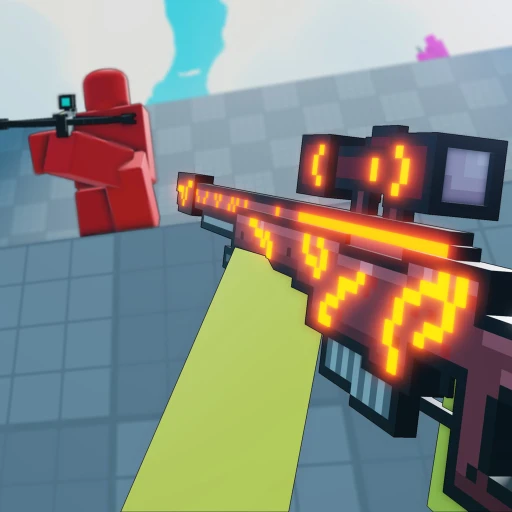
FPS Flick vs RIVALS (2026) -- Which Roblox Shooter Is Better?
Two of Roblox's most popular shooter experiences sit on opposite ends of the FPS spectrum. FPS Flick is the platform's go-to aim trainer -- a solo laboratory where you grind flick shots, tracking drills, and reaction-time benchmarks until your crosshair placement is second nature. RIVALS is the full-blown competitive FPS that drops you into 5v5 team fights with ranked ladders, weapon loadouts, and map rotations. They're both shooters, but the comparison is a bit like comparing a batting cage to an actual baseball game. So which one deserves your time? Let's break it down across every category that matters.
Quick Stats Comparison
| Feature | FPS Flick | RIVALS |
|---|---|---|
| Genre | Aim Trainer / Practice FPS | Competitive Team FPS |
| Typical Concurrent Players | 2,000 - 8,000 | 40,000 - 80,000 |
| Core Game Mode | Solo target drills | 5v5 team matches |
| Ranked System | Leaderboard-based scores | Full ranked ladder with tiers |
| Weapons | Simulated crosshair types | 15+ unique weapons with loadouts |
| Maps | Training arenas (6+) | 12+ competitive maps |
| Mobile Friendly | Moderate | Playable but challenging |
| Monetization | Cosmetic crosshairs, premium drills | Skins, emotes, battle pass |
| Average Session | 10 - 20 minutes | 25 - 45 minutes |
| Total Visits | 180M+ | 3.5B+ |
Gameplay Mechanics
FPS Flick strips the shooter experience down to its skeleton. You load into a training arena, targets appear at randomized positions, and your job is to snap your crosshair onto them as fast and accurately as possible. There are flick-shot scenarios where targets pop up for 800 milliseconds, tracking drills where spheres glide along curved paths, and reaction-time tests that measure your raw speed in milliseconds. Every drill gives you a score out of 100, and there's a global leaderboard for each scenario.
The beauty of FPS Flick is its isolation. There are no teammates to carry you, no camping spots to exploit, and no weapon meta to worry about. Your score is a pure reflection of hand-eye coordination. The game also lets you customize sensitivity settings, crosshair size, target speed, and spawn patterns -- making it genuinely useful for serious players who want to dial in their muscle memory.
RIVALS, on the other hand, is a full competitive experience. You pick from weapon loadouts that include assault rifles, SMGs, shotguns, snipers, and sidearms. Maps range from tight close-quarters corridors to open sightlines that reward long-range precision. The core mode is a 5v5 objective-based format with attack and defense rounds, but there are also team deathmatch, free-for-all, and gun game rotations.
Where RIVALS really shines is in how it layers strategy on top of mechanics. You need to learn callouts, coordinate pushes with teammates, manage your economy for weapon upgrades between rounds, and adapt your loadout to the map. Raw aim matters, but game sense, positioning, and communication matter just as much. A player with mediocre flick speed but great map knowledge will regularly beat a human aimbot who doesn't understand angles.
Progression and Ranking
FPS Flick's progression is refreshingly simple. You complete drills, earn scores, and climb global leaderboards. There's a personal stats dashboard that tracks your average accuracy percentage, reaction time in milliseconds, and improvement trends over 7-day and 30-day windows. The game also has achievement badges for hitting specific accuracy thresholds -- stuff like maintaining 90% accuracy across 50 consecutive flick trials or hitting sub-200ms reaction times.
There's no XP bar or season pass here. Your "rank" is literally your score on the leaderboard. Top 100 players get a visible badge next to their name, and the top 10 get featured on the game's homepage. It's a meritocracy in the purest sense, and that simplicity keeps things focused.
RIVALS takes a layered approach to progression. The ranked system uses a tier structure similar to other competitive shooters: Bronze, Silver, Gold, Platinum, Diamond, and Champion. You earn or lose Elo points based on match results, with individual performance metrics like K/D ratio and objective contributions factoring into point calculations. Climbing from Gold to Platinum typically requires around 80-120 matches of consistent play.
On top of ranked, RIVALS has a seasonal battle pass (free and premium tiers), daily and weekly challenges, weapon mastery tracks that unlock camos for specific guns, and a lifetime stats page. There's always something to chase, which keeps engagement high -- but it can also feel like a treadmill if you're the type who gets anxious about completing every challenge before the season ends.
Graphics and Performance
FPS Flick keeps visuals deliberately minimal. Training arenas use flat colors, simple geometric targets, and clean backgrounds that eliminate visual clutter. This isn't a limitation -- it's a design choice. The fewer distracting elements on screen, the better you can focus on your crosshair and targets. Frame rates stay consistently high even on lower-end devices because there's almost nothing to render beyond the targets and arena walls.
RIVALS pushes Roblox's rendering engine harder than most games on the platform. Maps feature detailed textures, dynamic lighting, particle effects for explosions and smoke grenades, and environmental details like scattered debris and flickering lights. Character models have distinct silhouettes for each team, and weapon skins feature animated elements like glowing tracers and reactive camos. It looks genuinely impressive for a Roblox title.
The trade-off is performance. On mid-range devices, RIVALS can dip below 40 FPS during chaotic firefights with multiple smoke effects active. Mobile players especially feel this -- the game is technically playable on phones, but frame drops during close-range engagements can make the difference between winning and losing a gunfight. The developers have added a "performance mode" that strips back visual effects, which helps, but it's still noticeably heavier than FPS Flick.
Community and Social Features
FPS Flick's community is small but intensely focused. The Discord server has about 15,000 members, and conversations revolve almost entirely around sensitivity settings, accuracy benchmarks, and aim technique. People share their drill scores, compare improvement graphs, and debate optimal crosshair configurations. It's a niche community, but the signal-to-noise ratio is excellent. You won't find much casual chatter -- everyone's there to get better.
In-game, FPS Flick is primarily a solo experience. There's a spectator mode where you can watch top leaderboard players run drills in real time, which is genuinely educational. A recent update added head-to-head challenge rooms where two players compete on the same drill simultaneously, adding a competitive social element. But for the most part, you're training alone.
RIVALS is inherently social. Every match puts you on a 5-player team, and the game has built-in voice chat, text chat, and a ping system for callouts. The community is massive -- the official Discord has over 200,000 members, and there's an active ecosystem of content creators, tournament organizers, and clan communities. Ranked play naturally creates social bonds; you'll friend-request teammates who communicate well, form stacks, and grind together.
The flip side of a large community is toxicity. RIVALS has the usual competitive FPS issues: teammates blaming each other for losses, spawn-camping complaints, and occasional cheating accusations. The moderation team is active, but keeping a community of this size civil is an ongoing battle. FPS Flick largely sidesteps these issues because there's nobody to blame but yourself when your accuracy drops.
If you're looking for ways to earn Robux for either game, our RIVALS free Robux guide covers the latest methods.
Monetization and Value
FPS Flick's monetization is light. The base game with all standard training scenarios is completely free. Robux purchases unlock cosmetic crosshair packs (ranging from 75 to 250 Robux), premium drill scenarios with unique target behaviors (150-400 Robux per pack), and a "Pro Stats" dashboard that gives deeper analytics on your performance trends. None of the paid content gives a competitive advantage -- it's all cosmetic or analytical.
RIVALS follows the standard free-to-play competitive model. All weapons, maps, and game modes are free. The battle pass costs 499 Robux per season and includes 50 tiers of cosmetic rewards like weapon skins, character outfits, emotes, and spray tags. Individual weapon skins range from 100 to 800 Robux in the shop, and limited-time bundles can run 1,200-2,000 Robux. There's also a "starter pack" for 399 Robux that includes a premium skin set and enough currency to unlock the battle pass.
Neither game is pay-to-win, which is important. You can't buy better weapons, faster movement, or higher damage in RIVALS. You can't buy inflated scores in FPS Flick. Both games respect the free player. That said, RIVALS has significantly more content to spend Robux on, which means the "I want everything" cost is much higher. If you're on a tight budget, FPS Flick is the cheaper hobby by a wide margin.
For active RIVALS codes that can save you Robux on cosmetics, we keep an updated list.
Updates and Developer Support
RIVALS operates on a seasonal content calendar. Major updates drop every 3-4 weeks and typically include a new map or weapon, balance adjustments based on community data, and fresh battle pass content. Seasonal events -- like holiday-themed limited-time modes and competitive tournaments with exclusive rewards -- keep the game feeling alive. The development team communicates through patch notes on Discord and developer streams where they preview upcoming content.
FPS Flick updates on a similar cadence but with smaller scope. New training scenarios appear roughly monthly, and the developers regularly tweak target behavior algorithms, add sensitivity calibration tools, and reset leaderboards to keep competition fresh. The development team is smaller, so individual updates are less flashy, but they're consistent and focused on the core training experience.
Both games have shown strong long-term commitment. RIVALS has maintained its update schedule for over two years now without significant gaps. FPS Flick has been steadily growing since its launch, adding features that its community specifically requests. Neither game feels abandoned or neglected, which is more than you can say for plenty of Roblox titles that blow up and then fade.
Who Should Play Which Game?
Play FPS Flick If You...
Want to genuinely improve your aim mechanics across all Roblox shooters. Prefer solo, focused practice sessions over team-based chaos. Like tracking your progress through hard numbers and leaderboard positions. Don't want to spend much Robux. Enjoy the satisfaction of watching your reaction time drop from 280ms to 210ms over a few weeks of consistent practice. Want a warm-up tool before jumping into competitive matches in other games.
Play RIVALS If You...
Want a complete competitive FPS experience with teams, strategies, and ranked climbing. Enjoy the social side of gaming -- communicating with teammates, building a squad, joining a community. Like having tons of cosmetic content to chase through battle passes and seasonal events. Want the adrenaline of clutching a 1v3 in a ranked match. Prefer longer play sessions with variety in maps and modes.
Play Both If You...
Are serious about competitive Roblox FPS gaming. The ideal workflow is 10-15 minutes of FPS Flick drills to warm up your mechanics, then queuing into RIVALS ranked matches with sharp reflexes. Many top RIVALS players follow exactly this pattern, and their consistency shows it works. The two games aren't competitors -- they're complementary tools for different parts of the same skill set.
Final Verdict
FPS Flick and RIVALS serve fundamentally different purposes, so declaring an outright "winner" misses the point. If you forced us to pick one game to play exclusively, RIVALS wins because it's a complete, self-contained competitive experience -- you can improve your aim through live combat while also enjoying strategy, teamwork, and progression depth. But you'd be leaving performance on the table by skipping FPS Flick's targeted training. The smartest approach is using both: FPS Flick for focused warm-ups and mechanical refinement, RIVALS for the actual competitive grind. Together, they make you a better Roblox shooter player than either one alone.
Earn Free Robux for Skins and Battle Passes
Want premium crosshairs in FPS Flick or the RIVALS battle pass without spending real money? Earnaldo lets you earn free Robux by completing simple tasks -- no surveys, no downloads, just straightforward earning.
Frequently Asked Questions
FPS Flick is specifically designed as an aim trainer with dedicated flick-shot drills, tracking exercises, and accuracy scores. If your main goal is raw mechanical improvement, FPS Flick is the better choice. RIVALS can improve your aim through live combat, but it doesn't isolate specific skills the way FPS Flick does.
Both games are playable on mobile through the Roblox app, but the experience differs significantly. FPS Flick's target-based drills translate reasonably well to touchscreen controls. RIVALS is much harder on mobile because you're fighting real players who may be on PC with a mouse and keyboard advantage.
RIVALS has a substantially larger active player base, regularly pulling 40,000-80,000 concurrent players. FPS Flick is a niche aim trainer that typically sees 2,000-8,000 concurrent users. However, FPS Flick's community is tightly focused on skill improvement, so the smaller size doesn't hurt the experience.
Neither game requires Robux to play the core experience. FPS Flick's training scenarios are free, with Robux unlocking cosmetic crosshairs and premium drill packs. RIVALS offers all maps and modes for free, with Robux purchases limited to weapon skins, emotes, and battle pass tiers.
Yes, many RIVALS players warm up in FPS Flick before ranked sessions. The flick-shot and tracking drills directly translate to RIVALS gunfights because both games run on the Roblox engine with similar mouse sensitivity scaling. Spending 10-15 minutes in FPS Flick before queuing can noticeably sharpen your first-shot accuracy.
RIVALS receives larger content updates roughly every 3-4 weeks, adding new maps, weapons, and seasonal events. FPS Flick updates on a similar cadence but with smaller patches focused on new training scenarios, leaderboard resets, and sensitivity calibration tools. Both developers are active and responsive to community feedback.