Hide or Die Free Robux Guide (2026) -- Tips, Codes & Strategies for Hiders and Seekers
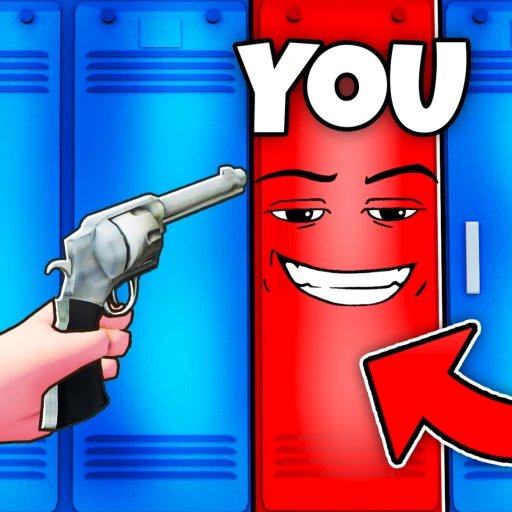
Hide or Die has pulled in over 673 million visits since launching in July 2024, and right now roughly 7,900 players are morphing into bookshelves and trash cans across its servers. If you've never held your breath while a Seeker walked right past your disguised lamp, you're missing one of the best prop hunt experiences on Roblox. This guide covers everything you need to win on both sides of the round: Hider morph strategies, Seeker hunting techniques, the power system, crate economy, battle pass breakdown, and legitimate ways to earn Robux for that premium pass.
What's in This Guide
What Is Hide or Die?
Hide or Die is an asymmetric prop hunt game developed by Splitbrick Studio / 0 CCU Games that blends classic hide-and-seek with horror elements and a morph system that lets you transform into literally any object on the map. It launched on July 2, 2024, and climbed to an all-time peak of 52,260 concurrent players, establishing itself as one of the top prop hunt experiences on the platform.
The core concept is deceptively simple. One team hides. The other team seeks. But the morph mechanic changes everything. Hiders don't just crouch behind a dumpster and hope for the best — they become the dumpster. Or the fire hydrant. Or that slightly suspicious potted plant sitting in the middle of a hallway. The game turns every single object on the map into a potential disguise, which means Seekers have to scrutinize their environment with paranoid attention to detail.
Each server holds up to 16 players, and the game supports all Roblox platforms including PC, mobile, Xbox, and Meta Quest. With an 87% positive approval rating and consistent player numbers hovering around 7,900 concurrent, Hide or Die has found a loyal audience that keeps coming back for its unique blend of tension, strategy, and the occasional absurdity of watching a refrigerator sprint across the map.

How Rounds Work
Every round in Hide or Die follows a clear structure, and understanding the flow is the first step to winning consistently.
Phase 1: The Head Start (10 Seconds)
At the start of each round, Hiders get a 10-second head start. During this window, Seekers are locked in place while Hiders scatter across the map to find hiding positions. Ten seconds sounds short, but experienced players can cover a surprising amount of ground and morph into a prop before the first Seeker even moves. The head start is your most valuable window as a Hider — don't waste a single second of it.
Phase 2: The Hunt
Once the head start ends, Seekers are released with guns drawn. They play in first-person perspective, scanning the environment for anything that looks out of place. Hiders operate in third-person, which gives them a wider field of view and better situational awareness — a deliberate design choice that compensates for the disadvantage of not being able to fight back effectively.
The key mechanic during this phase is the whistle cycle. Roughly every 30 seconds, all Hiders involuntarily whistle, producing an audio cue and a red circle that briefly reveals their general position. This is the game's built-in anti-camping timer. It forces Hiders to stay alert and be ready to reposition, while giving Seekers periodic location updates to prevent rounds from dragging on endlessly.
Phase 3: Escalation
Here's where Hide or Die gets intense. When a Seeker shoots a disguised Hider, the Hider's health bar becomes visible. Once that health drops to zero, the eliminated Hider joins the Seeker team. This means the Seeker team grows larger over time while the Hider team shrinks. Early in the round, one or two Seekers are scanning the map. By the end, six or seven former Hiders are hunting the remaining survivors. The pressure escalates naturally with every elimination.
Win Conditions
Seekers win by eliminating every single Hider before the round timer expires. Hiders win if at least one player survives to the end of the clock. This creates an asymmetric dynamic where Seekers need to be thorough and fast, while Hiders just need one person to hold out.
Complete Hider Guide
Playing as a Hider is where Hide or Die really shines. The morph system gives you creative freedom that few other Roblox games can match, and mastering it is the difference between getting found in the first 30 seconds and surviving an entire round while Seekers walk past you repeatedly.
The Morph Mechanic
To morph, hold the F key (or the designated button on mobile/console) near any prop or object in the environment. Your character transforms into that object, complete with matching size and appearance. You can morph into furniture, barrels, crates, books, plants, food items, decorative objects — essentially anything the map renders as an interactive prop.
The critical thing to understand about morphing is that it doesn't make you invisible. It makes you disguised. A couch sitting in a living room won't attract attention. That same couch sitting in the middle of a parking lot will get shot immediately. Your morph choice is only as good as your placement, and your placement is only as good as your knowledge of the map.
Positioning After the Morph
Once you've morphed, positioning becomes everything. The best Hiders don't just pick a random prop — they study the environment and morph into something that belongs there. A stack of boxes in a warehouse area, a chair near a table, a lamp on a desk. Seekers are trained to look for objects that seem out of place, so your survival depends on blending in seamlessly.
Avoid morphing into large, distinctive objects unless they're in an area that already contains similar items. A giant piano in a music room is fine. A giant piano in a bathroom is a death sentence. Similarly, avoid morphing into very small objects in wide-open spaces — a tiny cup sitting alone on a vast floor is conspicuous precisely because it's isolated.
Managing the Whistle Cycle
The whistle hits every 30 seconds or so, and it's the single biggest threat to a well-hidden Hider. When the whistle triggers, a red circle appears around your position, giving nearby Seekers a general idea of where you are. You can't prevent the whistle, but you can manage it.
The best approach is to start counting after each whistle. When you sense the next one is coming (around the 25-second mark), evaluate your surroundings. If a Seeker is nearby, be ready to unmorph and reposition the moment the whistle fires and the red circle appears. The whistle tells the Seeker your area, but if you move immediately after, you're no longer where the circle indicated. If no Seeker is close, hold your position and don't panic — the whistle gives a general area, not a pinpoint location.

Complete Seeker Guide
Playing Seeker in Hide or Die requires a completely different mindset from hiding. You're in first-person, which limits your field of view but delivers an intense hunting experience. Your gun has infinite ammo, so the question is never whether to shoot — it's where to shoot and how to cover ground efficiently.
Shoot Everything (Seriously)
This is the single most important piece of Seeker advice. Your ammo is infinite. There is zero penalty for shooting a prop that turns out to be a real prop and not a disguised player. The only cost is time, and even that is minimal. If something looks even slightly suspicious — shoot it. If a bookshelf seems a little off — shoot it. If you're not sure whether that barrel was there before — shoot it.
When you hit a disguised Hider, their health bar appears above the prop. That's your confirmation. Keep shooting until the health bar empties, and the Hider is eliminated. If nothing happens when you shoot an object, it's a real prop and you move on. The worst thing a Seeker can do is walk past a disguised player because they "didn't want to waste a shot." There's nothing to waste.
Using the Whistle to Your Advantage
The whistle cycle is your most reliable tracking tool. Every 30 seconds, red circles appear around Hider positions. When you see a red circle, head toward that area immediately. The Hider knows they've been pinged and might try to reposition, so approach quickly but stay alert for movement. A prop that suddenly shifts position after a whistle is almost certainly a player.
Smart Seekers don't just rush to the red circle's center. They approach from an angle that cuts off likely escape routes. If the circle appeared near a building, cover the exits before going inside. If it appeared in an open area, scan for any props that might be trying to slip away while you're en route.
Environmental Memory
The most underrated Seeker skill is remembering what the map looks like before Hiders morph into things. Did that corner of the room always have three barrels, or was it two? Was there a chair next to that table earlier? Over time, experienced Seekers develop an intuitive sense for what belongs where on each map. Objects that don't match the "normal" layout trigger suspicion, and suspicion means bullets.
Coordinating as the Team Grows
Remember that every eliminated Hider joins your team. As the round progresses, you go from one or two Seekers to potentially eight or nine. Use this growing team to cover more ground. Spread out and systematically sweep different areas of the map rather than clustering in one spot. Call out suspicious areas if you're using voice chat. The late-game Seeker advantage is enormous — use the numbers.
Morph Mastery -- Choosing the Right Prop
The morph system is the heart of Hide or Die, and the difference between a beginner Hider and a veteran comes down to prop selection and placement. Let's break down the principles that govern good morph decisions.
Context Matching
Every prop has a context where it makes sense and a context where it's absurd. A trash can on a street corner is invisible. A trash can inside a bedroom is a target. Before you morph, take half a second to evaluate the area. What objects already exist there? What would a Seeker expect to see? Morph into something that completes the scene rather than disrupting it.
Size Considerations
Large props are easy to spot but hard to confirm. If you morph into a couch, a Seeker might notice you but think "that couch was probably always there." Small props are harder to notice but easier to confirm once spotted — a single cup sitting on an empty counter is immediately suspicious. Medium-sized props in cluttered environments tend to offer the best survival rates because they blend in without attracting specific attention.
The Decoy Play
Advanced Hiders sometimes use a technique where they morph into a deliberately suspicious prop to draw Seeker fire, then immediately unmorph and sprint to a new location while the Seeker is reloading or reorienting. This is risky but effective against aggressive Seekers who commit fully to shooting every suspicious object. The key is having an escape route planned before you execute the bait.
Map-Specific Morph Spots
Each map has particular areas with dense prop clusters that provide natural cover. Warehouses with rows of identical crates, kitchens filled with appliances, offices cluttered with furniture — these areas are Hider paradise because adding one more prop to an already busy scene is nearly undetectable. Learn these high-density areas on each map and prioritize them during the head start.
Powers and When to Use Them
Hide or Die features four powers that Hiders can pick up during rounds. Each one serves a different purpose, and knowing when to deploy them separates good players from great ones.
Healing (Default Power)
Healing is your default power, equipped from the start of every round. It restores a portion of your health when activated. The best time to use Healing is immediately after taking damage from a Seeker but managing to break line of sight. Don't pop it mid-fight when the Seeker is still shooting — you'll just heal damage that gets immediately re-applied. Escape first, heal second.
Speed
Speed gives you a burst of movement speed that lets you outrun Seekers. It's arguably the strongest power for escaping a bad situation. The optimal timing is when a Seeker discovers your morph and starts shooting — activate Speed, unmorph, and sprint to a new area before they can deplete your health bar. Speed is also useful for repositioning after a whistle cycle when a Seeker is converging on your location.
Freeze
Freeze temporarily immobilizes a nearby Seeker, locking them in place for several seconds. This power is devastating when used correctly. If a Seeker is chasing you and you can't outrun them, hitting Freeze buys you enough time to morph into a new prop around a corner. It's also effective in tight spaces where the Seeker's immobility creates a physical barrier that other Seekers can't easily get around.
Swap
Swap instantly teleports you to another position on the map, usually swapping your location with another player. This is the most unpredictable power and the hardest to use strategically. Swap is best deployed as a panic button when you're cornered with no escape route. The randomness means you might end up in a worse position, but when your current position is "surrounded by three Seekers," even random relocation is an improvement.
Coins, Crates & the Economy
Hide or Die's economy runs on Coins, the primary in-game currency. Unlike many Roblox games that rely heavily on Robux-gated purchases, Hide or Die gives you multiple ways to earn Coins through gameplay alone.
How to Earn Coins
Coins come from four main sources. First, you earn them by completing matches — both winning and losing grant some amount, with wins paying more. Second, each map has up to 30 Coins scattered across the environment that you can pick up during rounds. Third, active codes periodically drop that award free Coins when redeemed. Fourth, daily login rewards include Coin bonuses that accumulate over time.
The map pickup Coins are worth pursuing as a Hider, especially during transitions between hiding spots. When you reposition after a whistle cycle, route through areas where Coin pickups tend to spawn. You're already moving, so grabbing Coins along the way costs you nothing extra. Over time, these small pickups add up significantly.
The Crate System
Coins are spent on opening crates, which contain cosmetic items. There are four crate tiers: Common, Uncommon, Rare, and Spooky. Higher-tier crates cost more Coins but contain rarer cosmetic items. The Spooky crates tend to have the most sought-after items and are the most expensive to open.
If you're a casual player, Common and Uncommon crates give solid value. If you're grinding for rare skins and effects, save your Coins for Rare and Spooky crates. There's no gameplay advantage tied to any cosmetic — it's purely about looking good while you're disguised as a washing machine.

Battle Pass Breakdown
Hide or Die's monetization is built around a seasonal battle pass rather than traditional game passes. This means your Robux spending is focused on a single, value-packed purchase rather than multiple individual items.
Free Tier (30 Levels)
Every player has access to the free battle pass tier, which spans 30 levels. You progress by earning XP from playing matches, and each level unlocks a cosmetic reward. The headline item on the free track is the Vampire Gun at Level 30 — a unique weapon skin that looks solid and costs you nothing but time. The free tier rewards along the way include Coins, basic skins, and other cosmetic items that keep you engaged as you progress.
Premium Tier (600 Robux)
The premium battle pass costs 600 Robux and unlocks an additional reward track alongside the free tier. Premium rewards are generally higher quality, with exclusive skins, effects, and cosmetics that aren't available any other way. The premium Level 30 reward is the Hell Fire Knife, which is one of the more visually impressive items in the game. At 600 Robux, the premium pass offers decent value if you play regularly enough to hit Level 30.
Battle Pass Skip (1,499 Robux)
For players who want all rewards immediately without grinding, the Battle Pass Skip costs 1,499 Robux and unlocks everything at once. Whether this is worth it depends on how much you play. If you're grinding daily, you'll hit Level 30 naturally and the skip is unnecessary. If you're a casual player who wants the exclusive items without the time commitment, the skip saves you weeks of progression.
Is the Premium Pass Worth It?
At 600 Robux, the premium pass is one of the more affordable battle passes on Roblox. The Hell Fire Knife alone justifies the cost for many players, and the additional rewards throughout all 30 tiers add meaningful value. If you plan to play Hide or Die regularly during the season, the premium pass is a solid investment. And if you'd rather not spend real money, earning 600 Robux through Earnaldo is entirely doable — more on that below.
Hide or Die Codes
Hide or Die does support redeemable codes that grant free Coins. Codes are released periodically through the game's social media channels and community Discord. For the full, regularly updated list of active and expired codes with step-by-step redemption instructions, check out our dedicated Hide or Die codes page.
While codes give you a nice Coin boost, they're not a replacement for consistent gameplay earnings. Think of them as bonuses that supplement your regular income rather than a primary source. The real grind happens in-match, where you're picking up Coins, completing rounds, and progressing through the battle pass.
How to Get Free Robux for Hide or Die
The premium battle pass costs 600 Robux. The battle pass skip runs 1,499 Robux. Whether you're saving for the premium tier or just want a head start on cosmetics, having Robux makes the Hide or Die experience better. Here are the legitimate ways to get them without opening your wallet.
1. Earn Robux Through Earnaldo
Earnaldo lets you complete simple tasks — surveys, offers, app downloads — and earn points that convert directly into Robux. It's straightforward, it's free, and the Robux go directly to your Roblox account. For context, 600 Robux (enough for the Hide or Die premium battle pass) is achievable within a reasonable timeframe depending on the offers available. This is by far the most reliable free Robux method for players who don't create their own games.
2. Use the Roblox Affiliate Program
Share Hide or Die's game link with your personal affiliate code attached. When new players join through your link and make Robux purchases, you earn a percentage. If you're active in Hide or Die communities, Discord servers, or create content about the game, affiliate earnings can add up. The game's 7,900+ concurrent player base means there's always new players discovering it.
3. Participate in Roblox Platform Events
Roblox runs platform-wide events throughout the year that occasionally reward free items and Robux-equivalent rewards. Keep an eye on the Roblox events page and participate when new events launch. They're free and open to all players.
4. Sell Creations in Your Own Experiences
If you build Roblox experiences or create UGC items, revenue from those projects can fund your purchases in other games. Many players pay for their Hide or Die battle passes using income generated from their own creations. It requires an upfront time investment, but the returns can be substantial.
5. Roblox Premium Stipend
Roblox Premium subscribers receive a monthly Robux stipend (450, 1,000, or 2,200 depending on tier). If you're already a Premium subscriber, your monthly stipend easily covers the Hide or Die premium battle pass with Robux to spare. If you're not a subscriber but play Roblox regularly across multiple games, the stipend often pays for itself in game pass and battle pass purchases.
Want Free Robux for the Hide or Die Battle Pass?
Skip the wallet. Earn Robux for free and spend them on the premium battle pass, battle pass skip, or crate cosmetics.
Advanced Strategies
Once you've got the basics down, these advanced techniques will improve your win rate on both sides of the round.
Hider: The Rotation System
Instead of finding one spot and praying, develop a rotation pattern across the map. Identify three or four strong hiding positions connected by routes that offer cover. After each whistle cycle, rotate to the next position in your circuit. This makes you unpredictable — Seekers who find your previous location arrive to find nothing, because you've already moved to the next spot. The rotation system turns the whistle from a liability into a structured cue for repositioning.
Hider: Third-Person Camera Abuse
As a Hider, your third-person camera gives you a significant vision advantage over the first-person Seekers. Use it. While morphed, you can see Seekers approaching from angles they can't see you from. This advance warning lets you decide whether to hold position or unmorph and relocate before the Seeker gets close enough to notice you. Skilled Hiders constantly scan their surroundings using the third-person camera even while sitting perfectly still as a morphed prop.
Hider: The Late-Round Mindset
Late in the round, when most Hiders have been eliminated and the Seeker team is massive, survival becomes exponentially harder. At this point, stop trying to find the "perfect" hiding spot. Instead, focus on mobility. Keep moving between cover, morph for brief periods, and use powers aggressively. A moving target that constantly relocates is harder to coordinate against than a stationary prop surrounded by eight Seekers who are systematically shooting everything in the area.
Seeker: The Systematic Sweep
Rather than running around the map randomly, divide it into zones and clear each one methodically. Start from one corner of the map and work your way across, shooting every single prop in each room before moving to the next. This guarantees you don't miss anyone in the areas you've already covered. As more Seekers join your team, assign different zones to different players to cover the map faster.
Seeker: Whistle Triangulation
When the whistle cycle fires and you see multiple red circles, prioritize the one closest to your position. But also note where the other circles are. If a teammate is closer to a different circle, let them handle it while you focus on yours. Efficient whistle response across the whole Seeker team ensures no Hider gets a free pass just because their circle appeared in an area nobody was covering.
Seeker: The Patience Trap
Sometimes the most effective Seeker play is to stop moving. Find a central position with good sightlines and just wait. Hiders who think you've moved on will start repositioning, and movement is the easiest way to spot a disguised player. This works especially well in the mid-round when Hiders are getting antsy about the approaching whistle cycle and make premature movements that give away their position.

How Hide or Die Compares to Other Roblox Games
Hide or Die occupies a specific niche within Roblox's game library. It's not a pure horror game like DOORS, which pits players against scripted entities in a procedurally generated hotel. Instead, Hide or Die is PvP at its core — the tension comes from real human opponents making real-time decisions, which means no two rounds play out the same way.
Compared to Murder Mystery 2, another PvP game with asymmetric roles, Hide or Die leans more heavily into environmental interaction. Murder Mystery 2 is about reading player behavior and quick combat. Hide or Die is about environmental deception and spatial awareness. If you enjoy one, you'll likely enjoy the other for different reasons.
For players coming from Flee the Facility, the transition is natural. Both games feature asymmetric teams, one side hunting while the other evades. But where Flee the Facility is about completing objectives under pressure, Hide or Die is purely about survival through disguise. There's no hacking computers or powering exits — just morphing, hiding, and hoping the Seeker doesn't notice that there are six chairs at a table that normally has five.
The Hide or Die hub page on our blog covers additional comparisons, community resources, and updates as they drop.
Frequently Asked Questions
Hold the F key (or the designated button on your platform) near any prop in the environment. Your character transforms into that object, matching its size and appearance. You can morph into almost anything on the map — furniture, barrels, plants, food items, and more. Stay still after morphing to avoid detection, and choose props that match the surrounding environment.
Every 30 seconds or so, all Hiders automatically whistle, producing an audio cue and a red circle indicator that briefly reveals their general position. You can't prevent the whistle. The best strategy is to anticipate it, count the seconds since the last one, and be ready to reposition immediately after it fires. The whistle shows your area, not your exact spot — so moving right after the ping can throw Seekers off.
Yes. Hide or Die periodically releases codes that grant free Coins. Codes are shared on the game's social media and community Discord. Check our Hide or Die codes page for the latest active codes. Redeem them quickly, as codes can expire without warning.
There are four powers: Healing (restores health, equipped by default), Speed (burst of movement speed for escaping), Freeze (temporarily immobilizes a nearby Seeker), and Swap (teleports you to another position). You find power pickups scattered across the map during rounds. Speed and Freeze are generally considered the most consistently useful powers.
The battle pass has 30 tiers. The free track gives cosmetic rewards with the Vampire Gun at Level 30. The premium track costs 600 Robux and adds exclusive rewards on every tier, with the Hell Fire Knife at Level 30. A Battle Pass Skip for 1,499 Robux unlocks everything immediately. You progress by earning XP from playing matches.
When a Seeker depletes a Hider's health bar by shooting their disguised form, the Hider is eliminated and switches to the Seeker team. This means the Seeker side gets stronger as the round progresses while the Hider side weakens. It creates escalating pressure, making late-round survival significantly more challenging for the remaining Hiders.
Yes. Hide or Die supports all Roblox platforms: PC, mobile, Xbox, and Meta Quest. Gameplay is the same across all platforms, though PC players may have a slight edge with faster morph inputs and more precise aiming via mouse and keyboard.
Coins come from four sources: completing matches (wins pay more than losses), picking up Coins scattered across the map during rounds (up to 30 per map), redeeming active codes, and claiming daily login rewards. Coins are spent on opening crates that contain cosmetic items of varying rarity — Common, Uncommon, Rare, and Spooky.
Final Thoughts
Hide or Die has carved out a genuinely fun space in Roblox's prop hunt category. The morph mechanic gives Hiders creative tools that go beyond basic hiding, while the first-person Seeker experience delivers genuine tension as you scan rooms full of potentially disguised players. The whistle cycle prevents rounds from stalling, the escalating Seeker team creates natural pressure curves, and the power system adds enough unpredictability to keep every round feeling fresh.
With 673 million visits and nearly 8,000 concurrent players on any given day, the game isn't slowing down. The seasonal battle pass model gives you something to grind toward, the crate system provides cosmetic variety, and the code drops offer periodic free Coins. Whether you're a patient Hider who likes morphing into a bookshelf and watching Seekers walk past, or an aggressive Seeker who shoots every object that doesn't feel right, there's a playstyle here for you.
Grab the premium battle pass if you want the Hell Fire Knife. Grind the free track if you're after the Vampire Gun. Either way, the strategies in this guide will help you survive longer as a Hider and hunt more efficiently as a Seeker. See you on the map.