Hug or Jail vs Dress to Impress (2026) — Which Roblox Game Is Better?
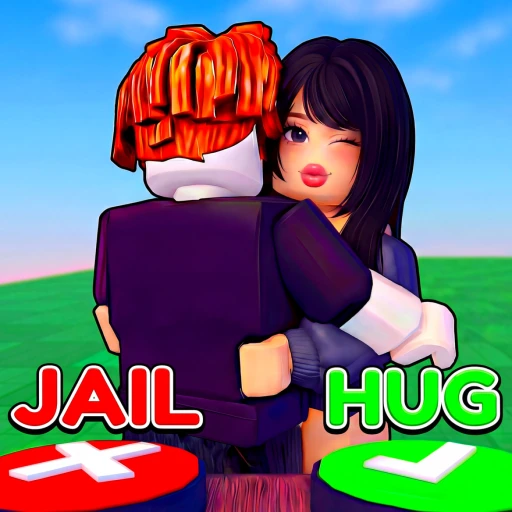
Two of the most talked-about social games on Roblox right now take completely different approaches to the same basic idea: getting other players to like you. Hug or Jail puts one player in the role of the Picker, who decides whether each contender deserves a warm hug or a cold jail cell. Dress to Impress hands you a theme and a wardrobe, then lets the entire lobby vote on whose outfit turned the most heads on the runway.
Both games revolve around social judgment, but the mechanics could not be more different. One is about charm, personality, and convincing a single person to spare you. The other is about creative fashion choices evaluated by a crowd. If you are trying to figure out which one to load up tonight — or which one to sink your next few weeks into — this breakdown covers everything that matters.
Hug or Jail vs Dress to Impress — Quick Stats (2026)
| Category | Hug or Jail | Dress to Impress |
|---|---|---|
| Genre | Social / Party | Fashion / Social Voting |
| Place ID | 118285317524736 | 8838619534 |
| Developer | IN CONTROL GAMES | Dress to Impress Team |
| Concurrent Players | 6K–10K | 50K–75K |
| Core Loop | Picker hugs or jails contenders | Dress up, walk runway, vote |
| Session Length | 5–20 min | 10–25 min |
| Key Features | Emotes, outfits, badges, gifting | Wardrobe, themes, voting |
| Cross-Platform | Yes | Yes |
| Free-to-Play | Yes | Yes |
The player count difference is the first thing that jumps out. Dress to Impress consistently pulls five to eight times more concurrent players than Hug or Jail. That gap matters, but it does not automatically mean DTI is the better game for you. Plenty of the best experiences on Roblox thrive with smaller, tighter communities. Let us dig into what each game actually offers.
Gameplay — What Do You Actually Do?
Hug or Jail
Hug or Jail follows a format that Roblox players will recognize from the "pick or kick" genre, but it adds enough personality to stand on its own. Each round starts with one player being selected as the Picker. The rest of the lobby becomes contenders, and their job is straightforward: convince the Picker to give them a hug instead of throwing them into jail.
The convincing happens through a mix of emotes, outfits, dances, and general vibes. There is no formal argument system or dialogue tree. You just stand in front of the Picker and do whatever you think will earn their approval. Some players go for funny emotes. Others rely on their outfit game. Some just stand there and hope for mercy. The Picker walks through the lineup and makes snap judgments — hug or jail, one at a time.
What makes the game stick is the social tension. When you are standing in line watching the Picker approach, there is genuine suspense. Getting hugged feels like a small victory. Getting jailed generates laughs, outrage, and the kind of drama that fuels group chats for hours afterward. The game also features seasonal events like the Valentine Event, which introduces themed cosmetics and special interaction animations. Badges reward consistent play, and the gifting system lets you share items with friends.
Dress to Impress
Dress to Impress follows a more structured competitive loop. Each round begins with a theme announcement — anything from "cottage core" to "red carpet villain" to "Y2K throwback." Players then get a limited window of time to assemble a complete outfit from a shared wardrobe. The wardrobe includes tops, bottoms, dresses, shoes, accessories, hairstyles, makeup, and layering options. You can mix and match freely within the time limit.
Once the timer expires, every player takes a turn walking the runway while the rest of the lobby watches and votes. The voting system rates outfits on a scale, and the results determine a winner for each round. The competitive element is real — you are not just dressing up for fun, you are dressing up to beat other people who are also dressing up. The theme constraint prevents anyone from relying on a single "best outfit" every round, which keeps the challenge fresh.
The wardrobe itself is one of the deepest character customization systems on Roblox. Hundreds of items span every style imaginable, from streetwear to formal wear to fantasy costumes. The system encourages creativity because the same wardrobe is available to everyone — winning comes down to how well you combine pieces, not what exclusive items you own.
Social Dynamics — How Each Game Handles Player Interaction
This is the category where these two games diverge most sharply, and it is worth spending time on because social interaction is the backbone of both experiences.
Hug or Jail puts all the social power into one player's hands each round. The Picker has absolute authority. There is no appeal, no second chance, no committee vote. This creates a fascinating dynamic where contenders are actively trying to influence a single person's opinion in real time. Friendships form quickly. Inside jokes develop within a single server session. The game generates stories — "remember when the Picker jailed everyone except the person with no outfit?" — that players carry into their next session.
The gifting system amplifies the social element by letting players send items to each other during gameplay. You can gift someone an emote as a peace offering after jailing them, or reward a contender who made you laugh. This layer of generosity gives the game a warmth that purely competitive experiences lack.
Dress to Impress spreads social power across the entire lobby through the voting system. No single player decides your fate. The group does. This feels fairer, and it removes the randomness of whether the Picker happens to like your style. But it also dilutes the personal connection. You are performing for a crowd, not connecting with an individual. The social interaction during dress-up time — when players are running around the wardrobe grabbing items — is chaotic and fun, but the main event is the solitary runway walk followed by anonymous votes.
Edge: Hug or Jail for direct, personal social interaction. Dress to Impress for structured, crowd-based social feedback. If you want to make friends in a server, Hug or Jail creates more opportunities for that. If you want fair judgment on your creative output, DTI's voting system delivers.
Customization and Cosmetics
Both games lean heavily on how your character looks, but they approach cosmetics from opposite directions.
Hug or Jail treats outfits as a tool for social influence. Your appearance matters because the Picker is judging you based on everything they can see. The game offers its own collection of outfits, emotes, and accessories that you can equip before rounds. These cosmetics serve a dual purpose — they look good and they help you stand out in the lineup. The emote library is particularly important because your emote choice is often the deciding factor in whether you get hugged or jailed. Seasonal items tied to events like the Valentine Event give collectors something to chase.
Dress to Impress makes customization the core mechanic rather than a supporting feature. The wardrobe is the game. Every item exists to be combined with other items under time pressure, and the depth of options is staggering. You can build entirely different looks every round without repeating yourself. The system supports layering, color coordination, and accessorizing in ways that most Roblox games do not attempt. Where Hug or Jail gives you a fixed outfit to wear into rounds, DTI gives you a blank canvas and hundreds of paint colors every single time.
Edge: Dress to Impress, and it is not close. Fashion customization is the entire game, and the wardrobe system is among the best character-styling tools on the platform. Hug or Jail's cosmetics are fun but serve a supporting role.
Progression — How Does Each Game Keep You Coming Back?
Hug or Jail uses a badge-based progression system. You earn badges for hitting milestones — number of hugs received, number of rounds as Picker, consecutive days played, and event participation. Badges serve as a visible record of your experience, and veteran players display them with pride. The game does not have a traditional XP bar or leveling system, which keeps it accessible but means progression-driven players may feel the absence of a structured climb. New emotes and outfits release periodically, giving you items to work toward, and the gifting economy adds an informal layer of social progression as you build a reputation in the community.
Dress to Impress has a clearer progression path. You earn in-game currency from competing in rounds, and that currency unlocks additional wardrobe pieces and customization options. A leveling system tracks your overall experience and gates some items behind level thresholds. Seasonal collections rotate in and out, creating urgency to play during limited-time windows. Your win history acts as an informal leaderboard, and consistent winners develop a reputation in the community. The combination of currency earning, level progression, and seasonal drops gives DTI a progression loop that rewards regular play more explicitly than Hug or Jail's badge system.
Edge: Dress to Impress for structured progression with clear rewards. Hug or Jail for players who prefer social progression over systems-driven advancement.
Graphics and Presentation
Hug or Jail goes for a bright, playful aesthetic that matches its lighthearted tone. The environments are colorful and clean, with simple stage areas where contenders line up and the Picker makes their rounds. Character models display emotes and outfits clearly, which matters because visual first impressions drive the entire game. The jail area has its own distinct look — dramatic enough to make getting jailed feel like an event, funny enough to keep it from feeling punishing. Audio cues punctuate key moments: a satisfying sound when you receive a hug, a comedic thud when you land in jail. The presentation is not technically ambitious, but it serves the gameplay loop effectively.
Dress to Impress invests more heavily in visual presentation because the game depends on outfits looking good. The runway stage is well-lit with dynamic lighting effects that highlight fabric textures and accessory details during the walk. Lobby environments rotate with themes and seasonal updates, adding visual variety between rounds. Character rendering prioritizes clothing detail — colors are vibrant, layering looks intentional, and the overall presentation during the runway walk feels polished. Background music sets the tone for each phase of the round, from the upbeat energy of the dressing room to the spotlight drama of the runway.
Edge: Dress to Impress for visual polish and character presentation. Hug or Jail for charm and audio-visual comedy timing.
Player Count and Community (July 2026)
Dress to Impress is the larger game by a significant margin. With 50K-75K concurrent players at peak hours, DTI consistently ranks among the most-played experiences on Roblox. The community is deeply engaged on social media, with outfit showcases, theme tier lists, and runway compilations performing well on TikTok and YouTube. The Dress to Impress Team has cultivated an active player base that treats the game as both entertainment and creative outlet.
Hug or Jail runs at 6K-10K concurrent players, which is a healthy number for any Roblox game even if it looks modest next to DTI's figures. IN CONTROL GAMES has built a loyal following, and the game's community tends to be tight-knit — smaller servers mean you are more likely to recognize returning players and develop ongoing social connections. The game generates content on YouTube and TikTok through its naturally dramatic moments, and creators who focus on "pick or kick" style content have adopted Hug or Jail as a staple.
The community atmospheres differ in a predictable way. Hug or Jail servers are rowdier and more personality-driven because the game rewards putting yourself out there. DTI servers are more focused and quietly competitive, with socializing happening mostly during the dressing phase. Both communities are generally welcoming to new players, though Hug or Jail's format makes it easier for newcomers to jump in — there is no learning curve for standing in a line and hoping for the best.
Edge: Dress to Impress for sheer community size and content creator ecosystem. Hug or Jail for intimate community feel and approachability.
Monetization — How Do Game Passes Compare?
Hug or Jail offers game passes and in-game purchases focused on cosmetic items. You can buy premium emotes, exclusive outfits, and special accessories that let you stand out in the contender lineup. The gifting system also ties into monetization — some giftable items are premium. None of these purchases affect the Picker's judgment in any mechanical way. A free player with good timing on a default emote can get hugged just as easily as someone wearing a full premium outfit. The monetization is light and does not create a pay-to-win environment.
Dress to Impress features a VIP game pass that unlocks exclusive wardrobe items, early access to seasonal collections, and a visual badge during runway walks. The pass is priced at a mid-range point and provides ongoing value since new VIP items are added with each season. Free players still have access to the vast majority of the wardrobe, and the voting system does not favor VIP items over free ones. The game earns additional revenue through individual item packs and limited-time cosmetic bundles tied to themed events.
Edge: Roughly even. Both games keep monetization cosmetic and optional. Dress to Impress offers a more structured VIP experience with rolling content updates. Hug or Jail keeps things simpler with individual item purchases. Neither game pressures you to spend money to enjoy the core experience.
Replay Value — Will You Still Be Playing Next Month?
Hug or Jail thrives on the unpredictability of human behavior. No two rounds play out the same way because every Picker has different preferences and every lobby has a different energy. The game is at its best when you play with friends because the hug-or-jail decisions generate real social stakes within your group. "Why did you jail me and hug the person with no outfit?" becomes a running joke that spans sessions. The format is inherently repeatable because the humans are the content — the game is just the framework. Seasonal events like the Valentine Event add temporary variety, and badge hunting gives completionists a long-term goal.
The risk for Hug or Jail is that the format can feel samey if you play solo. Without the social context of friends or recognizable server regulars, the hug-or-jail decision carries less weight. The game needs people you care about in the lobby to reach its full potential.
Dress to Impress has replay value built into its rotating theme system. As long as the developers keep adding new themes and wardrobe items, the creative challenge stays fresh. The competitive element also drives replayability — winning a round feels good enough that you want to queue again immediately. The seasonal content drops create natural return points for players who drift away. The leveling system provides a slow-burn reason to keep playing even when the novelty of the format has worn off.
The risk for DTI is mechanical repetition. The loop — dress, walk, vote — does not change between rounds. If you are not intrinsically motivated by fashion creativity, the game can start feeling like the same activity with different themes painted over it. The voting results can also feel arbitrary at times, which frustrates competitive players who feel their outfits deserved higher scores.
Edge: Dress to Impress for solo replay value thanks to its structured progression and content pipeline. Hug or Jail for group replay value thanks to its social unpredictability. Both games can hold your attention for weeks, but they rely on different hooks to do it.
Head-to-Head Verdict — Hug or Jail vs Dress to Impress in 2026
The Verdict
Choose Hug or Jail if you want a social party game that generates laughs, drama, and memorable moments with friends. The Picker mechanic creates genuine tension, the emote-based gameplay is instantly accessible, and the smaller community means you build real connections in servers. It is the better pick for players who value social interaction over competition, and for groups looking for a quick, low-stakes game that everyone can enjoy regardless of skill level.
Choose Dress to Impress if you want creative competition, deep customization, and a game that rewards your fashion sense. The wardrobe system is one of the best on Roblox, the themed rounds keep the challenge fresh, and the voting system gives you immediate feedback on your creative choices. It is the better pick for players who enjoy expressing themselves through style and competing against a large, active community.
Overall winner: Dress to Impress — by a clear margin. DTI's larger player base, deeper customization systems, stronger progression loop, and more polished presentation make it the more complete package for most players. But Hug or Jail fills a niche that DTI does not even attempt — pure social party gameplay with no creative pressure. If you want to vibe with friends and see who gets jailed, nothing else on Roblox does it quite like Hug or Jail. The two games complement each other well, and plenty of players keep both in their rotation.
Who Should Play What?
- You want quick social fun with friends: Hug or Jail. Rounds are fast, the format creates instant inside jokes, and the game is best experienced with people you know.
- You enjoy fashion and creative expression: Dress to Impress. The wardrobe depth and themed rounds are tailor-made for players who think in outfits.
- You want competitive gameplay: Dress to Impress. The voting system provides measurable results and a real sense of winning or losing.
- You prefer low-pressure social games: Hug or Jail. There is no skill requirement, no timed pressure, and the worst outcome is a funny jail animation.
- You are a content creator: Both work. Hug or Jail generates reaction-heavy clips. Dress to Impress generates showcase and challenge content. Pick based on your audience.
- You want to earn Robux while playing: Both work with Earnaldo. DTI's longer rounds give you more time to complete earning tasks on the side, while Hug or Jail's quick sessions let you check progress between rounds.
For game-specific earning strategies, check out our Hug or Jail free Robux guide and Dress to Impress free Robux guide.
Hug or Jail Tips for New Players
If you are loading into Hug or Jail for the first time, the biggest mistake you can make is standing still. The Picker is scanning the lineup quickly, and players who are doing nothing tend to get jailed by default. Use your emotes. Even the free ones work. Timing matters more than rarity — hitting a well-timed dance when the Picker walks past you is more memorable than passively wearing an expensive outfit.
Pay attention to the Picker's pattern. Some Pickers jail everyone wearing the same color. Some hug the funniest emote. Some are completely random. Reading the Picker's vibe in the first few decisions gives you information about how to position yourself for a hug. If the Picker is jailing flashy outfits, tone it down. If they are rewarding confidence, go big.
The gifting system is also worth engaging with early. Sending a small gift to someone who jailed you is a power move that often earns you a hug in the next round. Building social capital in a server pays off across multiple games.
Dress to Impress Tips for New Players
Speed is your most important skill in Dress to Impress, and it only comes with familiarity. Spend your first few rounds just exploring the wardrobe. Learn where the different item categories are. Figure out which accessories layer well over which tops. Getting comfortable with the wardrobe layout lets you execute on theme ideas faster, which gives you more time to refine details before the timer runs out.
Theme interpretation matters more than outfit quality. If the theme is "beach vacation" and you put together a technically perfect formal gown, you will lose to a mediocre beach outfit that matches the prompt. Voters reward relevance first and execution second. Read the theme carefully and build toward it — do not just assemble whatever looks best in isolation.
Watch the runway walks of players who consistently win. You will notice patterns in how top players use color coordination, accessory placement, and silhouette variety to create outfits that read well from a distance. The voting happens while your character is walking, so your outfit needs to look good in motion, not just standing still in the wardrobe.
Cross-Platform Play and Accessibility
Both Hug or Jail and Dress to Impress support full cross-platform play through the Roblox ecosystem. You can play on PC, Mac, mobile (iOS and Android), Xbox, and any other platform that runs Roblox. Your progress, cosmetics, and friends list carry across all devices.
Hug or Jail is particularly well-suited to mobile play because the core gameplay involves simple interactions — tapping emotes, moving your character in line, and watching the Picker's decisions. There are no complex controls or precision-dependent mechanics. The game runs smoothly on lower-end devices because the environments are not graphically demanding.
Dress to Impress works on mobile but benefits from a larger screen. The wardrobe interface involves browsing through many item categories and dragging pieces onto your character, which is easier with more screen real estate. Touch controls work fine, but PC players have a slight practical advantage in wardrobe navigation speed — not enough to be unfair, but enough that mobile players should account for slightly slower outfit assembly.
Which Game Updates More Frequently?
Dress to Impress has a more visible update cadence. The Dress to Impress Team releases seasonal collections, new wardrobe items, themed events, and limited-time content on a regular schedule. Each update adds reasons for existing players to return and gives new players more options to explore. The game's social media channels announce updates consistently, and the community responds with high engagement around each new drop.
Hug or Jail receives updates tied to events and seasonal moments. IN CONTROL GAMES has added the Valentine Event, new emote packs, outfit collections, and badge expansions over time. The update pace is slower than DTI's, which is partly a function of the game's smaller development team and partly because the core format requires less content injection to stay fresh. When you build a game around human social behavior, the "content" renews itself every round.
Edge: Dress to Impress for update frequency and content volume. Hug or Jail for having a format that stays fresh without constant content drops.
Earn Free Robux for Hug or Jail or Dress to Impress
Complete simple tasks on Earnaldo and withdraw real Robux — no downloads, no generators, no scams.
Earnaldo is a platform where Roblox players earn free Robux by completing simple tasks like surveys, watching videos, and trying apps. The Robux you earn can be spent on game passes, outfits, and accessories in any Roblox game, including Hug or Jail and Dress to Impress. It works on any device and takes just a few minutes to get started.
Frequently Asked Questions
Is Hug or Jail or Dress to Impress more popular on Roblox in 2026?
Dress to Impress is significantly more popular. It averages 50K-75K concurrent players compared to Hug or Jail's 6K-10K. DTI has also accumulated far more total visits over its lifetime. Both games are growing, but Dress to Impress holds a commanding lead in raw player numbers.
Which game is better for playing with friends — Hug or Jail or Dress to Impress?
Both games work well with friends, but the experience is different. Hug or Jail is built around direct social interaction — picking friends to hug or jail creates immediate drama and laughter. Dress to Impress lets you compete against friends in fashion rounds, which is fun but less directly interactive. For group laughs, Hug or Jail has the edge. For creative competition, Dress to Impress wins.
Can you play Hug or Jail and Dress to Impress on mobile?
Yes. Both games are fully playable on mobile through the Roblox app on iOS and Android. Hug or Jail's simple tap-to-choose interface works well on touchscreens. Dress to Impress's drag-and-drop wardrobe system is also optimized for mobile, though outfit assembly benefits from a larger screen.
Are Hug or Jail and Dress to Impress free to play?
Yes. Both games are completely free to play. Any purchases are optional and cosmetic — emotes, outfits, and accessories in Hug or Jail, or VIP wardrobe items in Dress to Impress. The full core experience of each game is accessible without spending Robux.
Which game has longer play sessions — Hug or Jail or Dress to Impress?
Both games feature relatively short play sessions compared to RPGs or simulators. Hug or Jail rounds typically run 5-15 minutes, and players often queue multiple rounds in a sitting. Dress to Impress rounds last 10-20 minutes including dressing time, runway, and voting. Neither game demands hour-long commitments, making both ideal for casual play.
Which game is better for younger players — Hug or Jail or Dress to Impress?
Both games are appropriate for younger players. Hug or Jail has a simpler concept — you either get hugged or jailed — that even very young kids understand immediately. Dress to Impress requires a bit more creative decision-making with the wardrobe system. For the youngest players, Hug or Jail is slightly easier to pick up.