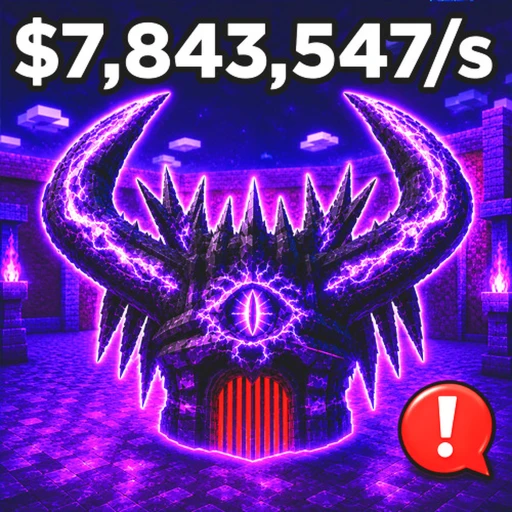
Inside Brainrot Head vs Steal a Brainrot (2026) -- Which Roblox Game Is Better?
Both games run on the same Italian brainrot meme energy and both are built around stealing brainrots, but they play in completely different leagues. Inside Brainrot Head is a tight 2026 newcomer about raiding giant NPC heads and outrunning a Guard. Steal a Brainrot is one of the biggest games on all of Roblox, a sprawling PvP tycoon with billions of visits and a brutal rarity ladder. Here's how they stack up so you can pick the right one.
Quick Stats
| Feature | Inside Brainrot Head | Steal a Brainrot |
|---|---|---|
| Genre | Tycoon / steal-and-escape | Tycoon / simulator with PvP |
| Place ID | 105633123928294 | 109983668079237 |
| Developer | Kibrix Trends | Brazilian Spyder / Do Big Studios |
| Released | March 28, 2026 | May 16, 2025 |
| Concurrent Players | ~3,225 peak | ~500,000 |
| Total Visits | ~25.2 million | ~60-68 billion |
| Core Loop | Steal from NPC heads, outrun Guard | Buy/steal brainrots, defend base |
| PvP Stealing | No (NPC Guard only) | Yes (raid other players) |
| Rarity Tiers | Simpler ladder | 8 tiers (Common to OG) |
| Free-to-Play | Yes | Yes |
Core Loop & Gameplay
Inside Brainrot Head is focused and fast. You walk into a giant sleeping brainrot head, grab a unit, and the moment you do, a Guard wakes up and chases you. Your whole job is to sprint that loot back to your base before you get tagged. Make it and the brainrot prints Money for you. The tension is one clean question every run: can I make it home?
Steal a Brainrot is the genre's heavyweight. Released in May 2025, it's grown to roughly 500,000 concurrent players and around 60 to 68 billion visits, making it one of the two biggest games on Roblox. You buy brainrots off a conveyor, place them across your eight-base map to print cash, and steal rarer ones from other players whose bases have unlocked. Your own base locks for 30 seconds on join and can relock for 60 seconds, so defending your collection is half the game.
That base-lock timer is the heart of the tension. While your base is locked, your brainrots are safe and printing cash. The moment the lock drops, you're exposed, and a passing rival can dart in and grab your best unit. So the game becomes a constant balancing act: do you stay home and re-lock to protect what you have, or go out and raid someone else's base while yours sits vulnerable? Inside Brainrot Head removes that dilemma entirely. There's no rival player who can take your placed brainrots, only the NPC Guard during a steal, so once a unit is on your base it's yours for good. Two games, two completely different relationships with risk.
The contrast in scale here is hard to overstate. Steal a Brainrot, made by Brazilian Spyder and Do Big Studios and released in May 2025, grew into one of the most-played games in Roblox history. It famously set a record of more than 25 million concurrent players at one peak, a figure that beat the previous all-time high for any single game on any platform. Inside Brainrot Head, by Kibrix Trends and released in March 2026, is a tidy, fast-rising newcomer rather than a juggernaut. Comparing them isn't really about which is "bigger", that's settled, but about which design you'll actually enjoy sitting down with.
Edge: Inside Brainrot Head for a focused, low-stress loop you can grasp in one run. Steal a Brainrot for depth and the thrill of raiding real opponents.
Stealing & Risk
Both games are about stealing, but the risk lives in different places. In Inside Brainrot Head the only threat is the NPC Guard, and it only triggers once you've grabbed a brainrot. Your base income is completely safe; nobody can touch what you've already banked. That makes it a friendlier game for players who hate losing progress.
Steal a Brainrot puts the danger on both ends. You steal from other players, and they steal from you. Once your base lock expires, a rival can walk in and snatch your best brainrot, which is exhilarating or infuriating depending on which side you're on. It's player-versus-player at its core, and that's the reason it has the community it does.
Edge: Steal a Brainrot for adrenaline and social stakes, Inside Brainrot Head for a calmer, progress-safe experience.
Economy & Rarities
Inside Brainrot Head runs on Money for upgrades and Trade Tokens for trading, with codes handing out Trade Tokens plus temporary Money and Luck boosts. Its rarity ladder exists but stays relatively simple, which keeps the focus on the steal-and-escape skill rather than chart-watching.
Steal a Brainrot is built on an enormous rarity system: eight tiers running Common, Rare, Epic, Legendary, Mythic, Brainrot God, Secret, and OG. Commons might earn a dollar or two per second, while Secret and OG units can pull millions of cash per second. There's a whole community economy around chasing and valuing rare brainrots, with trading values that shift constantly.
That spread, from a couple of dollars per second up into the millions, is what gives Steal a Brainrot its long tail. There's always a rarer unit to chase, always a trade that could level up your base, and the community tracks values like a stock market. For some players that depth is the entire appeal; for others it's overwhelming, and that's exactly where Inside Brainrot Head's simpler economy becomes a selling point rather than a limitation. With fewer tiers and no shifting trade market to study, you spend your mental energy on the steal-and-escape skill instead of spreadsheet-watching. It's the difference between a deep collectathon and a focused arcade loop, and which one sounds better is purely personal taste.
Edge: Steal a Brainrot for economic depth and a serious rarity chase. Inside Brainrot Head for a cleaner, easier-to-track progression.
Scale & Community
This is the most lopsided category. Steal a Brainrot is a phenomenon, at one point setting a record of more than 25 million concurrent players, the highest ever recorded for a single game on any platform. Inside Brainrot Head is a tidy newcomer with around 3,225 peak players and 25.2 million visits. One has a massive, always-populated playerbase and endless guides; the other is fresh, less crowded, and easier to feel like you're keeping up in.
Edge: Steal a Brainrot on raw scale and community. Inside Brainrot Head if you'd rather a smaller pond where the meta isn't already solved.
Skill & Learning Curve
Inside Brainrot Head rewards route-planning and timing: knowing when to grab, the fastest line home, and how many Coils you need to stay ahead of the Guard. It's a quick skill to learn and satisfying to master. Steal a Brainrot rewards economic planning, base defense, and reading other players, when to lock your base, who to raid, which brainrots to chase. It's a deeper, slower-burn skill set with a much higher ceiling.
Edge: Tie, depending on what you enjoy. Inside Brainrot Head for a clean, masterable skill you can feel improving run to run. Steal a Brainrot for a sprawling ceiling that keeps revealing new layers months in.
Updates & Longevity
Steal a Brainrot has a proven track record of frequent, large updates, including seasonal events like its Easter 2026 run and a constant stream of new brainrots that keep the rarity chase fresh. With a team and a community that size, content arrives steadily and the meta shifts often, which is part of what's kept it at the top of the charts for over a year. The flip side is that the meta can feel like a moving target, and keeping up with values and new units is its own small commitment.
Inside Brainrot Head is younger, having launched in late March 2026, so its update history is shorter. That cuts both ways. There's less accumulated content than the genre giant, but the developer Kibrix Trends has been adding codes and tweaks, and a smaller, newer game means the systems are easier to fully understand and there's room to be an early expert rather than a latecomer. If you like getting in before a game is fully solved, the newcomer has appeal the giant can't match.
Edge: Steal a Brainrot for sheer volume and event cadence. Inside Brainrot Head for a fresh, learnable game where you're not years behind the curve.
Monetization & Fairness
Both games are free-to-play and lean on optional Robux purchases rather than paywalls. In Inside Brainrot Head, game passes and boosts can speed your climb, but the core steal-and-escape loop is fully free and skill-driven, and codes hand out boosts at no cost. Steal a Brainrot similarly sells boosts and conveniences, and while spending can accelerate your collection, the trading and stealing systems mean a sharp free player can still build something impressive. Neither game locks the fun behind a wallet, which is a big reason both have stayed popular.
Edge: Tie. Both respect free players, with optional spending that speeds things up rather than gating them.
Pace & Session Length
The two games suit different amounts of time. Inside Brainrot Head is built for short, punchy sessions. A single heist takes seconds, and you can make real progress in ten or fifteen minutes of focused stealing and reinvesting. There's no pressure to log in daily to defend anything, since your base income is safe from other players, so it's easy to dip in and out without falling behind.
Steal a Brainrot rewards longer engagement. The deeper economy, the trading scene, and the need to manage your base against raiders all reward time spent and attention paid. It's the kind of game where regulars build serious collections and casual drop-ins can feel a step behind. If you want something to sink hours into and track over weeks, the giant delivers. If you want a game you can enjoy in bursts without guilt, the newcomer is the friendlier fit.
Edge: Inside Brainrot Head for short, low-commitment sessions. Steal a Brainrot for players who want a game to live in.
Which Is Right for You?
Strip away the stats and it comes down to temperament. Some players love the social chaos of a PvP economy, the bluffing, the raids, the rush of snatching someone's prized brainrot and the sting of losing your own. Those players will be at home in Steal a Brainrot, and its scale means there's always someone to play against and always something new being added. Other players want a clean skill they can master without other people ruining their day, a game where progress is theirs to keep. Those players will click with Inside Brainrot Head's tight, Guard-only loop. Neither preference is wrong, and trying both costs nothing since they're free.
Earn Free Robux with Earnaldo
Whichever game you pick, Earnaldo can fund it. Complete simple tasks and offers to earn real Robux and withdraw straight to your account.
The Verdict
If you want a fast, focused, progress-safe loop you can pick up in a single run, Inside Brainrot Head is the easier, calmer pick in 2026, its steal-and-escape design is tight and the Guard is the only thing standing between you and a fat base. If you want the biggest, deepest brainrot game on Roblox, with real PvP stakes, an eight-tier rarity chase, and a giant community, Steal a Brainrot is in a class of its own. There's no wrong answer, and plenty of players keep both installed.
Who Should Play What?
- Play Inside Brainrot Head if you want a quick, focused steal-and-escape loop, prefer no PvP, hate losing progress to other players, and like a smaller, fresher game.
- Play Steal a Brainrot if you're after PvP stealing, a deep rarity and trading chase, a huge always-full playerbase, and the most popular brainrot game around.
- Play both if you want variety, one for chill solo runs against the Guard, the other for chaotic player-versus-player tycoon drama.
Mobile, Console & Performance
Both games run on PC, mobile, and console, and both are playable on a phone, which matters a lot given how much of Roblox's audience plays on mobile. Inside Brainrot Head's smaller scale and tighter loop mean it tends to feel light and responsive even on modest hardware, with the chase mechanic translating cleanly to touch controls. Steal a Brainrot is far larger, with busy servers full of other players, more units on screen, and more going on at once, so it asks a bit more of your device. Neither is demanding by modern standards, but if you're on an older phone, the newcomer's leaner design is the safer bet for a smooth experience.
Edge: Inside Brainrot Head for lightweight, low-spec-friendly performance. Steal a Brainrot for a richer, busier world that rewards a capable device.
Frequently Asked Questions
Steal a Brainrot is vastly bigger, with around 60 to 68 billion visits and roughly 500,000 concurrent players in 2026. Inside Brainrot Head is the smaller, newer title, peaking around 3,225 concurrent players and about 25.2 million visits since its March 2026 launch.
Inside Brainrot Head is quicker to grasp because the loop is one clear action: steal a brainrot, run it home past the Guard. Steal a Brainrot has more systems, so it takes longer to learn.
Yes, both are free-to-play and run on PC, mobile, and console.
Yes, but differently. In Inside Brainrot Head you steal from giant NPC heads and outrun a Guard. In Steal a Brainrot you can steal from other real players' bases, which adds PvP tension.
Steal a Brainrot, by a wide margin. It runs eight rarity tiers from Common up through Mythic, Brainrot God, Secret, and OG, with top units earning millions per second. Inside Brainrot Head has a simpler ladder.
Yes. Your base can be raided once its lock timer expires, so protecting your brainrots is part of the game. Inside Brainrot Head keeps the threat to the NPC Guard, so your base income is safe.
Want to go deeper on either game? Read our Inside Brainrot Head free Robux guide and our Steal a Brainrot free Robux guide, or visit the Inside Brainrot Head hub for codes, tips, and more.