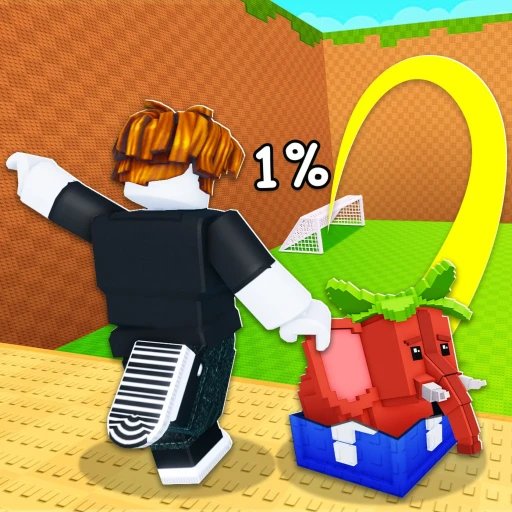
Kick a Lucky Block vs Steal a Brainrot (2026) -- Which Is Better?
Brainrot games owned Roblox in 2026, and two of the biggest sit at opposite ends of the genre. Kick a Lucky Block by No More Flops is a fast, solo-feeling kick-and-farm game where you generate your own Brainrots by booting Lucky Blocks down a field. Steal a Brainrot is the social juggernaut that turned the meme into the most-played experience on the platform, where you buy Brainrots from a conveyor and steal them off other players' bases. Both run on Brainrots, rarity, and passive income, but they feel completely different in your hands.
If you're trying to decide which one earns your next session, this comparison breaks down the core loops, progression, the risk and social layers, mobile play, community size, game passes, and how each fits into a Robux-earning routine with Earnaldo.
Both games are free-to-play, both are wildly popular, and both reward players who keep their income engine growing. The genres split hard, though, so the right pick depends on whether you want a calm solo grind or a chaotic social scramble. Here's how they stack up.
Quick Comparison Table
| Feature | Kick a Lucky Block | Steal a Brainrot |
|---|---|---|
| Genre | Kick-and-farm / luck simulator | Social PvP base-builder |
| Place ID | 89469502395769 | 109983668079237 |
| Developer | No More Flops | Brazilian Spyder / Jandel |
| Concurrent Players | ~100K (major 2026 hit) | Record 24M+ peak (all-time CCU record) |
| Total Visits | 1.1B+ | Tens of billions |
| Core Loop | Kick block, grab Brainrot, outrun tsunami, place for income | Buy Brainrots from a conveyor, steal others', defend your base |
| Key Systems | Zones, Kick Power, Perfect Kicks, mutations, rebirth | Conveyor rarities, stealing, mutations, 18-level rebirth |
| Player Interaction | Mostly solo (shared servers, no theft) | Heavy PvP stealing and defending |
| Mobile-Friendly | Yes | Yes |
| Free-to-Play | Yes | Yes |
Gameplay and Core Loop
The clearest split between these two is interaction. Kick a Lucky Block is about you, your timing, and your luck, while Steal a Brainrot is about reading other players and reacting fast. Both still run on the addictive "one more" hook of chasing a rarer Brainrot.
Kick a Lucky Block -- Edge: Calm, Skill-Driven Loop
Kick a Lucky Block keeps your fate in your own hands. You stand in the yellow zone, time a kick meter on a Lucky Block, and send it down a field into a distance zone where a Brainrot pops out. The farther the zone, the rarer the Brainrot, and the moment you kick, a tsunami spawns and chases you home. Beat the wave, place the Brainrot on a pedestal, and it earns passive income you collect from a green pad.
What gives the loop depth is the layering of skill and luck. A Perfect Kick adds distance and a luck boost, raising your odds of landing a higher zone and rolling a mutation that multiplies a Brainrot's income. Your Kick Power climbs as you lift weights, your Speed keeps you ahead of bigger tsunamis, and rebirth trades a power reset for a permanent income multiplier. No other player can touch your stuff, so the challenge is entirely against the meter and the wave.
Steal a Brainrot -- Edge: Social Chaos
Steal a Brainrot plays in a completely different key. A conveyor belt cuts across the map carrying Brainrots of escalating rarity that you buy with cash, then place on your base where they generate income per second. The twist is in the name: you can walk into other players' bases and steal their Brainrots right off the pedestals, and they can do the same to you. Every server is a constant scramble of buying, stealing, and defending.
The risk layer is the whole appeal. A rare, mutated Brainrot earning huge income per second is also a target, so holding onto your best earners means watching your base and timing your own raids on richer players. The rebirth system runs 18 levels, each resetting progress for higher income, more base capacity, and new content. It's louder, more reactive, and more dependent on who else is in your server than Kick a Lucky Block ever is.
Progression and Long-Term Goals
Kick a Lucky Block -- Edge: Clear Solo Ladder
Progression in Kick a Lucky Block is a clean, self-directed climb. You push your Kick Power to reach farther zones, hunt mutated Brainrots to raise your income ceiling, bank permanent Speed upgrades, and time rebirths for multipliers. Each piece is something you control directly, with no other player able to set you back. That makes the sense of advancement steady and predictable, which suits players who want a grind that always moves forward.
The ceiling is the exotic zones, Hacked, OG, Celestial, and Eternal, paired with a fully mutated plot and a deep rebirth count. Because nothing can be stolen, the only thing standing between you and progress is your own kicking and upgrade discipline.
Steal a Brainrot -- Edge: Higher Ceiling, More Volatility
Steal a Brainrot offers a longer, more volatile climb. You're buying rarer conveyor Brainrots, chasing mutations, expanding base capacity, and grinding the 18-level rebirth ladder, all while the steal mechanic means your progress can swing on a single raid, for or against you. That volatility is the point: a lucky steal can vault you ahead, and a careless moment can cost you your best earner.
With its enormous scale and frequent updates, there's almost always a new Brainrot, event, or limited unit to chase. Players who like a high ceiling with social risk baked into the grind will get more long-term mileage here, as long as they enjoy the back-and-forth.
Risk and Player Interaction
Kick a Lucky Block
The only "enemy" in Kick a Lucky Block is the tsunami. You share servers with other players, but they can't take your Brainrots, so the risk is purely about your own escape after each kick. Lose a race home and you lose that kick's reward, nothing more. It's a low-stress format where mistakes cost you a single Brainrot, not your whole base.
Steal a Brainrot -- Edge: Real Stakes
Steal a Brainrot builds risk straight into the social layer. Your best Brainrots are always vulnerable to other players, which raises the stakes of every purchase and forces you to balance offense (raiding others) against defense (guarding your base). For players who find pure solo grinding flat, that tension is exactly what makes the game stick. For players who want to relax, it can feel relentless.
Graphics and Presentation
Both games lean into the loud, meme-forward Brainrot aesthetic with chunky characters and bright effects. Kick a Lucky Block centers its presentation on the kick arc, the zone bands stretching down the field, and the dramatic tsunami chase, which gives it a clear visual rhythm tied to its loop. Steal a Brainrot's presentation is busier by design, with conveyor units streaming past, bases packed with Brainrots, and constant player movement as people raid and defend.
Neither is a graphical showcase, and neither tries to be. Kick a Lucky Block wins on readable, loop-focused visuals, while Steal a Brainrot wins on the spectacle of a packed, chaotic server full of players and Brainrots.
Player Count and Community
Steal a Brainrot -- Edge: Record-Breaking Scale
Steal a Brainrot operates at a scale almost nothing reaches. It set the all-time concurrent-player record at over 24 million in late 2025, breaking the previous record, and has piled up tens of billions of total visits to sit among the most-played experiences in Roblox history. That scale means packed servers around the clock, constant creator coverage, active trading and value discussion, and a flood of community guides. There's always a full server to scramble in.
The size keeps the game fresh through momentum alone. New players arrive constantly, updates land to a massive audience, and the steal-driven social loop stays lively because there's never a shortage of targets or rivals.
Kick a Lucky Block
Kick a Lucky Block is a major 2026 hit in its own right, with roughly 100,000 concurrent players and more than a billion visits in a short time. That's an enormous footprint for a newer game, and the community is active and growing, with guides and creators covering zones, weights, and mutation strategy. It's smaller than Steal a Brainrot, but few games aren't, and its solo-friendly format means server population matters less to your experience anyway.
Game Passes and Monetization
Kick a Lucky Block
Kick a Lucky Block follows the standard Roblox free-to-play model. The full game is playable without spending, and the premium offerings center on luck and convenience: community sources point to a Mutation Luck pass that permanently doubles mutation odds (reported around 139 Robux), a Rebirth Skip pass (reported around 99 Robux), and a VIP pass with luck and cash bonuses. Prices and lineups shift with updates, so confirm anything in the in-game shop before buying. Passes accelerate the grind rather than gate it.
Steal a Brainrot
Steal a Brainrot's monetization matches its scale, with a range of passes and boosts around luck, income, and convenience, plus limited and event units that rotate through. As with Kick a Lucky Block, the core loop and progression are fully achievable for free with time; the paid options mainly speed things up. Exact passes and prices change often, so check the shop in-game.
Both games are genuinely enjoyable without spending anything. If you use Earnaldo to earn free Robux, you can pick up luck passes or boosts in either title without spending real money. Our Kick a Lucky Block free Robux guide and Steal a Brainrot free Robux guide cover the specifics for each.
Earn Free Robux for Either Game
Both games have natural idle moments -- Brainrots farming passive income in Kick a Lucky Block, and your base ticking away cash in Steal a Brainrot. Earnaldo lets you turn that downtime into free Robux, then spend it on luck passes and boosts in whichever game you prefer.
Who Should Play What
Choose Kick a Lucky Block If You...
- Want a calmer, solo-feeling grind where nobody can steal your stuff
- Enjoy skill-timed mechanics like the kick meter and the tsunami escape
- Like a clear, self-directed ladder of zones, power, and rebirths
- Prefer low-stakes sessions where a mistake costs one Brainrot, not your base
- Want a fresh, fast-rising 2026 game to grow with from early on
Choose Steal a Brainrot If You...
- Want chaotic social PvP with real stakes and constant player interaction
- Enjoy raiding other players and defending your own base
- Like a high ceiling with an 18-level rebirth grind and rotating units
- Want the biggest, most active community on the platform
- Thrive on volatility where a single steal can swing your progress
Play Both If You...
- Love Brainrot games and want variety between calm and chaotic sessions
- Want to maximize downtime for earning Robux with Earnaldo while income ticks in both
- Enjoy comparing a solo luck-and-timing loop against a social steal-and-defend one
Final Verdict
Both games are strong Brainrot titles that earn their followings, but they serve different moods. Steal a Brainrot wins on scale, social depth, and a high-stakes ceiling -- it's the pick if you want a massive, chaotic, player-driven scramble with the biggest community on Roblox. Kick a Lucky Block wins on calm, skill-driven solo progression where your luck and timing are all that matter and nothing can be stolen from you. If you want chaos and competition, Steal a Brainrot delivers; if you want a satisfying, low-stress grind you fully control, Kick a Lucky Block is the better fit. For deeper strategy on the latter, see our Kick a Lucky Block hub.
Frequently Asked Questions
Steal a Brainrot is larger. It set the all-time concurrent-player record at over 24 million in late 2025 and has tens of billions of total visits, putting it among the biggest games in Roblox history. Kick a Lucky Block is a major 2026 viral hit in its own right, with roughly 100,000 concurrent players and more than a billion visits. Both are very active, but Steal a Brainrot operates at a larger scale.
Both pair well with Earnaldo because each has natural idle windows. Kick a Lucky Block has pauses while Brainrots earn passive income and during rebirth regain, while Steal a Brainrot has stretches where your base is just generating cash. Either game lets you switch to Earnaldo's earn page during those gaps and return without losing progress.
Yes. Both games are fully playable on mobile through the Roblox app on iOS and Android. Kick a Lucky Block's kick-meter timing and running translate cleanly to touch controls, and Steal a Brainrot's grab-and-run loop was built with mobile players in mind. Both run smoothly on most modern phones.
Kick a Lucky Block is a single-player-style kick-and-farm game where you generate Brainrots yourself by kicking blocks into distance zones and outrunning a tsunami. Steal a Brainrot is a social PvP game where you buy Brainrots from a conveyor and steal other players' Brainrots straight off their bases. One is about your own luck and timing, the other about interaction with other players.
Both are easy to start. Kick a Lucky Block is arguably the gentler intro because the loop is kick, grab, run, and place, with no other players able to take your stuff while you learn. Steal a Brainrot adds the social steal-and-defend layer, which is more chaotic but still simple to grasp. New players settle into either within minutes.
Yes. Both revolve around Brainrots of varying rarity and value. Kick a Lucky Block uses distance zones and Perfect Kicks to roll rarer Brainrots and mutations that multiply income. Steal a Brainrot uses a conveyor of Brainrots at different rarities and mutations, with rarer ones earning more per second. Higher rarity means more income in each game.