Launch vs Fling Things and People (2026) -- Which Is Better?
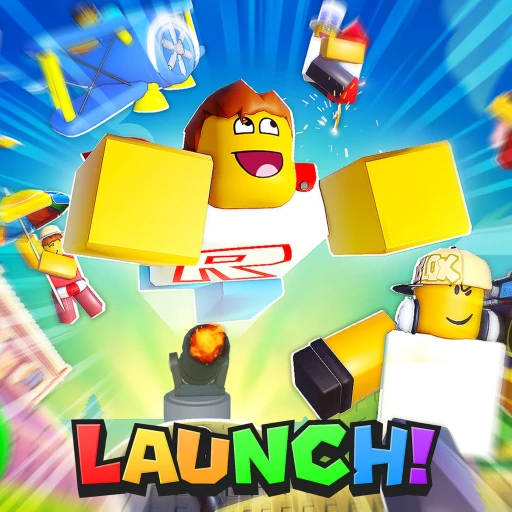
Both games revolve around sending things flying through the air, but they approach that concept from completely different angles. Launch by Moneybag Games is a progression-driven launcher simulator where you build and upgrade a machine to fling your own character as far as possible. Fling Things and People by DizzyPurple is a physics sandbox where you grab objects and other players, then hurl them across destructible environments. Same thrill of watching something soar through the sky, entirely different games underneath.
Launch is currently in beta, riding the wave of launcher-style simulators that have surged in popularity across Roblox in 2026. You build a launcher, angle it, power it up, fire your character into the sky, collect coins mid-flight, and then pour those coins back into upgrades that let you fly even farther next time. It is a classic idle-progression loop wrapped in satisfying physics. Fling Things and People takes the opposite approach -- there are no upgrades to your throwing arm. Instead, you rely on raw physics knowledge, grab technique, and the chaos of 25 players all flinging objects at each other in a sandbox arena.
This comparison covers gameplay mechanics, progression systems, physics and visuals, player counts, monetization models, mobile performance, social features, replay value, and how each game fits into earning free Robux. Whether you have five minutes or five hours, one of these games will fit your session length and playstyle better than the other.
In This Comparison
Launch vs Fling Things and People -- Quick Stats (2026)
| Category | Launch | Fling Things and People |
|---|---|---|
| Genre | Launcher / Flying Simulator | Physics / Ragdoll Sandbox |
| Place ID | 92546724840766 | 4406884040 |
| Developer | Moneybag Games | DizzyPurple |
| Status | Beta | Full Release |
| Core Loop | Build launcher, fly far, collect coins, upgrade | Grab objects and players, fling with physics |
| Key Features | Rebirths, pets, biomes, trail effects, leaderboards | Destructible maps, ragdoll mechanics, wide item variety |
| Trading | No | No |
| Code System | Yes | No |
| Mobile-Friendly | Yes | Yes (better on PC) |
| Free-to-Play | Yes | Yes |
The quick stats reveal two games that share almost nothing beyond the concept of making things fly. Launch is a structured, progression-heavy experience with a clear gameplay loop: launch, earn, upgrade, repeat. Fling Things and People is an open sandbox where the fun comes from player interaction and physics experimentation. One gives you a checklist of things to work toward. The other hands you a grab line and says "figure it out."

Gameplay -- What Do You Actually Do?
Launch
Launch drops you next to a launcher -- a mechanical contraption that you can customize, upgrade, and tune. You set the angle, power up the launch force, and fire your character into the sky. The moment you leave the launcher, the game shifts into a mid-air experience where you collect coins scattered along the flight path, dodge obstacles, and try to cover as much distance as possible before gravity pulls you back down.
Distance is the primary metric. Every launch is measured, and your personal best sits on a leaderboard alongside other players in the server. Coins earned mid-flight feed directly into upgrades: launcher power determines your initial velocity, angle adjustments let you optimize trajectory, and aerodynamics stats reduce drag so you stay airborne longer. The loop is simple to understand on the first try, but optimizing it requires dozens of hours of incremental stat improvements.
Beyond the core launch-fly-upgrade cycle, Launch layers in several systems that extend the gameplay. Trail effects leave colored streaks behind your character as you fly, serving as both a visual reward and a way to track your arc. Biome discovery gates certain areas behind distance milestones -- fly far enough and you unlock new environments with different visual themes and coin layouts. Event launchers appear during seasonal updates and offer limited-time launch mechanics with unique physics properties.
The pet companion system adds passive bonuses during flight. Pets provide small multipliers to coin collection range, flight duration, or speed. They don't fundamentally change the gameplay but they add another layer of collection and optimization for players who want to min-max their launches. The rebirth system allows you to reset your stats in exchange for permanent multipliers, creating a prestige loop that experienced players cycle through repeatedly to push their distance records higher.
Fling Things and People
Fling Things and People puts you in a server of up to 25 players with one core tool: a physics-based grab line. Click on any object or player in range, and your character attaches a rope to it. Build momentum by running, jumping, and swinging, then release to send whatever you grabbed flying across the map. The physics engine calculates weight, velocity, and angle in real time, so every fling produces a different result based on your inputs.
The maps are destructible. Walls crack, structures collapse, and debris scatters when hit with enough force. This means the environment changes throughout every session as players fling heavy objects into buildings, knock out walls, and create new paths through the wreckage. A fresh server looks clean and organized. A server that has been running for 30 minutes looks like a tornado hit it -- because functionally, 25 player-controlled tornados did hit it.
There is no objective beyond the chaos you create. No rounds, no win conditions, no score. You fling things because flinging things is inherently satisfying, and you fling people because their ragdoll reactions are even more satisfying. The ragdoll mechanics are the real star here -- player characters flop, tumble, spin, and bounce in ways that feel physically plausible while also being consistently funny. Two players cooperating to chain-fling a third player across the entire map produces the kind of moments that end up in YouTube compilations.
The item variety keeps the sandbox from going stale. Different objects have different weights, shapes, and physics behaviors. A bowling ball transfers force differently than a wooden plank. A rubber duck bounces. A pallet of bricks demolishes structures on impact. Learning how each item class behaves is an unofficial skill tree that rewards experimentation.
Edge: Fling Things and People -- the sandbox depth, destructible environments, PvP dynamics, and emergent gameplay create a richer minute-to-minute experience. Launch has a more satisfying progression loop, but Fling Things offers more gameplay variety within any single session.
Progression & Goals
Launch
Launch is built entirely around progression. Every launch earns coins. Coins buy stat upgrades. Stat upgrades make the next launch go farther. Farther launches earn more coins. The feedback loop is tight and immediately rewarding -- you can feel the difference after every few upgrades as your character flies noticeably farther than the previous attempt.
The stat categories include launcher power, launch angle precision, aerodynamics (drag reduction), coin magnet range, and flight stability. Each stat has dozens of upgrade tiers, with costs scaling exponentially. Early upgrades come fast and feel impactful. Later upgrades require patient coin farming but deliver proportionally larger distance gains. The progression curve is designed to keep you engaged without hitting a hard wall, though the beta status means balance adjustments are still happening.
The rebirth system adds a prestige layer on top of the standard upgrade path. Once you reach a certain upgrade threshold, you can rebirth to reset all stats to zero in exchange for a permanent multiplier that applies to all future coin earnings and stat effects. Each rebirth makes subsequent progression faster, and the multiplier stacks across multiple rebirths. This creates a meta-progression layer where your long-term power grows even as your short-term stats reset. Dedicated players cycle through rebirths to hit distance milestones that would be impossible on a first playthrough.
Biome discovery provides geographic progression goals. The default launch area is a starter zone. Fly 1,000 studs and you enter a forest biome. Hit 5,000 and you reach a desert. Push past 10,000 and a snow biome appears. Each biome has its own visual identity, coin distribution pattern, and sometimes unique obstacles. Reaching a new biome for the first time feels like unlocking a new level, even though the core mechanic never changes.
Pet companions offer a collectible dimension. Different pets provide different passive bonuses, and rarer pets provide stronger effects. Acquiring all pets and finding the optimal pet for your playstyle becomes a side objective that runs parallel to the core upgrade grind.
Fling Things and People
Fling Things and People has progression, but it is loose and player-driven rather than structured. Coins come from slot machines scattered across the map. You interact with a machine, wait for the cooldown, and collect 150-250 coins per spin. Rotating between multiple machines generates a steady income that you spend on the Item Builder -- a system that lets you construct walls, platforms, ramps, and custom structures on your personal building plot.
Building plot progression is the closest thing to a formal goal system. You accumulate materials over multiple sessions, design increasingly complex structures, and show them off to other players on the server. There is no blueprint system or guided building path -- you decide what to build and how to build it. Some players create elaborate obstacle courses. Others build fortified shelters to protect against flingers. A few build launching ramps designed to amplify fling distance when objects hit them at the right angle.
Toy collecting provides a completionist goal. Over 100 toys are hidden or spawned across the map, and collecting them all requires exploring every corner of every map variant. The default cap of 100 toys per player can be expanded with a game pass. Displaying a full toy collection on your building plot serves as visible proof of dedication.
The most meaningful progression in Fling Things is skill-based and invisible. Your flinging technique improves over time in ways the game does not measure or reward with numbers. Landing 100+ stud flings consistently, pulling off mid-air redirects, mastering the timing of grab-swing-release combos, and winning PvP encounters against experienced players are all progression milestones that exist only in your own muscle memory and knowledge.
Edge: Launch -- the structured upgrade path, rebirth system, biome milestones, and pet collection give you clear, measurable goals that drive session-over-session engagement. Fling Things has progression, but it requires self-motivation rather than system-driven incentives.

Graphics & Physics
Launch
Launch leans into the visual spectacle of flight. Trail effects streak behind your character in bright colors, creating arcs across the sky that look striking against the biome backgrounds. The biome environments themselves are well-designed for a beta -- the forest biome has layered canopy, the desert features sand dunes with heat shimmer effects, and the snow biome adds particle-based snowfall that reacts to your character passing through it.
The physics model in Launch is simplified compared to a true simulation, but it serves the gameplay well. Your character follows a ballistic trajectory modified by aerodynamics stats, and the coin collection hitboxes are generous enough that flight paths feel rewarding rather than punishing. The launcher itself has satisfying mechanical animations -- gears turning, springs compressing, and the release snap that sends your character skyward. These small visual touches sell the fantasy of being launched from a contraption you personally built and tuned.
Performance is solid on most devices. The game renders primarily along a flight corridor rather than an open world, which means the engine only needs to display the biome segment you are currently passing through. This keeps frame rates stable even on lower-end hardware, and the trail effects scale down gracefully on mobile without losing their visual appeal.
Fling Things and People
Fling Things runs on a more demanding physics engine because every object in the game is a live physics actor. Grab lines apply forces in real time, objects collide with weight-based momentum transfer, and structures crumble piece by piece when enough force is applied. The ragdoll system is the visual highlight -- player characters react to flings with flailing limbs, spinning torsos, and impact bounces that look different every single time.
The visual style is clean and colorful with a slightly cartoonish aesthetic that suits the comedic gameplay. Maps feature bright materials, distinct color palettes, and clear spatial layouts that let you identify objects and players at a glance. Seasonal decorations change the visual theme throughout the year, keeping the environment from feeling static across months of play.
The trade-off for all that real-time physics is performance variability. Servers with 25 active players all flinging objects simultaneously can cause frame rate drops, especially on mobile devices. The physics calculations scale with the number of active objects, so a server in its first few minutes runs smoother than one where players have scattered debris across every surface. Desktop players rarely notice issues, but mobile players may experience occasional stutters during peak chaos moments.
Edge: Fling Things and People -- the real-time physics simulation, destructible environments, and ragdoll mechanics create a more technically impressive and visually dynamic experience. Launch has polished biome visuals and satisfying trail effects, but Fling Things' physics engine does more heavy lifting and produces more varied visual outcomes.
Player Count & Community (July 2026)
Fling Things and People is the established game in this matchup. It has been live since 2020, has accumulated billions of visits, and consistently pulls high concurrent player counts during peak hours in May 2026. The community is active across YouTube, Discord, and TikTok, with a steady stream of fling compilation videos, building showcases, and technique tutorials. Server fill times are near-instant at any hour.
Launch is the newer contender, still carrying the beta tag as of July 2026. Its player base is growing rapidly, driven by the popularity of the launcher simulator genre and strong word-of-mouth from early adopters. Concurrent player counts are climbing as the game receives updates, but they have not yet reached the level of an established title like Fling Things. The community is enthusiastic and engaged in providing beta feedback, and Moneybag Games has been responsive to player suggestions on social channels.
The community dynamics differ significantly. Fling Things players form server-specific social groups around building plots and PvP rivalries. The sandbox nature encourages repeated interaction with the same players over time. Launch players tend to focus on individual progression, competing via leaderboards rather than direct interaction. The leaderboard system creates a competitive community where personal best distances are the primary social currency.
Both games benefit from Roblox's cross-platform matchmaking, which means PC, mobile, and console players share the same servers. Fling Things has the advantage of years of accumulated content creator coverage, while Launch is still building its presence in the Roblox content ecosystem.
Monetization
Launch
Launch offers optional game passes and boosts that accelerate progression without gating content. Coin multiplier passes increase earnings per flight, making the upgrade grind faster. Speed boosts and launch power boosts provide temporary advantages that help push for new distance records. None of the monetization locks content behind a paywall -- every biome, every pet, and every rebirth tier is reachable through free play. The passes simply reduce the time investment required to reach endgame milestones.
For a beta game, the monetization is restrained. There are no loot boxes, no gacha mechanics for pets, and no pay-to-win stat advantages that free players cannot eventually match. The model follows the standard Roblox simulator approach: time-saving purchases for players who want to skip the grind, with everything remaining accessible to patient free-to-play players.
Fling Things and People
Fling Things offers six permanent game passes ranging from 100 to 400 Robux. Farther Reach (400 R$) extends your grab line distance and is the most impactful for PvP since it lets you grab objects and players from a greater range. Escape Faster (400 R$) reduces your recovery time after getting flung. More Slot Coins (400 R$) increases slot machine payouts. Raised Toys Limit (400 R$) lifts the 100-toy collection cap. Multi-Color Line (240 R$) is purely cosmetic. More House Saves (100 R$) adds building plot save slots.
The total cost for all six passes is 1,940 R$. None are required to enjoy the game. You can fling, build, and collect at full capacity without spending anything -- the passes accelerate and enhance rather than gatekeeping. Farther Reach provides the clearest gameplay advantage, but skilled players without it regularly outperform pass owners through better technique and positioning.
Edge: Launch -- both games handle monetization fairly, but Launch's model is slightly more generous to free players because there is no equivalent of Farther Reach that provides a tangible competitive advantage. In Launch, paying players save time. In Fling Things, Farther Reach gives a genuine gameplay edge in PvP encounters.

Mobile Experience
Launch
Launch translates well to mobile. The core gameplay loop -- tap to launch, tilt or swipe to adjust mid-air, tap to collect coins -- maps naturally to touchscreen controls. Menu-based upgrades work identically on mobile and desktop. The flight corridor rendering approach means the game does not need to load an entire open world at once, which keeps performance stable on mid-range phones. Trail effects scale down automatically on lower-end devices without losing their visual appeal.
The one area where mobile falls slightly behind is precision aiming of the launch angle. Desktop players can fine-tune their angle with a mouse, while mobile players rely on a slider or tilt controls that feel less precise. For casual play this difference is negligible, but competitive leaderboard pushes benefit from the finer control that mouse input provides.
Fling Things and People
Fling Things works on mobile but the experience is noticeably different from desktop. The grab line mechanic requires clicking on a target, building momentum through movement, and releasing at the right moment. On a touchscreen, the click-to-grab and drag-to-swing inputs compete with camera controls, which can lead to missed grabs or accidental camera rotations during critical moments. Experienced mobile players develop workarounds, but the learning curve on touch is steeper than on mouse and keyboard.
Performance on mobile varies more than Launch because of the physics engine demands. A fresh server runs smoothly. A server with 25 players actively flinging objects and demolishing structures can cause frame rate dips on older phones. The game remains playable, but players on low-end devices will notice stutters during peak chaos that desktop players do not experience.
Edge: Launch -- the tap-based controls, corridor rendering, and lighter physics load make Launch the more consistent mobile experience. Fling Things works on mobile but the grab line mechanic was clearly designed for mouse input first.
Social Features
Launch
Social interaction in Launch centers on competition rather than cooperation. The leaderboard system displays the longest flights in the server, creating an informal race where players push for the top spot. You can see other players' launchers, observe their upgrades, and compare setups -- but you cannot interact with their equipment directly. There is no trading, no co-op launching, and no team system.
The pet system adds a minor social comparison layer. Seeing another player with a rare pet signals their dedication or luck, and pet discussions happen in chat naturally. Event launchers during seasonal updates create shared experiences as players experiment with limited-time mechanics together, even though the actual launches remain individual.
Launch is fundamentally a solo game played in a shared space. You are always competing against your own previous best, with the leaderboard providing context for how that best stacks up against others. The social energy comes from proximity and comparison, not interaction.
Fling Things and People
Social interaction is the core of Fling Things. The grab line works on other players, which means every person on the server is simultaneously a potential ally, target, and entertainer. PvP flinging creates rivalries that develop over the course of a session. Building plots sit adjacent to each other, encouraging visits, commentary, and collaborative construction. Chain-flings -- where multiple players grab and release in sequence to launch an object farther than any single player could manage -- require coordination and timing.
The sandbox design means social dynamics emerge organically. Two strangers might team up to defend a building plot from a group of flingers. A server might collectively decide to see how far they can launch a single player by combining forces. These moments are unscripted and unique to each session, which gives Fling Things a social texture that structured games struggle to replicate.
Edge: Fling Things and People -- multiplayer interaction is the foundation of the experience rather than an add-on. Launch is competitive but fundamentally solo. Fling Things is social by design, and the best moments in the game require other players to happen.
Replay Value
Launch and Fling Things and People both have strong replay value, but they achieve it through completely different mechanisms.
Launch relies on progression hooks. The rebirth system alone guarantees dozens of hours of replay because each prestige cycle resets your stats while making future cycles faster. Biome discovery gates content behind distance milestones that take multiple rebirths to reach. Pet collection adds a completionist dimension that runs parallel to the main upgrade grind. The leaderboard creates an endless competitive loop -- there is always someone ahead of you, and closing that gap requires more launches. For players who enjoy incremental progress and measurable improvement, Launch provides a replay structure that could sustain hundreds of hours.
Fling Things relies on emergent gameplay. Every session plays differently because the 25 players in your server bring different energy, skill levels, and intentions. A server full of builders creates a different experience than a server full of aggressive flingers. The destructible environments mean the map itself changes throughout a session, so the same starting conditions lead to wildly different outcomes. Seasonal map changes refresh the visual environment several times a year. The skill ceiling for fling technique is high enough that veteran players continue discovering new object interactions and launch angles months into their playtime.
The key difference is session dependency. Launch gives you progression that carries over between sessions -- you log out stronger than when you logged in. Fling Things resets every session, so the replay value comes from the experience itself rather than from accumulated progress. Both approaches work, but they appeal to different player motivations.
Edge: Launch -- the progression systems, rebirth loop, biome unlocks, and pet collection create more structured reasons to return session after session. Fling Things has strong in-session replay value, but Launch's between-session hooks are harder to walk away from.

Earning Free Robux While You Play
Neither Launch nor Fling Things and People pays out Robux directly. Launch has a code system that provides free coins and boosts -- check the Launch codes page for the latest working codes -- but codes do not give Robux. Fling Things has no code system at all. If you want Robux for game passes in either game, the most efficient method is completing tasks on Earnaldo between sessions.
Fling Things players have the clearer Robux incentive. The six game passes total 1,940 R$, and Farther Reach at 400 R$ is widely considered worth the investment for regular players. Earning that through Earnaldo instead of a direct Robux purchase saves real money. See the Fling Things and People free Robux guide for strategies specific to that game.
Launch players can also benefit from earned Robux to grab game passes and boosts that speed up progression. If you are grinding through early rebirths and want to accelerate the coin flow, a coin multiplier pass purchased with earned Robux removes the need to spend out of pocket. The Launch free Robux guide covers the best approaches for that game specifically.
Earn Free Robux for Launch or Fling Things and People
Complete simple tasks on Earnaldo and withdraw real Robux -- no payment info required.
Head-to-Head Verdict -- Launch vs Fling Things and People in 2026
The Verdict
Choose Launch if you want a structured progression grind with clear goals. The launcher upgrade path, rebirth system, biome discovery, pet collection, and leaderboard competition create a game that rewards every session with measurable improvement. It is the better choice for players who enjoy seeing numbers go up, pushing personal bests, and working toward long-term milestones. The beta status means the game is still evolving, which is both a risk and an opportunity -- early players get to shape the game through feedback while it is still being tuned.
Choose Fling Things and People if you want a sandbox that prioritizes player creativity, social interaction, and emergent chaos. The grab line mechanic, destructible environments, ragdoll physics, and 25-player servers create an experience where no two sessions play the same way. It is the better choice for players who enjoy PvP, creative building, cooperative moments, and the kind of unscripted comedy that only real-time physics can produce.
Overall: These games serve fundamentally different moods. Launch is a solo progression experience you play to build something over time. Fling Things and People is a multiplayer sandbox you play to have fun right now. Launch wins on progression depth, mobile experience, and structured replay value. Fling Things wins on gameplay variety, social interaction, and physics-driven spectacle. The right choice depends entirely on whether you want to grind toward a goal or cause chaos in the moment.
Who Should Play What?
- You love progression and upgrading stats: Launch, because the entire game is built around a satisfying upgrade loop with rebirths, biomes, and pets layered on top.
- You want social, multiplayer chaos: Fling Things and People, because the sandbox design makes other players the content, and the best moments require a full server.
- You play primarily on mobile: Launch, because tap-based controls and corridor rendering deliver a smoother touchscreen experience than Fling Things' grab line mechanics.
- You enjoy PvP and competition: Fling Things and People for direct PvP through flinging, or Launch for indirect competition through leaderboard distance records. Different styles of competition for different preferences.
- You have limited time per session: Launch, because even a five-minute session yields coins and upgrade progress that carries forward. Fling Things is best enjoyed in longer sessions where server dynamics have time to develop.
- You enjoy building and creating: Fling Things and People, because the building plot system lets you design structures that persist across the session and serve as social hubs for other players to visit.
- You want to earn Robux for game passes: Both games pair well with Earnaldo, but Fling Things players have more to spend on with 1,940 R$ worth of passes. Check the Launch free Robux guide or the Fling Things free Robux guide for game-specific strategies.
Frequently Asked Questions
Fling Things and People has the larger established player base with billions of total visits accumulated since 2020 and consistently high concurrent player counts. Launch is still in beta as of July 2026, so its total visits and concurrent numbers are lower. However, Launch is growing quickly and the launcher genre is trending on Roblox. In terms of raw player counts right now, Fling Things and People is the more popular game.
Launch is the stronger mobile experience. The core loop of tapping to launch, collecting coins mid-flight, and navigating upgrade menus translates cleanly to touchscreen controls. Fling Things and People supports mobile but the grab line mechanic was designed with mouse input in mind. The click-to-grab, drag-to-swing, release-to-fling combo competes with camera controls on touchscreens, making it less precise than on desktop.
Neither game has a trading system. Launch focuses on solo progression through launcher upgrades and rebirths. Fling Things and People centers on physics sandbox gameplay. There are no tradeable items, pets, or currencies that transfer between players in either experience.
Yes. Launch lets you access the entire upgrade path, all biomes, and the full rebirth system without spending Robux. Fling Things and People gives you the complete grab line mechanic, slot machines, building plots, and all map content at no cost. Both games have optional game passes that enhance the experience, but neither gates core content behind a paywall.
It depends on what drives you to replay. Launch has structured replay value through its rebirth system, biome unlocks, pet collection, and leaderboard competition -- these give you clear goals to chase across dozens of sessions. Fling Things and People has emergent replay value where every session plays differently based on who is in the server and what chaos unfolds. Launch rewards grinding. Fling Things rewards creativity and social interaction. Both sustain long-term play, but through different mechanisms.
Yes. Launch has a code redemption system that provides free coins, temporary boosts, and other in-game rewards. Codes are released regularly by Moneybag Games, often tied to milestones or events. Check the Launch codes page for the most current list of working codes. Fling Things and People does not have a code system.