Lost Currents vs Fisch (2026) -- Which Roblox Game Is Better?
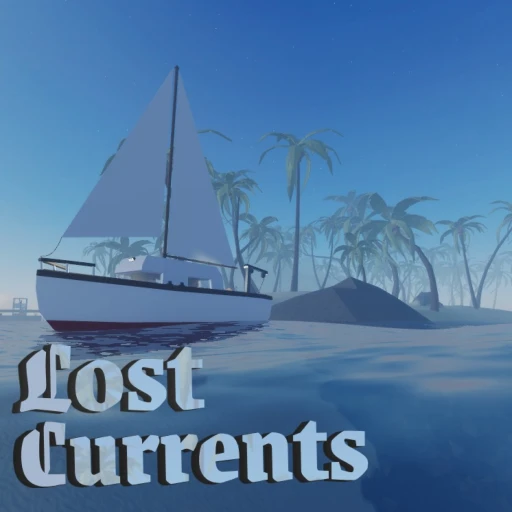
Roblox has no shortage of games that put you near water, but two of the most compelling ocean-themed experiences in 2026 approach the concept from completely different angles. Lost Currents is an atmospheric survival and exploration game that sends you beneath the waves into mysterious, pressure-filled depths where danger lurks in every shadow. Fisch is a massive fishing simulator that has attracted 95,000 or more concurrent players by delivering a polished cast-and-reel loop wrapped in a satisfying progression system.
One game asks you to strap on diving gear and descend into the unknown. The other hands you a fishing rod and invites you to relax by the shore. Both revolve around the ocean, but the experiences they deliver could not be further apart. Lost Currents, developed by flMindworks, leans into tension, discovery, and the thrill of finding something nobody has seen before. Fisch, built by the Fisch team, leans into comfort, collection, and the steady dopamine drip of catching one more rare fish.
This comparison covers every category that matters -- gameplay mechanics, progression systems, graphics, community, monetization, social features, and replay value -- so you can figure out which ocean game deserves a spot in your rotation heading into mid-2026.
Lost Currents vs Fisch -- Quick Stats (2026)
| Category | Lost Currents | Fisch |
|---|---|---|
| Genre | Survival / Exploration / Diving | Fishing Simulator |
| Place ID | 106324368467440 | 16732694052 |
| Developer | flMindworks | Fisch team |
| Peak CCU | Growing (niche) | 95K+ |
| Setting | Deep-sea underwater caves, wrecks | Sunny coastlines, open water |
| Core Loop | Dive, explore, survive, surface | Cast, catch, sell, upgrade |
| Tone | Tense, mysterious, atmospheric | Relaxed, cheerful, rewarding |
| Session Length | 15-30 min dives | Open-ended, drop in/out |
| Mobile-Friendly | Playable (keyboard preferred) | Yes (touch controls work well) |
| Free-to-Play | Yes | Yes |
Gameplay -- What Do You Actually Do?
Lost Currents
Lost Currents drops you into an underwater world that feels genuinely dangerous. You begin on the surface -- or at a shallow staging area -- and dive downward into progressively deeper zones filled with sunken structures, underwater caves, bioluminescent corridors, and environmental hazards that test both your navigation skills and your nerve. Oxygen is your primary constraint. Every second you spend underwater ticks down a resource that you cannot replace without surfacing or finding a resupply point, which means every dive is a calculated risk.
The exploration loop is what separates Lost Currents from the crowd. You are not following waypoint markers or grinding a checklist. You are reading the environment -- noticing a crack in a cave wall that might lead somewhere new, spotting the glow of a rare collectible half-hidden behind coral, hearing an audio cue that signals something large moving nearby. The game rewards curiosity but punishes recklessness. Pushing too deep without enough oxygen to return is a real possibility, and the tension of watching your air gauge drop while you decide whether to press forward or retreat creates genuinely gripping moments.
Movement through water is deliberate. You feel the weight of depth -- currents push you off course, visibility narrows as you descend, and the environment shifts from bright coral shallows to pitch-dark abyssal zones. Lost Currents treats the ocean as a place that does not want you there, and surviving it requires attention, planning, and the willingness to turn back when the risk outweighs the reward. The game also features collectibles, loot from wrecks, and environmental storytelling scattered throughout its dive sites, giving each session a sense of narrative discovery that most Roblox games do not attempt.
Fisch
Fisch takes the opposite approach. Instead of plunging you into danger, it hands you a rod and plants you on a sunny dock overlooking calm water. The core loop is cast, wait, reel, and sell. It sounds simple because it is -- and that simplicity is the entire point. Fisch does not need complexity to be compelling. The satisfaction comes from the rhythm of the catch, the surprise of what bites, and the steady accumulation of better gear that lets you access rarer fish in more exotic locations.
The fishing mechanics are polished well beyond what the genre typically delivers on Roblox. Different rods have different casting ranges, line strengths, and bait compatibilities. Different fish species have different behavioral patterns -- some fight hard when hooked, some require specific bait, and the rarest ones only appear in certain locations under certain conditions. Learning where and when to fish for specific species is a knowledge game that rewards time spent on the water. The reeling mini-game provides just enough active engagement to prevent the loop from feeling fully passive without demanding the kind of intense focus that would undermine the relaxing atmosphere.
Location variety keeps the loop fresh. You start at basic docks but eventually unlock access to tropical islands, deep-sea fishing zones, arctic waters, and volcanic coastlines where different fish populations live. Each biome introduces new species, new environmental conditions, and new gear requirements. The progression from catching common bass at a starter dock to landing legendary deep-sea creatures at an endgame location feels earned and satisfying. Fisch has sustained 95,000 or more concurrent players because the loop works -- it is comfort food designed to be consumed in any portion size, from five-minute breaks to multi-hour sessions.
Edge: Lost Currents for depth, tension, and unique moment-to-moment gameplay. Fisch for accessibility, polish, and the sheer reliability of its core loop. Lost Currents offers an experience you cannot find elsewhere on Roblox. Fisch offers an experience that millions of players have already proven they want. The right choice depends entirely on whether you are looking for adventure or relaxation.
Progression -- How Does Each Game Keep You Playing?
Lost Currents
Lost Currents builds its progression around expanding what you can reach. Early dives are shallow -- you have limited oxygen, basic equipment, and restricted access to deeper zones. As you gather resources and complete objectives, you unlock better diving gear that extends your air supply, improves your movement speed underwater, and grants access to previously unreachable areas. The progression is spatial: you are not climbing a number upward, you are pushing deeper into the ocean.
This design creates a natural difficulty curve tied to exploration. Shallow zones teach you how the game works -- oxygen management, navigation, hazard recognition. Mid-depth zones introduce more complex environments with branching pathways and environmental puzzles. Deep zones are where the game reveals its most challenging content, with dangerous creatures, claustrophobic cave systems, and rare discoveries that reward players willing to push past their comfort zones. Each upgrade feels meaningful because it directly correlates with new areas you can explore and new secrets you can uncover.
The collectible and loot systems add secondary goals. Wrecks contain salvageable items, the environment hides discoverable objects, and certain zones hold unique finds that contribute to completion tracking. For players who respond to exploration-driven rewards -- the satisfaction of finding something hidden rather than earning a number going up -- Lost Currents provides a progression loop that respects their time without hand-holding the journey.
Fisch
Fisch runs on one of the most proven progression systems in gaming: catch fish, sell fish, buy better gear, catch better fish. The loop is clean because every action feeds directly into advancement. Currency earned from selling catches funds rod upgrades, bait purchases, boat improvements, and location unlocks. Each upgrade expands what you can catch, which earns you more currency, which funds the next upgrade. The cycle is transparent and satisfying.
The species collection provides a secondary progression layer that hooks completionist players hard. Fisch features hundreds of fish species across its biomes, each with rarity tiers from common to legendary. Filling out your collection log becomes a goal that persists long after your gear is maxed out, because the rarest species require specific conditions -- right location, right bait, right time of day, right weather -- that turn each catch attempt into a knowledge check. Seasonal fish, event-exclusive species, and limited-time additions keep the collection from ever feeling truly complete.
Leaderboards and competitive rankings add a third progression dimension. Catching the biggest fish of a species, accumulating the most total catches, or earning the highest single-session income all feed into competitive metrics that give experienced players something to chase beyond collection completion. Fisch layers its progression so effectively that players at every stage -- new, mid-game, endgame -- have concrete goals to pursue at all times.
Edge: Fisch. The layered progression with gear upgrades, species collection, location unlocks, and competitive leaderboards provides more concrete milestones at every stage of play. Lost Currents' exploration-driven progression is more atmospheric and rewarding for the right player, but Fisch's system casts a wider net and keeps a broader audience engaged over time. If you need visible goals, Fisch delivers them constantly.
Graphics and Audio
Lost Currents
Lost Currents is one of the most visually ambitious underwater experiences on Roblox. The lighting system carries enormous weight -- sunbeams filter through shallow water in ways that feel natural, mid-depth zones shift to muted blue-greens that sell the transition, and deep zones plunge into near-total darkness broken only by bioluminescent organisms and the narrow cone of your dive light. The color grading changes continuously as you descend, creating a visual language that communicates depth without numbers.
Environmental detail is strong throughout. Coral formations look organic rather than blocky, wrecks show realistic decay with rusted hulls and collapsed interiors, and cave systems feature geological formations that give each passageway a distinct identity. Particle effects -- floating sediment, rising bubbles, disturbed sand clouds when you pass near the seafloor -- add layers of environmental texture that make the underwater spaces feel lived-in and real.
The audio design works in tandem with the visuals to build atmosphere. Sound travels differently underwater in Lost Currents -- it is muffled, directional, and filtered in ways that create a sense of isolation. Your own breathing becomes the dominant sound at depth, punctuated by distant metallic groans from settling wrecks and the occasional organic sound that might be marine life or might be something else. The audio is functional too: sound cues telegraph hazards, signal nearby points of interest, and provide spatial information that helps you navigate when visibility drops. Playing with headphones transforms the experience from a game into something closer to a sensory simulation.
Fisch
Fisch takes a cheerful, colorful approach to its visual design. The water surface reflects sunlight with a warm glow, fishing locations are vibrant and distinct, and fish models are detailed enough to feel collectible without pushing Roblox's rendering limits. Each biome has its own visual identity -- tropical locations use saturated greens and blues, arctic zones shift to cool whites and grays, and volcanic regions introduce warm oranges and reds into the palette. The variety keeps the game visually fresh as you progress through locations.
Fish animations are a highlight. Species move differently -- fast predators dart through the water, bottom feeders hug the seafloor, and large trophy fish breach the surface with satisfying weight. The reeling animations provide visual feedback that makes each catch feel physical. Rod upgrades are visible on your character, and boats show progressive detail as you invest in them. The overall visual style prioritizes clarity and charm over realism, which aligns perfectly with the relaxed tone.
Audio in Fisch leans toward ambient comfort. Waves lap against docks, seabirds call in the distance, and the splash of a cast hitting water provides satisfying punctuation to the core loop. Music shifts gently between locations without demanding attention. The sound design is pleasant and functional rather than immersive -- it supports the relaxing atmosphere without trying to pull you into a different headspace. The audio works for what Fisch is trying to be, even if it does not push boundaries.
Edge: Lost Currents. The atmospheric lighting, environmental detail, and immersive audio design put Lost Currents in a different category. It treats sound and visuals as core gameplay elements rather than decorations. Fisch looks polished and inviting, and its visual clarity serves its gameplay well, but Lost Currents achieves something closer to genuine environmental storytelling through its presentation. For players who care about atmosphere, Lost Currents delivers an experience that sticks with you after you close the game.
Player Count and Community (July 2026)
The numbers tell a clear story about scale, though not necessarily about quality. Fisch regularly sustains 95,000 or more concurrent players, placing it among the most-played games on Roblox at any given moment. That kind of sustained concurrency requires a game that appeals broadly, retains consistently, and runs smoothly across all devices -- and Fisch checks every box. The community around Fisch is massive, with active Discord servers, dedicated YouTube content creators producing catch guides and tier lists, and a trading economy that generates its own layer of social engagement.
Lost Currents operates at a different scale. As a newer title from flMindworks focused on atmospheric exploration rather than mass-market appeal, its player counts are smaller but its community density is higher relative to its size. The players who find Lost Currents tend to stay because the game offers something they cannot get elsewhere on the platform. Community discussions center on exploration discoveries, dive strategies, hidden secrets, and environmental lore -- the conversations of a fanbase that engages deeply with content rather than consuming it quickly.
Content creation reflects the difference. Fisch generates volume -- hundreds of videos covering tier lists, rare catches, update breakdowns, and beginner guides. Lost Currents generates intensity -- longer-format exploration videos, atmospheric showcases, and discovery compilations that treat the game more like a shared adventure than a competitive grind. Both styles of community engagement are healthy; they serve different audiences and different content consumption patterns.
Edge: Fisch for sheer scale, content volume, and social trading infrastructure. Lost Currents for community depth and the quality of player engagement. Fisch has the numbers that prove mass appeal. Lost Currents has the kind of community that builds around games people care about rather than games people play out of habit.
Game Passes and Monetization
Lost Currents
Lost Currents approaches monetization with restraint. The game pass offerings focus on quality-of-life improvements and cosmetic enhancements rather than gameplay advantages. Expect to find passes that provide cosmetic dive gear, visual effects for your character, and convenience features that make the experience smoother without altering the fundamental balance of exploration and survival. The core experience -- diving, exploring, discovering -- remains fully accessible to free players.
This approach reflects the game's design philosophy. Lost Currents works because every player faces the same ocean with the same constraints. Selling oxygen advantages or exploration shortcuts would undermine the tension that makes the game compelling. By keeping monetization cosmetic and convenience-focused, flMindworks preserves the integrity of the survival loop while still generating revenue from players who want to support the project or personalize their experience.
Fisch
Fisch offers a broader monetization spread that matches its larger scale. Game passes range from permanent rod upgrades and expanded inventory capacity to premium bait bundles and exclusive fishing locations. The pricing spans from budget-friendly options under 100 Robux to premium passes in the several-hundred range. Each pass communicates its value clearly -- you know exactly what you are buying and how it affects your gameplay before you spend.
The free-to-play experience in Fisch is fully viable. Every fish in the game is catchable without spending Robux, and progression moves at a pace that feels intentional rather than gated. Premium passes accelerate the loop or provide access to premium content, but they do not create an insurmountable gap between paying and free players. The trading economy also provides an indirect path to premium items for players willing to invest time rather than money, which softens the monetization curve for dedicated free players.
Edge: Fisch for value clarity and catalog breadth. Lost Currents for preserving gameplay integrity. Fisch gives you more purchasing options with transparent value propositions, and its free-to-play path is generous enough that spending feels optional rather than necessary. Lost Currents earns respect by refusing to monetize the survival tension that defines the experience, which is a harder design choice that pays off in player trust.
Social Features -- Playing with Friends
Lost Currents
Diving with friends in Lost Currents transforms the experience. Solo dives are tense and introspective -- it is you against the ocean, managing your oxygen, reading the environment, deciding when to push deeper. Adding a dive partner changes the dynamic entirely. You can split up to cover more ground, signal each other toward discoveries, share resources in emergencies, and create a safety net that lets both players push deeper than either would risk alone.
The shared discovery moments are what make Lost Currents special in multiplayer. Finding a hidden chamber with a friend, both of you running low on oxygen and deciding together whether to press forward or retreat, creates the kind of shared memory that becomes a story you retell. The tension is amplified because you are responsible for someone else's experience -- if you lead your friend into a dead end at critical oxygen levels, the consequences are shared. These dynamics emerge naturally from the game's survival systems rather than being scripted or forced.
The limitation is that Lost Currents' social features are built around the experience of being in the same space rather than around structured social systems. There is no trading economy, no leaderboard competition, and limited social infrastructure beyond the act of exploring together. The social experience is deep but narrow -- incredible when it works, but reliant on having the right people to play with.
Fisch
Fisch builds social interaction into its core systems. The trading economy is a significant social feature -- players buy, sell, and negotiate over rare catches, premium bait, and collectible items in a player-driven marketplace. Trading creates relationships, rivalries, and community dynamics that extend well beyond the fishing loop itself. You might befriend someone because they had the bait you needed, or develop a trading partnership that benefits both players over weeks of play.
Competitive leaderboards add a social layer that fishing games often lack. Comparing your catches to your friends' catches, racing to be first in your group to land a legendary species, and tracking seasonal rankings all create social stakes without requiring players to be in the same server simultaneously. The asynchronous competition means social engagement persists even during solo sessions.
Group fishing with friends is relaxed and conversational. Sitting on a dock together, casting lines, chatting while waiting for bites -- Fisch provides the Roblox equivalent of hanging out at a lake with friends. The low-pressure format means nobody feels rushed, and the shared experience of someone landing a rare catch generates genuine excitement for the entire group. Fisch understands that social gaming does not always need intensity. Sometimes the best social experience is doing something calm together.
Edge: Fisch for breadth of social features and accessibility. Lost Currents for intensity and emotional impact of shared experiences. Fisch provides more ways to interact socially -- trading, competing, fishing together casually -- and those systems work with any group dynamic. Lost Currents delivers fewer but deeper social moments that require the right group to reach their peak. If your friends are already playing, Fisch is the easier social sell. If your friends love cooperative adventures, Lost Currents creates bonds that casual games rarely match.
Replay Value -- Will You Still Play Next Month?
Lost Currents
Lost Currents derives its replay value from the fact that exploration is inherently variable. Even in the same dive site, your route through the environment can differ dramatically from one session to the next. Environmental conditions shift, your risk tolerance changes based on your current gear and oxygen reserves, and the discovery of a new passage or hidden area can redirect an entire dive. The game also benefits from content updates that add new zones, new collectibles, and new environmental challenges, each of which revitalizes the exploration loop for returning players.
The mastery curve extends replay value for dedicated players. Learning to optimize oxygen usage, identify hazard patterns, and navigate efficiently through complex environments provides a skill-based progression that exists alongside the gear-based one. A veteran diver with basic equipment outperforms a new player with premium gear because knowledge of the environment is the real currency. This skill gap keeps experienced players engaged because there is always room to improve technique.
The limitation is content dependency. Exploration games live and die by the freshness of their environments. Once you have mapped every cave system and found every hidden item, the drive to return weakens unless new content refills the mystery tank. Lost Currents needs consistent updates to maintain its exploration appeal over months and years, and the cadence of those updates will determine its long-term staying power.
Fisch
Fisch has already proven its replay value through sustained player counts that have held strong over time. The core fishing loop is inherently repeatable because each cast is a micro-gamble -- you never know what will bite, and the possibility of a rare or legendary catch keeps every session interesting. The species collection provides a long-tail goal that takes hundreds of hours to complete, and seasonal additions ensure the checklist keeps growing before anyone finishes it.
The economic layer adds replay depth that pure fishing does not provide. Market prices fluctuate based on supply and demand, creating opportunities for players who pay attention to trading trends. A player who understands the market can earn more efficiently than one who simply catches and sells, which adds a strategic dimension that extends engagement well beyond the fishing mechanics themselves. The competitive leaderboard resets provide recurring goals that prevent experienced players from running out of milestones.
Fisch also benefits from the breadth of its content pipeline. Regular updates introduce new fish species, new locations, new equipment, seasonal events, and limited-time challenges. The Fisch team has maintained a consistent update cadence that keeps the community engaged and gives returning players fresh content to explore. For a game built on collection and progression, this update consistency is not a bonus -- it is essential, and the team has delivered on it reliably.
Edge: Fisch. The combination of a proven retention track record, layered progression systems, active trading economy, and consistent content updates gives Fisch a clear advantage in long-term replay value. Lost Currents offers a more memorable individual session, but Fisch provides more reasons to return day after day and week after week. Longevity is about habit formation, and Fisch has built a loop that becomes a comfortable part of your daily routine.
Earning Potential -- Free Robux While You Play
If you use Earnaldo to earn free Robux alongside your gaming sessions, both titles offer natural pairing points. Fisch's core loop includes inherent waiting time -- the period between casting your line and getting a bite -- that creates regular micro-breaks perfect for checking earning tasks or completing quick offers. Each fishing session contains dozens of these brief pauses, making it one of the most Earnaldo-compatible games on the platform. You can fish and earn simultaneously without either activity suffering.
Lost Currents provides earning windows between dive sessions. Each dive has a defined beginning and end -- you descend, explore, and eventually surface to sell loot, manage inventory, and prepare for the next dive. Those surface intervals last several minutes and represent clean breaks where your full attention is available for Earnaldo tasks. The breaks are less frequent than Fisch's micro-pauses but longer and more focused, giving you time to complete higher-value tasks without rushing.
For game-specific strategies on maximizing your Robux earnings, check our dedicated guides: Lost Currents free Robux guide and Fisch free Robux guide. Stay updated with the latest working codes: Fisch codes. And if you enjoy ocean-themed Roblox games, our Fisch tier list 2026 covers the best fish species to target for maximum value.
Earn Free Robux for Lost Currents or Fisch
Complete simple tasks on Earnaldo and withdraw real Robux -- no downloads, no generators, no scams.
Head-to-Head Verdict -- Lost Currents vs Fisch in 2026
The Verdict
Choose Lost Currents if you want an ocean game that treats the water as a place full of mystery and danger rather than a backdrop for a collection loop. The underwater exploration is atmospheric, tense, and rewarding in ways that few Roblox games attempt. The survival mechanics create genuine stakes, the environmental design tells stories without words, and the audio-visual presentation pushes the platform toward cinematic territory. Best for players who value discovery, atmosphere, and the thrill of venturing into the unknown.
Choose Fisch if you want a polished, proven fishing simulator with a progression system that respects your time and rewards your investment at every stage. The fishing mechanics are satisfying, the species collection is enormous, the trading economy adds strategic depth, and 95,000 or more concurrent players mean the community is always active. Fisch is the kind of game that becomes part of your daily routine because the loop is so clean and the goals so well-layered. Best for players who value relaxation, tangible progression, and a game they can return to for months without running out of things to do.
Overall winner: Fisch -- for most players. The scale of its player base, the depth of its progression systems, the reliability of its content updates, and the sheer polish of its core fishing loop make Fisch the safer recommendation for the majority of Roblox players looking for an ocean-themed game. But Lost Currents is the better game for a specific type of player -- the one who wants to be surprised, challenged, and immersed rather than relaxed and rewarded. If you have ever wished Roblox had more games that prioritize atmosphere over accessibility, Lost Currents is the game you have been waiting for. Both deserve your attention, and they serve different moods so effectively that playing both is the real winning strategy.
Who Should Play What?
- You want a relaxing game to unwind after school or work: Fisch. The cast-wait-reel loop is meditative and the progression is comforting.
- You crave exploration and genuine discovery: Lost Currents. The underwater environments hide secrets that reward curiosity and patience.
- You play primarily on mobile: Fisch. The simple touch-based fishing controls translate cleanly. Lost Currents benefits from keyboard precision.
- You want the best visuals and audio on Roblox: Lost Currents. The atmospheric presentation is among the strongest on the platform.
- You are a completionist who needs collection goals: Fisch. Hundreds of fish species across rarity tiers will keep you busy for months.
- You enjoy cooperative adventure with friends: Lost Currents. Shared dive sessions create memorable, high-stakes bonding experiences.
- You want an active trading economy: Fisch. The player-driven marketplace adds strategic depth beyond the fishing loop.
- You want to earn Robux while playing: Both pair well with Earnaldo. Fisch's frequent micro-breaks during fishing give more earning windows. Lost Currents' between-dive intervals provide longer focused earning periods.
Frequently Asked Questions
Is Lost Currents or Fisch more popular on Roblox in 2026?
Fisch is significantly more popular by raw numbers, regularly sustaining 95,000 or more concurrent players and ranking among the most-played games on Roblox. Lost Currents is a newer, more niche experience from flMindworks that targets players looking for atmospheric underwater exploration rather than mass-appeal fishing loops. Fisch dominates in scale, but Lost Currents is building a dedicated following among players who want something deeper and more immersive from their ocean games.
Which game is better for younger players, Lost Currents or Fisch?
Fisch is the better pick for younger audiences. Its bright visuals, simple cast-and-reel mechanics, and cheerful progression loop are immediately accessible to players of any age. Lost Currents features darker underwater environments with survival tension -- oxygen management, deep-sea hazards, and exploration pressure -- that may feel stressful for younger children. Both games are safe within Roblox's platform guidelines, but Fisch is the more relaxed and kid-friendly option by a comfortable margin.
Can you play Lost Currents and Fisch on mobile?
Yes, both are playable on mobile through the Roblox app on iOS and Android. Fisch translates particularly well to touchscreens because the core fishing mechanics use straightforward tap-and-hold inputs that feel natural on phones and tablets. Lost Currents is playable on mobile but the underwater navigation, inventory management, and survival mechanics are more complex and benefit from the precision of a keyboard and mouse setup. For the best Lost Currents experience, desktop is recommended.
Are there active codes for Lost Currents and Fisch in May 2026?
Fisch regularly releases codes for free bait, currency, and cosmetic items -- check our Fisch codes page for the latest working codes updated throughout May 2026. Lost Currents may offer codes as the game grows and its player base expands. Bookmark both pages and check back regularly as new codes are released.
Which game is better for earning free Robux while playing?
Both pair well with Earnaldo for earning free Robux, but in different ways. Fisch's repetitive cast-wait-reel cycle creates natural idle moments during each catch attempt where you can quickly check earning tasks or complete offers. Lost Currents provides breaks between dive sessions when you return to the surface to sell loot and prepare for the next descent. Fisch offers more frequent micro-breaks per hour, while Lost Currents gives you longer, more focused earning windows between dives. Pick whichever game you enjoy more -- both work well alongside Earnaldo.
Do you need friends to enjoy Lost Currents or Fisch?
Neither game requires friends, and both are enjoyable solo. Fisch works perfectly as a solo relaxation experience, with its trading economy and competitive leaderboards providing optional social engagement when you want it. Lost Currents is compelling as a solo exploration game, with the isolation actually enhancing the atmosphere, though diving with friends adds cooperative safety and shared discovery moments that elevate the experience. For solo players, both hold up well independently, but Fisch is the more inherently social experience due to its trading features and larger active player base.