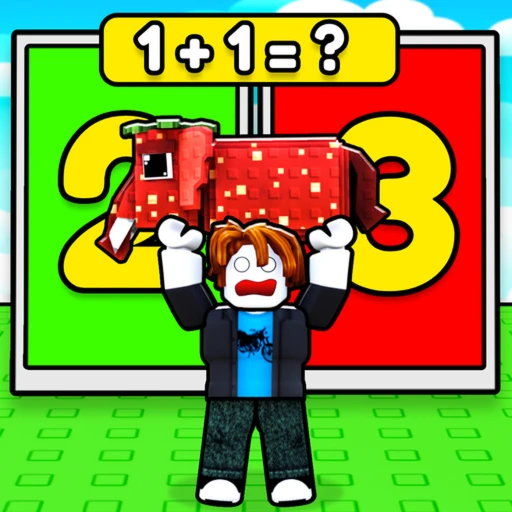
Math for Brainrots vs Grow a Garden (2026) -- Which Roblox Game Is Better?
Two very different Roblox experiences are competing for your time right now. Math for Brainrots blends tycoon mechanics with math-based obbies and meme culture. Grow a Garden is the farming and idle juggernaut that broke records in 2026 with over 21 billion visits. Both games are free, both are addictive, and both pull in millions of players every single week. The question is simple: which one actually deserves your attention?
This comparison digs into every angle that matters -- gameplay loops, progression depth, monetization, community, and long-term replay value. Whether you are a casual player looking for something to relax with or a grinder chasing the next big rebirth milestone, one of these games will fit you better than the other. Stick around for the full breakdown and our final verdict at the end.
Quick Stats: Math for Brainrots vs Grow a Garden
Before we get into the deep analysis, here is a side-by-side snapshot of where both games stand as of July 2026. Numbers tell part of the story, but context matters just as much. We will unpack each category in the sections that follow.
| Category | Math for Brainrots | Grow a Garden |
|---|---|---|
| Developer | Sie x Dos Studios | Noot Studio |
| Genre | Tycoon / Simulator | Farming / Idle |
| Place ID | 121326136128491 | -- |
| Rating | 82.44 / 100 | ~85 / 100 |
| Total Visits | Growing (newer title) | 21+ billion |
| Peak Concurrent | Climbing steadily | 1,000,000+ |
| Game Passes | None | Multiple |
| Active Codes | None yet | Yes (rotating) |
| Core Loop | Math gates, obbies, brainrot collecting, rebirth | Plant, grow, harvest, collect pets, trade |
| Trading System | No | Yes (player economy) |
Edge: Grow a Garden dominates in popularity metrics. Math for Brainrots stands out for its completely free, no-game-pass model. Both hold strong approval ratings from the community.
Gameplay Loop: What You Actually Do
Math for Brainrots
Math for Brainrots puts you inside a tycoon-style world built around internet meme culture. The core loop starts at math gates -- barriers that present arithmetic problems you need to solve before you can pass through. Once past the gates, you navigate obbies (obstacle courses) that range from straightforward jumps to genuinely tricky platforming sections. Completing these stages rewards you with brainrot characters, each generating passive income over time.
The brainrot characters are the backbone of your progression. Each one you collect feeds into your overall income rate, and that income lets you unlock new areas, harder obbies, and tougher math gates. The difficulty scales at a reasonable pace. Early gates feature basic addition and subtraction. Later stages introduce multiplication, division, and multi-step problems that actually require some thought.
The rebirth system adds another layer. Once you have accumulated enough currency and brainrot characters, you can rebirth to reset your progress in exchange for permanent multipliers. Each rebirth makes subsequent runs faster and unlocks content that was previously gated behind rebirth milestones. It is a familiar tycoon formula, but the math and obby mechanics keep it from feeling like a pure idle game.
Grow a Garden
Grow a Garden takes the opposite approach. You start with a small plot of land, a handful of seeds, and a watering can. From there, the gameplay loop is plant, water, wait, harvest. Crops grow on timers that vary by rarity. Common seeds sprout in minutes. Legendary seeds can take significantly longer, building anticipation around each harvest cycle.
Pets add a collecting layer on top of the farming. You can hatch pets from eggs earned through gameplay, and each pet provides passive bonuses to your garden -- faster growth, higher sell prices, or bonus seed drops. The pet system ties directly into the trading economy, which is where Grow a Garden truly differentiates itself from other idle games on the platform.
The social element is massive. Players gather in public servers to trade crops, pets, and rare items. The trading economy has its own meta, with certain limited-edition pets and seeds commanding serious value. If you enjoy the negotiation and social aspects of Roblox, Grow a Garden delivers that experience better than almost any other game on the platform right now.
Edge: Math for Brainrots offers more active gameplay through its obby and math gate mechanics. Grow a Garden wins on social interaction and idle-friendly design. Your preference depends on whether you want to solve problems or watch crops grow.
Progression and Depth
Progression design determines whether a game stays interesting after the first hour or becomes something you abandon after a single session. Both of these games handle it differently, and both have clear strengths.
Math for Brainrots Progression
The rebirth system is the primary depth driver. Each rebirth cycle takes roughly 20 to 40 minutes depending on how efficiently you clear obbies and solve gates. Early rebirths feel rewarding because the multipliers make a noticeable difference in income speed. Later rebirths require more strategic play -- choosing which brainrot characters to prioritize, which obbies to speedrun, and when to trigger the rebirth for maximum efficiency.
There is a satisfying crunch to optimizing your runs. Players who enjoy min-maxing tycoon games will find enough here to stay engaged across multiple sessions. The math gates also introduce a skill element that pure idle games lack. You cannot just leave the game running and come back to progress. You need to actively solve problems and navigate obstacles, which keeps the gameplay feeling earned rather than passive.
The main concern is content volume. As a newer title, Math for Brainrots does not yet have the sheer amount of unlockables and content tiers that more established games offer. Sie x Dos Studios will need to push regular updates to maintain player interest over time.
Grow a Garden Progression
Grow a Garden has the advantage of maturity. With over a year of updates and content drops, the progression tree is enormous. There are dozens of seed types ranging from common to mythical, each with unique growth times and sell values. The pet collection spans hundreds of variants with different rarity tiers. Garden expansions unlock new plots, decorations, and biome-specific crops.
The game also layers in seasonal events, limited-time seeds, and exclusive pets that keep the content pipeline feeling fresh. Players who have been grinding since launch still have goals to chase, which speaks to the depth of the progression system.
On the flip side, the core loop can feel repetitive if you are not invested in the trading economy. Planting and harvesting follows the same pattern whether you are on day one or day one hundred. The pets and seasonal content help mask that repetition, but the fundamental mechanics do not evolve the way Math for Brainrots' difficulty scaling does.
Edge: Grow a Garden has more content right now. Math for Brainrots has a more engaging moment-to-moment loop. Players who want long-term grinding will lean toward Grow a Garden. Players who want each session to feel actively engaging will prefer Math for Brainrots.
Monetization: How Each Game Handles Spending
Monetization is always a factor in Roblox games, and these two titles sit at opposite ends of the spectrum.
Math for Brainrots -- Completely Free
This is one of the most notable things about Math for Brainrots. As of May 2026, the game has zero game passes and zero redeemable codes. Every piece of content is accessible to every player for free. There are no speed boosts to buy, no VIP passes, and no premium currencies. You progress purely through gameplay.
For players who are tired of pay-to-progress mechanics dominating the Roblox tycoon space, Math for Brainrots is a breath of fresh air. The level playing field means that your progress is a direct reflection of your time and skill, not your Robux balance.
The trade-off is that Sie x Dos Studios will eventually need a revenue model to sustain development. It remains to be seen whether they will introduce optional cosmetics, game passes, or other monetization down the line. For now, the fully free experience is a significant draw.
Grow a Garden -- Game Passes and Economy
Grow a Garden follows the standard Roblox monetization playbook. There are multiple game passes offering quality-of-life upgrades like auto-watering, extra garden plots, and increased pet storage. None of these passes are strictly required, but they do provide meaningful advantages that free players do not have access to.
The game also features rotating codes that grant free seeds, currency, and occasionally pet eggs. These codes help free-to-play users keep pace with paying players to some extent, but the gap widens at higher levels of play.
The trading economy adds an informal monetization layer as well. While you cannot directly buy items from the developer, the player-driven market creates its own value hierarchy. Rare pets and seeds become status symbols, and acquiring them without spending Robux on game passes requires significant grinding.
Edge: Math for Brainrots wins outright on monetization fairness. Everything is free, no exceptions. Grow a Garden is not aggressively monetized, but the game passes do create a gap between free and paying players.
Community and Social Features
The community surrounding a Roblox game often determines its staying power. A game with a strong, active community generates its own content through guides, trading servers, tier lists, and social media discussion. Both of these titles have communities, but they look very different.
Grow a Garden has one of the largest and most active communities on the platform. The trading economy alone fuels entire Discord servers, YouTube channels, and Reddit threads. Players share garden layouts, pet tier lists, and trading tips daily. The social features built into the game -- public trading hubs, chat systems, and server-hopping for rare items -- make it feel like a living world rather than a solo grind.
Math for Brainrots has a growing community that centers more on speedrunning and optimization. Players share rebirth strategies, obby shortcuts, and math gate solutions. The meme-culture branding attracts a younger, highly engaged audience that thrives on internet humor and trending content. The community is smaller but passionate, and Sie x Dos Studios appears to be actively listening to feedback based on the game's update patterns.
Neither game has robust in-game social features beyond Roblox's native chat system. Grow a Garden's trading gives players a reason to interact directly, while Math for Brainrots is more of a solo experience that players discuss externally.
Edge: Grow a Garden dominates in community size and social features. The trading economy creates organic social interaction that Math for Brainrots currently lacks.
Replayability and Long-Term Appeal
This is where the comparison gets interesting, because both games approach replay value from fundamentally different directions.
Math for Brainrots relies on the rebirth loop and difficulty scaling. Each rebirth run is a contained session with a clear beginning, middle, and end. The math gates get harder, the obbies get trickier, and the multipliers grow. This creates a natural skill curve that rewards returning players. You genuinely get better at the game over time, which is something few tycoon games can claim. The speedrun potential is real -- experienced players can shave significant time off their rebirth cycles by memorizing obby layouts and solving math gates faster.
Grow a Garden relies on content breadth and collecting. The game always has something new to chase -- a seasonal event, a new pet, a rare seed drop. The trading economy means that every server visit could result in a deal that changes your collection. The dopamine loop is tied to rarity and collection completion rather than skill improvement.
For players who measure replay value by skill growth and optimization, Math for Brainrots has the edge. For players who measure replay value by how much there is to collect and how long the content lasts, Grow a Garden is the clear winner.
Edge: Tied. Both games offer strong replay value, but they appeal to different player motivations. Skill-focused players lean toward Math for Brainrots. Collectors and social players lean toward Grow a Garden.
Graphics, Performance, and Polish
Both games run smoothly on modern devices, including mobile. Roblox's engine handles both titles without major issues, though there are differences in visual style and overall polish.
Grow a Garden features a colorful, inviting art style that emphasizes readability. Crops are visually distinct, pet designs are charming, and the garden environments have a cozy feel. The game benefits from over a year of visual refinement and optimization. Frame rates stay stable even in crowded public trading servers, which is impressive given the player counts.
Math for Brainrots leans into the brainrot meme aesthetic. The visual design is intentionally chaotic and humorous, matching the internet culture theme. Obby environments are well-constructed with clear visual cues for platforming. The math gate interfaces are clean and readable, which matters when you are solving problems under time pressure. Performance is solid across devices, partly because the game does not need to render massive multiplayer hubs.
Neither game pushes Roblox's graphical limits, but both are competently made and run without frustrating technical issues. Grow a Garden has the more polished overall presentation, while Math for Brainrots has the more distinctive and personality-driven visual identity.
Edge: Grow a Garden for overall polish and visual consistency. Math for Brainrots for personality and style. Neither game has significant performance problems.
Who Should Play Which Game?
Choosing between these two games comes down to what you want from your Roblox sessions. Here is a straightforward breakdown of which game fits which player type.
Play Math for Brainrots if you:
Want active gameplay that requires input and attention. Enjoy tycoon games with a skill element. Prefer a completely free experience with no monetization pressure. Like internet meme culture and brainrot humor. Appreciate rebirth systems and run optimization. Are looking for a newer game with a growing community to join early.
Play Grow a Garden if you:
Enjoy idle and farming games that let you relax. Want a massive collection to build over time. Thrive on trading and social interaction with other players. Prefer a game with a proven track record and steady content updates. Like pet collecting and seasonal events. Want to be part of the biggest community on Roblox right now.
Play both if you:
Want variety in your Roblox rotation. Enjoy active gameplay sessions in Math for Brainrots and wind down with passive farming in Grow a Garden afterward. Have the time to maintain progress in two games simultaneously. There is zero conflict between the two -- they serve completely different moods and play styles.
Final Verdict
There is no universal winner here because these games target different needs. Grow a Garden is the bigger, more established game with deeper content, a thriving trading economy, and a massive community. It is the safe pick for anyone who wants a proven Roblox experience with months of content ahead. Math for Brainrots is the fresher, more mechanically engaging option. Its combination of math challenges, obbies, and tycoon progression creates a gameplay loop that rewards active play and genuine skill improvement. The fact that it is entirely free with no game passes is a standout feature in a platform full of monetized experiences. If we had to pick one for pure gameplay quality per session, Math for Brainrots edges ahead. If we had to pick one for overall value and longevity, Grow a Garden takes it. The best move is to try both and let your playstyle decide.
Earn Free Robux for Any Roblox Game
Whether you are saving for Grow a Garden game passes or stacking Robux for future Math for Brainrots updates, Earnaldo helps you earn free Robux through simple tasks, offers, and referrals. No surveys, no scams -- just straightforward earning.
Frequently Asked Questions
Grow a Garden is far more popular by raw numbers. It has surpassed 21 billion visits and has hit over 1 million concurrent players at peak. Math for Brainrots is a smaller, newer title that is steadily growing but has not reached those figures.
As of May 2026, Math for Brainrots does not offer any game passes or redeemable codes. All content is accessible for free, which makes it one of the most accessible tycoon games on the platform right now.
Yes. Both Math for Brainrots and Grow a Garden are fully playable on mobile, PC, and Xbox through the Roblox app. Controls are adapted for touch screens in both titles.
Math for Brainrots has a slight educational angle because players solve math problems at gates throughout the obbies. Grow a Garden is straightforward farming with no academic component. Both games are safe and appropriate for all ages.
Yes. Grow a Garden features a robust player-to-player trading economy for pets, seeds, and rare items. Math for Brainrots does not currently have a trading system.
Earnaldo lets you earn free Robux by completing simple offers, watching videos, and referring friends. You can withdraw your earnings directly and spend them on any Roblox game, including Grow a Garden game passes or future Math for Brainrots updates.