Mount Sawit vs Tower of Hell (2026) — Which Roblox Game Is Better?
Roblox obbies come in all shapes and sizes — from breezy five-minute courses to full-blown endurance tests that push even seasoned platformers to their limits. In 2026, two games sit at opposite ends of that spectrum and keep pulling players back for very different reasons: Mount Sawit, the nature-themed mountain climb with 40 generous checkpoints, and Tower of Hell, the legendary no-checkpoint, randomly generated tower that has racked up more than 27 billion visits and a permanent place in Roblox history.
Both are obbies. Both want you to reach the top. But the experience of getting there — and what you take away when you do — could hardly be more different. This guide breaks down every meaningful angle, from moment-to-moment gameplay to long-term replayability, so you can decide which one deserves your next session.
Quick Stats Comparison
| Stat | Mount Sawit | Tower of Hell |
|---|---|---|
| Developer | Independent creator | YXceptional Studios (uwuPyxl & ObrenTune) |
| Genre | Nature-themed obby | Round-based tower obby |
| Checkpoints | 40 checkpoints Edge: Mount Sawit | None (zero) |
| Level Design | Fixed, hand-crafted course | Randomly generated each round Edge: Tower of Hell |
| Difficulty | Easy | Medium–Hard (escalates with RNG) Edge: Tower of Hell |
| Round Length | Self-paced | ~8 minutes per round |
| All-Time Visits | Growing (newer game) | 27+ billion Edge: Tower of Hell |
| Theme / Aesthetic | Outdoor mountain / nature Edge: Mount Sawit | Abstract neon/void tower |
| Beginner-Friendly | Yes — checkpoints prevent restarts Edge: Mount Sawit | No — harsh restart penalty |
| Replayability | Moderate (fixed layout) | Very high (infinite variation) Edge: Tower of Hell |
| Competitive Scene | Casual | Strong (speed runs, leaderboards) Edge: Tower of Hell |
| Awards | — | Bloxy Award, Roblox Innovation Award 2024 Edge: Tower of Hell |
Gameplay and Feel
Mount Sawit — A Relaxed Mountain Ascent
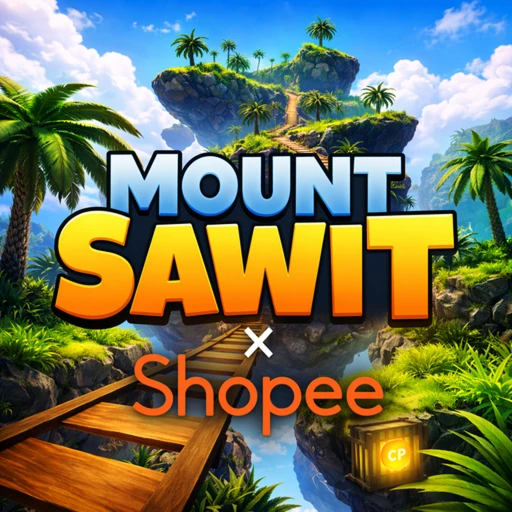
Mount Sawit drops you at the base of a hand-crafted mountain and asks you to climb. The course leans into a nature aesthetic — think rocky ledges, forest platforms, and winding paths that echo the feeling of a real outdoor hike. With 40 checkpoints distributed along the route, each small victory is locked in the moment you touch that glowing pad. Slip off a ledge 30 sections in? You respawn near where you fell, not at the bottom.
That design philosophy makes Mount Sawit a genuinely low-friction experience. There is no round timer breathing down your neck, no lobbying to get back into the game after a fall, and no RNG that can suddenly stack three near-impossible sections back to back. You set the pace, the mountain doesn't change, and progress always feels cumulative.
For players who want to zone out, listen to music, and still feel a sense of accomplishment at the end, Mount Sawit delivers that loop cleanly. The difficulty rating of Easy is accurate — this is not a game that will wall you repeatedly. What it offers instead is a calm, structured path with a clear finish line.
Tower of Hell — Chaos by Design
Tower of Hell operates on an entirely different philosophy. Every eight-minute round, the game assembles a new tower by stringing together randomly selected obstacle sections. No two towers are identical, and the sections themselves range from manageable jump sequences to agonising precision platforming that demands pixel-perfect movement. You have no checkpoints. Fall at section 9 of 10 and you start back at the ground floor.
That ruthlessness is also the game's greatest strength. The combination of randomness and time pressure creates a nervous, electric atmosphere that is hard to find in most Roblox experiences. The moment the round clock starts ticking, you feel it. Other players rush past you, some fall into the void beside you, and the question of whether you can reach the top before the round ends keeps every session genuinely tense.
The randomly generated layout also means Tower of Hell almost never gets stale. You might see the same individual section appear again, but the order, the spacing, and the combination with adjacent sections keeps each run feeling fresh. This is why the game has maintained an active daily player count for years after launch, long past the point where most fixed-layout games would have bled their audiences.
Difficulty and Learning Curve
Mount Sawit sits at the accessible end of the obby difficulty spectrum. The jumps are well-telegraphed, obstacles behave predictably, and checkpoint frequency ensures that failure never costs more than a few seconds of progress. For a player new to the genre — or someone coming back after a long break — this is a comfortable entry point that teaches the basics of Roblox platforming without overwhelming.
Tower of Hell's difficulty is harder to pin down because it shifts with every round. An easy tower could be cleared in under three minutes; a brutal RNG draw might produce something that chews through your entire round without a single player reaching the top. On average, expect something in the medium-to-hard range. The no-checkpoint rule amplifies every difficulty tier because a mistake anywhere on the tower means losing all of that round's progress — a very different psychological experience to respawning 10 sections back.
If you are measuring which game offers more of a challenge, Tower of Hell wins by a wide margin. If you are measuring which game is more welcoming to players who want to improve gradually without constant frustration, Mount Sawit takes that category.
Replayability
Replayability is where the gap between these two games becomes most obvious. Mount Sawit has a fixed map. Once you have completed the 40-checkpoint course — maybe two or three times — you have seen everything the game has to offer. There is still value in returning to beat your personal time or help a friend through the course, but the core loop doesn't evolve. Most players will treat it as a game they play through once or twice and move on.
Tower of Hell's random generation effectively makes it infinitely replayable. You are not just replaying a fixed course — you are playing a new configuration every eight minutes. Skilled players chase faster completion times, compete with friends in the same session, and try to nail sections that destroyed them in previous rounds. The competitive community around Tower of Hell — including speed runners and players who track their completion rates — gives long-term players a meaningful target to work toward beyond just reaching the top.
For raw replay value, Tower of Hell is in a different class. That said, replayability is only meaningful if the base experience is enjoyable — and not every player wants the high-pressure, no-checkpoint format that Tower of Hell demands.
Progression and Rewards
Mount Sawit's 40-checkpoint system is itself a form of progression — each checkpoint is a small, visible milestone that tracks how far you have come. There is a satisfying rhythm to unlocking them one by one, and the fixed nature of the course means you can mentally mark the sections you found tricky and approach them with more care on a second run. The game does not wrap this in a formal leveling system, but the sense of forward movement through the mountain is clear at every step.
Tower of Hell has historically kept progression tied to the act of completion itself — the satisfaction of beating the tower before the round ends is the primary reward. Some versions of the game and related spinoffs have introduced additional features over the years, but the core design keeps the focus on the run rather than an external reward track. Many players find that the internalized progression — watching their own skill improve across sessions until sections that once stopped them are now cleared without hesitation — is more meaningful than any badge or currency system could provide.
Neither game gates you behind paywalls for the core experience, which is worth noting. Both are free to play on Roblox. Some cosmetic or premium options may exist, but the obstacle courses themselves are fully accessible from the moment you join.
Player Counts and Community
Tower of Hell's numbers are not in the same universe as most Roblox games. Crossing 27 billion visits makes it one of the most-played games in the platform's history, and its consistent presence in the top five most-visited experiences is a testament to how effectively the game has held its audience. The community spans casual players, speed runners, YouTube creators, and a robust social scene on Discord and fan wikis. If you join a round of Tower of Hell, you are almost always playing alongside a full server.
Mount Sawit is a newer title operating at a much smaller scale. It has an active player base — tracker data has noted peaks around 2,200 concurrent players — but that figure reflects a game still building its audience rather than one with years of organic growth behind it. The community is smaller and more casual, which can actually be a plus if you prefer a lower-key session without the competitive edge that Tower of Hell's crowds bring.
For players who care about finding others to play with at any time of day, Tower of Hell's sheer footprint means wait times are essentially non-existent. Mount Sawit may require a bit more patience during off-peak hours.
Aesthetics and Atmosphere
The visual languages of these two games are almost complete opposites. Mount Sawit draws from the natural world — earthy tones, organic shapes, the suggestion of altitude and open sky as you climb. There is a calm, grounded quality to its presentation that fits the relaxed difficulty level. It feels like a game designed to be pleasant to look at, not just functional.
Tower of Hell inhabits an abstract, almost surreal space. The tower rises through a dark void, sections glow with contrasting colors to signal danger zones, and the visual complexity escalates as you climb higher. The aesthetic serves the tension perfectly: the environment looks and feels unstable, reinforcing the sense that one wrong move ends your run. It is a purposeful design choice that makes the game's emotional beats land harder.
Neither aesthetic is objectively superior — they serve different moods. Mount Sawit is the game you play to unwind; Tower of Hell is the game you play when you want your heart rate to go up a little.
Overall Verdict
Tower of Hell is the stronger game for most Roblox players in 2026. Its randomly generated design, no-checkpoint tension, massive community, and near-infinite replayability have made it one of the defining experiences on the platform — and those qualities hold up. If you want a game that will keep you coming back for months and push your platforming skills to their limits, Tower of Hell is the clear answer.
Mount Sawit earns its place for a specific audience: beginners who want a gentle, structured introduction to obbies, players who prefer a calmer pace, and anyone who finds no-checkpoint design more frustrating than fun. Its 40-checkpoint layout and nature-themed course make it a solid pick for casual sessions where the goal is enjoyment over competition.
Put simply — Tower of Hell for depth and challenge, Mount Sawit for accessibility and relaxation.
Who Should Play Each Game?
Play Mount Sawit if you...
- Are new to Roblox obbies and want to build confidence before tackling harder games
- Prefer a fixed, learnable layout where practice produces consistent improvement
- Find no-checkpoint mechanics more frustrating than motivating
- Want something visually calm to play in the background without high stakes
- Are playing with younger friends or family members who need generous checkpoint spacing
Play Tower of Hell if you...
- Want a competitive, high-tension obby experience with a live timer
- Value replayability and hate playing the same fixed course repeatedly
- Enjoy the extra pressure of no checkpoints and the satisfaction of a clean run
- Want to join a massive, active community with speed runners and content creators
- Are chasing one of the most iconic and historically significant Roblox experiences available
Getting the Most Out of Both Games
Neither game requires Robux to play, but Roblox's ecosystem rewards those who have a little currency to spend — whether that's unlocking avatar items, purchasing game passes that enhance your experience, or supporting the developers who built these worlds. Tower of Hell, for instance, has historically offered a Mutants game pass that changes how sections behave, adding an entirely new difficulty layer to an already challenging game.
If you want to fund those extras without spending real money, Earnaldo is worth bookmarking. Earnaldo is a free platform where you complete tasks, surveys, and offers to accumulate points that convert into free Robux. It's a straightforward way to keep your Roblox wallet topped up regardless of which game you're focused on this week.
We have put together dedicated guides for both games if you want to go deeper on earning Robux while playing each one. See the Mount Sawit free Robux guide and the Tower of Hell free Robux guide for game-specific tips and the best ways to use Earnaldo alongside each experience.
Earn Free Robux for Either Game
Whether you're climbing Mount Sawit's mountain or grinding Tower of Hell's no-checkpoint tower, Earnaldo lets you earn free Robux by completing simple tasks — no purchase required.
Frequently Asked Questions
No. Mount Sawit is rated Easy difficulty with 40 checkpoint saves to fall back on. Tower of Hell is significantly more punishing — it has zero checkpoints and its randomly generated sections can stack into genuinely brutal combinations. Tower of Hell wins on raw challenge.
The original Tower of Hell has no checkpoints at all. A missed jump sends you back to the bottom of the tower. Some fan-made spinoffs on Roblox add permanent checkpoints, but the official YXceptional Studios version deliberately omits them as a core design choice that defines the game's identity.
As of 2026, Tower of Hell has surpassed 27 billion visits, making it one of the most-played games in Roblox history. It consistently ranks in the platform's top five experiences by all-time visit count and won the Best Obby category at the Roblox Innovation Awards in 2024.
Mount Sawit has 40 checkpoints distributed across its nature-themed mountain course. Each checkpoint saves your position, so if you fall you respawn at the most recent one you reached rather than restarting from the very beginning. This makes the game significantly more forgiving than most competitive obbies.
Mount Sawit is the friendlier choice for newcomers. Its 40 checkpoints eliminate the frustration of full restarts, and the nature-themed visuals paired with an Easy difficulty rating make it a low-stress introduction to the obby genre. Tower of Hell's no-checkpoint design and competitive atmosphere are better suited to players who already have solid platforming fundamentals and a tolerance for setbacks.
Playing either game does not award Robux directly. However, Earnaldo lets you earn free Robux by completing offers, surveys, and tasks outside the games — then spend those Robux however you like, whether that's a game pass in Tower of Hell, an avatar item, or anything else in the Roblox ecosystem. Check out our Mount Sawit guide or our Tower of Hell guide for details.