Multiverse Defenders vs Anime Defenders (2026) -- Which Tower Defense Is Better?
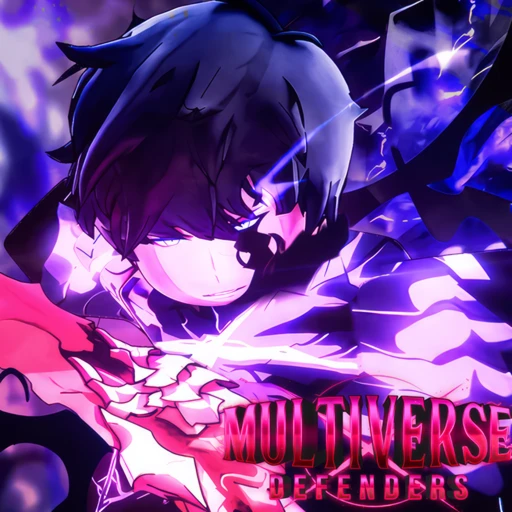
Roblox has no shortage of anime tower defense games, but not all of them deliver the same experience. Multiverse Defenders and Anime Defenders both fall under the anime TD umbrella, yet they occupy very different positions in the genre. One is a rising newcomer with roughly 12 million visits and a growing community. The other is a titan of the category with over 2 billion visits and tens of thousands of players online at any given moment.
Comparing these two games is not about finding two equals and picking the better one. It is about understanding what each game does well, where each one falls short, and which experience matches what you are looking for. Whether you want a smaller community where you can stand out or a massive ecosystem with endless content, this breakdown covers every angle so you can make an informed decision.
We will walk through gameplay mechanics, unit systems, summoning, progression, player counts, trading, monetization, and overall value. By the end, you will know exactly which game fits your playstyle -- or whether you should be playing both.
Multiverse Defenders vs Anime Defenders -- Quick Stats (2026)
| Category | Multiverse Defenders | Anime Defenders |
|---|---|---|
| Genre | Anime tower defense | Anime tower defense |
| Place ID | 12323348421 | 17017769292 |
| Total Visits | ~12M | ~2B |
| Concurrent Players | 500 - 2,000 | 20,000 - 40,000 |
| Unit Source | Summoning system | Gacha banners |
| Unit Roster Size | Growing (smaller roster) | Large (100+ units) |
| Game Modes | Multiple modes | Standard TD + events |
| Trading | Not available | Yes |
| Co-op | Yes | Yes |
| Mobile-Friendly | Yes | Yes |
| Free-to-Play | Yes | Yes |
| Update Frequency | Regular | Frequent (weekly events) |
The numbers tell a clear story at first glance. Anime Defenders dwarfs Multiverse Defenders in every popularity metric. But raw player count does not always determine which game is more fun for any individual player. The sections below dig into the details that matter.
Gameplay -- Core Loop and Mechanics
Multiverse Defenders
Multiverse Defenders follows the anime tower defense formula with its own set of twists. You summon anime-inspired units through a summoning system, then deploy them on tower defense maps where waves of enemies advance along predetermined paths. Your goal is to place units strategically, upgrade them between waves, and prevent enemies from reaching the end of the path.
What sets Multiverse Defenders apart is its approach to game modes. Rather than offering a single tower defense mode with varying difficulty, the game includes multiple distinct ways to play. These modes change the rules and objectives enough to keep sessions from feeling repetitive, even if you are running the same units. The variety is a strong point for a game of its size, and it suggests the developers are thinking about long-term engagement rather than relying solely on the unit collection treadmill.
The summoning system in Multiverse Defenders draws from anime archetypes and multiverse-themed characters. Units feel familiar if you watch anime, and the art direction leans into recognizable references without being direct copies. The roster is still growing, which means the meta has not fully solidified -- a situation that can actually be more fun for players who enjoy experimenting rather than following an established tier list.
Being a newer and smaller game, Multiverse Defenders benefits from a tighter feedback loop between developers and players. Bug fixes, balance changes, and feature requests move through the pipeline faster when the community is smaller. If you have ever wanted your feedback to matter, a game at this stage of growth is where it carries the most weight.
Anime Defenders
Anime Defenders has had time to refine its core loop into something polished and deeply engaging. You summon units from gacha banners using gems earned through gameplay or purchased with Robux. Each banner features specific high-rarity characters alongside a general pool, and drop rates for the top-tier units sit around 1% or lower. Once you have built a roster, you enter tower defense maps and face waves of increasingly powerful enemies.
The strategic depth in Anime Defenders comes from the sheer number of unit synergies available. With over 100 characters in the game, team-building is a complex and rewarding puzzle. Some units specialize in area-of-effect damage for clearing dense waves. Others deal massive single-target damage for burning down bosses. Support characters buff allies, debuff enemies, or provide utility like slowing or stunning. The best teams combine all of these roles in ways that maximize efficiency on specific maps.
Maps in Anime Defenders span multiple difficulty tiers, from beginner-friendly layouts with single paths to endgame challenges that demand optimized teams and precise placement. The difficulty curve is well-calibrated -- each new tier feels like a meaningful step up without being an unfair wall. Endgame content is genuinely challenging and gives veteran players a reason to keep pushing for stronger units and better strategies.
Co-op play supports up to four players and transforms the experience significantly. Combining rosters with other players opens up team compositions that are impossible solo, and coordinating placement and upgrades with teammates adds a social dimension that the genre benefits from. The co-op matchmaking works smoothly, and the game balances enemy health and wave difficulty based on party size.
Edge: Anime Defenders for depth, content volume, and refined mechanics. Multiverse Defenders for variety in game modes and a less overwhelming entry point.
Unit Systems -- Summoning and Collection
The summoning system is where these two games diverge in meaningful ways, and it shapes the entire player experience.
Multiverse Defenders uses a summoning system that lets you acquire new units through in-game currency. The system is straightforward -- spend your currency, receive a random unit from the available pool. Because the roster is still growing, the pool is smaller, which means your chances of getting specific units are relatively higher compared to games with hundreds of characters. This works in favor of newer players who want to build a functional team without months of grinding. The flip side is that there are fewer rare chase units to hunt, which reduces the long-term collecting appeal for hardcore gacha fans.
Anime Defenders runs a banner-based gacha system with limited-time featured units. New banners arrive regularly, each spotlighting specific high-rarity characters. The summoning pool is deep -- over 100 units across multiple rarity tiers -- and the drop rates for the rarest characters are low enough to keep them feeling special. The game provides a steady stream of free gems through daily quests, map completions, event rewards, and codes, but building a roster of top-tier units takes real commitment. For many players, this long-term pursuit is the primary motivation to keep playing.
Unit upgrading follows different paths in each game. Multiverse Defenders allows you to strengthen units through progression systems that improve their stats and abilities over time. Anime Defenders uses a merge system where combining duplicate units raises their star level, boosting stats significantly. This merge system ties directly back into the gacha loop -- you need duplicates to maximize your units, which means more summoning.
Edge: Anime Defenders for collection depth and the thrill of chasing rare units. Multiverse Defenders for accessibility and faster roster completion.
Progression and Difficulty Curve
How a tower defense game handles progression determines whether it holds your attention for days or months. Both games take different approaches here, and both have merit.
Multiverse Defenders offers a progression curve that respects your time without demanding huge commitments per session. You can make meaningful progress in 30 to 60 minutes, unlocking new content and strengthening your roster at a pace that feels rewarding without being exhausting. The multiple game modes contribute to this -- when you hit a wall in one mode, you can switch to another and still make progress. This design keeps frustration low and makes the game easy to pick up whenever you have free time.
The difficulty in Multiverse Defenders ramps up at a steady pace, but the ceiling is lower than in Anime Defenders simply because the game has less content. You will reach the current endgame faster, which can be either a positive or a negative depending on your perspective. Some players appreciate reaching the endgame quickly so they can focus on mastery. Others want an endgame that takes months to conquer.
Anime Defenders has a progression system that stretches across weeks and months of play. Early content is approachable and teaches you the fundamentals of unit placement, upgrading, and team composition. Mid-game introduces you to harder maps, the importance of unit synergies, and the trading system. The endgame is where the real depth lives -- clearing the hardest difficulty maps requires carefully optimized teams, precise placement, and an understanding of enemy patterns that only comes from experience.
The depth of Anime Defenders' endgame is one of its strongest features. There is always a harder map to attempt, a better team to build, or a rare unit to chase. This gives the game staying power that few Roblox titles can match. The trade-off is that progress can feel slow during the mid-game grind, particularly if luck is not on your side with summons.
Edge: Anime Defenders for long-term depth and endgame challenge. Multiverse Defenders for approachable progression that does not demand massive time investment.
Player Count and Community (July 2026)
The community difference between these two games is stark, and it affects your experience in ways that go beyond just finding a co-op partner.
Anime Defenders has accumulated over 2 billion visits and consistently pulls 20,000 to 40,000 concurrent players during peak hours. The community infrastructure is extensive -- multiple Discord servers with tens of thousands of members, active subreddits, YouTube creators producing daily content, tier lists that get updated with every patch, and a trading economy with its own set of norms and value systems. When a new update drops, the community generates guides, tier rankings, and strategy discussions within hours. You will never struggle to find information, co-op partners, or trading opportunities.
Multiverse Defenders sits at roughly 12 million visits with 500 to 2,000 concurrent players. The community is smaller but genuine. Discord servers exist and the conversation is active, though you will not find the same depth of resources. Content creator coverage is limited, and community-maintained guides are less comprehensive. Finding co-op partners may take slightly longer, but the smaller player base also means less competition for event rewards and a friendlier atmosphere where individual players can build reputations.
There is something to be said for being part of a game during its growth phase. Players who joined Anime Defenders early had a very different experience than those joining now -- they shaped the meta, discovered strategies first, and built the community from scratch. Multiverse Defenders is in that early phase right now, and players who join during this period will have outsized influence on how the game and community develop.
Trading Economy
Trading is a major differentiator between these two games, and it matters a lot depending on how you like to play.
Anime Defenders features a fully functional trading system that has become a core part of the game's identity. You can trade units with other players, which means bad luck on a summon banner is not the end of the world -- if you pull a duplicate of something valuable, you can trade it for a unit you actually need. Community-maintained value lists track the relative worth of every unit in the game, and dedicated Discord channels facilitate thousands of trades every day. The trading economy adds a layer of engagement that extends well beyond the tower defense gameplay itself. For some players, trading is the endgame.
Multiverse Defenders does not currently offer a trading system. This means every unit you acquire comes directly from summoning or progression systems. If you want a specific character, your only option is to keep summoning until you get it. The absence of trading simplifies the game in some ways -- you do not need to learn market values or worry about getting scammed -- but it also removes a potential source of engagement and a way to mitigate bad luck.
Edge: Anime Defenders, clearly. The trading system adds depth, social interaction, and a safety net for unlucky summons.
Game Passes and Monetization
Both games are free-to-play with optional purchases, but the scale of their monetization reflects their different sizes.
Anime Defenders offers gem packs, VIP game passes, and limited-time bundles. The VIP pass provides ongoing benefits like increased gem income and bonus rewards from map completions. Gem purchases accelerate your summoning but do not provide access to exclusive units -- everything in the game can be obtained through free play. The monetization is standard for the Roblox anime gacha genre. Heavy spenders will build stronger rosters faster, but free players can clear all content with patience and smart resource management.
Multiverse Defenders has a lighter monetization structure, which fits its smaller scale. Game passes and in-game purchases exist, but the lower player count means the in-game economy is less competitive. You do not feel the same pressure to keep up with whales because the community is small enough that everyone progresses at a similar pace. This can make the free-to-play experience feel more relaxed compared to the high-pressure environment of a massive game like Anime Defenders.
Neither game crosses into pay-to-win territory in a way that locks free players out of content. Both respect the fundamental principle that skill and strategy should matter more than spending. The difference is one of scale -- Anime Defenders has more to spend on, more reasons to spend, and a more competitive environment that rewards spending.
Updates and Developer Support
A tower defense game lives and dies by its update cadence. Stale content drives players away faster than any balance issue or bug.
Anime Defenders benefits from a large and experienced development team that pushes updates on a frequent schedule. New banners appear regularly, introducing fresh units that shift the meta and give players new targets to chase. Limited-time events run on a consistent calendar, providing exclusive rewards and time-sensitive challenges. Maps, balance patches, and quality-of-life improvements arrive alongside the content updates. The update cadence is one of the reasons Anime Defenders has maintained its massive player base for so long -- there is always something new happening.
Multiverse Defenders updates regularly for its size, and the developers have shown responsiveness to community feedback. New units, modes, and features are added over time, and the smaller scale of the game means changes can be implemented faster. The roadmap is less public and the update cadence is less predictable than Anime Defenders, but the game is actively maintained and growing. For players who enjoy watching a game evolve in real time, Multiverse Defenders is at an interesting point in its development arc.
Earning Free Robux While You Play
Tower defense games pair naturally with Earnaldo for earning free Robux. Both Multiverse Defenders and Anime Defenders have built-in downtime between waves and during lobby periods where you can complete Earnaldo tasks. The strategic, less reflex-intensive nature of TD gameplay means you can manage tasks without hurting your in-game performance.
Anime Defenders sessions tend to run longer, which means more natural windows for completing tasks between rounds. Multiverse Defenders sessions are typically shorter, but the multiple game modes mean you can find natural break points to check Earnaldo between matches.
For specific strategies on maximizing your Robux earnings alongside each game, check out our Multiverse Defenders free Robux guide and Anime Defenders free Robux guide. You might also find our Toilet Tower Defense free Robux guide useful if you enjoy the TD genre more broadly.
Earn Free Robux for Multiverse Defenders or Anime Defenders
Complete simple tasks on Earnaldo and withdraw real Robux -- no downloads, no generators, no scams.
Head-to-Head Verdict -- Multiverse Defenders vs Anime Defenders in 2026
The Verdict
Choose Multiverse Defenders if you want a smaller, more approachable anime tower defense experience where you can make meaningful progress quickly. The multiple game modes keep things fresh, the community is friendly and growing, and the lack of an overwhelming unit pool means you can build a strong team without months of grinding. It is a solid choice if you prefer a game where you can reach the endgame at a reasonable pace and enjoy the journey of watching a game evolve during its growth phase.
Choose Anime Defenders if you want the definitive anime tower defense experience on Roblox. The massive unit roster, deep strategic gameplay, active trading economy, and frequent updates create an experience with months of content to explore. The community is large and well-organized, guides and resources are abundant, and the endgame offers genuine challenge. If you are looking for a game you can sink hundreds of hours into, Anime Defenders delivers.
Overall: These two games are not direct competitors in the way that similarly-sized titles would be. Anime Defenders is the established heavyweight with years of content and a massive player base. Multiverse Defenders is a promising newcomer with unique ideas and room to grow. If you have time for only one, Anime Defenders offers more content and community. If you enjoy supporting newer games and want a less competitive environment, Multiverse Defenders has genuine appeal. Playing both is entirely viable -- they scratch slightly different itches within the same genre.
Who Should Play What?
- You want maximum content: Anime Defenders. Over 100 units, dozens of maps, regular events, and a deep endgame.
- You prefer a smaller community: Multiverse Defenders. Fewer players means less competition, friendlier lobbies, and more developer interaction.
- You want active trading: Anime Defenders. The trading system is well-established with community value lists and active Discord channels.
- You are new to anime TD: Multiverse Defenders offers a simpler on-ramp, while Anime Defenders has more guides and community resources to help you learn.
- You want multiple game modes: Multiverse Defenders provides more variety in how you play beyond standard tower defense.
- You want to earn Robux while playing: Both work well with Earnaldo. TD gameplay has natural downtime perfect for completing earning tasks.
Frequently Asked Questions
Anime Defenders is far more popular by every measurable metric. It has accumulated over 2 billion visits and regularly pulls 20,000 to 40,000 concurrent players. Multiverse Defenders is a newer, smaller title with roughly 12 million visits and 500 to 2,000 concurrent players. Anime Defenders has the larger and more established community by a wide margin.
Multiverse Defenders is generally more accessible for free-to-play players because it is smaller and less competitive. You can progress through content without needing top-tier units. Anime Defenders has more free gem sources thanks to its larger event calendar, but the sheer size of its unit roster means building a competitive collection takes longer without spending.
Anime Defenders features a well-established trading system with community-maintained value lists and active Discord trading channels. Multiverse Defenders does not currently have a trading system. If trading is an important feature for you, Anime Defenders is the clear choice.
Anime Defenders has a significantly larger unit roster with well over 100 characters drawn from dozens of anime series. Multiverse Defenders has a smaller but growing roster of anime-inspired units. Both games add new characters through updates, but Anime Defenders' head start means it will likely maintain a larger roster for the foreseeable future.
Yes, both games are fully playable on mobile through the Roblox app on iOS and Android. Tower defense gameplay works well on touchscreens since the core actions are tapping to place and upgrade units. Both games run smoothly on most modern mobile devices.
If you are new to anime tower defense games on Roblox, Multiverse Defenders offers a simpler entry point with less overwhelming content. If you want the full-featured experience with the largest community and the most content, start with Anime Defenders. Many players enjoy both games and switch between them depending on their mood and what events are running.