Natural Disaster Survival vs Survive the Killer (2026) -- Which Roblox Game Is Better?
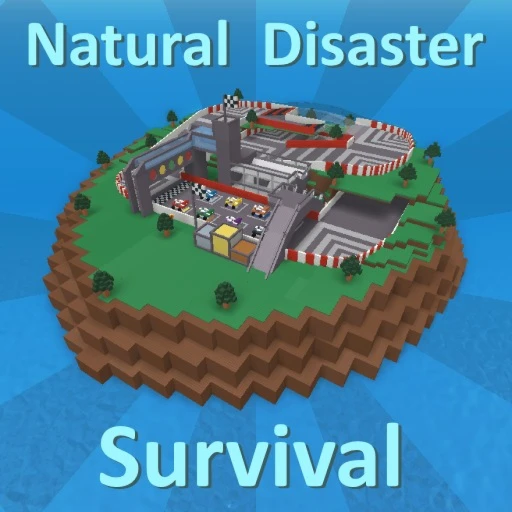
Survival games are one of Roblox's most popular genres, but the word "survival" can mean wildly different things depending on which game you load up. Natural Disaster Survival puts you on a map with random players and asks a simple question: can you stay alive while a tornado, tsunami, earthquake, or volcanic eruption tears the environment apart around you? Survive the Killer flips the threat from nature to a person -- one player becomes the killer, armed with a blade, and the rest have to hide, run, and outlast the clock to make it out alive.
These two games represent fundamentally different philosophies about what it means to survive. One is a pure environmental challenge where the danger is impersonal and chaotic. The other is a social horror experience where the danger has a name, a skin, and is actively trying to find you behind that dumpster. Both have earned massive audiences -- Natural Disaster Survival has crossed 3.5 billion visits as one of Roblox's longest-running titles, while Survive the Killer has pulled in over 2 billion visits since its launch by Flavor Studios.
This comparison walks through every category that matters -- gameplay, progression, graphics, community, monetization, social features, and replay value -- so you can decide which survival game fits your playstyle heading into mid-2026.
Natural Disaster Survival vs Survive the Killer -- Quick Stats (2026)
| Category | Natural Disaster Survival | Survive the Killer |
|---|---|---|
| Genre | Environmental survival | Asymmetric survival horror |
| Place ID | 189707 | 4580204640 |
| Developer | Stickmasterluke | Flavor Studios |
| Total Visits | 3.5B+ | 2B+ |
| Release | 2008 (updated over the years) | 2019 |
| Setting | Various maps (islands, cities, structures) | Horror-themed maps (factories, mansions, camps) |
| Core Loop | Survive random natural disasters | Hide from the killer or hunt as the killer |
| Threat Type | Environmental (PvE) | Player-controlled killer (PvP) |
| Round Length | ~2-4 minutes | ~3-8 minutes |
| Mobile-Friendly | Yes (very simple controls) | Yes (hiding works well on mobile) |
| Free-to-Play | Yes | Yes |
Gameplay -- What Do You Actually Do?
Natural Disaster Survival
Natural Disaster Survival is one of the most straightforward games on Roblox, and that simplicity is exactly why it has endured for over fifteen years. Each round drops you onto one of several destructible maps -- an island resort, a suburban neighborhood, a glass-paneled skyscraper, a parking structure -- and then hits you with a randomly selected natural disaster. Your only job is to not die.
The disaster pool includes tornadoes that rip buildings apart and fling debris, tsunamis that flood entire maps, earthquakes that crack the ground and collapse structures, volcanic eruptions that rain fire from the sky, sandstorms that reduce visibility and push you around, blizzards that freeze and obscure, acid rain that eats through surfaces, and meteor showers that turn the ground into a minefield. Each disaster demands different positioning. When a tornado spawns, you want to get low and find shelter behind solid walls. When a tsunami hits, you need to climb as high as possible before the water arrives. Earthquakes punish anyone standing on weak structures. Volcanic eruptions require constant movement to dodge falling rocks.
The beauty of the game is that every round teaches you something about map knowledge. Over time, you learn which structures survive which disasters. You figure out that the lighthouse on the island map is a death trap during earthquakes but a safe haven during floods. You discover that the parking garage holds up against tornadoes but floods quickly. This environmental literacy is the game's hidden skill layer -- what looks like pure luck to new players becomes a calculated reading of the map for experienced ones.
Rounds are short, typically lasting two to four minutes including the disaster itself and a brief intermission. The pace is relentless in the best way. You survive a tornado, respawn on a new map, and immediately start scanning the sky for the next threat. There is zero downtime, zero setup, and zero barrier to understanding what you need to do.
Survive the Killer
Survive the Killer takes a completely different approach to the survival concept. At the start of each round, one player is randomly selected as the killer. That player gets a weapon and a time limit. Everyone else becomes a survivor whose goal is to hide, avoid detection, and stay alive until the timer runs out. If the killer finds and eliminates all survivors, they win. If even one survivor makes it to the end, the survivors win.
The maps are designed around hiding spots, sightlines, and escape routes. Factories with conveyor belts and industrial machinery offer dozens of nooks to squeeze into. Mansions have closets, attics, and secret rooms. Camp maps use dense trees and cabins to break up the killer's field of view. Map knowledge matters enormously here -- knowing where the hiding spots are, which routes give you the longest escape paths, and where other survivors tend to cluster (and therefore draw the killer's attention) separates experienced players from new ones.
Playing as the killer is an entirely different experience. You have enhanced speed and a third-person perspective that gives you better spatial awareness. The challenge is systematic -- sweeping through the map efficiently, checking common hiding spots, listening for audio cues, and cutting off escape routes when you spot a runner. Good killers develop patrol patterns and learn to predict survivor behavior. They know that newer players tend to hide in the first spot they find, while veterans rotate between hiding spots and move when the killer is on the other side of the map.
The game also features a survivor rescue mechanic. Eliminated survivors can be rescued by teammates who reach their body before it fully despawns, adding a risk-reward layer for survivors who have to decide whether helping a fallen friend is worth exposing their own position. This creates genuine tension -- you hear the killer's footsteps fading into the distance, and you have maybe ten seconds to sprint to your downed teammate and revive them before the killer circles back.
Edge: Survive the Killer for depth and tension. Natural Disaster Survival for accessibility and speed. Survive the Killer delivers a richer psychological experience with more decision-making per round. Natural Disaster Survival gets you into the action faster and requires zero social navigation -- you never have to worry about another player hunting you down.
Progression -- How Does Each Game Keep You Playing?
Natural Disaster Survival
Natural Disaster Survival takes a deliberately minimal approach to progression. There is a survival streak counter that tracks how many consecutive rounds you have survived, serving as a personal benchmark and bragging right. Beyond that, the game does not layer on experience points, skill trees, unlockable abilities, or complex currency systems. You play because the core gameplay loop is satisfying, not because a progress bar is telling you to.
This design philosophy reflects the game's era -- it was built in an early period of Roblox development when games were simpler and less focused on retention mechanics. For some players, the absence of extrinsic rewards is a weakness. For others, it is a feature. There is something clean about a game that does not try to manipulate you into one more round through daily login bonuses or limited-time battle passes. You open Natural Disaster Survival because you want to play Natural Disaster Survival, and you close it when you have had enough.
The implicit progression is map mastery. Learning how each disaster interacts with each map is the real long-term skill development. After hundreds of rounds, you develop instincts -- you hear the disaster announcement and your feet are already moving to the right position before your brain fully processes what is happening. That kind of embodied knowledge is its own reward, even if the game does not give you a trophy for it.
Survive the Killer
Survive the Killer invests heavily in progression systems. Players earn coins from surviving rounds and completing objectives, which feed into a robust knife cosmetic economy. Knives are the central collectible -- they come in various rarities from common to legendary, with different visual effects, trails, and animations. The knife inventory becomes a collection showcase, and rare knives carry genuine social currency within the community.
Beyond knives, the game features seasonal events, limited-time game modes, and collaboration skins that create urgency around logging in during specific windows. Holiday events introduce themed maps, exclusive killer skins, and limited-edition knife drops that become permanently unavailable after the event ends. This creates a fear-of-missing-out cycle that keeps the active player base engaged and gives returning players something new to chase.
The leveling system tracks your overall experience and unlocks access to certain cosmetics and features as you progress. High-level players are visibly different from newcomers, which adds a social progression layer -- when you see a max-level player in your lobby, you know they have put in serious time. The combination of collectible economy, seasonal content, and visible leveling gives Survive the Killer significantly more progression hooks than Natural Disaster Survival offers.
Edge: Survive the Killer. The knife economy, seasonal events, and leveling system provide concrete goals that keep players engaged between sessions. Natural Disaster Survival's minimalist approach has philosophical appeal but gives players fewer reasons to return beyond the core gameplay itself.
Graphics & Audio
Natural Disaster Survival
Natural Disaster Survival's visual style is classic Roblox -- blocky terrain, simple structures, and straightforward textures that prioritize readability over detail. The maps are functional rather than beautiful, designed so you can quickly identify safe zones, structural weak points, and escape routes at a glance. This clarity is a gameplay asset. When a tornado is bearing down on you, you do not want to waste time parsing elaborate visual detail -- you need to instantly see where the nearest solid wall is.
The disaster effects themselves are the visual highlight. Tornadoes have a satisfying sense of scale as they tear across the map, pulling debris into a visible column. Tsunamis create a rising waterline that transforms the entire geography of the play area. Volcanic eruptions fill the sky with glowing projectiles that leave impact craters. These effects have been refined over the years and hold up surprisingly well considering the game's age. The audio is functional -- you hear wind, water, rumbling, and impacts that communicate what is happening even when the disaster is off-screen.
The visual simplicity also means the game runs smoothly on virtually any device. Low-end phones, old tablets, and budget laptops can handle Natural Disaster Survival without frame drops, which partly explains its massive reach across the global Roblox audience.
Survive the Killer
Survive the Killer puts considerably more effort into atmosphere. Maps are lit with moody, directional lighting that creates deep shadows -- exactly the kind of shadows you want to hide in. Factory maps feature flickering overhead lights and steam vents. Mansion maps use dim chandeliers and candlelight to create pools of visibility separated by darkness. The visual design directly serves the gameplay: dark corners are not just atmospheric, they are strategic resources.
Knife cosmetics are where the visual polish really shows. Rare knives feature particle effects, animated textures, glow trails, and unique idle animations. When a killer rounds a corner carrying a legendary knife with a neon trail, the visual impact is immediate. The cosmetic system gives Flavor Studios a reason to invest in visual fidelity, and it shows in the quality of the weapon models and effects.
Audio design in Survive the Killer is functional and atmospheric. Footstep sounds vary by surface type, giving survivors audio information about the killer's location. Ambient soundscapes -- dripping water, creaking floorboards, distant machinery -- build tension even when nothing is actively happening. The killer's heartbeat audio cue, which increases in intensity as they approach, is a smart design choice that gives survivors information without breaking immersion.
Edge: Survive the Killer. The atmospheric lighting, cosmetic visual quality, and functional audio design create a more polished and immersive experience. Natural Disaster Survival's visual simplicity has practical advantages for accessibility and performance, but Survive the Killer demonstrates what a more modern Roblox game can achieve visually.
Player Count & Community (July 2026)
Natural Disaster Survival sits at over 3.5 billion total visits, a number that places it among the most-played experiences in Roblox history. That figure represents nearly two decades of accumulated play across every era of the platform. Stickmasterluke, the solo developer behind the game, is one of the original Roblox creators whose work helped define what the platform could be. The game has been a gateway experience for millions of players -- it is often one of the first games new Roblox users try because of its simplicity and prominent placement.
Survive the Killer has crossed 2 billion visits, which is a staggering number in its own right, achieved in roughly six years compared to Natural Disaster Survival's nearly two decades. Flavor Studios has built a dedicated community around the game through consistent updates, seasonal events, and an active social media presence. The game generates strong content on YouTube and TikTok, where killer POV clips, clutch survival moments, and rare knife unboxings perform well.
Community culture differs noticeably between the two. Natural Disaster Survival's community is broad and casual -- most players experience the game as one of many in their Roblox rotation rather than as a primary game they build an identity around. The Discord and forum presence is modest compared to its player count. Survive the Killer's community is more invested, with active trading markets for rare knives, tier list discussions, map strategy guides, and content creator ecosystems. The game has the kind of community infrastructure that indicates a deeply engaged core audience.
Edge: Natural Disaster Survival for raw reach and historical significance. Survive the Killer for community engagement and content creation momentum. Natural Disaster Survival's 3.5 billion visits reflect a legacy that very few games can match. Survive the Killer's community is more actively engaged and generates more ongoing content discussion.
Game Passes & Monetization
Natural Disaster Survival
Natural Disaster Survival has one of the lightest monetization approaches of any major Roblox game. The game offers minimal purchasable content, keeping the experience almost entirely free. There are no premium currencies, no loot boxes, and no seasonal battle passes extracting Robux from the player base. What you see is what you get -- everyone in the server is playing the same game with the same tools.
This approach has trade-offs. On one hand, it means the game never feels exploitative or pressures you to spend. On the other hand, limited monetization means limited revenue for development, which partly explains why the game receives less frequent updates compared to more heavily monetized competitors. Stickmasterluke has maintained the game as a labor of love rather than a revenue-driven live service.
Survive the Killer
Survive the Killer features a more developed monetization model built around its knife economy. Players can purchase knife crates with in-game coins or Robux, with different crate tiers offering different rarity distributions. Individual game passes provide benefits like increased coin earnings, exclusive knife skins, and cosmetic enhancements. The pricing is generally reasonable by Roblox standards, with most individual passes falling in the 100-400 Robux range.
The trading system adds a secondary economy layer. Rare knives can be traded between players, creating a marketplace where certain limited-edition items appreciate in perceived value over time. This gives collecting a speculative dimension -- players hold onto event-exclusive knives knowing they may become more desirable as they become rarer.
Importantly, none of the monetization affects gameplay balance. A player with every game pass and a legendary knife collection has zero mechanical advantage over a free player. The killer's weapon functions identically regardless of its cosmetic skin. Survive the Killer monetizes vanity effectively without compromising competitive fairness.
Edge: Draw. This depends entirely on what you value. Natural Disaster Survival's near-zero monetization is appealing if you want a completely free experience with no spending pressure. Survive the Killer's cosmetic economy is appealing if you enjoy collecting, trading, and expressing yourself through rare items. Neither game crosses into pay-to-win territory.
Social Features -- Playing with Friends
Natural Disaster Survival
Natural Disaster Survival creates social moments through shared chaos rather than structured cooperation. When a tornado rips through the map and you watch three players get flung off a rooftop simultaneously, the shared absurdity is inherently social even though nobody coordinated anything. The game generates watercooler moments -- "remember when the earthquake hit and the entire building collapsed on everyone" stories that come from being in the same place when something ridiculous happens.
Playing with friends adds a casual competitive layer. You end up comparing survival streaks, calling out each other's questionable positioning choices, and laughing when someone confidently declares a spot safe right before a meteor lands on their head. The social experience is low-stakes and low-effort -- you do not need to coordinate, communicate tactics, or depend on each other. You just share a server and watch the same disasters unfold from different vantage points.
The limitation is that the game does not provide tools for meaningful cooperation. You cannot help a friend survive. You cannot share resources or build defenses together. Each player's survival is entirely individual, which means the social experience is observational rather than participatory. You are together in the same disaster, but you are each surviving it alone.
Survive the Killer
Survive the Killer offers a more structured social experience. When you and your friends are all survivors, the round becomes a cooperative challenge -- sharing information about the killer's location, distracting the killer so a friend can escape, coordinating rescue attempts for eliminated teammates. Voice chat adds another dimension, as whispered callouts and panicked warnings create shared tension that solo play cannot replicate.
The asymmetric format also creates memorable friend-group moments. When your friend becomes the killer and immediately beelines for your favorite hiding spot because they know your habits, the social dynamic shifts from cooperative to adversarial in a way that generates stories. "I cannot believe you checked behind that exact crate" becomes a running joke. The game's format naturally produces these interpersonal moments because the threat is a person, not a weather system.
The rescue mechanic gives groups a genuine cooperation challenge. Choosing to risk your own survival to save a downed friend creates meaningful decisions that solo play does not. The best survive-the-killer memories come from clutch rescues where a friend sprints across an open room, revives you, and you both escape the killer by seconds.
Edge: Survive the Killer. The asymmetric format, rescue mechanics, and interpersonal dynamics create richer social experiences. Natural Disaster Survival's shared-chaos moments are entertaining, but Survive the Killer gives friends more tools to interact meaningfully during gameplay.
Replay Value -- Will You Still Play Next Month?
Natural Disaster Survival
Natural Disaster Survival has already answered this question definitively by maintaining an active player base for nearly two decades. The combination of short rounds, randomized disasters, and multiple maps creates enough variety per session that the game never feels stale in the short term. You might get three tornadoes in a row, or you might get a perfectly varied sequence of flood, earthquake, meteor shower, and blizzard. The randomization keeps individual sessions fresh.
The long-term replay ceiling is lower, though. Once you have learned all the maps and all the disasters, the game does not offer new challenges to master. There are no difficulty escalations, no new mechanics that unlock at higher play counts, and limited new content additions. The game is what it is -- and what it is has been enough for billions of visits, but individual players tend to cycle in and out rather than playing daily for months at a time. Natural Disaster Survival is the kind of game you revisit periodically rather than grind continuously.
Survive the Killer
Survive the Killer has stronger ongoing replay hooks. The knife collection provides a persistent goal that spans hundreds of hours. Seasonal events inject new content regularly, giving players reasons to return during specific windows. The asymmetric gameplay creates natural variety because human killers play differently from each other -- the same map feels different when the killer is methodical versus aggressive, patient versus impulsive.
The skill ceiling for both roles is high enough to sustain long-term engagement. As a survivor, advanced techniques like baiting the killer into checking a spot you have already left, timing rotations around the killer's patrol pattern, and managing rescue timing all improve gradually through practice. As a killer, efficiency optimization -- clearing maps faster, predicting spawn positions, controlling sightlines -- provides a mastery curve that rewards dedicated play.
The constraint is content dependency. While human opponents provide more variety than scripted disasters, the map pool and game mode options still need regular refreshment. Flavor Studios has maintained a solid update cadence through 2026, but the game's replay value is more dependent on continued developer support than Natural Disaster Survival's self-sustaining simplicity.
Edge: Survive the Killer for active replay hooks and skill ceiling. Natural Disaster Survival for low-maintenance revisitability. Survive the Killer gives you more reasons to play tomorrow specifically. Natural Disaster Survival gives you a game that will be exactly as enjoyable whenever you decide to come back, whether that is next week or next year.
Earning Potential -- Free Robux While You Play
If you use Earnaldo to earn free Robux alongside your gaming sessions, both games pair well with the platform but in different ways. Natural Disaster Survival's round structure is almost purpose-built for multitasking with Earnaldo. Rounds last two to four minutes, and the intermission between disasters gives you a clean window to switch over, check available offers, and start a quick task. The rapid cycling means you get six to ten natural break points per half hour of play -- more than enough to fit earning into your session without missing gameplay.
Survive the Killer offers slightly longer rounds at three to eight minutes, but it has a built-in advantage: if you get eliminated early in a round, you enter spectator mode with nothing to do until the round ends. That spectating time is a perfect window to complete Earnaldo tasks. Even when you survive the full round, the between-match lobby period provides a natural pause. Players who alternate between earning and playing can use elimination downtime productively rather than just watching the remaining survivors hide.
For game-specific strategies on maximizing your Robux earnings, check our dedicated guides: Natural Disaster Survival free Robux guide and Survive the Killer free Robux guide.
Earn Free Robux for Natural Disaster Survival or Survive the Killer
Complete simple tasks on Earnaldo and withdraw real Robux -- no downloads, no generators, no scams.
Head-to-Head Verdict -- Natural Disaster Survival vs Survive the Killer in 2026
The Verdict
Choose Natural Disaster Survival if you want a survival game that is instantly understandable, requires zero social navigation, and delivers quick bursts of chaotic fun with no strings attached. The game has survived nearly two decades on pure gameplay merit -- no battle passes, no FOMO events, no complex progression systems. Just you, a map, and a disaster trying to kill you. With 3.5 billion visits, it has earned its place as one of the defining Roblox experiences. Best for players who value simplicity, accessibility, and a game that respects your time without trying to manipulate your engagement.
Choose Survive the Killer if you want a survival game with genuine tension, social depth, and long-term progression goals. The asymmetric format creates psychological gameplay that environmental survival cannot match -- the fear of being found by a thinking, adapting human opponent is fundamentally different from dodging a scripted tornado. The knife economy, seasonal events, and leveling system give you concrete reasons to keep playing. Best for players who want a game they can invest in deeply, build a collection around, and share tense moments with friends.
Overall winner: Survive the Killer -- by a narrow margin. The deeper gameplay mechanics, richer social features, stronger progression systems, and more polished presentation give Survive the Killer the edge for players looking for a survival game they can sink serious time into. But Natural Disaster Survival's unmatched accessibility, zero-pressure design, and proven multi-generational staying power make it the better choice for casual sessions, younger players, and anyone who just wants to jump in and survive something. Both games belong in your Roblox library, and they serve different moods well enough that switching between them depending on your energy level is a perfectly valid approach.
Who Should Play What?
- You want zero learning curve: Natural Disaster Survival. Move away from the disaster. That is the entire tutorial.
- You enjoy hide-and-seek with stakes: Survive the Killer. The hiding mechanics create genuine tension that environmental dangers cannot replicate.
- You play on a low-end device: Natural Disaster Survival. The simple graphics run smoothly on virtually any hardware.
- You like collecting rare items: Survive the Killer. The knife economy provides a robust collecting and trading metagame.
- You are introducing someone to Roblox: Natural Disaster Survival. It has been a first-game experience for millions of players for good reason.
- You want meaningful teamwork with friends: Survive the Killer. The rescue mechanic and shared hiding strategies create cooperative moments.
- You want short sessions under five minutes: Natural Disaster Survival. Rounds are two to four minutes with instant restarts.
- You want to earn Robux while playing: Both pair well with Earnaldo. Natural Disaster Survival gives more frequent break points, while Survive the Killer offers spectator downtime when eliminated early.
Frequently Asked Questions
Natural Disaster Survival has over 3.5 billion total visits, making it one of the most-visited games in Roblox history. Survive the Killer has over 2 billion visits, which is also a massive number. Natural Disaster Survival benefits from being one of the oldest games on the platform, dating back to the early days of Roblox. Both maintain healthy active player bases in 2026, though Natural Disaster Survival's total visit count reflects over a decade of accumulated play.
Natural Disaster Survival is the safer pick for younger audiences. The gameplay involves surviving environmental hazards like tornadoes and floods with no combat or violence between players. Survive the Killer features a horror-lite atmosphere where one player hunts others with a weapon, which may be too intense for very young children despite being within Roblox's content guidelines. Both games are free and safe within the Roblox platform.
Yes, both are fully playable on mobile through the Roblox app on iOS and Android. Natural Disaster Survival works particularly well on mobile since the controls are simple -- you just need to move and jump. Survive the Killer is also playable on mobile but hiding mechanics and spatial awareness can be slightly harder on a smaller screen compared to PC.
Natural Disaster Survival is largely free with minimal monetization, keeping the experience accessible to everyone. Survive the Killer offers game passes and a knife cosmetic economy that lets players collect and trade rare knives. Neither game is pay-to-win -- spending money provides cosmetic variety and convenience rather than competitive advantages.
Both work well with Earnaldo. Natural Disaster Survival rounds last about 2-4 minutes with brief intermissions between disasters, giving you very frequent short breaks to complete earning tasks. Survive the Killer rounds run 3-8 minutes depending on whether you survive or get eliminated early. If you are eliminated, the spectating period is a natural window to switch to Earnaldo and complete offers. Both games create regular downtime windows that pair naturally with earning.
Neither game requires friends. Natural Disaster Survival is fundamentally a solo experience where you survive disasters on your own, even though other players are in the server. Survive the Killer works well with randoms since the hiding and seeking mechanics play out naturally regardless of whether you know the other players. Playing with friends adds entertainment to both, but neither depends on it for the core experience to work.