Nuke for Brainrot vs Steal a Brainrot (2026) -- Which Roblox Game Is Better?
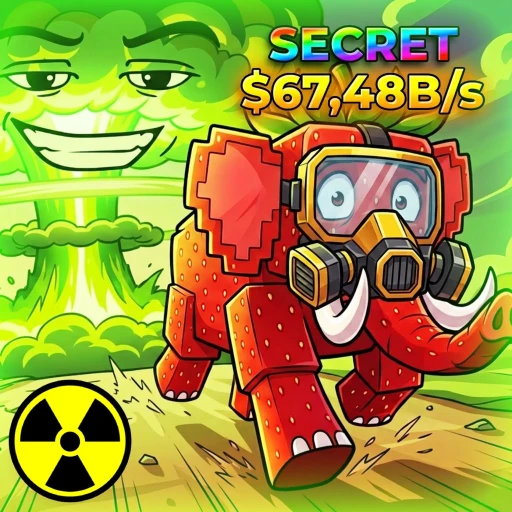
The brainrot trend on Roblox shows no sign of slowing down. What started as an internet meme phenomenon has evolved into a full-blown game genre, with dozens of brainrot-themed experiences competing for millions of daily players. Two of the most talked-about titles in this space are Nuke for Brainrot and Steal a Brainrot -- both tycoon-style games built around collecting absurdist meme characters, but each delivering a fundamentally different experience. One hands you nuclear weapons and tells you to blow things up. The other pits you directly against other players in a high-stakes game of collection and theft.
Nuke for Brainrot, developed by Future Trash 2, launched in April 2026 and has quickly accumulated over 2.7 million visits with a steady player base of around 26,000 concurrent users. Its premise is straightforward and satisfying: use increasingly powerful nukes to destroy walls, reveal hidden brainrot characters, collect them, and build your income. It is a destruction-focused tycoon that leans into the chaos of its theme without apology.
Steal a Brainrot, created by SpyderSammy and published under Do Big Studios, is a different beast entirely. This tycoon-PvP hybrid regularly pulls 600,000 to 900,000 concurrent players and holds a staggering record of 25.8 million CCU set in October 2025 -- a number that places it among the most-played Roblox experiences in the platform's history. Players buy voxel-style brainrot characters, build collections, and then attempt to steal brainrots from other players while defending their own.
We compared both games across every category that matters to Roblox players in 2026: core gameplay, progression systems, PvP depth, player counts, visual design, game passes, community health, and long-term replay value. Whether you are deciding which game deserves your time or figuring out where to spend your Robux (or earn free Robux through Earnaldo), this comparison will give you the full picture.
Nuke for Brainrot vs Steal a Brainrot -- Quick Stats (2026)
| Category | Nuke for Brainrot | Steal a Brainrot |
|---|---|---|
| Genre | Tycoon / Destruction | Tycoon / PvP |
| Place ID | 109908567838703 | 109983668079237 |
| Developer | Future Trash 2 | SpyderSammy / Do Big Studios |
| Concurrent Players | ~26K | 600K--900K |
| Total Visits | 2.7M+ | Billions |
| Release | April 2026 | 2025 |
| Peak CCU Record | N/A | 25.8M (Oct 2025) |
| Core Mechanic | Nuke walls, collect brainrots | Buy brainrots, steal from players |
| PvP Element | Minimal | Core mechanic |
| Base Building | Income-based tycoon | Collection-based tycoon |
| Theme | Brainrot memes | Brainrot memes |
| Free-to-Play | Yes | Yes |
Gameplay -- Destruction vs Deception
Nuke for Brainrot
Nuke for Brainrot keeps things simple in the best possible way. You start with a basic nuke and a wall standing between you and a collection of brainrot characters. Launch the nuke, watch the wall crumble in a satisfying explosion of debris and particle effects, and collect the brainrot characters that were hiding behind it. Each collected brainrot adds to your base income, which ticks up passively and can be reinvested into stronger nukes, expanded blast radii, and access to new areas with tougher walls and rarer brainrot characters.
The progression loop is clean and addictive. Early nukes barely scratch the surface of reinforced walls, but as you earn income and upgrade your arsenal, you gain access to increasingly devastating weapons that obliterate entire sections of the map in a single detonation. There is a tangible sense of escalation -- your first nuke is a firecracker compared to the screen-filling explosions you unlock later in the game. The developers at Future Trash 2 clearly understand that the appeal lies in the spectacle, and they deliver on that front consistently.
What makes Nuke for Brainrot work as a tycoon is the pacing. Income scales predictably with your brainrot collection, and each new tier of nukes requires a meaningful investment that makes you feel the weight of the upgrade. There are no complex skill trees or branching paths to worry about -- you nuke, you collect, you upgrade, you nuke bigger. For players who want a relaxing, satisfying gameplay loop without the stress of competing against other players, Nuke for Brainrot delivers exactly what it promises. The brainrot characters themselves are charming in their absurdity, each one a reference to internet meme culture that adds personality to what could otherwise be a generic tycoon formula.
Steal a Brainrot
Steal a Brainrot takes the brainrot collection concept and adds a layer of tension that transforms the entire experience. You start by purchasing voxel-style brainrot characters from an in-game shop using currency earned through gameplay. Each brainrot has a rarity tier and a value, and building a collection of high-value brainrots is the primary objective. But here is where it gets interesting -- other players can attempt to steal your brainrots, and you can steal theirs.
The stealing mechanic is what elevates Steal a Brainrot from a standard tycoon into something genuinely competitive. Every session involves a constant push and pull between building your collection and protecting it from rivals. You need to learn when to invest in defenses, when to go on the offensive and target other players' collections, and when to lay low and let the chaos unfold around you. The social dynamics this creates are remarkably complex for a game built around meme characters -- alliances form and break, grudges develop between regular players, and the thrill of successfully stealing a rare brainrot from a well-defended opponent provides an adrenaline rush that pure PvE tycoons cannot match.
The scale of the game is staggering. With 600,000 to 900,000 concurrent players at any given time, servers are always populated with active opponents, traders, and potential targets. The 25.8 million CCU record set in October 2025 is not just a number -- it represents a game that captured the attention of a significant percentage of the entire Roblox player base at once. That kind of viral momentum creates a self-reinforcing cycle where the game's popularity feeds its appeal. Everyone is playing it, which means everyone wants to play it, which means there is always someone online to compete against.
Edge: Steal a Brainrot for competitive depth and social dynamics. Nuke for Brainrot for stress-free, satisfying destruction gameplay.
Progression -- Building Power vs Building Collections
Progression in Nuke for Brainrot follows a vertical path. You start weak and become stronger in a linear, predictable fashion. Early nukes have small blast radii and deal minimal damage to walls, but each upgrade noticeably increases your destructive capability. The income system scales with your brainrot collection -- the more characters you have collected, the faster your passive income grows, which in turn lets you afford better nukes faster. There is a satisfying exponential curve at work: the early game feels deliberately slow to establish the baseline, and the late game rewards patience with explosions that level entire map sections in a single blast.
The brainrot characters themselves serve as progression markers. Common brainrots are plentiful behind the first few walls, but as you push deeper into the map, the walls get thicker and the brainrots behind them become rarer and more valuable. Legendary and mythic brainrot characters are locked behind walls that require the most powerful nukes in the game to breach, creating natural long-term goals that keep players coming back across multiple sessions. The collection screen doubles as a progress tracker -- filling it out becomes a goal in itself.
Steal a Brainrot has a more lateral progression system. Rather than becoming strictly more powerful over time, you become wealthier and more strategically capable. Your collection grows through purchases and successful steals, but it can also shrink if other players manage to steal from you. This creates a fundamentally different relationship with progress -- nothing is truly permanent until you have built up enough defenses and strategic knowledge to protect your most valuable brainrots.
The rarity system in Steal a Brainrot adds depth to the collection game. Common brainrots are cheap and easy to acquire, but they contribute minimal value to your overall standing. Rare and legendary brainrots command significant prices and make you a target worth raiding. The tension between wanting to display your best brainrots and knowing that doing so paints a target on your back is a design choice that keeps progression feeling dynamic rather than static. You are never truly done progressing because the competitive landscape is always shifting.
Edge: Nuke for Brainrot for clear, satisfying vertical progression. Steal a Brainrot for dynamic, high-stakes collection building where progress feels earned and defended.
PvP and Social Interaction
Nuke for Brainrot
Nuke for Brainrot is primarily a solo experience. The core gameplay loop -- launching nukes, collecting brainrots, upgrading -- does not require interaction with other players and does not penalize you for ignoring them. Other players exist in the same server space, and there is a communal satisfaction in watching multiple players launch nukes simultaneously, but the game does not build competitive mechanics around player interaction. You cannot steal another player's brainrots, sabotage their progress, or directly compete for resources in any meaningful way.
This is not necessarily a weakness. For many players, especially younger audiences and those who play Roblox to relax, the absence of PvP pressure is a feature rather than a limitation. You can log in, nuke some walls, watch your collection grow, and log out without worrying that someone undid your progress while you were offline. The social aspect comes from sharing the experience -- comparing collections, discussing which nukes are most effective, and enjoying the spectacle together without the anxiety of competition.
Steal a Brainrot
Social interaction is the engine that drives Steal a Brainrot. Every mechanic in the game is designed around player-to-player dynamics. The stealing system creates immediate, visceral interactions -- the tension of sneaking up on another player's collection, the panic of realizing someone is targeting yours, the celebration of a successful heist or the frustration of losing a prized brainrot. These moments generate stories that players share, discuss, and remember, which is precisely why the game generates such intense word-of-mouth momentum.
Beyond stealing, the game's massive player count creates a thriving social ecosystem. Trading is active and constantly evolving as players negotiate brainrot values, establish reputation within their server communities, and form groups for coordinated raids. The meta-game -- understanding which brainrots are rising in value, which defensive strategies are currently effective, and which players on your server are dangerous -- adds intellectual depth that rewards invested players. It is a social simulation wrapped in a tycoon wrapped in a meme game, and that layering is what keeps hundreds of thousands of players engaged simultaneously.
Edge: Steal a Brainrot decisively. If PvP and social dynamics matter to you, Steal a Brainrot is in a different league. If you prefer peaceful solo play, Nuke for Brainrot is the clear choice.
Player Count and Community (July 2026)
The difference in scale between these two games is enormous, and it matters for the player experience in tangible ways. Steal a Brainrot operates at a scale that most Roblox games never achieve. With 600,000 to 900,000 concurrent players on a regular basis and a peak record of 25.8 million CCU from October 2025, it sits among the most-played experiences on the entire platform. This player base fuels an active content creation community across YouTube, TikTok, and Discord, with strategy guides, steal compilations, trading value lists, and update breakdowns published daily. Finding opponents, trading partners, and community content is never an issue.
Nuke for Brainrot is a newer and smaller game with 2.7 million total visits and roughly 26,000 concurrent players. For a game that launched in April 2026, these numbers represent solid growth and indicate a healthy player base that is still expanding. The community is active in-game and on social platforms, though the volume of community content is proportionally smaller. Future Trash 2 has built a game that fills a specific niche -- destruction-based brainrot collection -- and the players who gravitate toward it tend to be engaged and loyal.
The practical impact of this difference depends on what you value. In Steal a Brainrot, every server is packed with potential targets and threats, creating a constantly active environment. In Nuke for Brainrot, servers are calmer and less chaotic, which lets you focus on the core tycoon loop without distraction. Neither approach is inherently superior -- they serve different player preferences. But if you want to be part of a massive, buzzing community where something is always happening, Steal a Brainrot has a commanding lead.
Graphics and Visual Design
Nuke for Brainrot invests heavily in its destruction effects. The nuke explosions are the visual centerpiece of the game, and Future Trash 2 has built them to feel impactful and satisfying. Walls crumble with convincing physics-based debris, particle effects bloom across the screen during detonation, and the aftermath reveals a satisfyingly cleared landscape dotted with newly accessible brainrot characters. The brainrot characters themselves are rendered in a colorful, exaggerated style that leans into the absurdist humor of the genre. The environments are clean and readable, with a focus on making the destructible walls visually distinct from the permanent terrain. The UI is minimal and functional, keeping the focus on the action rather than cluttering the screen with menus.
Steal a Brainrot takes a different visual approach with its distinctive voxel art style. The brainrot characters are rendered as blocky, stylized figures that are immediately recognizable and surprisingly expressive despite their simplified geometry. The voxel aesthetic gives the game a cohesive visual identity that sets it apart from other brainrot-themed games on the platform. Player bases and collections are displayed prominently, creating a visual hierarchy that communicates wealth and progress at a glance -- you can tell who the big players are just by looking at their display. The UI handles the game's complexity reasonably well, though the sheer amount of information on screen during peak activity can feel overwhelming on mobile devices.
Both games make smart visual choices that support their gameplay priorities. Nuke for Brainrot looks best during its explosions -- the moment of detonation is genuinely spectacular. Steal a Brainrot looks best when you are surveying the landscape of player collections, reading the social environment through visual cues before deciding who to target.
Edge: Even. Both games have strong, purposeful visual design that serves their respective gameplay loops. Nuke for Brainrot for spectacle; Steal a Brainrot for readability and character design.
Game Passes and Monetization
Nuke for Brainrot
- 2x Income: Doubles all passive income from your brainrot collection. Significantly accelerates progression by cutting the time between nuke upgrades roughly in half. A strong quality-of-life purchase for players who want to reach the endgame nuke tiers faster.
- Auto-Collect: Automatically collects brainrots after walls are destroyed, removing the need to manually pick up each character. Particularly valuable for players who run the game in the background or prefer a more idle experience.
- Premium Nukes: Grants access to exclusive nuke types with unique visual effects and enhanced blast characteristics. These nukes are not strictly more powerful than the top free-tier options, but they add variety and visual flair to the destruction gameplay.
Steal a Brainrot
- VIP Pass: Provides a bundle of bonuses including increased storage capacity, bonus income multipliers, and exclusive brainrot characters not available to free players. The most popular pass due to its comprehensive value proposition.
- Extra Storage: Expands the number of brainrots you can hold in your collection simultaneously. In a game where collection size directly correlates with power and income, additional storage is a significant competitive advantage.
- Steal Protection: Adds a defensive layer that reduces the chance of successful steals against your collection. Does not make you immune to theft but meaningfully decreases the rate at which you lose brainrots to opponents. Particularly valuable for players who accumulate high-value collections.
Both games are fully playable without spending any Robux. Nuke for Brainrot's game passes primarily accelerate progression and add convenience, meaning free players can reach the same endgame given enough time. Steal a Brainrot's passes provide competitive advantages that free players cannot fully replicate through time investment alone -- extra storage and steal protection create a measurable gap between paying and non-paying players. This difference reflects the games' different philosophies: Nuke for Brainrot sells comfort, while Steal a Brainrot sells competitive edge.
Replay Value -- What Keeps You Coming Back
Nuke for Brainrot draws its replay value from the tycoon formula's most reliable strength: the satisfaction of incremental progress. Each session moves you closer to the next nuke tier, the next rare brainrot, the next income milestone. The collection aspect adds a completionist dimension -- players who want to find every brainrot character have a clear, long-term goal that extends well beyond the initial hours of gameplay. Updates from Future Trash 2 add new areas, new walls to destroy, new brainrot characters to collect, and new nuke types to unlock, which periodically refreshes the gameplay loop for returning players. The game also works well as a secondary experience -- something you play alongside another game during downtime -- which increases its effective replay value for multitaskers.
Steal a Brainrot has replay value that is fundamentally different in nature because the game state is never static. Every session is shaped by the other players on your server -- who is online, what they are defending, what they are targeting, and how the social dynamics are evolving. You can play the same game ten times and have ten genuinely different experiences because the human element introduces unpredictability that no tycoon algorithm can replicate. The trading economy adds another axis of engagement, with brainrot values fluctuating based on supply, demand, new releases, and community sentiment. Long-term players develop reputations, rivalries, and strategies that deepen their connection to the game beyond the mechanical loop.
The honest comparison is that Steal a Brainrot gives you more reasons to keep playing because its competitive and social systems generate emergent content -- stories, rivalries, and victories that are unique to each player. Nuke for Brainrot gives you a more predictable but consistently satisfying return -- you know what you are getting each session, and what you are getting is reliably enjoyable. The question is whether you want a game that surprises you or a game that delivers exactly what you expect.
Edge: Steal a Brainrot for emergent replay value driven by social dynamics. Nuke for Brainrot for reliable, low-stress sessions that fit into any schedule.
Earn Free Robux for Nuke for Brainrot or Steal a Brainrot
Complete simple tasks on Earnaldo and withdraw real Robux -- no downloads, no generators, no scams. Use it on game passes, brainrots, or anything you want.
Head-to-Head Verdict -- Nuke for Brainrot vs Steal a Brainrot in 2026
The Verdict
Choose Steal a Brainrot if you want the most dynamic, competitive, and socially charged brainrot experience on Roblox. Its 600K-900K concurrent player base, PvP stealing mechanics, voxel character design, and the sheer scale of its community create an experience that feels alive in a way that few Roblox games can match. The 25.8 million CCU record is not an accident -- this game captured the attention of the Roblox world because its blend of collection, competition, and social interaction taps into something genuinely compelling. If you thrive on competition, enjoy outsmarting other players, and want a game where your skills and strategy matter as much as your time investment, Steal a Brainrot is the stronger choice.
Choose Nuke for Brainrot if you want a satisfying, stress-free tycoon experience with spectacular destruction mechanics. Future Trash 2 has built a game that understands its appeal perfectly -- the joy of watching increasingly powerful explosions tear through walls to reveal new collectible brainrot characters. There is no risk of losing progress to other players, no pressure to defend your collection, and no learning curve beyond "point nuke at wall." For players who are looking for something relaxing, visually satisfying, and consistently rewarding without the competitive intensity of PvP, Nuke for Brainrot fills that role excellently. Its newer status and smaller player count also mean there is room to grow and evolve in ways that established games like Steal a Brainrot may not.
Overall winner: Steal a Brainrot takes this comparison based on the depth of its gameplay systems, the scale of its community, and the emergent replay value created by its PvP mechanics. It is the more complete and ambitious game. But Nuke for Brainrot is not trying to compete on the same terms -- it is a different experience entirely, and it excels at what it sets out to do. Both games are free to play, and both reward Robux investment through their game pass systems. The best approach is to try both and decide which type of brainrot experience suits your play style.
Who Should Play What?
- You love PvP and competitive play: Steal a Brainrot. The stealing mechanic and social dynamics create a competitive environment that Nuke for Brainrot does not attempt to match.
- You prefer solo, relaxing gameplay: Nuke for Brainrot. No one can steal your progress, and the destruction loop is inherently satisfying without requiring social interaction.
- You want the biggest community: Steal a Brainrot. At 600K-900K concurrent players, it is one of the most populated games on all of Roblox.
- You enjoy destruction and spectacle: Nuke for Brainrot. The escalating nuke explosions are the visual highlight of the brainrot genre.
- You are a completionist: Nuke for Brainrot. The collection system is straightforward and rewards persistent play without the risk of losing progress.
- You want a game with trading and social strategy: Steal a Brainrot. The economy and player dynamics add layers of depth beyond the core mechanics.
- You want to invest Robux wisely: Both games offer meaningful game passes, and Earnaldo lets you earn free Robux to spend on whichever game you choose. Check our dedicated guides for Nuke for Brainrot and Steal a Brainrot.
Frequently Asked Questions
Steal a Brainrot is significantly more popular, regularly reaching 600K to 900K concurrent players and holding a record of 25.8 million CCU set in October 2025. Nuke for Brainrot has accumulated over 2.7 million visits with around 26K concurrent players. Both games are growing, but Steal a Brainrot operates at a scale that few Roblox games have ever reached.
Steal a Brainrot has the stronger PvP element because stealing brainrots from other players is a core mechanic built into every session. Nuke for Brainrot focuses on PvE destruction using nukes to break walls and collect brainrot characters, with less direct player-versus-player interaction. If competitive play is your priority, Steal a Brainrot delivers more of it.
Yes. Platforms like Earnaldo let you complete simple tasks -- such as surveys, app trials, and offers -- and withdraw real Robux that you can spend on game passes in either game. Both games have natural downtime between active sessions that works well for completing offers on the side. Visit earnaldo.com to get started.
Brainrot is a meme category on Roblox inspired by absurdist internet humor. Games in this genre feature collectible characters based on viral memes, surreal humor, and exaggerated visuals. The trend exploded in late 2025 and has sustained momentum through 2026, with titles like Steal a Brainrot reaching record-breaking player counts and dozens of brainrot-themed games launching across the platform. The genre shows no sign of slowing down.
Nuke for Brainrot is generally more beginner-friendly because the core loop is straightforward -- launch nukes, destroy walls, collect brainrots, and earn income. There is no risk of losing progress to other players. Steal a Brainrot has a steeper learning curve because PvP theft is a constant factor, and new players may lose brainrots to experienced opponents before they understand the defense and strategy mechanics.
Both games receive regular updates, but Steal a Brainrot benefits from a larger development team at Do Big Studios and its massive revenue, which funds more frequent content drops including new brainrot characters, maps, events, and balance changes. Nuke for Brainrot from Future Trash 2 also updates consistently with new nukes, areas, and brainrot characters, though at a slightly slower pace.