Pilot Training Flight Simulator Free Robux Guide (2026) — Aircraft, Tips & Game Passes
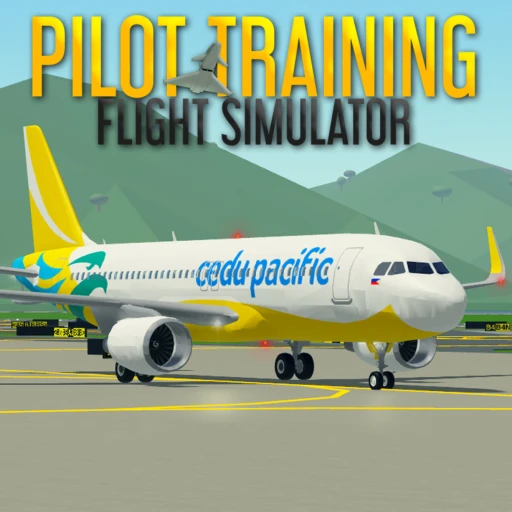
Pilot Training Flight Simulator is one of the most detailed flight simulation games on Roblox, with over 717 million visits and a hangar of more than 50 flyable aircraft spanning everything from a Cessna 172 to a Boeing 747 and beyond. Developer Orange12345 has built a game that rewards patience and practice, and this guide covers everything you need to know to fly well, earn coins efficiently, and decide which game passes are actually worth your Robux as of July 2026.
This guide covers aircraft progression, flight controls, coin-earning strategies, ATC roleplay, and a full game pass breakdown. We also cover how Earnaldo can help you earn free Robux for optional passes. For other simulation games on Roblox, see our guides for Cabin Crew Simulator, Vehicle Simulator, and Brookhaven RP.
In This Guide
What Is Pilot Training Flight Simulator?
Pilot Training Flight Simulator (Place ID: 20321167), commonly abbreviated as PTFS, is a flight simulation game developed by Orange12345. Players spawn at one of several airports on a large open-world map and can choose any aircraft they've unlocked to fly across the terrain, complete flight missions, and earn in-game coins. The game has accumulated over 717 million total visits and holds an approval rating of approximately 88%, making it one of the most well-regarded simulation titles on the platform.
The core loop centers on flying routes between airports to collect coins, which you then spend on upgrading your progression toward new aircraft. Over 50 aircraft fill the hangar, ranging from light propeller planes like the Cessna 172 and Piper Cherokee through commercial jets like the Boeing 737 and 747, all the way to military aircraft including the F-16 and F-22. Each plane behaves differently, and the game's physics engine models throttle response, flap behavior, and landing gear in enough detail that switching between aircraft types genuinely requires adjustment.
What keeps PTFS relevant after years on the platform is its community. Player-run ATC roleplay sessions, group flights, and livery showcases fill servers regularly. The open-world map with multiple airports and landmarks also gives free-roam flyers plenty to explore between structured missions.

Aircraft Roster and Progression
How Aircraft Unlocks Work
PTFS uses a level-based unlock system for most of its aircraft. Light propeller planes are available immediately to all players. As you log more flight hours and complete missions, your level increases and gates to more advanced aircraft open. Military jets require level 15 or higher to access without a game pass. Reaching that level takes roughly 8 to 12 hours of active play depending on how efficiently you run routes and which aircraft you use along the way.
The All Aircraft game pass (799 Robux) bypasses the level requirement entirely and immediately unlocks every plane in the hangar. For players who know they want to fly jets from day one, it's the most direct path. For everyone else, the natural unlock progression through the propeller and early jet tiers provides a reasonable learning curve before you're handed something capable of Mach 1+.
Aircraft Categories
The roster breaks down into four main categories. Light aircraft includes single-engine and twin-engine propeller planes like the Cessna 172, Piper Cherokee, and Beechcraft Bonanza. These are the starting point for new players and the most forgiving to fly. Commercial jets covers the bulk of the hangar — Boeing 737, 747, 777, Airbus A320, A380, and several others. These require managing throttle and flap settings more precisely and have longer takeoff rolls. Regional aircraft such as the Bombardier Dash 8 and Embraer E175 sit between light planes and full-sized jets in handling difficulty. Military jets — F-16, F-22, and others — are the fastest and least forgiving aircraft in the game, with high stall speeds and rapid throttle response that demands steady hands.
The Boeing 747 and Coin Earnings
Among all aircraft in PTFS, the Boeing 747 earns the most coins per flight because of its passenger bonus mechanic. The 747 carries the highest passenger count in the game, and completed flight routes pay out a bonus proportional to passenger capacity. On long-haul routes between the two primary airports, a 747 flight generates roughly 40% more coins than a comparable trip in a single-aisle jet. Once you've unlocked it, using the 747 for your coin-farming runs is the most efficient strategy available to free players.

Flight Controls and Physics
Basic Controls
PTFS uses a keyboard-and-mouse control scheme. Throttle increases with W and decreases with S. Pitch (nose up/down) is controlled by moving the mouse forward and back, and roll (banking left/right) follows mouse movement left and right. Flaps are toggled with F and cycle through retracted, partial, and full extension. Landing gear deploys and retracts with G. The controls are consistent across all aircraft, though the responsiveness and sensitivity scale with each plane's size and type.
Camera view switches between third-person external and first-person cockpit with the default Roblox camera controls. Third-person view is recommended for takeoff and landing because it gives you a wider perspective on your alignment with the runway centerline and your height above the ground. First-person cockpit view is better suited for cruising because it lets you monitor the instrument panel and provides a more immersive sense of speed and altitude.
Understanding the Physics
The flight physics in PTFS model a few key behaviors you need to internalize early. First, all aircraft have a stall speed — fly too slowly and the wings lose lift. Light aircraft stall around 55-65 knots; commercial jets closer to 120-140 knots depending on flap setting and weight. Second, flaps increase lift at low speeds but also increase drag, which is why you extend them for approach and landing but retract them during climb-out. Third, throttle response has a lag on larger aircraft; the 747 in particular takes several seconds to spool its engines up or down, so you need to anticipate power changes well ahead of when you need them.
Crosswind landings at the mountain airport add an additional variable: the terrain creates turbulence and shifting wind direction that can push you off the centerline on short final. These landings are harder but reward extra XP when completed cleanly, making the mountain airport a worthwhile destination for players looking to level up faster.
Landing Approach Checklist
- Begin descent 5-10 kilometers from the runway threshold
- Reduce throttle to approximately 60% as you descend
- Extend flaps to full when airspeed drops into the approach range
- Deploy landing gear (G key) at least 2 kilometers from the runway
- Line up with the runway centerline in third-person view
- Flare gently just before touchdown to reduce sink rate, then cut throttle to idle
Airports and ATC Roleplay
Airport Locations
The PTFS map includes several airports of different sizes. The main international airport is the largest, with multiple parallel runways, a full terminal building, taxiways, and instrument approach paths. A secondary regional airport on the opposite side of the map handles medium and short-haul traffic. The mountain airport is a single-runway field set in elevated terrain with challenging approach conditions due to surrounding terrain and crosswind effects. A small general aviation airfield rounds out the map for light aircraft operations.
Flight routes between airports are the primary coin-earning mechanic. The longer the route, the higher the base coin payout, with the mountain airport route from the main international field being one of the longer options on the map. Pair that with the 747's passenger bonus and you have the most efficient farming loop currently available.
ATC Roleplay
Air traffic control roleplay in PTFS is entirely player-organized. A player who takes the ATC role at the main airport's control tower coordinates takeoff clearances, landing sequences, and runway assignments through in-game chat. There are no automated systems — all communication is manual and voluntary. Servers with active ATC tend to run more smoothly and attract more experienced players who want an organized flying environment.
If you're new, joining a server with active ATC is actually a useful learning tool. Listening to clearances and understanding the flow of traffic around a busy airport teaches you situational awareness that improves your solo flying as well. VIP pass holders receive priority clearance in ATC chat, which reduces wait times during peak server traffic.

Tips and Strategies
Start on the Cessna 172. It's not glamorous, but spending your first hour on the Cessna before touching a jet will save you hours of frustration later. The Cessna is slow enough that you can make corrections mid-approach without overcorrecting into a crash. Every control input and concept you learn on it transfers directly to larger aircraft.
Use third-person for takeoff and landing, first-person for cruise. This isn't just a style preference — it's a practical split that experienced PTFS players use because the two views serve different purposes. External view gives you better spatial awareness near the ground. Cockpit view gives you instrument access and immersion at altitude.
Manage your throttle early on approach. The most common mistake new players make is carrying too much speed into the landing flare. Reducing throttle to 60% should happen well before you're on short final, not as you're crossing the runway threshold. Give yourself time for the aircraft to bleed airspeed naturally rather than forcing a steep dive onto the runway.
Practice crosswind landings at the mountain airport. The extra XP bonus for clean landings there accelerates your level progression, and the challenge forces you to develop skills — particularly rudder input to maintain centerline alignment — that make you a better pilot everywhere else on the map.
Fly the Boeing 747 for coin farming once you've unlocked it. Its passenger bonus makes it the highest coins-per-flight aircraft in the game. Run it on the longest available routes for maximum payout per session. If the 747 isn't accessible yet, the Boeing 737 is a reasonable substitute with similar route compatibility and faster unlock requirements.
Earning Coins
Coins in PTFS are earned by completing flight routes between airports. The payout per flight depends on three factors: the distance of the route, the aircraft type (with passenger bonuses for commercial airliners), and landing quality. A smooth landing within the touchdown zone triggers a quality bonus that increases your coin total by a meaningful percentage.
The most efficient coin-farming loop for free players is to fly the Boeing 747 on the main airport to secondary airport route repeatedly. Each completed round trip takes roughly 8-12 minutes depending on your cruise speed, and the combination of route distance and passenger bonus makes it the highest-yield option currently available. Players who grind this loop consistently can expect approximately 1,500-2,000 coins per hour of active flying.
Flight missions offer an alternative to free-roam flying for coin earning. Missions typically require you to fly to a specific destination or land within a time window, and they pay out a fixed coin reward on completion. The rewards are reliable but generally lower than optimized free-roam loops on the 747. Missions are better for XP than pure coin accumulation.
Having other players aboard your aircraft as passengers also contributes to the passenger bonus calculation, so flying with friends or joining a group flight can push your per-flight coin totals higher than solo runs on the same route.
Earn Free Robux for Pilot Training Flight Simulator
Game passes like All Aircraft and VIP make PTFS significantly more enjoyable, but they cost Robux. Earnaldo lets you earn free Robux by completing simple tasks — no surveys, no downloads, just real rewards.
Game Passes — Which Are Worth It
PTFS offers five game passes. Here's a breakdown of each with a clear-eyed take on their value.
| Game Pass | Price | What It Does |
|---|---|---|
| All Aircraft | 799 Robux | Unlocks every aircraft in the hangar immediately, including all military jets, bypassing the level 15 requirement |
| VIP | 299 Robux | Private VIP server access, custom aircraft liveries and paint schemes, priority ATC clearance, exclusive name tag |
| Private Jet | 199 Robux | Exclusive Gulfstream G650 aircraft not available in the standard hangar |
| Co-Pilot | 99 Robux | Lets other players sit in the cockpit co-pilot seat during your flights |
| Speed Trails | 49 Robux | Visual trail effects that stream from your aircraft during high-speed flight |
The All Aircraft pass (799 Robux) is the most impactful purchase in the game if unlocking the full hangar immediately is your priority. It removes the level 15 gate on military jets and gives you access to every plane on day one. If you're planning to play for a long time and know you want to fly everything, it's good value spread over your total playtime. If you're content to earn unlocks naturally, skip it.
The VIP pass (299 Robux) is the second-best value, but its appeal depends on how you play. Private servers are genuinely useful for practicing approaches and landings without traffic interference, and custom liveries add meaningful personalization to your aircraft. If you enjoy solo flying or want to set up organized group flights without interruptions, VIP is worth the price. If you prefer busy public servers with ATC roleplay, the private server feature matters less.
The Private Jet pass (199 Robux) is essentially a single exclusive aircraft — the Gulfstream G650. It's a well-modeled business jet that isn't available anywhere else in the hangar, which gives it novelty value. But at 199 Robux for one plane, it's a luxury rather than a meaningful upgrade to your experience. The Co-Pilot pass (99 Robux) is a social feature that shines in group play and adds nothing to solo sessions. Speed Trails (49 Robux) is purely cosmetic.

Earning Free Robux for Pilot Training Flight Simulator
The All Aircraft and VIP passes cover the two most meaningful upgrades in PTFS, but together they run over 1,000 Robux. If you'd rather not spend real money, Earnaldo lets you earn free Robux by completing simple tasks on the platform. Most players can accumulate enough for the VIP pass within a single session, and the All Aircraft pass within a few days of casual task completion. Check how Earnaldo works for the full breakdown.
Frequently Asked Questions
Pilot Training Flight Simulator has over 50 flyable aircraft as of 2026. The roster spans light propeller planes like the Cessna 172, commercial airliners including the Boeing 737, 747, and Airbus A380, and military jets such as the F-16 and F-22. Military jets require level 15 or the All Aircraft game pass (799 Robux) to access.
The Boeing 747 earns the most coins per flight because of its passenger bonus mechanic. Its high passenger capacity increases the payout on every completed route by roughly 40% compared to single-aisle jets flying the same distance. Running the 747 on long routes between the main international airport and the secondary airport is the most efficient coin-farming loop in the game.
On approach, reduce throttle to around 60%, extend flaps fully, and deploy landing gear at least 2 kilometers from the runway. Line up with the centerline in third-person view and maintain a 3-degree glide path. Airspeed should be 130-150 knots for jets and 65-80 knots for light aircraft. Flare gently just before touchdown to reduce your sink rate, then cut throttle to idle.
Military jets are locked behind level 15 for free players. Reaching level 15 takes roughly 8-12 hours of active play through flight missions and route completion. The All Aircraft game pass (799 Robux) bypasses this requirement entirely and unlocks all aircraft immediately, including every military jet in the hangar.
The All Aircraft pass at 799 Robux is worthwhile if you want immediate access to the full hangar of 50+ aircraft from day one. Without it, military jets and some advanced aircraft are locked behind level 15. If you enjoy the natural progression of unlocking planes through gameplay, the pass isn't necessary. For players who want everything available immediately, it's the clearest upgrade in the game.
The VIP pass (299 Robux) grants access to private VIP servers for distraction-free flying and practice, the ability to apply custom liveries and paint schemes to your aircraft, priority clearance in ATC roleplay chat, and an exclusive VIP name tag. It's most valuable for players who want to practice solo or organize private group flights.
ATC roleplay in PTFS is entirely player-run. One player takes the tower role and coordinates traffic through in-game chat — issuing takeoff clearances, landing sequences, and runway assignments. There are no automated penalties, so participation is voluntary. Servers with active ATC tend to run more smoothly and attract more experienced players. VIP pass holders receive priority clearance in ATC chat.
Third-person external view is recommended for takeoff and landing because it gives you a wider field of view to judge runway alignment and approach angle. Switch to first-person cockpit view at cruising altitude for instrument monitoring and immersion. Most experienced PTFS players use third-person for all ground operations and the first 1,000 feet of climb, then transition to cockpit view for the cruise phase.
About This Guide
This Pilot Training Flight Simulator guide was last updated on May 4, 2026. Game mechanics, aircraft rosters, and prices may change with future updates from Orange12345. For the latest Roblox flight simulation content, browse our blog. Have feedback or corrections? Join our Discord community.