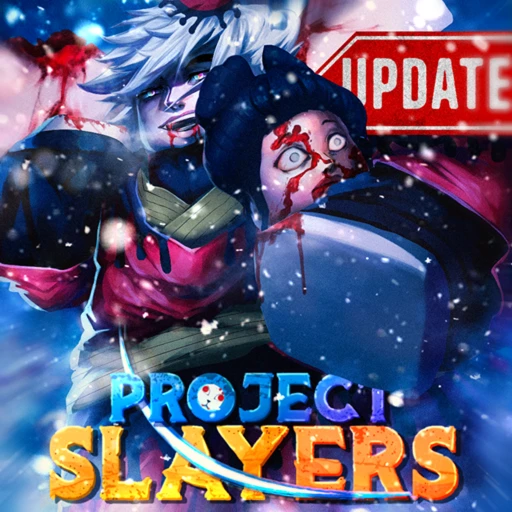
Project Slayers vs Fruit Battlegrounds (2026) -- Which Roblox Game Is Better?
Roblox's anime game catalog keeps growing, but two titles consistently pull players looking for very different flavors of the genre. Project Slayers drops you into an open-world RPG inspired by Demon Slayer, where breathing styles and demon transformations shape your combat identity. Fruit Battlegrounds takes the One Piece universe and distills it into fast-paced arena combat, where the fruit you spin determines everything about how you fight.
Between them, these games have crossed 1.1 billion total visits on Roblox. Project Slayers launched in July 2022 and quickly hit 100,000 concurrent players in its first hour. Fruit Battlegrounds, created by P O P O in March 2022, recently passed the 500 million visit milestone and continues to receive major updates like the April 2026 OPE V2 patch. They're both anime-inspired, both free to play, and both demand grinding to reach endgame -- but the way they ask you to spend that time couldn't be more different.
We've spent weeks testing both games, tracking update frequency, and comparing what your Robux actually gets you. Here's the full breakdown.
Project Slayers vs Fruit Battlegrounds -- Quick Stats (2026)
| Category | Project Slayers | Fruit Battlegrounds |
|---|---|---|
| Genre | Action RPG / Open World | PvP Arena Fighter |
| Place ID | 5956785391 | 9224601490 |
| Developer | Ouw0pp (Dimension X) | P O P O |
| Concurrent Players | ~350-400 | ~4,300 |
| Total Visits | 668M+ | 500M+ |
| Core Loop | Explore, train breathing styles, slay demons | Spin fruits, fight players, awaken abilities |
| Key Features | Breathing styles, demon path, open world quests | 100+ fruits, V2 awakenings, gem spin system |
| Trading System | No | No |
| Mobile-Friendly | Yes | Yes |
| Free-to-Play | Yes | Yes |
Gameplay -- What Do You Actually Do?
Project Slayers
Project Slayers gives you a full open world to explore, set in the Demon Slayer universe. You'll start as a human in a quiet village, talk to NPCs, and gradually unlock your first breathing style through a chain of quests that test your combat skills against progressively tougher enemies. The available breathing styles -- Flame, Water, Mist, Serpent, Insect, and Thunder -- each come with distinct movesets and visual effects that genuinely change how you approach fights.
The game splits into two major paths. Becoming a Demon Slayer means mastering one of those breathing styles and working through a quest line that mirrors the anime's story beats. Going the demon route unlocks Blood Demon Art abilities and a completely different transformation system. Both paths take you through the same world, but they feel like separate games once your abilities start diverging around the 10-hour mark.
Boss encounters are scattered across the map and require genuine strategy. You can't just button-mash through a high-level demon -- you'll need to learn attack patterns, manage your stamina, and use your breathing style's specific strengths. Hidden trainers and rare item spawns reward exploration, making it worth wandering off the beaten path between quests.
Fruit Battlegrounds
Fruit Battlegrounds strips away the RPG framing and goes straight to fighting. You spin for a Devil Fruit using Gems (50 Gems per spin), and whichever fruit you land on becomes your entire moveset. The rarity tiers run from Common through Rare, Legendary, and Mythical, with the most powerful fruits like Ope V2 sitting at a 0.02% drop rate. Premium players get a 20% luck boost on spins, but everyone has access to the same pool.
Combat is arena-based and fast. Each fruit grants 4-5 abilities with varying cooldowns, and fights revolve around landing combos, managing your ability rotations, and positioning yourself to avoid AoE attacks. The OPE V2 update in April 2026 shifted the meta toward high-speed block-breaking and V2 awakenings that deliver massive area damage. If you pull a Mythical fruit like Magu, Gomu, or Ope, you'll feel the power difference immediately.
The game's loop is simple by design: spin fruits, fight players, earn Gems from victories and codes, spin again. There's no quest log or narrative arc. You're here to fight, and the game respects that by getting you into matches within seconds of joining a server. That immediacy is one of Fruit Battlegrounds' biggest strengths and exactly what separates it from Project Slayers.
Edge: Project Slayers for depth and variety. Fruit Battlegrounds for instant action and low time commitment per session.
Progression -- How Quickly Does It Hook You?
These two games couldn't be more different in how they handle progression. Fruit Battlegrounds gets you into its core loop within 60 seconds of joining. You spin a fruit, get your abilities, and start fighting. Progression is horizontal rather than vertical -- you're not grinding levels so much as grinding for better fruit rolls. Landing a Legendary or Mythical fruit transforms your effectiveness overnight, and the awakening system (V2 forms) adds a second progression layer for endgame players.
Project Slayers takes a much slower approach. Your first breathing style requires hours of questing and training before it unlocks. Each new technique within that style comes through additional quests, combat milestones, or NPC interactions. The demon path adds a parallel progression track that roughly doubles the game's content. Reaching what most players consider "endgame" takes somewhere between 25 and 40 hours of active play.
The tradeoff is clear. Fruit Battlegrounds gives you instant gratification with every lucky spin, but the depth of each fruit's mastery is relatively shallow. Project Slayers makes you work for every upgrade, but those upgrades feel earned and meaningful. Your breathing style isn't random -- it's something you chose and committed to. If you've got limited time each session, Fruit Battlegrounds fits better. If you want a progression system that builds over weeks, Project Slayers delivers that feeling.
Graphics and Audio
Project Slayers uses a detailed anime art style with character models, environmental effects, and breathing style animations that clearly reference the Demon Slayer source material. Flame Breathing's fire effects trail behind your attacks. Water Breathing creates flowing blue visual arcs. The open world itself has distinct biomes -- forests, villages, mountain paths -- that give the map visual variety as you explore.
Fruit Battlegrounds goes for a cleaner, more stylized look that prioritizes readability over detail. In a fast-paced PvP game, being able to instantly identify which fruit your opponent is using matters more than environmental art. Ability effects are bright and clearly defined, with Mythical fruit abilities producing screen-filling visuals that feel appropriately powerful. The OPE V2 abilities in particular have some impressive spatial effects that warp the arena.
Audio-wise, Project Slayers offers regional background music that changes as you move between areas, adding atmosphere to the exploration. Fruit Battlegrounds keeps its audio focused on combat feedback -- impact sounds, ability activation cues, and knockback effects that help you track what's happening during chaotic multi-player fights. Neither game has a standout original soundtrack, but both handle their audio needs competently for their respective genres.
Edge: Project Slayers for overall visual quality and environmental design. Fruit Battlegrounds optimizes for combat clarity, which serves its PvP focus well.
Player Count and Community (July 2026)
The numbers here tell a dramatic story. As of April 2026, Fruit Battlegrounds sits at approximately 4,300 concurrent players, ranking around 191st on Roblox's most-played list. The game crossed 500 million total visits recently and continues to pull solid numbers thanks to regular content updates like the OPE V2 patch.
Project Slayers averages 350-400 concurrent players on the original game, with over 668 million lifetime visits. That player count drop from its 100,000-player launch day reflects the franchise's shift toward Project Slayers 2, which is in closed beta development. The original game's community hasn't disappeared -- it's migrating to the sequel and waiting for its full release.
Community engagement differs significantly between the two. Fruit Battlegrounds has an active Discord and social media presence, with codes dropping regularly around updates. The community focuses on fruit tier lists, combo videos, and spin results. Project Slayers' community runs deeper into game mechanics, with breathing style guides, quest walkthroughs, and lore discussions dominating their Discord channels. Both communities are welcoming to new players.
For the latest codes and rewards in each game, check our Project Slayers codes page and Fruit Battlegrounds codes page.
Game Passes and Monetization
Project Slayers keeps its monetization straightforward. The flagship purchase is a lifetime Private Server game pass at 900 Robux -- a one-time payment that never expires. This gives you a dedicated space to grind mobs, practice combos, and farm boss spawns without competition from other players. Additional passes cover cosmetic items and minor convenience features, but nothing blocks core content behind a paywall.
Fruit Battlegrounds offers four game passes totaling around 2,036 Robux if you buy them all. The Fast Spin pass costs 199 Robux and speeds up your fruit rolling animation. The x2 EXP pass accelerates leveling. Premium players receive a permanent 20% luck boost when spinning fruits, increasing your odds of landing Legendary and Mythical tiers. Private Servers cost 399 Robux per month, which adds up to 4,788 Robux annually -- over five times what Project Slayers charges for lifetime access.
The value calculation here favors Project Slayers clearly. Its 900 Robux gets you permanent private server access with no recurring costs. Fruit Battlegrounds' monthly server fee and multiple pass options mean you can easily spend 2,000+ Robux in your first month if you want the full premium experience. For players watching their Robux budget, Project Slayers is the more wallet-friendly option by a wide margin.
Edge: Project Slayers for value. One lifetime purchase versus recurring monthly costs makes this an easy call for budget-conscious players.
Social Features
Project Slayers supports open-world multiplayer where you'll encounter other players organically while exploring. You can team up for boss fights, help newer players through early quests, or just hang out in villages between grinding sessions. The lack of a formal clan system means social interaction is casual and player-driven rather than structured. Private servers let organized groups set up dedicated grinding sessions.
Fruit Battlegrounds is inherently social in a more competitive way. Every server is a shared arena where fights break out constantly. You'll form temporary alliances against stronger players, get into back-to-back duels with someone your level, and occasionally have the entire server team up against whoever pulled the rarest fruit. The immediate, always-on PvP creates social dynamics that emerge naturally without any formal system.
Edge: Fruit Battlegrounds for constant player interaction. Project Slayers is better if you prefer cooperative or solo play without the pressure of constant PvP.
Replay Value
Fruit Battlegrounds has a deceptively deep replay loop built on its spin system. With over 100 fruits at varying rarity tiers, you could play for months without landing every Mythical. Each fruit plays differently enough that getting a new one feels like starting a fresh character. The V2 awakening system adds another layer -- once you've mastered a fruit, awakening it gives you enhanced abilities and new combo routes to learn.
Project Slayers approaches replayability through its dual-path system and breathing style variety. Playing through as a Demon Slayer with Flame Breathing and then replaying as a Demon with Blood Demon Art gives you two distinct experiences. Six breathing styles mean six different combat approaches on the Slayer side alone. With Project Slayers 2 in development, the franchise also has a clear future that gives longtime players something to look forward to.
Update frequency matters here too. Fruit Battlegrounds receives regular patches -- the OPE V2 update in April 2026 added new fruits, balance changes, and awakening content. Project Slayers' update cadence has slowed as development resources shift to the sequel. If you want a game that's actively receiving new content right now, Fruit Battlegrounds has the edge. For investment in a franchise with long-term plans, Project Slayers' sequel pipeline is promising.
Earning Free Robux While You Play
Whether you're saving for Project Slayers' 900 Robux private server or Fruit Battlegrounds' 199 Robux Fast Spin pass, Earnaldo lets you earn Robux without spending real money. Complete tasks, accumulate points, and withdraw Robux directly to your account. For game-specific tips, check our Project Slayers free Robux guide and Fruit Battlegrounds free Robux guide.
Earn Free Robux for Project Slayers or Fruit Battlegrounds
Want more Robux for game passes and fruit spins? Earnaldo lets you earn free Robux by completing simple tasks -- no generators, no scams, just real rewards.
Head-to-Head Verdict -- Project Slayers vs Fruit Battlegrounds in 2026
The Verdict
Choose Project Slayers if you want a story-driven open-world RPG with deep breathing style mechanics, a meaningful PvE progression system, and a franchise actively building toward a sequel. It's the better pick for solo players, Demon Slayer fans, and anyone who values exploration and character-building over raw PvP action.
Choose Fruit Battlegrounds if you want instant PvP action, a spin-based progression system that keeps every session exciting, and a game that's actively receiving major content updates in 2026. It's ideal for competitive players, One Piece fans, and anyone who wants to jump in and start fighting within seconds.
Overall: Project Slayers is the RPG you invest in over weeks. Fruit Battlegrounds is the arena fighter you pick up whenever you've got 20 minutes. They scratch completely different itches, and many players will find room for both in their rotation. If you're forced to pick one, ask yourself this: do you want to build a character or test your luck and skill against everyone on the server? Your answer points you to the right game.
Who Should Play What?
- You love open-world exploration: Project Slayers, because its map is full of hidden trainers, boss encounters, and environmental storytelling.
- You want fast PvP sessions: Fruit Battlegrounds, because you're fighting within seconds of joining a server.
- You're a solo player: Project Slayers, because its PvE content is built for individual progression at your own pace.
- You create content: Fruit Battlegrounds, because Mythical fruit spins, clutch arena fights, and tier list debates generate strong viewer engagement.
- You're on a tight Robux budget: Project Slayers, because 900 Robux gets you a lifetime private server versus recurring monthly costs.
- You want to earn Robux: Both work with Earnaldo -- earn points from tasks and withdraw Robux for either game's passes.
Frequently Asked Questions
As of April 2026, Fruit Battlegrounds has roughly 4,300 concurrent players and ranks around 191st on Roblox's most-played list. Project Slayers (the original) averages 350-400 concurrent players since the franchise shifted focus to Project Slayers 2. Fruit Battlegrounds currently has a significantly larger active player base.
Fruit Battlegrounds is easier to pick up. You spin for a fruit, get your abilities immediately, and start fighting. Project Slayers requires completing quests and training with specific NPCs before you unlock your first breathing style, which takes several hours. If you want instant action, Fruit Battlegrounds is the faster on-ramp.
Yes, both run on mobile through the Roblox app. Fruit Battlegrounds works well on touchscreen since its combat inputs are relatively simple. Project Slayers is also playable on mobile, though some boss fights and breathing style combos benefit from a keyboard and mouse setup.
Project Slayers offers a lifetime Private Server at 900 Robux. Fruit Battlegrounds has four game passes totaling about 2,036 Robux, including a Fast Spin pass at 199 Robux and a Private Server at 399 Robux per month. Fruit Battlegrounds has more pass options but its private server requires monthly renewal.
Project Slayers is based on Demon Slayer: Kimetsu no Yaiba, featuring breathing styles, demon progression, and Taisho-era Japan settings. Fruit Battlegrounds is based on One Piece, with Devil Fruits that grant unique abilities like Ope, Magu, and Gomu -- all pulled from the manga and anime series.
Both games release codes periodically. Fruit Battlegrounds codes grant free Gems for fruit spins, and the game regularly drops new codes around updates like the OPE V2 patch. Project Slayers codes give free spins and in-game currency. Check our Project Slayers codes page and Fruit Battlegrounds codes page for the latest working codes.