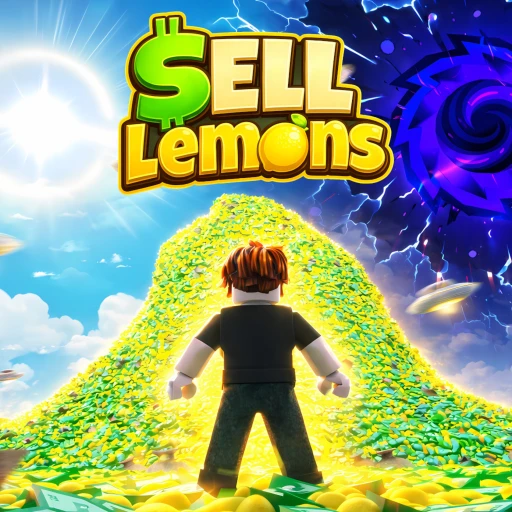
Sell Lemons vs Grow a Garden (2026) -- Which Roblox Game Is Better?
Two of Roblox's most talked-about casual experiences put players in charge of building something from the ground up. Sell Lemons, the new tycoon from BloxByte Games, has you squeezing every last drop of profit from a citrus empire. Grow a Garden, by Jandel, is a farming sim that's been dominating the platform with over 21 billion visits. Both games reward patience, but they do it in very different ways.
Picking between them comes down to what kind of grind you enjoy. If you want a quick comparison before diving into the details, the table below covers all the essentials. For more tips on earning while playing either game, check out our Sell Lemons free Robux guide and Grow a Garden free Robux guide.
Quick Stats Comparison
| Category | Sell Lemons | Grow a Garden |
|---|---|---|
| Genre | Tycoon / Idle | Farming Simulator |
| Place ID | 79268393072444 | 18893576187 |
| Developer | BloxByte Games | Jandel |
| Concurrent Players | ~22K | ~78K |
| Total Visits | Growing (new launch) | 21B+ |
| Core Loop | Sell lemons, earn cash, upgrade, unlock powers | Plant, grow, harvest, sell crops, expand garden |
| Key Features | Offline earnings, unique powers, deal-making | Mutations, soil types, seasonal events, rare crops |
| Trading System | Deal-making mechanics | Full player-to-player trading |
| Mobile-Friendly | Yes | Yes |
| Free-to-Play | Yes | Yes |
Gameplay
Sell Lemons follows a classic tycoon structure. You start with a small lemon stand, collect cash as lemons sell automatically, and reinvest profits into upgrades that boost your production. The twist is a set of unique powers you can unlock that change how your operation works, adding a layer of strategy to what could otherwise be a standard idle loop.
Grow a Garden takes a more hands-on approach. You're planting seeds, watering crops, managing soil quality, and waiting for harvests. Different soil types affect growth rates and mutation chances. There's genuine tension in deciding whether to sell a rare crop or hold it for trading. The gameplay feels more deliberate and less automated than a traditional tycoon.
Both games reward players who check in regularly, but Sell Lemons explicitly supports offline earnings, meaning your income keeps rolling even when you're away. Grow a Garden requires more active management to maximize profit.
Edge: Grow a Garden -- The deeper farming mechanics and mutation system give it more strategic variety than a tycoon loop.
Progression
Sell Lemons structures its progression around cash milestones and power unlocks. Each new tier of upgrades feels meaningful because your earnings jump noticeably. The deal-making system adds an extra progression path where savvy negotiations can accelerate your growth beyond what pure idle income delivers.
Grow a Garden has a more layered progression system. You're leveling up your garden, unlocking new crop types, discovering mutations, and climbing through rarity tiers from common produce to mythical crops like the infamous Lemon. The trading economy creates an entirely separate progression path where your inventory's value matters as much as your farm output.
Early game pacing in Sell Lemons is snappier. You'll hit satisfying milestones within the first hour. Grow a Garden's early game is slower, but the depth that comes later makes the investment worthwhile.
Edge: Grow a Garden -- More progression paths, deeper systems, and a trading economy that adds long-term goals.
Graphics and Audio
Sell Lemons uses a bright, colorful art style with clean tycoon aesthetics. The lemon theme runs through every visual element, from the UI to the upgrade animations. It's pleasant and readable without being visually complex. Audio is upbeat and unobtrusive, fitting the casual tone.
Grow a Garden leans into a cozy, nature-inspired look. Gardens feel alive with color variation across crop types, and the mutation system produces visually distinct plant variants that make your plot feel unique. Sound design includes ambient nature effects that help sell the farming atmosphere.
Neither game pushes Roblox's visual boundaries, but both nail their respective aesthetics. Grow a Garden's visual variety edges ahead simply because there are more things to look at as your garden expands.
Player Count and Community
Grow a Garden is a juggernaut. With roughly 78K concurrent players and over 21 billion total visits, it's one of the most popular experiences on the entire platform. Its community has built out a full wiki, active Discord trading channels, and extensive fan content. Finding help or trading partners is never an issue.
Sell Lemons sits at around 22K concurrent players, which is impressive for a game that just launched in May 2026. BloxByte Games has a track record of building successful titles, so there's reason to expect that number will grow. The community is still forming, which means less established resources but also less competition for early adopters.
The size difference matters for matchmaking and social features. In Grow a Garden, you'll always find active servers and trading partners at any hour. Sell Lemons' smaller but growing community means you might encounter quieter lobbies during off-peak hours, though this is likely temporary as the player base expands.
Edge: Grow a Garden -- Massive established player base and a mature community ecosystem.
Game Passes and Monetization
Sell Lemons offers game passes focused on convenience. Speed boosts, auto-collection upgrades, and premium cosmetics are the main options. The offline earnings feature is free, which is a nice touch since many tycoons lock that behind a paywall. Spending Robux accelerates progress but doesn't gate content.
Grow a Garden's monetization includes garden expansion passes, premium seeds, and boost items. Some limited-time event items have appeared as purchasable options. The trading economy means players with patience can eventually acquire most items without spending, though rare crops can take significant time to trade for.
Both games handle monetization fairly. Neither creates a hard paywall, and both let free players access the full experience with enough time invested. If you're looking for the most value from a single game pass purchase, Grow a Garden's expansion passes tend to have the longest-lasting impact on your gameplay experience.
Social Features
Grow a Garden's trading system is the standout social feature on this list. Player-to-player crop trading creates organic interactions and gives the community a reason to engage beyond just playing the game. The Discord server functions almost like a marketplace, with players negotiating deals for rare mutations and mythical crops.
Sell Lemons includes deal-making mechanics that create player interactions, but they're more structured than Grow a Garden's open trading. The social element exists, but it's woven into the gameplay loop rather than sitting as a standalone system. You won't find the same kind of bustling marketplace atmosphere, though the deal mechanics do add a welcome layer of player-to-player interaction to the tycoon formula.
It's worth noting that Grow a Garden's social features can also be a barrier for some players. Trading requires understanding crop values, negotiating with strangers, and managing inventory -- all of which add complexity that not everyone wants in a casual game. Sell Lemons keeps things simpler on the social front.
Edge: Grow a Garden -- The trading ecosystem creates a thriving social layer that goes beyond the game itself.
Replay Value
Sell Lemons benefits from the idle nature of tycoons. There's always another upgrade to chase, and the offline earnings mean you're never really "done." The power unlock system adds goals to work toward, and the deal-making provides variety. That said, the core loop is fundamentally repetitive, as all tycoons eventually are.
Grow a Garden has stronger long-term hooks. Mutation hunting is essentially endless since rare combinations keep players experimenting for weeks. Seasonal events rotate in new content, and the trading economy gives you reasons to keep playing even after your garden is maxed. The sheer number of crop varieties means there's always something new to discover.
For players who enjoy checking in for short sessions, Sell Lemons delivers. For those who want a game they can sink hundreds of hours into, Grow a Garden has more to offer.
One factor worth considering is longevity risk. Grow a Garden has already proven itself over years with consistent updates and a stable player base. Sell Lemons is brand new, and while BloxByte Games has a strong track record, any new game carries uncertainty about long-term support. If you're investing serious time, Grow a Garden's track record is reassuring.
Earn Free Robux While You Play
Whether you're selling lemons or growing gardens, Earnaldo lets you earn free Robux through simple tasks. Use those Robux to grab game passes in either game.
Final Verdict
Choose Sell Lemons if...
You want a casual tycoon you can check in on throughout the day. Its offline earnings, straightforward upgrade path, and quick progression make it ideal for players who prefer low-commitment sessions. It's also a great pick if you enjoy being an early adopter in a growing community.
Choose Grow a Garden if...
You want depth, community, and long-term goals. The mutation system, trading economy, and massive player base make it one of the richest casual experiences on Roblox. If you're the type of player who enjoys optimizing strategies and chasing rare items, this is the clear pick.
Overall
Grow a Garden wins this comparison on depth, player base, and replay value. It's a more complete experience with years of content built up. But Sell Lemons isn't trying to be the same game. It's a fresh, accessible tycoon that does its job well and offers a lighter alternative. There's no reason you can't play both, using Sell Lemons for quick idle sessions and Grow a Garden for deeper farming runs.
Who Should Play What
Casual players who want a game they can leave running in the background should start with Sell Lemons. Its idle mechanics and offline earnings are designed for people who don't have hours to sit and grind. The early game hooks are satisfying, and BloxByte Games has a reputation for supporting their titles with consistent updates.
Dedicated players looking for their next long-term Roblox experience should go with Grow a Garden. The depth of the farming system, the social trading economy, and the constant drip of seasonal content make it a game you can play for months without running out of things to do.
Players who enjoy both genres can genuinely split time between the two. Sell Lemons earns you cash while you're away, and Grow a Garden rewards you when you're actively playing. They complement each other surprisingly well.
If you're on mobile most of the time, Sell Lemons' simpler interface gives it a slight edge for phone play. Grow a Garden works fine on mobile, but managing inventory and navigating the trading system is smoother on a tablet or desktop. Consider your primary device when making your choice.
Frequently Asked Questions
Sell Lemons is easier to pick up for newcomers. Its tycoon loop is straightforward -- sell lemons, earn cash, upgrade. Grow a Garden has more depth with soil types, mutations, and crop tiers, which can feel overwhelming at first.
Grow a Garden consistently pulls around 78K concurrent players and has surpassed 21 billion total visits. Sell Lemons is newer with roughly 22K concurrent players and climbing quickly since its May 2026 launch.
Grow a Garden has a robust player-to-player trading system for crops, seeds, and rare items. Sell Lemons focuses more on individual progression with deal-making mechanics rather than traditional trading.
Both games are fully playable on mobile devices. Their UI elements are designed to fit smaller screens, though Grow a Garden's inventory management can feel a bit cramped on phones.
Yes, both games are completely free to play. Each offers optional game passes and Robux purchases for convenience boosts, but nothing essential is locked behind a paywall.
Grow a Garden has a longer update history with seasonal events and regular content drops. Sell Lemons is brand new so its update cadence is still being established, though early patches have been frequent.