Shopping Cart Simulator vs Supermarket Simulator (2026) -- Which Is Better?
Both games sit in the same grocery aisle of Roblox, but they could not play more differently. Shopping Cart Simulator is a launch-distance game where you fling a cart off a ramp and chase upgrades to fly farther, while Supermarket Simulator is a store-management sim where you stock shelves, set prices, and grow a business. This head-to-head breaks down gameplay, progression, player counts, codes, monetization, and community so you know which one fits how you like to play.
The two games sit at very different points in their lives. Shopping Cart Simulator, built by Halt Studios at placeId 8705534359, launched back in 2022 and has aged into a relaxed niche launcher with roughly 5.2 million visits and around 41,000 favorites as of July 2026. Supermarket Simulator, at placeId 96462622512177, is the much larger draw, sitting past roughly 222 million visits and pulling a big active store-sim crowd.
Put them side by side and you get a useful question: do you want a quick, physics-driven launch loop you can fire off in seconds, or a slower business builder where you run an actual shop? Both are free, both use codes, and both reward steady upgrading. The differences are in pace, depth, and how much of your attention each one wants.
Shopping Cart Simulator vs Supermarket Simulator -- Quick Stats (2026)
| Category | Shopping Cart Simulator | Supermarket Simulator |
|---|---|---|
| Genre | Launch / distance simulator | Store-management simulator |
| Place ID | 8705534359 | 96462622512177 |
| Developer | Halt Studios | Supermarket Simulator dev team |
| Released | 2022 | Newer (2024-2025 era) |
| Total Visits | ~5.2 million | ~222 million+ |
| Favorites | ~41,000 | Much larger |
| Core Loop | Launch cart, earn coins, buy upgrades, unlock worlds | Stock shelves, set prices, take payments, expand store |
| Key Features | Tricks, coffee, rockets, wheels, desert world | Pricing, staff, store expansion, customers |
| Codes | Yes (Coffee, Coins, boosts) | Yes (cash, bonuses) |
| Free-to-Play | Yes | Yes |

Gameplay -- What Do You Actually Do?
Shopping Cart Simulator
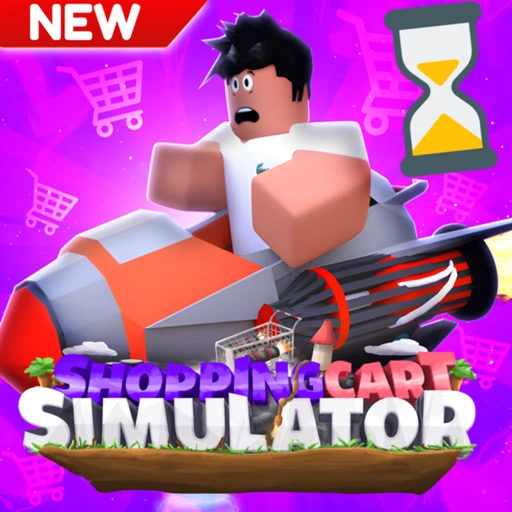
The setup is pure physics fun: you ride a shopping cart down a ramp and launch yourself as far as you can. Distance earns coins, and you spend those coins on upgrades like rockets, better wheels, and more speed to fly farther on the next run. It's a tight launch-and-upgrade loop with a clear goal every time you play.
The twist is the style system. Coins scale with distance and style points, so you hop into your cart over the Neon Checkpoints, perform tricks mid-air, and activate coffee to boost your style score for a bigger payout. You can even buy friends to add to your score. Reaching the end of a map unlocks a new world, like the desert world, which keeps the distance loop fresh with longer ramps.
Because runs are short, a botched launch costs you nothing. You just spend your coins, upgrade, and send the cart again, which makes it an easy game to fire up for a few minutes between other things. The progression is satisfying precisely because each launch visibly goes a little farther than the last.
Supermarket Simulator
Supermarket Simulator is a slower, busier sim about running a shop. You stock shelves, set your own prices, take payments at the register, hire staff, and expand and redesign your store as your cash grows. It's less about a single satisfying action and more about juggling many small tasks that compound into a thriving business.
The depth is in the management. Pricing your goods right, keeping shelves full, and handling a steadily busier store is the core challenge, and the developers have layered in features like online orders, delivery, shoplifters, and security to keep the simulation interesting. It rewards players who enjoy optimizing systems rather than chasing a high score.
Progression here is a long arc. You start with a tiny shop and grind cash to expand floor space, add product lines, and automate with staff, so a session feels like genuinely growing something. That makes it stickier for players who like to settle in for a longer play, where Shopping Cart Simulator is built for quick bursts.
Progression -- How Quickly Does It Hook You?
Shopping Cart Simulator hooks you in the first minute because the goal is obvious and a run is instant. You launch, you see a distance, you buy an upgrade, you launch farther. That immediate feedback loop is its whole appeal, and unlocking the desert world feels like a real milestone for such a simple game.
Supermarket Simulator hooks you through investment. Your first goal is just keeping shelves stocked and customers happy, then affording your first expansion, then hiring staff, then optimizing prices for maximum profit. Each step takes longer and feels more earned, which is why store sims keep players for hours at a time.
So the difference is burst payoff versus long-term growth. Shopping Cart Simulator gives you a win every few seconds; Supermarket Simulator gives you a business you build over many sessions. If you want instant gratification, the launcher delivers. If you want something to manage and grow, the store sim has the deeper ladder.

Codes and Free Rewards
Both games use codes, which is a nice bonus on either side. Shopping Cart Simulator codes give free Coffee, Coins, and coin boosts, redeemed through the More button then Settings, with active June 2026 codes like 1Mill for 1 Million Coins, 25kFav for 25k Coffee, and 1klikes for a 15-minute 2x Coins boost. There's also a free daily coin reward for joining the Halt Studios group.
Supermarket Simulator runs its own codes for cash and bonuses, redeemed through its in-game settings menu. Both games tie codes to milestones and make them case-sensitive, so they can expire without notice and should be tested in-game. For the full Shopping Cart Simulator list, see our codes page, which we keep updated.
Edge: Tie. Both offer regular free rewards through codes, and neither makes you pay to get meaningful value out of them.
Player Count and Community (July 2026)
Supermarket Simulator is the bigger world by every measure. Sitting past roughly 222 million visits as of July 2026, it pulls a large, active store-sim crowd, which means busy servers, frequent updates, and a steady stream of community guides and clips. It's firmly in the popular-simulator tier.
Shopping Cart Simulator is the smaller, more niche experience. With around 5.2 million visits and about 41,000 favorites since 2022, it has a dedicated but modest following, and its all-time concurrent peak of 1,096 players landed back in April 2022. It's a relaxed game you play for the loop rather than the crowd.
On community depth, Supermarket Simulator wins easily thanks to its larger active base and more recent momentum. Shopping Cart Simulator's community is smaller and quieter, with fewer fresh resources, though the game itself still plays perfectly well solo.
Edge: Supermarket Simulator, for sheer scale and an active, resource-rich community.

Game Passes and Monetization
Neither game is pay-to-win, and both are completable for free. Shopping Cart Simulator keeps progression behind coins you earn by launching, plus free codes and daily group rewards. Robux mainly buys optional coin multipliers, boosts, and cosmetic carts, none of which are required to clear worlds. Prices vary by update, so check the in-game store for current numbers.
Supermarket Simulator follows the typical sim model with optional game passes for boosts and convenience, again set by the developer and shown in-game. The core management loop is fully playable without spending, and Robux purchases mostly shave time off the grind rather than unlocking power you can't earn.
Edge: Tie. Both keep Robux purchases to convenience and cosmetics, so you can fully enjoy either game without spending a single Robux.
Replay Value
Supermarket Simulator has the deeper well for long-term play. Store expansion, pricing optimization, staff management, and a steady stream of new features like deliveries and security mean you can keep growing your shop across many sessions. It's the better pick if you measure replay value in hours of content.
Shopping Cart Simulator's replay value is built on quick repeatability rather than depth. Once you've unlocked the worlds, the fun is in chasing longer launches, bigger style scores, and faster coin grinds. As an older game it leans on its core loop rather than constant updates, so how long it holds you depends on how much you enjoy the launch-and-upgrade rhythm.
If you want a game to sink dozens of hours into, Supermarket Simulator is the clear winner. If you want something low-commitment to fire up for ten minutes, Shopping Cart Simulator is the easier game to drop in and out of.
Earning Free Robux While You Play
Whether you want a coin multiplier in Shopping Cart Simulator or a boost pass in Supermarket Simulator, those purchases cost Robux, and there's no need to pay out of pocket. Earnaldo lets you earn free Robux by completing quick tasks, then spend it on whatever passes or items you want in either game. It's a simple way to fund a multiplier without touching your own wallet.
If you want the full breakdown for each title, our Shopping Cart Simulator free Robux guide and our Supermarket Simulator free Robux guide cover passes, tips, and earning methods game by game. You can also browse the wider best Roblox games of 2026 if you're hunting for your next obsession.
Earn Free Robux for Either Game
Complete simple tasks on Earnaldo and withdraw real Robux to spend in either game.
Head-to-Head Verdict -- Shopping Cart Simulator vs Supermarket Simulator in 2026
The Verdict
Choose Shopping Cart Simulator if you want a quick, physics-driven launch game you can pick up for a few minutes, you like chasing distance and style high scores, or you just want a relaxed upgrade loop without much commitment.
Choose Supermarket Simulator if you want a deeper management sim with pricing, staff, store expansion, a much larger active community, and dozens of hours of growth-driven content.
Overall: Supermarket Simulator is the bigger, deeper game if "better" means more content, more players, and more to manage, and it's the safer pick for anyone who loves business sims. Shopping Cart Simulator is the better pick for fast, low-effort fun and a satisfying launch loop. They're not really rivals so much as two very different takes on a grocery theme, and the honest answer for many players is to keep both installed and switch based on whether you want quick physics fun or a slow build.
Who Should Play What?
- You love quick sessions: Shopping Cart Simulator, because a launch takes seconds and resets are instant.
- You want a deep management sim: Supermarket Simulator, because pricing, staff, and expansion give you a real business to grow.
- You like physics and high scores: Shopping Cart Simulator, because distance and style scoring reward mastery of the launch.
- You want the biggest active community: Supermarket Simulator, because its much larger visit count means busy servers and lots of guides.
- You play in short bursts: Shopping Cart Simulator, because it's built to drop in and out of.
- You want to earn Robux: Both work with Earnaldo.
Frequently Asked Questions
Supermarket Simulator is far larger overall, sitting past roughly 222 million visits as of July 2026. Shopping Cart Simulator is the smaller, older launch game at around 5.2 million visits and about 41,000 favorites since its 2022 release. Supermarket Simulator wins on total scale and active audience, while Shopping Cart Simulator is a more niche, relaxed launch-distance game.
Shopping Cart Simulator is a launch-distance game where you ride a cart off a ramp, travel as far as possible, and spend coins on rockets, wheels, and speed to launch farther and unlock new worlds. Supermarket Simulator is a store-management game where you stock shelves, set prices, take payments, hire staff, and expand your shop. One is about physics and distance; the other is about running a business.
Yes, both use codes. Shopping Cart Simulator codes give free Coffee, Coins, and coin boosts, redeemed through the More then Settings menu, with active June 2026 codes like 1Mill, 25kFav, and 5klikes. Supermarket Simulator also runs codes for cash and bonuses through its in-game settings menu. Codes in both are case-sensitive and tied to milestones, so they can expire without notice.
No, both are free to play and fully playable without spending. In Shopping Cart Simulator you can clear worlds with free upgrades, codes, and daily group rewards, and Robux only buys optional multipliers and cosmetics. Supermarket Simulator is the same, with optional game passes for boosts and convenience. Neither requires Robux to progress.
Shopping Cart Simulator is the more relaxing pick for short sessions, since each run is a single launch you can fire off in seconds before spending coins and going again. Supermarket Simulator is relaxing in a slower, busier way, with steady tasks like stocking shelves and ringing up customers that build into a growing store. Pick the launcher for quick idle fun and the store sim for longer management sessions.
Start with Shopping Cart Simulator if you want a quick, low-effort launch game you can pick up for a few minutes at a time. Pick Supermarket Simulator if you want a deeper management sim with progression, staff, store expansion, and a much larger active community. Many players keep both installed and switch based on whether they want fast physics fun or a slower business builder.
About This Comparison
This comparison was last updated on June 13, 2026 using visit figures and gameplay current at that date. Stats, game pass prices, codes, and content can change with future updates, so verify in-game before relying on a number. Check the official pages for the latest details: Shopping Cart Simulator on Roblox and Supermarket Simulator on Roblox. For a deeper dive on the launch game, see our Shopping Cart Simulator hub.