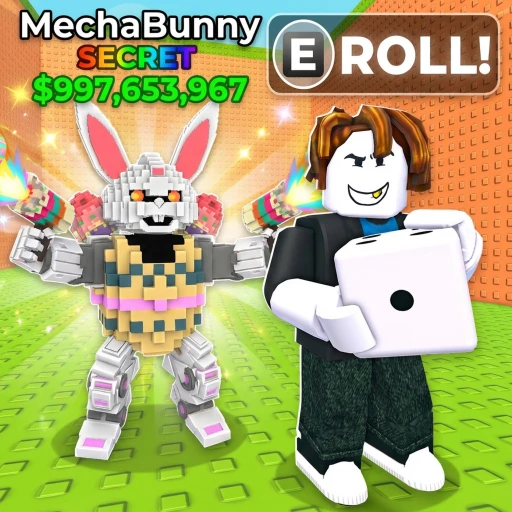
Spin a Brainrot vs Be a Lucky Block (2026) -- Which Roblox Game Is Better?
The brainrot collection genre on Roblox has taken off in ways nobody could have predicted. What started as a niche meme category has turned into one of the most competitive spaces on the platform, with dozens of titles fighting for the attention of millions of players. Two games that keep coming up in that conversation are Spin a Brainrot and Be a Lucky Block. Both revolve around collecting meme-inspired creatures called Brainrots, both use RNG-driven mechanics at their core, and both have built loyal player bases in early 2026.
But that is where the similarities start to thin out. Spin a Brainrot puts a dice-rolling system front and center, letting you spin for random Brainrots and build out a plot that generates passive income. Be a Lucky Block flips the entire concept on its head by turning you into the Lucky Block itself, requiring you to physically run to NPC bases, get broken open, and escape back with whatever Brainrot you become. They are two very different answers to the same question: how do you make collecting random internet creatures feel rewarding?
This comparison will walk you through every aspect that matters -- gameplay loops, RNG systems, progression depth, monetization, community size, and long-term staying power. Whether you are already deep in one game and curious about the other, or trying to figure out which one to start with, this guide has you covered.
Quick Stats: Spin a Brainrot vs Be a Lucky Block at a Glance
| Category | Spin a Brainrot | Be a Lucky Block |
|---|---|---|
| Developer | RNG Creationss | Lucky Block Studio |
| Roblox Place ID | 112371649846345 | 124473577469410 |
| Concurrent Players | ~2.5K | ~93K (peak 125K+) |
| Total Visits | 68.6M+ | 14.6M+ |
| Genre | RNG Collection / Tycoon | RNG Collection / Action |
| Core Loop | Roll dice, collect Brainrots, build plot | Disguise as block, get broken, escape with Brainrot |
| Brainrot Count | 80+ (expanding) | 100+ (expanding rapidly) |
| Progression System | Rebirth multiplier + pets | NPC base tiers + upgrades |
| Passive Income | Yes (Brainrots auto-earn) | Yes (placed Brainrots generate cash) |
| Launch Period | Late 2025 | February 2026 |
| Average Session | 15-30 minutes | 20-45 minutes |
| Age Suitability | All ages | All ages |
The numbers paint an interesting picture. Be a Lucky Block dominates in concurrent players by a wide margin, but Spin a Brainrot has racked up far more total visits thanks to its earlier launch. Both games are free to play with optional purchases. Now let us dig into the details that these numbers alone cannot capture.
Gameplay and Core Loop
Spin a Brainrot: Roll the Dice
Spin a Brainrot takes one of the oldest game mechanics in existence -- rolling dice -- and wraps it in the brainrot collection formula. You start with a basic plot and a small amount of in-game cash. With that cash, you buy dice. You roll the dice. A random Brainrot appears based on the roll outcome, and you place it on your plot. That Brainrot then passively generates income, which you use to buy more dice, which you roll for more Brainrots. The loop is clean and addictive.
What gives the game its depth is the rarity system. Those 80+ Brainrots are separated into tiers ranging from common to legendary, and the odds of landing a top-tier creature are slim. This is where the RNG element becomes the main hook. Every single roll carries the possibility of pulling something absurdly rare, and that anticipation is what keeps players clicking the spin button for hours on end. It borrows heavily from the gacha model, and it works.
The rebirth system adds a layer of long-term progression. Once you have accumulated enough earnings, you can rebirth your entire plot to reset your Brainrots but gain a permanent earnings multiplier. This means early rebirths are fast and frequent, while later ones require patience and strategy around which dice to prioritize. Pets serve as another progression lever, boosting your luck stat and increasing your odds of pulling rarer Brainrots on each roll.
RNG Creationss built Spin a Brainrot as a streamlined version of the broader brainrot formula: less complexity, faster feedback loops, and an emphasis on the dopamine hit of each individual spin.
Be a Lucky Block: Become the Loot
Be a Lucky Block starts with a premise that sounds absurd until you play it and realize how well it works. Instead of opening Lucky Blocks to find loot, you are the Lucky Block. Your character takes on the appearance of a block, and you need to make your way across the map toward NPC bases. When an NPC catches you and breaks you open, you transform into a random Brainrot. The Brainrot you become depends on which NPC base you reached -- farther bases yield rarer creatures.
Here is where the gameplay gets interesting. After the NPC breaks you and you transform, you need to escape from their plot and make it back to your own base to place the Brainrot. Getting caught during the escape means losing your roll. This creates a risk-reward dynamic that Spin a Brainrot lacks entirely. Do you push for the distant NPC base where the legendary Brainrots spawn, knowing the run back will be longer and more dangerous? Or do you play it safe with nearby bases and stockpile common-to-rare Brainrots quickly?
The placed Brainrots generate passive cash, similar to Spin a Brainrot, but the collection process is physical and active rather than menu-driven. You are running, dodging, and making split-second decisions about which direction to escape. The game also introduced a spin-the-wheel feature in its March 2026 update, adding a secondary RNG layer that uses Luminous Spin Coins as currency.
Live events have been another differentiator. The developer has rolled out limited-time admin Brainrots like Dojonini Assassini and Magiani Tankiani that can boost your earnings by up to 140%. Collecting full sets of event Brainrots unlocks special variants like the Secret Zeus Block, which pushes earnings even higher. These events create urgency and keep the community engaged between major updates.
Edge: Be a Lucky Block. The physical gameplay loop -- running to bases, getting broken, escaping back -- gives every collection attempt a sense of stakes that dice rolling cannot match. Spin a Brainrot is satisfying in its simplicity, but Be a Lucky Block turns brainrot collection into an active experience that keeps you engaged at a mechanical level, not just a statistical one.

RNG Systems and Collection Depth
How Spin a Brainrot Handles Randomness
Spin a Brainrot is transparent about its RNG. Each die has defined probability tables, and players in the community have reverse-engineered the approximate odds for each rarity tier. The luck stat, boosted by pets and certain game passes, shifts these odds in your favor. Higher luck means a better chance at rare and legendary Brainrots, but even maxed-out luck does not guarantee anything on a single roll. The randomness is always present, and that is by design.
The game currently has 80+ Brainrots, and new ones are added periodically through updates. Each Brainrot has a unique appearance and a specific income-per-second value tied to its rarity. There is no fusion, evolution, or upgrade mechanic -- a Brainrot is what it is when you roll it. This keeps the system simple but also means that once you have filled your plot with top-tier creatures, the endgame narrows to chasing the final few collectibles.
How Be a Lucky Block Handles Randomness
Be a Lucky Block layers its RNG differently. The randomness is not purely statistical -- it is tied to physical progression across the map. The NPC base you reach determines the pool of possible Brainrots, so players have some control over which rarity tier they are rolling from. A player who can consistently reach the farthest bases has access to the rarest Brainrots, but the specific creature they get is still random within that pool.
With over 100 Brainrots and counting, the collection is larger and more varied. The addition of admin Brainrots, event-exclusive creatures, and set bonuses means there are multiple layers of collection goals. You are not just chasing individual Brainrots -- you are trying to complete sets that unlock bonus effects. This gives the collection system more structure and more reasons to keep playing after you have landed the individually rare units.
Edge: Be a Lucky Block. The combination of skill-gated rarity pools, a larger roster, set bonuses, and event-exclusive Brainrots creates a collection system with more depth and more goals. Spin a Brainrot keeps things clean and approachable, but Be a Lucky Block rewards long-term investment more meaningfully.
Progression and Endgame
Spin a Brainrot: Rebirth and Repeat
The rebirth system is the backbone of Spin a Brainrot's long-term progression. Each rebirth resets your plot but permanently increases your earnings multiplier. Early rebirths happen quickly -- within your first hour, you might rebirth two or three times. As the multiplier climbs, the cost of each subsequent rebirth grows, creating a natural slow-down that stretches the game's lifespan.
Pets add a secondary progression track. You hatch eggs to get pets that boost your luck stat, and higher-tier pets provide bigger boosts. Combining the rebirth multiplier with high-luck pets creates a compounding effect that makes late-game dice rolls meaningfully different from early-game ones. The problem is that once you have high rebirth counts and good pets, the game starts to feel like a waiting game. You roll, you earn, you rebirth, and the core loop does not fundamentally change.
For players who enjoy incremental progress and number-goes-up satisfaction, this is perfectly fine. Spin a Brainrot does not pretend to be anything more than what it is: a clean RNG loop with satisfying numbers. But players who need variety in their endgame may find the ceiling after a few weeks of regular play.
Be a Lucky Block: Layers on Layers
Be a Lucky Block has more endgame surface area. Beyond collecting Brainrots and placing them on your base, you are upgrading your speed to reach farther NPC bases, optimizing your base layout for maximum income, chasing event-exclusive Brainrots during live events, completing sets for bonus effects, and working toward the strongest Lucky Block variants.
The speed upgrade system is particularly important because it directly affects which content you can access. A new player physically cannot reach the farthest NPC bases -- they need to invest earnings into speed upgrades over multiple sessions before those bases become reachable. This creates a natural progression gate that feels earned rather than arbitrary. When you finally reach a new base tier and start pulling Brainrots you have never seen before, the dopamine hit is real.
The live event system also gives endgame players something to chase on a regular schedule. When the developer drops a new admin Brainrot event, even veterans have fresh goals. The limited-time nature of these events adds urgency, and the set bonus mechanics (collect all five event Brainrots to unlock a special reward) give completionists a clear target.
Edge: Be a Lucky Block. More progression systems, more endgame goals, and live events that keep the content pipeline fresh. Spin a Brainrot has a solid rebirth loop, but it cannot match the variety of things to chase in Be a Lucky Block's endgame.
Community and Player Base
Spin a Brainrot: Steady and Loyal
With around 2,500 concurrent players and over 68 million total visits, Spin a Brainrot has carved out a respectable niche. Its community is smaller but dedicated. The official Discord server, run by RNG Creationss, stays active with roll showcases, code sharing, and update discussions. The game's subreddit and social media presence are modest but consistent.
The smaller player base has an upside: servers feel less chaotic, and the community is tight-knit. Regular players recognize each other, and there is a genuine sense of camaraderie around chasing rare rolls. The downside is that a smaller community means fewer content creators covering the game, fewer fan wikis to reference, and less momentum when it comes to attracting new players.
Be a Lucky Block: Massive and Growing
Be a Lucky Block is operating on a different scale entirely. With 93,000+ concurrent players and peaks above 125,000, it consistently ranks in the top 15 most-played games on all of Roblox. Since launching in February 2026, it has grown at an aggressive pace and shows no signs of slowing down. The game has dedicated fan wikis, multiple content creator communities, and a significant presence on platforms like YouTube and TikTok.
This size comes with benefits and trade-offs. On the positive side, there is always someone to play with, the developer is financially incentivized to keep pumping out updates, and the sheer volume of community content means you can find guides, tier lists, and strategy breakdowns for every aspect of the game. On the negative side, servers can feel crowded, and the community's size makes it harder to stand out or build personal connections with other players.
The broader brainrot trend on Roblox has helped too. With Steal a Brainrot reaching a record-breaking 24 million concurrent users, the entire genre gained visibility that Be a Lucky Block has capitalized on.
Edge: Be a Lucky Block. A 40x larger active player base, faster update cadence driven by revenue, and a thriving content ecosystem. Spin a Brainrot has a loyal following, but Be a Lucky Block has cultural momentum that is hard to compete with.
Monetization and Value
Spin a Brainrot: Light Touch
Spin a Brainrot keeps its monetization straightforward. Game passes and in-game purchases are available but never feel mandatory. The core dice-rolling loop works fine without spending Robux. Luck-boosting purchases and premium dice speed up progression but do not gate content behind paywalls. For a free-to-play title, the balance is reasonable -- you never hit a wall that forces you to spend.
The code system also helps here. Regular codes from RNG Creationss grant free dice, potions, and other boosts that help free players keep pace. Check out our Spin a Brainrot codes guide for the latest working codes.
Be a Lucky Block: More Options, Same Fairness
Be a Lucky Block has more monetization surface but maintains a similar philosophy. Game passes offer quality-of-life improvements like faster movement, auto-collection, and cosmetic perks. The spin-the-wheel feature uses Luminous Spin Coins, which can be earned through gameplay or acquired through codes and purchases. The economy is designed so that spending accelerates your progress but never replaces it.
Codes play a bigger role here because of the game's size and update frequency. The developer releases new codes with most updates, granting everything from cash rewards to rare Brainrots and Spin Coins. Our Be a Lucky Block codes guide stays updated with every working code.
Edge: Tie. Both games are genuinely free to play with fair optional purchases. Spin a Brainrot is lighter on monetization options, which some players will prefer. Be a Lucky Block has more things to buy, but nothing feels exploitative. Pick whichever model you are more comfortable with.
Updates and Developer Support
Spin a Brainrot: Consistent but Measured
RNG Creationss pushes updates at a steady pace, adding new Brainrots, adjusting balance, and releasing codes. The developer communicates through Discord and keeps the community informed about upcoming changes. Updates tend to be smaller and incremental -- a few new Brainrots here, a balance tweak there -- rather than large-scale content drops. This keeps the game stable but means there are fewer "big moments" that bring lapsed players back.
Be a Lucky Block: Aggressive Update Cadence
Be a Lucky Block ships updates frequently, and they tend to be substantial. New NPC bases, live events with admin Brainrots, the spin-the-wheel system, and new block variants have all arrived within the game's first two months of existence. The developer has the revenue and player base to justify rapid iteration, and the results show in the game's growth trajectory.
The live event model deserves specific mention. By creating limited-time Brainrots with set bonuses, the developer has built a content cadence that keeps the community engaged between major updates. Players log in regularly to avoid missing exclusive content, which sustains the high CCU numbers.
Edge: Be a Lucky Block. Faster updates, bigger content drops, and a live event system that creates regular reasons to log in. RNG Creationss does solid work on Spin a Brainrot, but they are working with fewer resources and a smaller team.
Accessibility and Learning Curve
Spin a Brainrot: Pick Up and Play
Spin a Brainrot has one of the lowest barriers to entry in the brainrot genre. You buy dice. You roll dice. You collect what appears. The entire core loop can be understood in under two minutes, and there are no complex mechanics to master before you start having fun. For younger players or anyone who just wants a low-effort dopamine loop, this is a genuine strength.
The interface is clean, the feedback is immediate (you see your new Brainrot appear on your plot right after rolling), and there is no penalty for bad rolls beyond not getting what you wanted. You cannot lose progress, you cannot fail a run, and you cannot get punished for playing suboptimally. It is a stress-free collection experience from start to finish.
Be a Lucky Block: More to Learn, More to Master
Be a Lucky Block asks more of its players. Understanding the disguise mechanic takes a moment. Figuring out which NPC bases to target, learning escape routes, managing your speed upgrades efficiently, and optimizing your base layout for maximum income -- all of this takes time. New players often spend their first few sessions just getting the hang of the core loop before they start making meaningful progress.
This is not a bad thing. The learning curve means there is skill expression baked into the game. A veteran player who knows the optimal paths and escape routes will progress significantly faster than a newcomer clicking randomly. But it does mean that Be a Lucky Block is less instantly gratifying than Spin a Brainrot. The payoff comes later, and it comes bigger, but you need to invest the time to get there.
Edge: Spin a Brainrot. For pure pick-up-and-play accessibility, Spin a Brainrot wins. Its simplicity is a feature, not a limitation. Be a Lucky Block rewards skill, but it takes longer to reach the fun if you are brand new to the genre.
Who Should Play What?
After comparing these two games across every dimension that matters, the answer to "which one should I play" depends entirely on what kind of experience you are looking for. Here is the breakdown.
Play Spin a Brainrot If You Want:
A straightforward RNG loop with minimal complexity. Spin a Brainrot is the right choice if you enjoy idle/incremental games, if you want something to play in short sessions while watching videos or chatting with friends, or if you are new to the brainrot genre and want to ease into it. The rebirth system gives you enough long-term goals to stay engaged, and the dice-rolling mechanic delivers quick dopamine hits without demanding much in return. It is comfort food gaming -- familiar, satisfying, and low-stress.
If you want free Robux to spend on game passes and dice, check our Spin a Brainrot free Robux guide for legitimate methods.
Play Be a Lucky Block If You Want:
An active collection experience with physical gameplay, deeper progression, and a massive community. Be a Lucky Block is the right choice if you want your brainrot collection to involve actual skill, if you enjoy the thrill of risk-reward decisions, or if you are the type of player who thrives on live events, set bonuses, and layered endgame goals. The game demands more from you, but it gives more back in return.
The larger community means more resources to learn from, more content creators producing guides and tier lists, and more players to compete with. For free Robux strategies, see our Be a Lucky Block free Robux guide.
Play Both If:
You genuinely enjoy the brainrot collection genre and want two different flavors of it. These games are not direct competitors in the way that many players assume. Spin a Brainrot is the game you play when you want to relax and spin for random creatures. Be a Lucky Block is the game you play when you want to actively engage with the collection process. They complement each other more than they conflict, and switching between them keeps both feeling fresh.
Final Verdict
Be a Lucky Block takes the overall win. Its active gameplay loop, deeper progression systems, larger Brainrot roster, live events, and massive community give it more staying power and more to offer in almost every category. But this is not a blowout. Spin a Brainrot earns its place with a cleaner, more accessible design that serves a different kind of player. If you value simplicity and quick satisfaction, Spin a Brainrot delivers. If you want depth, stakes, and a game that rewards investment, Be a Lucky Block is the stronger choice heading into mid-2026. Both games are free, so the best move is to try each one for an hour and let your own preferences decide.
Earn Free Robux for Both Games
Get free Robux through Earnaldo to spend on game passes, dice, and Spin Coins in either game. No downloads, no scams -- just legitimate earning methods.
Frequently Asked Questions
Be a Lucky Block is significantly more popular in terms of concurrent players, regularly pulling 90K-125K CCU compared to Spin a Brainrot's roughly 2,500 CCU. However, Spin a Brainrot has accumulated over 68 million visits thanks to its earlier launch, showing strong cumulative engagement over time.
Spin a Brainrot is more beginner-friendly. Its dice-rolling mechanic is straightforward -- you buy dice, spin them, and collect whatever Brainrot appears. Be a Lucky Block has a steeper learning curve because you need to understand the disguise mechanic, NPC base distances, and the escape-and-place loop before you start earning efficiently.
Yes. Spin a Brainrot codes typically grant free dice, potions, and luck boosts. Be a Lucky Block codes unlock rare Brainrots, Spin Coins, and cash rewards. Check our Spin a Brainrot codes guide and Be a Lucky Block codes guide for the latest working codes.
Both games support multiplayer through standard Roblox servers. In Spin a Brainrot, you and your friends manage your own plots and compare rolls. In Be a Lucky Block, you share the same server but compete independently to collect Brainrots. Neither game requires co-op, but both are more fun with friends.
Be a Lucky Block currently has a larger collection with over 100 Brainrots, plus event-exclusive creatures added through live events. Spin a Brainrot has around 80 Brainrots separated by rarity tiers. Both games continue to expand their rosters with regular updates.
Yes. Both games are free to play at their core. Each offers optional game passes and in-game purchases that speed up progression or grant cosmetic perks, but neither locks essential gameplay behind a paywall. You can enjoy the full brainrot collection experience without spending Robux.